The Japanese anti-aircraft gunners on Chichijima opened fire on an American plane overhead and shot it down.
The pilot's name was George H. W. Bush. He was 20 years old, a U.S. Navy pilot, bombing the island on September 2, 1944. His two crewmen died. Bush bailed out, floated in a life raft, and was rescued by the submarine USS Finback.
Eight other American airmen shot down around Chichijima in that period were captured by the Japanese garrison and executed. Bush was the only one who got away.
Forty-five years later, Hirohito, the Emperor in whose name those guns had fired, died in Tokyo on January 7, 1989, at the age of 87. He had been the longest-reigning emperor in Japanese history, and he was among the last surviving heads of state from World War II.
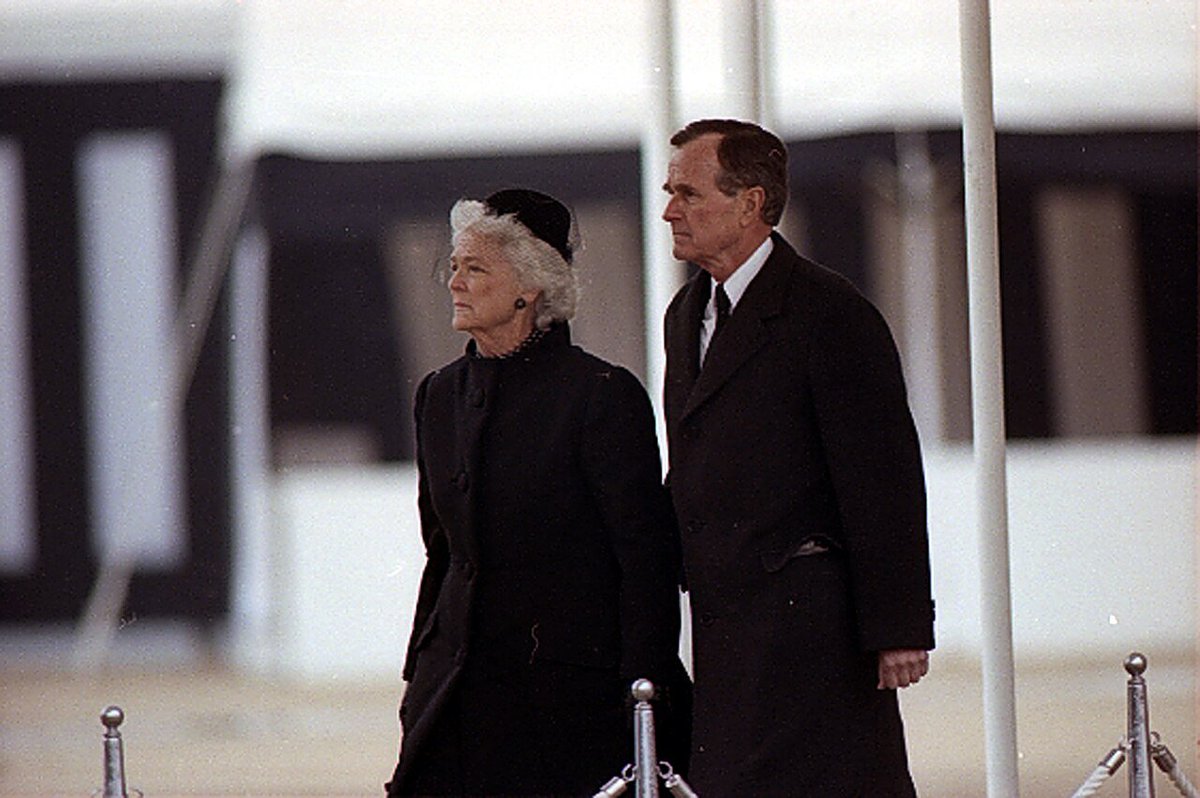
Bush was sworn in as President of the United States thirteen days after the Emperor's death. His first overseas trip as President was to Tokyo, to attend the funeral on February 24, 1989.
Many Allied veterans of World War II still regarded Hirohito as a war criminal and asked their governments to boycott the funeral. Of 166 foreign states invited, all but three sent someone.
Protocol would have placed Bush toward the back of the ceremony, because he had been President for so short a time. Japanese officials overrode protocol and gave him a front-row seat.
Standing there was a man whose plane Japanese gunners had once shot down over Chichijima.
Two years later, on the 50th anniversary of Pearl Harbor, he told American veterans in Honolulu: "I have no rancor in my heart towards Germany or Japan, none at all." He added: "I hope you have none in yours."
In the same Honolulu remarks, he said: "I thought of that meeting with MacArthur when I attended the Emperor's funeral in 1989."
The 20-year-old they had tried to kill came back as President of the United States, and he came in peace.