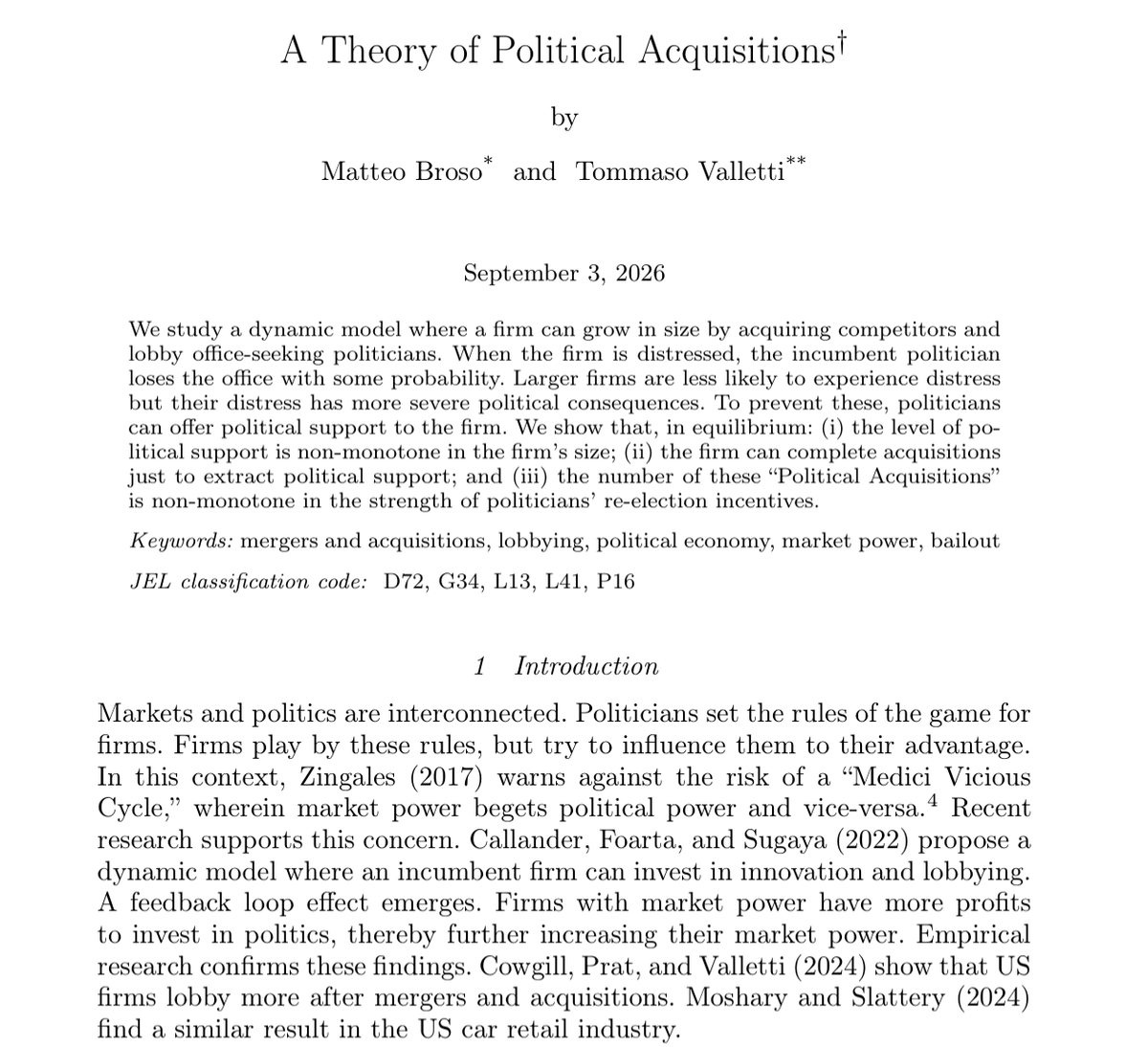
Why do firms acquire competitors? Not just to increase market power, but also to increase political power.
Firms may undertake acquisitions purely to extract political support from politicians who fear the consequences of their failure.
@TomValletti
https://t.co/WRTTA4z8ka
Back, but only shortly, on this platform after a long break, for obvious reasons. Looked around. 2 things worry me. 1: AER and Econometrica have linked their editorial pipeline to the same private AI platform, handing it a first-mover advantage across the top of the discipline.
Exactly the kind of bottleneck we warn about everywhere except our own backyard. 2: that tool is being used publicly to score points against a political philosopher's new entry on capitalism. We like to tell ourselves economists aren't ideological. We are, we just don't admit it.
More from the Europe 2050 project. https://t.co/xXwIEMGleN
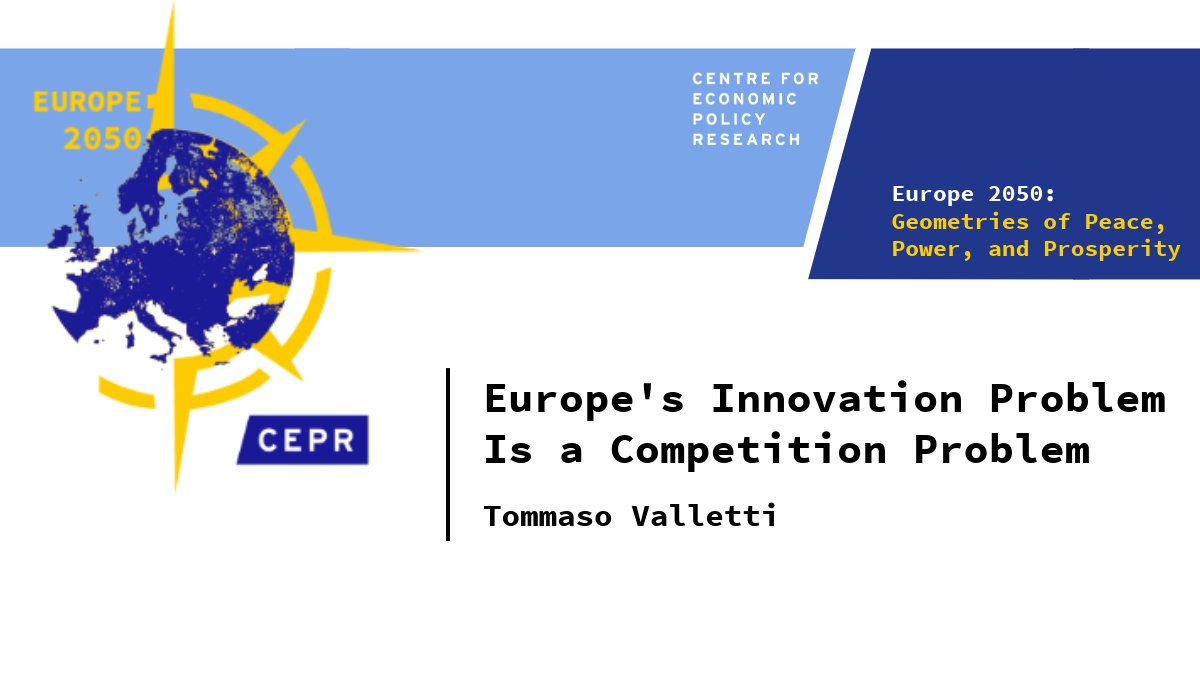
An important contribution from Tommaso Valletti, on why Europe has half as many high growth startups per capita as the US, and what to do about it. https://t.co/phaqO6NOJL
Among his recommendations, one which struck me, and is likely to be controversial, especially coming from a former chief competition economist of the EU, is to restructure merger review, and, in particular, take into account where the benefits land: The rationale: A merger when a big US firm buys a European startup may be good or bad for the world but is likely to be less good for Europe than for the US. (Read the full paper for more flesh and discussion)
In his contribution to CEPR's Europe 2050 series, @TomValletti offers a provocative reframing of Europe's innovation deficit: the problem is not only one of scale, capital, or regulation, but of market structure. Read the paper to see how he proposes to solve it.
https://t.co/HIWeTnw0e9
#Europe2050 @ojblanchard1
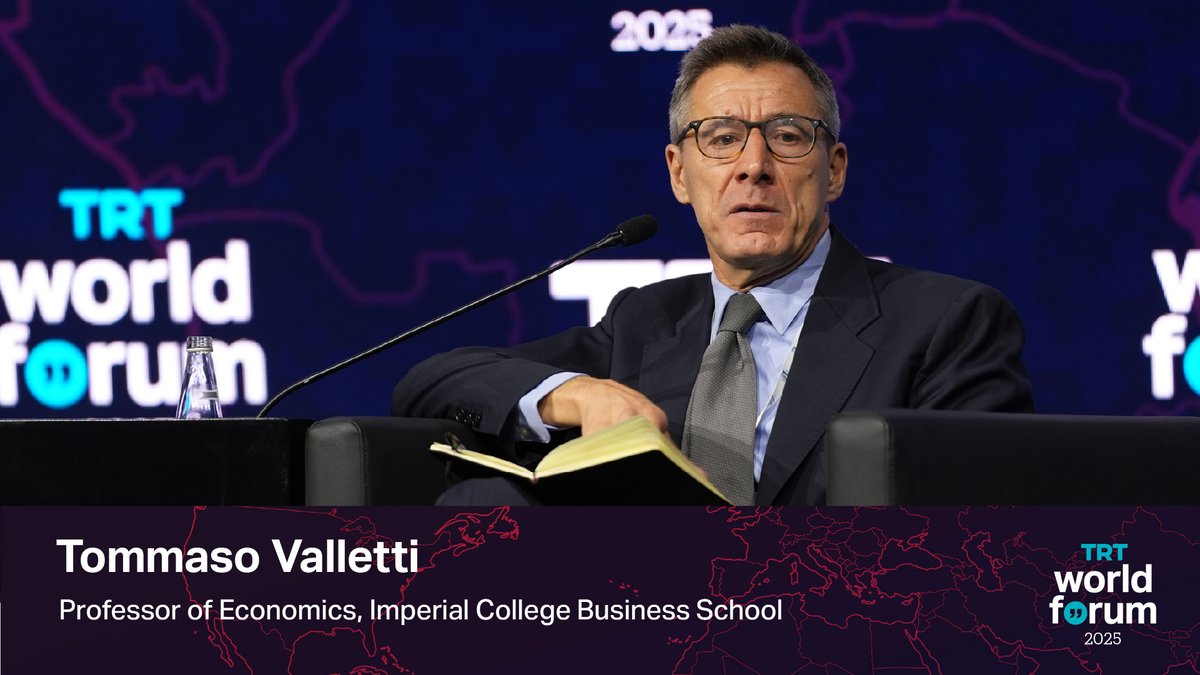
Tommaso Valletti, @TomValletti, Professor of Economics, Imperial College Business School, stated that “We’re witnessing not classic monopolies, but what I call portfolio capitalism, which is a few dominant players building bottlenecks across the AI value chain: chips, cloud, models, and data. Each layer reinforces the next, making new market entry nearly impossible.”
#TRTWorldForum2025
#TRTWorldForum
#GlobalReset
Why book publishing contradicts conventional wisdom about competition.
By @Cgenakos Lorien Sabatino, @TomValletti
In CentrePiece magazine
Read: https://t.co/x6U77e8oFp
Bottom line: Without synergies/spillovers, mergers harm consumers. Weakening merger control in the name of innovation is misguided.
📄 open access article https://t.co/mU0TuaM2W6
@LeverhulmeTrust
I revisit the Innovation Theory of Harm (ITOH): mergers often reduce incentives to innovate.
Once the econ theory literature is read correctly, the evidence overwhelmingly supports ITOH.