I think that Trump renaming Lake Ontario to Lake America is pointless and stupid.
Wanna know what else I think is dumb?
The fact left-wingers are triggered about this after they spent the last decade plus renaming sports teams, public schools and universities, streets and highways, food and condiment brands, and redefining half the dictionary altogether.
Here’s a list of some in case you forgot:
• Washington Redskins ➡️ Commanders
• Cleveland Indians ➡️ Guardians
• Stanford Indians ➡️ Cardinals
• Loudoun County Raiders ➡️ Captains
• Edmonton Eskimos ➡️ Elks
• Columbus Day ➡️ Indigenous Peoples’ Day
• Lee–Jackson Day ➡️ eliminated
• Robert E. Lee High School ➡️ John Lewis High
• Jefferson Davis Highway ➡️ Richmond Highway
• Mount McKinley ➡️ Denali
• Fort Bragg ➡️ Fort Liberty
• Fort Hood ➡️ Fort Cavazos
• Boy Scouts of America ➡️ Scouting America
• Aunt Jemima ➡️ Pearl Milling Company
• Uncle Ben’s Rice ➡️ Ben’s Original
• Eskimo Pie ice cream bars ➡️ Edy’s Pie
• Land O’Lakes ➡️ removed the Indian, but kept the land
• Illegal alien ➡️ undocumented worker
• Hispanic ➡️ Latinx (a term Hispanics did not want and do not use)
• Mother ➡️ birthing person
• Anchor baby ➡️ child of noncitizens
• black ➡️ Black
• Breastfeeding ➡️ chest feeding
• Inmate / prisoner / convict / felon ➡️ justice-involved person
• Ex-con / ex-felon ➡️ returning citizen
• “Gender” as a biological fact interchangeable with “sex” to being a social construct
• Fat ➡️ plus-sized
• Master bedroom ➡️ primary bedroom
• Manhole ➡️ utility hole
And so on and so on. . .
“Give a man a fish, and you feed him for a day.
Teach a man to fish, and you feed him for a lifetime.
Steal a fish from one guy and give it to another - and keep doing that on a daily basis - and you'll make the first guy pissed off, but you'll make the second guy lazy and dependent on you. Then you can tell the second guy that the first guy is greedy for wanting to keep the fish he caught. Then the second guy will cheer for you to steal more fish. Then you can prohibit anyone from fishing without getting permission from you. Then you can expand the racket, stealing fish from more people and buying the loyalty of others. Then you can get the recipients of the stolen fish to act as your hired thugs. Then you can ... well, you know the rest.”
- Larken Rose
Socialists keep saying "the rich don't pay their fair share in taxes." Charles Payne just ran the actual numbers and ENDED their narrative in under 2 minutes.
The top 1% pay roughly 40% of federal income taxes while earning about 22% of the income.
The top 10% (the entrepreneurs and small business owners putting in 60-hour weeks) pay over 70% of the total taxes.
If we were to tax people based on how much they use services, the top earners would be paying close to ZERO.
PAYNE: "Be thankful we live in a country that's as progressive as it is because it's a pretty good balance right now."
FUN FACT: Elizabeth Warren called Elon Musk a "freeloader" in 2021 and said we have to "change the rigged tax code so The Person of the Year will actually pay taxes."
Musk replied: "If you opened your eyes for 2 seconds, you would realize I will pay more taxes than any American in history this year."
Musk paid $11,000,000,000 that year in taxes.
⚡️Most people do not want what they say they want badly enough to pay for it.
They want the feeling of wanting it.
They want the identity of being ambitious.
They want to imagine the body, money, business, relationship, status, freedom.
That fantasy gives them a small dose of the reward without demanding the cost.
Behavior reveals the truth.
If someone says for five years that they want to get rich and spends every night consuming entertainment, they do not meaningfully want wealth. If someone says they want an exceptional body and repeatedly chooses comfort, comfort ranks higher. If someone says they want mastery and quits when repetition becomes boring, they wanted novelty and admiration.
Your calendar is the confession.
Your spending is the confession.
Your repeated behavior is the confession.
Everything else is testimony from an unreliable witness.
There is no mystical missing ingredient.
Reality does not care how sincerely you desire something. It responds to what you repeatedly do.
Most people spend their lives trying to keep two incompatible things alive at once: exceptional outcomes and ordinary levels of sacrifice.
Reality eventually kills one.
The more you optimize for happiness in childhood, the more you actually wire for anxiety in adulthood.
Dr. Becky Kennedy is right. Every time we rush to fix a kid’s upset, new toy, new plan, new distraction, we teach them hard feelings are emergencies that must end immediately. By adulthood the nervous system only knows two settings: full-on distress or full-off. No dimmer switch left.
That gap turns ordinary disappointment into panic. The feeling itself becomes the threat because it was never allowed to stay long enough to become familiar.
I want kids to know the dark is survivable, that they don’t have to scramble for the light the second it appears. That’s how the resilience muscle actually grows.
The older I get, the more I realize what “rich” actually means.
It’s not the Lamborghini.
It’s:
• Living 10 min drive from work
• Having quiet, and even friendly neighbours
• Being 5 minutes from the gym
• Having money left over to invest every month and knowing how to manage it
• Peace in your own home
• A slow morning
• Drinking your coffee without rushing
• Sleeping with a clear conscience
• Laughing with people who genuinely get you
• Traveling every year
• Waking up naturally without an alarm
• Eating a home-cooked meal with people you love
• Having time to read a book just because you want to
• Enjoying the little routines you used to take for granted
• Coming home to a pet that’s genuinely excited to see you
The older I get, the less I care about looking rich.
I care about having a life that feels rich.
Only in the greatest country in the world can some entitled young retard sit in a room with climate control, scrolling endlessly on a brand new phone that cost a thousand dollars and was paid for by their parents, wearing sneakers that cost two hundred dollars, and sipping an iced coffee that costs nine dollars, while still having the absolute nerve to post about how oppressed they are and how capitalism has failed them.
This is the same person who has never missed a meal, never slept in a car, and never gone without heat, yet somehow manages to convince themselves they are a victim of the very system that handed them every single one of those comforts.
It is not oppression.
It is not systemic failure.
It is simply a spoiled, ungrateful brat who has never actually suffered a day in their life and desperately needs something to cry about so they can feel important… because their lives are actually that fucking great compared to the rest of the planet.
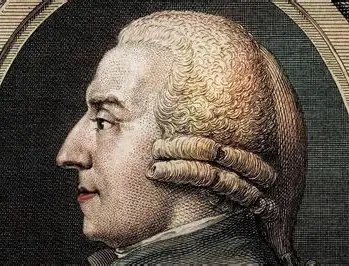
Adam Smith’s most famous sentence remains one of the clearest statements in all of social science:
“It is not from the benevolence of the butcher, the brewer, or the baker that we expect our dinner, but from their regard to their own interest.”
The point is simple and profound. We do not rely on the kindness of strangers to put food on the table. We rely on their self-interest. The butcher supplies meat because he profits by doing so. The baker rises early because customers will pay for bread. Their desire to improve their own condition leads them, without any central direction, to serve ours.
This is the central mechanism of a market economy. Self-interest, channelled through voluntary exchange, produces cooperation on a vast scale. No one has to love their customers or share their political views. They only have to respond to incentives. The result is a system that regularly feeds, clothes, and houses millions of people who will never meet.
Many on the left still struggle to accept this. Self-interest is treated as morally suspect - a form of greed that should be restrained or replaced by appeals to solidarity and collective purpose. The preference is for systems that rely on moral exhortation or state direction rather than on the everyday pursuit of personal advantage. Yet the historical record is clear: societies that suppress self-interest in the name of higher motives tend to produce shortages, stagnation, and coercion. Societies that allow people to benefit from serving others tend to produce abundance.
Smith’s insight is not a celebration of selfishness. It is a recognition of reality. People are more reliable when they can improve their own lives by improving the lives of others. That simple alignment of interests remains the most powerful engine of social cooperation ever discovered.
⚡️What you are seeing here is the rise of the credentialed underclass.
These people were trained to expect elite status, then entered an economy that gave them debt, rent, weak bargaining power, and little ownership.
Their education raised their expectations faster than the system raised their material position.
That gap creates political intensity.
A postgraduate degree gives cultural capital. It teaches the language of institutions, morality, expertise, identity, and systemic critique. Lower-to-middle income keeps the person economically dependent on those same institutions.
That combination is unusually powerful.
The wealthy graduate already owns the system.
The non-college worker often distrusts the system.
The underpaid graduate depends on the system while feeling betrayed by it.
That person becomes the natural base of modern progressivism.
They work disproportionately inside universities, nonprofits, media, government, health care, policy, law, and professional administration. Their income may be ordinary, but their worldview is shaped by elite institutions. They possess status language without status security.
That is the hidden class position:
Cultural rank without economic sovereignty.
A degree became a title without an estate.
This group votes Democratic because the party offers recognition, institutional protection, debt relief, public spending, credential legitimacy, and a moral explanation for why the promised life never arrived.
The real political fuel is frustrated expectation.
Poverty alone does not create this level of ideological coherence. Wealth does not create it either. The strongest radicalizing force is being told you belong near the top, then discovering that you cannot afford a home, raise a family comfortably, or escape institutional dependence.
That is why this bloc matters so much.
They have the vocabulary to turn private disappointment into public doctrine.
They have the institutional access to distribute that doctrine.
They have enough education to command authority.
They lack enough wealth to feel settled.
As housing stays unaffordable, graduate debt persists, and AI compresses white-collar work, this class becomes more politically aggressive. Its demand will be simple:
Make the state deliver the status the economy refused to provide.
That pressure will keep pulling the Democratic Party toward redistribution, debt cancellation, rent control, professional protection, expanded public employment, and stronger institutional management of economic life.
The deepest fracture in American politics is moving beyond rich versus poor.
It is becoming owners versus credentialed non-owners.
One group has assets.
The other has claims.
Politics will become the battlefield where those claims demand conversion into reality.
Marc Andreessen just said what no politician will ever admit. The ideology that claims to protect the working class is what ensures they never leave it.
Rogan: “We just assume that everybody who makes an incredible amount of money stole it.”
That assumption isn’t accidental. It’s load-bearing.
Remove it and the entire redistribution framework collapses.
Because if wealth is created and not taken, the builder isn’t your enemy.
And if the builder isn’t your enemy, you don’t need the politician who promised to fight them on your behalf.
Andreessen: “Jeff Bezos is the obvious counterexample. Every time you do the one-click and the thing gets delivered to you two hours later at the cheapest possible price, saving you and your family a lot of time and money.”
Bezos didn’t take from the economy. He expanded it.
Every transaction voluntary. Every customer better off. Every dollar of his net worth is proof someone chose his service because it made their life easier.
The economy isn’t a vault with a fixed amount inside.
It’s a system that grows every time someone builds something people want.
The fixed pie is a lie. And it has to be.
Because the moment you accept the pie grows, you have to ask why you aren’t growing it yourself.
That’s the question the ideology exists to prevent.
Andreessen: “You can compare and contrast to other countries that have more draconian policies. And the result is they’re much poorer.”
Every country that punished creation got less of it.
No exceptions.
Rogan: “That’s the weird thing about the whole socialism thing, is that it’s never worked ever, and they just go, ‘Well, it hasn’t been done right.’”
A century of data across dozens of countries. Same experiment. Same collapse.
The ideology doesn’t update because updating would end it.
The people pushing redistribution aren’t solving poverty.
They’re managing it.
Solved poverty doesn’t need a program. Doesn’t need a department. Doesn’t need a politician who campaigns on it every cycle.
Poverty is the product that funds the bureaucracy built to eliminate it.
When a founder reinvests instead of extracting, that’s not avoidance. That’s deployment.
Every dollar reinvested becomes a job. A contract. A supplier.
A chain of downstream opportunity that vanishes the moment someone confiscates it at the source to fund a program that will never solve what it was designed to manage.
The freest economies produce the most prosperity. The most regulated produce the most dependency.
That’s not a coincidence.
Dependency is the business model.
Free people who build don’t need the system.
The system needs people who don’t build.
The greatest theft in the history of economics was never committed by a billionaire.
It was committed by every ideology that looked a capable person in the eye and convinced them they were helpless.
The most dangerous thing you can do inside a redistribution framework isn’t to resist it.
It’s to succeed without it.
Because one person who builds their way out of nothing, without permission, without a program, without the system, is living proof that everything the ideology told you was a lie.
And that proof is the one thing the framework cannot survive.
Marc Andreessen just named the lie that held for a hundred years and is collapsing in real time.
We gave authority to the people who explained things. Not the people who built them.
And nobody questioned why.
For a century, builders created and journalists translated. The public accepted it because complexity demanded a middleman.
But the middleman was never the expert. The middleman was the channel.
And we mistook the channel for the source.
Andreessen: “You set it loose and it will write you literally a 30-page answer. This is basically like a textbook on any topic.”
Any topic. Infinite depth. Zero cost. No gatekeeper.
He has a name for what comes next. Practitioner media.
Andrej Karpathy doesn’t sit across from a journalist. He turns on a camera and teaches the world how the architecture works. No filter. No editorial framing. No one deciding what you’re ready to hear.
The press calls it dangerous.
They are not protecting the public. They are protecting the bottleneck that gave them power.
The critic always needed the creator. The creator never needed the critic.
They just had no other way to reach the world.
Now they do.