Christian||Med.Student||Good Leadership enthusiast||Humanitarian||volunteer|| 12th Executive President, Bingham University Medical Students Association(BhUMSA)
BREAKING: Nigeria: A Christian mother, Liatu Samuel Dawa, has been sentenced to 14 years in prison for the “crime” of evangelism.
Liatu shared her faith with a woman in Borno State who later converted to Christianity.
For that, Liatu is now behind bars and her family in hiding after Muslims threatened their lives.
The judge, A.B. Kumdila, imposed the harsh sentence.
This ruling is a gross miscarriage of justice.
The disgraceful action must be overturned and Liatu immediately returned safely to her family.
Free Liatu Dawa.
Captain Ibrahim Traoré stood before his nation and spoke a truth that had been buried for over a thousand years. He named the Arab slave trade. Not in whispers. Not in academic papers. But in a televised address, to a country that is overwhelmingly Muslim.
"The people came, first the Arab-Muslim conquests. That is over a thousand years of slavery in Africa," he said. He spoke of men castrated so they could not father children. He named the year 1962, when the last slave market closed in Medina. He refused to let silence protect a historical crime.
This was not an attack on Islam. Traoré is a Muslim himself. This was an act of reckoning. He was saying what the entire continent had been afraid to say: that Africa was enslaved by two systems, and only one of them is allowed to be remembered. The West's crime is taught in schools. The East's crime is erased.
The reaction was swift and fierce. Gulf states condemned him. Some clerics called it Islamophobic. But Traoré pressed forward. He announced that Burkina Faso would recall hundreds of students studying Sharia law abroad, warning that some returned with teachings incompatible with national unity. He declared the state secular, and no religious law—Islamic or otherwise—would govern it.
Why does this matter? Because the Sahel is burning. Jihadist groups are recruiting with a distorted version of faith, and that distortion has been imported and funded from outside Africa for centuries. By naming the Arab slave trade, Traoré severed the spiritual authority that foreign clerics have held over African Muslims. He asked a question that should echo across the continent: "Are we cursed?" His answer was no. Africa was not cursed. Africa was conquered, colonized, and enslaved by two different powers. And the only way to break free is to name it, teach it, and refuse to let it be silenced.
When Issues like this Come up, I see People very eager to Criticize the Doctors so I will Share Personal Experience as an Internationally Trained Medical Doctor that came back home to Practice solely because of My Love for the Country-Nigeria.
After the hurdles of Passing MDCN that decided that only 30% of Us international trained doctors is Worthy of Passing (Heartless Nigerian Victimization Mindset), I got to work in a Government hospital.
In an Emergency Department in a government hospital all I had to work with was my hands, a thermometer and a BP Monitoring machine that I go to the ward to borrow. (You don’t know how insane this is)
I’m not even talking about the fact that I’m sometimes on call 5 days in a week. That’s amounting to working 136 hours in a week.
I had moments that traumatized me, times I know what to do but lack basic equipments to do it with.
Was it the day that man was brought in Unconscious. I was about handing over. I went on my knees and did CPR, doing mouth to mouth with that man for almost 15 minutes before he regained consciousness. The joy in the families eyes. Got him admitted, just for me to come back to the emergency department in the evening, asked about him and heard he had died - the Oxygen was leaking, and they could not celotape it- A government hospital!
Or is it the day that 16 years sickle cell patient old only child of that woman- the way I was running around from ward to ward in the middle of the night looking for a department with Oxygen…
So when you come to emergency and we send you back, it’s because we can’t help. We know what to do but we don’t have what to do it with. Keeping you with us for an extra one minute can speed up your death so we refer you immediately.
Or how will you come with a gun wound at night to an hospital we don’t even have light and we are attending to patients in the ward with torchlight from our phones.
But your leaders fly to places where death are not just diagnosed with opening of eyes…
Then you say “Why do Doctors Strike?”
We strike because we deserve better than the way we are treated by the government.
We Strike because OF YOU. We need the government to listen to us and equip the hospital. Why should I be kissing that man over and over when a small equipment can do that. Why should lives be lost due to avoidable occurrences.
Even if Some Doctors are not sitting up enough (a Working government will create policies and stand on their feet to ensure it’s actualized and lead to better health for the people. Ask Peter Obi)
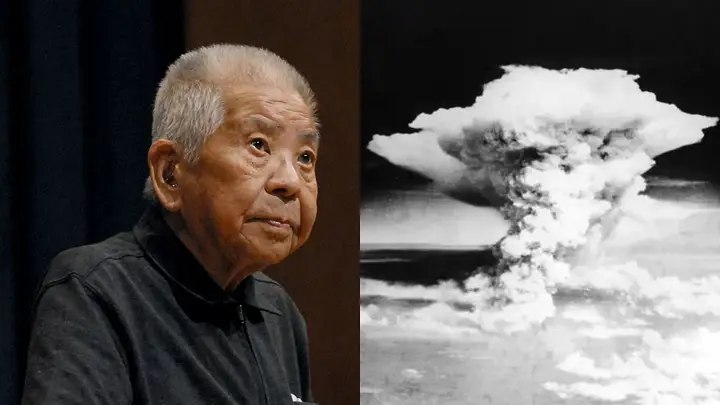
August 6, 1945. A 29 year old engineer is walking to work in Hiroshima on the last day of a three month business trip.
He's packed. He's going home to his wife and baby son tomorrow.
He looks up and sees a bomber high overhead. Something small falls from it.
Then the sky turns white.
His name was Tsutomu Yamaguchi. He designed oil tankers for Mitsubishi, and he'd been sent to Hiroshima to work at the company's shipyard. He was about two miles from where the bomb exploded.
The blast threw him off his feet. It burst his eardrums. It burned the left side of his upper body, his face and arms. For a while he couldn't see.
He spent the night in an air raid shelter in a city that no longer existed.
The next morning, badly burned, he found two of his coworkers who had also survived. Together they made their way through the ruins to a train station and got on one of the few trains still running.
They were going home.
Home was Nagasaki.
He got back on August 8, covered in bandages. His family barely recognized him. Doctors treated his burns. Most people would have stayed in bed.
On August 9, Yamaguchi reported to work.
He was sitting in the Mitsubishi office in Nagasaki, telling his boss what had happened in Hiroshima. How one bomb had wiped out an entire city. According to Yamaguchi, his boss told him that was impossible. That he must be out of his mind.
And at that moment, through the window, the room filled with the same white light.
The second atomic bomb had just exploded over Nagasaki. Once again, Yamaguchi was about two miles away.
The blast tore the bandages off his burns. The office was wrecked. And somehow, again, he lived.
He rushed home terrified of what he'd find. His house was destroyed. But his wife and son had survived too. They had gone out looking for burn ointment for him and were sheltering in a tunnel when the bomb hit.
Treating his injuries from the first bomb may have saved them from the second.
He was sick for a long time. His hair fell out. He had fevers and infections. But he recovered. He went back to work, raised a family, and lived a normal life for decades. He rarely talked about it publicly.
Hundreds of people are believed to have lived through both bombings. But in 2009, the Japanese government officially recognized Yamaguchi as a survivor of both, the only person ever formally given that status.
Late in life he finally started speaking out against nuclear weapons. He even addressed the United Nations.
He died in 2010 at the age of 93.
He was hit by the only two atomic bombs ever used in war. And he outlived the century they were dropped in.
I built NavRad Anatomy, a free tool with an AI Guide that makes it simpler to learn clinically important imaging anatomy.
To read scans, you need to know the anatomy. But there’s a lot to learn, and it’s hard to know what matters.
With this app, you can scroll through real scans with labels and colour-coded overlays, filter the structures you want to see, learn essential anatomy with key clinical pointers, or ask the AI Guide:
“Walk me through the liver segments” (see video)
“Teach me the segments of the internal carotid artery”
Or even: “Just show me the basics”
Then test yourself by asking it to quiz you.
Works on your phone or computer, so you can learn on the go.
See it in action 👇
Try it at https://t.co/ithILGSeYc, or click "Anatomy" in Navigating Radiology.
Dear bloody civilians,
I have noticed your ignorance about the military. To you, everyone in uniform is infantry or artillery. I’m in a good mood today, so I’ll teach you a thing or two.
Nigerians, your military is uncharted territory to you. You’ve been trained to see them as mini-gods. The moment you see a uniform, you start shitting your pants, so you know nothing about what goes on behind the scary face and ragged boots.
The military, like any organized company, has multiple departments and jobs. Dangote Cement has accountants, drivers, lawyers, and human resources. The military of any country has the same professions and more. Artillery and infantry (what you call the “real soldiers”) are just extra departments.
Like Dangote Cement’s job is to sell cement, the military’s sole duty is to defend a country’s borders, its territory, and the lives of its citizens, not to terrorize the people it is meant to protect.
No department is more important than another. No infantry unit leaves for a mission without its medical personnel, mechanics, or supply units.
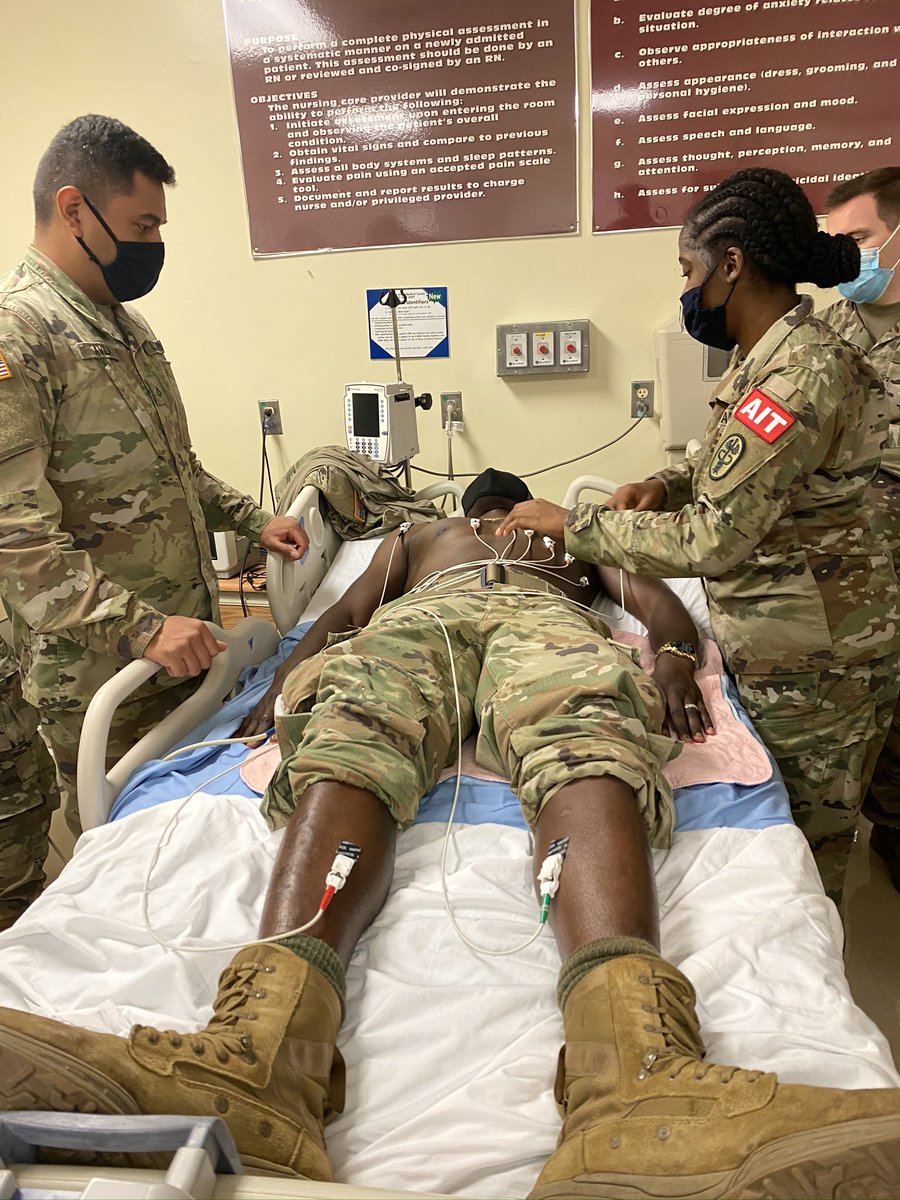
So when you ask, “I thought you were in the army, why are you a nurse?” it sounds so off I often don’t know how to answer. When soldiers get injured, they don’t go to civilian hospitals. They eat food prepared by other military departments. When a soldier gets in trouble, they are handed to the military’s justice system, not politicians or civilians justice department.
We all get trained in weaponry. Some get more of it and use it more often, but we all still need to be proficient. Some are trained to defend others; some are trained to defend their immediate environment. We all defend in our capacity.
I was trained for almost 24 months in skills to keep people alive long enough for help to arrive, with anything I carry in my bag or see around me, while also learning to defend myself and my immediate environment.
Next time you see a soldier in uniform, politely ask: “What’s your job in the service?” or “How exactly do you serve the country?” They’ll tell you. They’re not monsters. They’re humans like you, with more training than the average civilian.
You are welcome.
Twelve hours before my son Mitch was killed, he called me.
It was the best conversation we'd had in over a year. He told me he wanted to come home, live with us again, and go back to college. Then he told me he loved me, and I told him I loved him too.
Twelve hours later, he was gone.
For a long time, that phone call felt like the cruelest part. It seemed like God let me believe everything was going to be OK, and then took my son the same day.
There's a name for what happened in my brain. It's called cognitive tunneling. After all these years, I recently learned the name of it from a post by Jim Kwik @jimkwik , author of the book Limitless.
Under trauma, your attention narrows to one terrible point, and you lose the rest of the picture. I've described it as a camera zooming in so far that it can only see a small part of the world. I've felt it and written about it, but now I have a name for it, and that's healing.
A while after Mitch died, a chaplain friend sat with me in the hospital chapel and told me to do the hard work of looking back at that day from a different angle. So I did.
On the very last day of Mitch's life, we were connected. He was looking forward to coming home. And that same day, he went to his eternal home.
That phone call was a gift God gave me to hold onto.
The third commandment of self-brain surgery is that I must believe that most of my automatic thoughts are untrue. Grief hands you a story fast. You're allowed to look at it again.
"The LORD is near to the brokenhearted and saves the crushed in spirit." Psalm 34:18, ESV.
If you're in that tunnel right now, I'm so sorry. Look again. It's hard and holy work, and you don't have to do it alone.
Save this for the next time hardship has you too zoomed in to see other things that are still true. Share with a friend who's in the tunnel.
And follow me to connect the dots between neuroscience and faith to help you navigate life and find flourishing.
Click the link in my bio to learn more about the Ten Commandments of Self-Brain Surgery.
#selfbrainsurgery #anxiety #mentalhealth #grief #neuroscience
I've watched it happen a thousand times. A patient walks into pre-op terrified. Then they start humming a worship song, reciting a scripture, or someone prays with them—and their heart rate comes down, their blood pressure improves, and they go into surgery in a completely different state of mind.
I didn't expect it the first time I saw it. Now I look for it.
Worship isn't just what you feel. It's where you put your attention. Fear narrows your brain's filter onto the threat in the room until it's all you can see. Worship takes that same intensity and aims it at something truer and bigger than what you're afraid of—and it brings memory with it. Words you already know. Promises you've sung before. You're not inventing courage out of thin air. You're rehearsing a different center of gravity.
You can't stare at the monitor and the Maker with the same intensity at the same time. One of them is going to get your energy. Worship is a decision about which one it's going to be.
"I will bless the Lord at all times. His praise will continually be on my mouth." (Psalm 34:1) Not when you feel like it. At all times—including the holding area.
Worshiping in your hardest moments isn't denial. It's self-brain surgery. When the fear spikes, don't wait for the feeling to change first. Put truth in your mouth—a verse, a song, a prayer, and say it until your attention has a better place to stand.
Click the link in my bio to dive deeper into this topic and learn more about self-brain surgery!
*FOR INFORMATIONAL PURPOSES ONLY. NOT MEDICAL ADVICE.
He spent his life teaching surgeons how to repair the aorta.
Then, at 97, his own aorta began to tear.
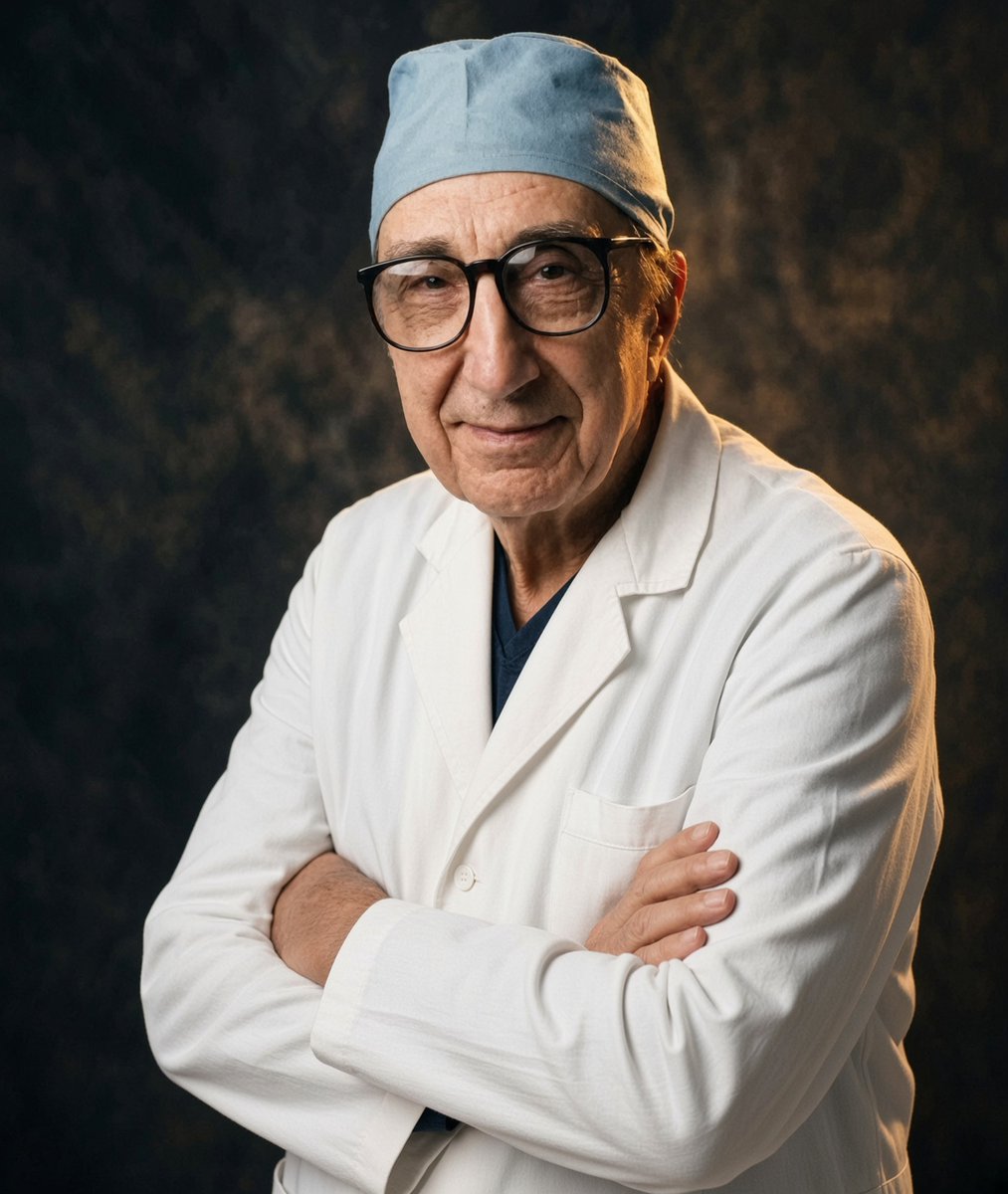
On New Year’s Eve 2005, Michael DeBakey was alone in his Houston study when a tearing pain ripped through his chest and into his back. He knew instantly what it was: an acute aortic dissection — the catastrophic condition he had classified, studied, and taught others to treat for decades.
At 97, he first refused surgery. He understood the odds. But his condition worsened. On February 9, 2006, after an ethics-committee debate and with his family pressing forward, surgeons opened his chest. They replaced the damaged segment of his aorta with a Dacron graft — the same kind of synthetic vessel he had pioneered in the 1950s.
There was a quiet full-circle detail in that graft. DeBakey had learned to sew from his mother. When department-store nylon ran out, he bought Dacron instead and stitched the first experimental tubes on his wife’s sewing machine.
Decades later, that material helped save his own life.
The operation lasted about seven hours. He survived. After a long recovery he returned to work, lectured, and wrote. In April 2008 he received the Congressional Gold Medal. He died on July 11, 2008, at 99 — weeks short of his 100th birthday.
He studied the disease. He built the tools. He trained the surgeons. Then he became the patient. The man who gave other people more time was given a little more time himself — and spent it in the hands of the people he had taught. ❤️
My father called me last week and said he needed 500,000 naira urgently. He promised to pay back. My father is a man of his word, so I disturbed my emergency funds and sent it.
Just yesterday, he called me to come to the house immediately. I grumbled because I was far away, but I rushed down.
He presented land documents to me.
He had bought my first land for 2.4 million naira, in my name. He just needed me to come and append my signature.
He said he never wanted that land to pass me by, so he used what he had and got the 500,000 naira balance from me without telling me why.
Then he said something that broke me:
"Since after your secondary education, I have never really had the privilege to gift you anything. You even sponsored yourself through school because I was incapable. This is my little gift to you."
I am finally a land owner. Courtesy of my loving Dad. ❤️
Above all, love God.
I spoke to a colleague who stayed back in Naija after Med school since 2012.
He’s now head of Department in a Medical School. He made me see reasons for his decision.
It’s really tough practising in Naija yet some guys are weathering the storm and giving their best to the country and to their patients. These guys are committed to improving the system and they’re winning gradually.
I salute every Naija doctor practicing in Nigeria. May you eat the good in that land.
Nigerian Lady makes history as the first Black African female Oral & Maxillofacial Surgeon (OMFS) from the University of Connecticut, United States.
Meet Dr. Faith Ajiboye (https://t.co/p0IPlJr7ON, MBA, MD, DMD).
She overcame doubts and discouragement when many told her it was "impossible" and that she wasn’t "the type" for the field.
After 14 years of higher education, including medical school, dental school, and OMFS residency, she has completed her training and is now a practicing Oral & Maxillofacial Surgeon.
A full-time OMF surgeon, mom of two young children, and pastoring a church alongside her husband, Dr. Faith remains deeply grateful for the journey.
To every young dreamer: Don't be discouraged by how long or hard the road seems. Keep going, stay consistent, and never let anyone talk you out of your purpose.
The sacrifice is always worth it.
A medical doctor can wake up, get tired of the ward, buy a Macbook, and pivot into tech.
A doctor can buy a ring light and become a content creator or filmmaker. But a Senior Software Engineer cannot wake up, buy a stethoscope, and decide to pivot into the operating theater.
There is a hierarchy to this pivot game.