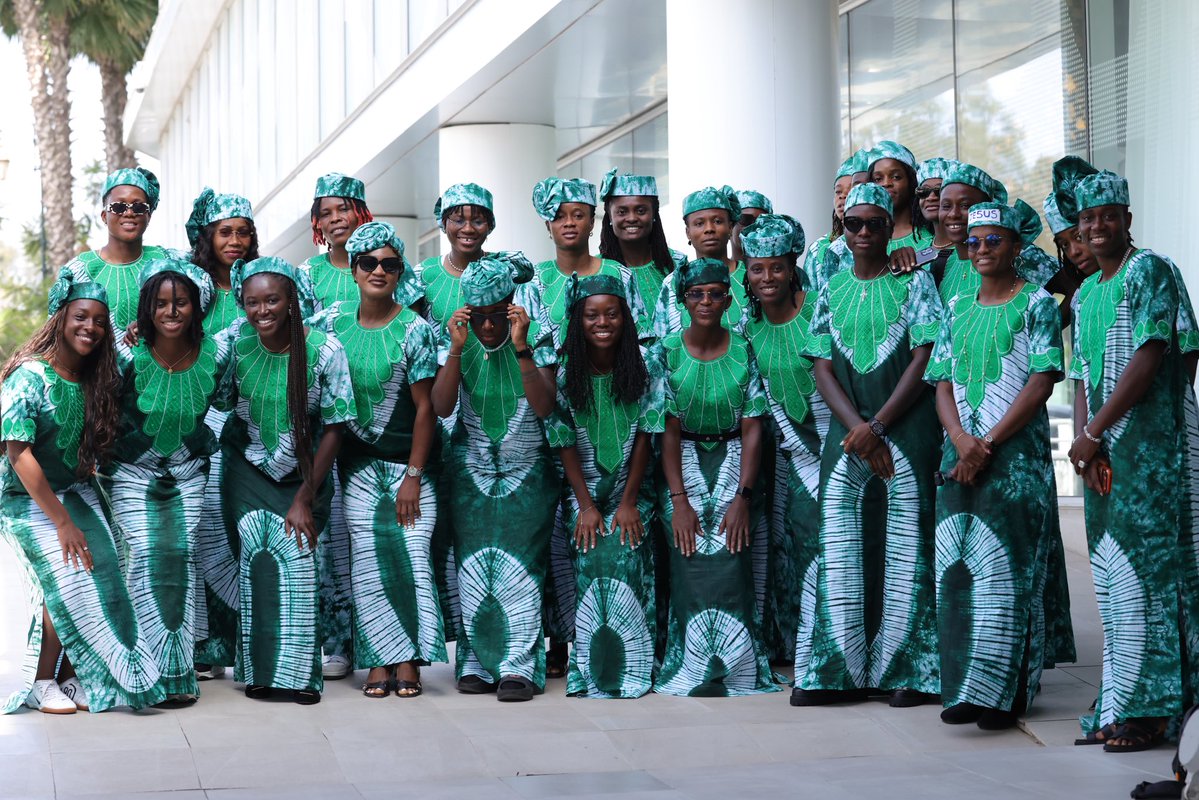
🚨🚨SOUND THE ALARM BELLS....DTIGRESS HAVE WON THE AFROBASKET TITLE AGAIN!!!
Nigeria's D'Tigress have won an unprecedented fifth consecutive #AfroBasketWomen title, becoming the first country in Africa to win this title five times in a row.
Nigeria defeated Mali in a nail-biting final, showing grit and determination to win a remarkable seventh Afrobasket title.
They have dominated and conquered Africa, winning their 29th match on the bounce without losing a single game since 2015!!
Full time: Nigeria 🇳🇬 78 - 64 Mali 🇲🇱
ALL HAIL THE QUEENS OF AFRICA... THEY ALWAYS COME THROUGH FOR MOTHERLAND !!!
Super Falcons captain, Rasheedat Ajibade, went to her church, Mountain of Fire Ministries, to testify and appreciate God for seeing her and her teammates through the WAFCON tournament🥇🏆
THE FIRST TO DO IT!!
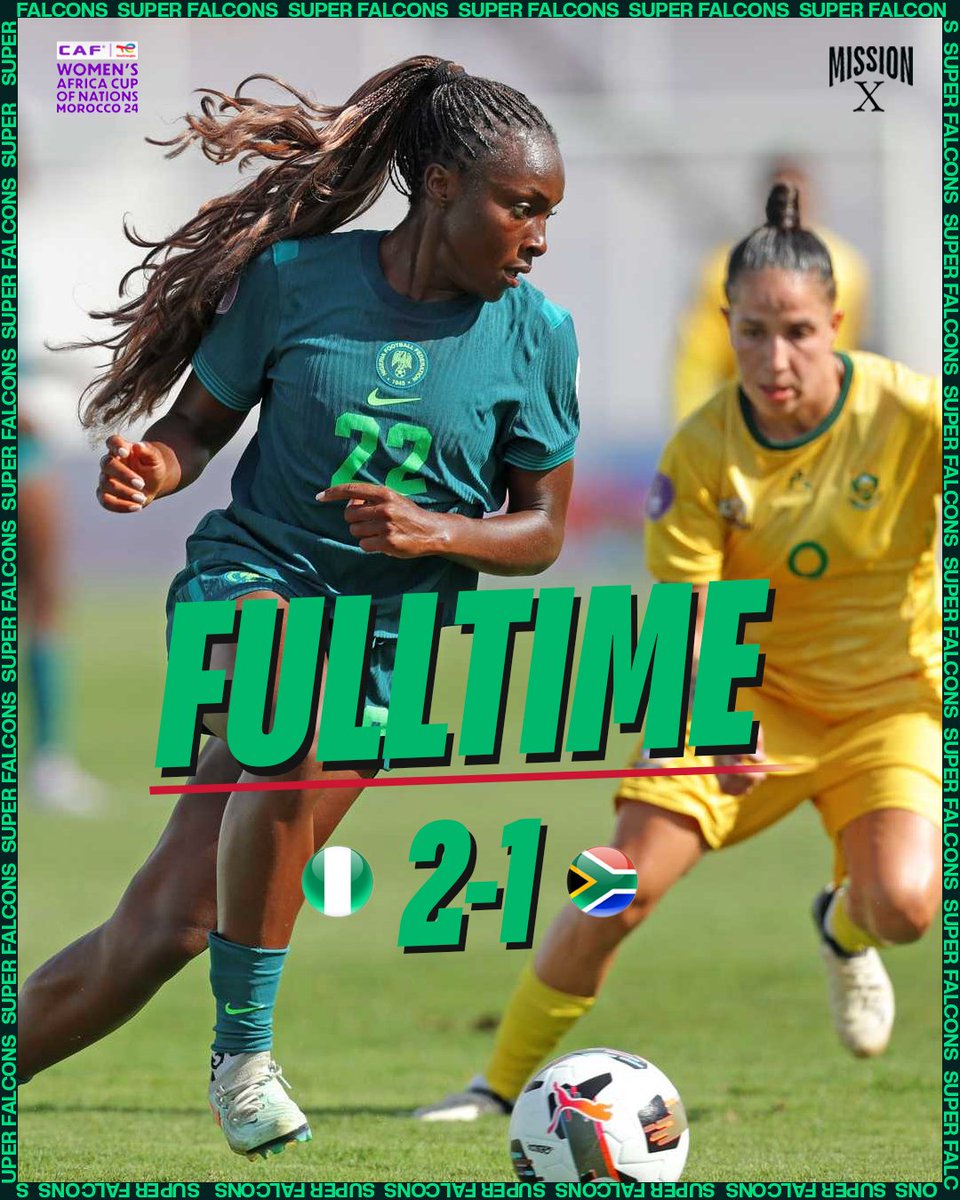
Nigeria's Super Falcons have completed #MissionX , becoming the first African team to win the #WAFCON tournament for a record 10th time!
From being 2-0 down at half time, to scoring three goals in the second half, the Super Falcons did the impossible, beating the host nation to win the #WAFCON2024 tournament.
What performance!!
Full time: Morocco 🇲🇦 2⃣ - 3⃣ Nigeria🇳🇬
#MARNGA #SoarSuperFalcons
FT’ Nigeria 🇳🇬 5-0 🇿🇲 Zambia
A five-star performance sends the Super Falcons into #WAFCON2024 semifinals!
Eyes on the prize, #MissionX rolls on 💯
#SoarSuperFalcons
Can an Unbeliever Act in a Gospel Movie?
There has been much debate about whether an unbeliever can take part in a gospel movie, with many citing The Passion of the Christ as a reference. Let’s break this down clearly.
What Is a Gospel Movie?
A gospel movie is one where the primary purpose is evangelism, with entertainment being secondary as a tool for the primary. This is why we use the term “evangetainment.” The main goal is to win souls for Christ, while secular movies primarily focus on generating revenue from viewership.
To better understand the issue, let’s categorize those involved in movie production into two groups:
Those behind the camera (e.g., cinematographers, sound engineers, gaffers, script managers, production managers, etc.).
Those in front of the camera (actors, speakers, and on-screen representatives of the message).
Using the church as a metaphor, those behind the camera are like the bricklayers, welders, and painters who build a church building. Whether they are believers or not does not affect the final outcome as long as the structure serves its purpose. In the same way, hiring professional crew members for production—regardless of their faith—does not directly impact the message being delivered.
However, the same cannot be said for those on camera. The moment an actor steps in front of the camera in a gospel movie, they become a representative of the message. Their role is similar to a preacher standing on the pulpit—they are speaking to souls about the gospel. An unbeliever stepping into that role would be like someone who openly denies Christ one day and then stands to proclaim Him the next. The inconsistency is glaring.
Yes, some individuals live double lives—appearing holy on stage while living in sin privately—but even this deception proves there is an expected standard. Pretending to be righteous only highlights that doing otherwise is an anomaly.
Are There Exceptions?
Absolutely. God can use exceptions to accomplish His purposes in unique situations. However, exceptions do not replace the standard. Eg.
-Hosea marrying a harlot (Hosea 1:2-3)
-Isaiah told to walk naked for three years (Isaiah 20)
-The instant death of Ananias and Sapphira (Acts 5)
-A donkey speaking to Balaam etc
These instances were exceptions, not the standard. Likewise, The Passion of the Christ was a powerful film that God used to spark a revival, but it was an exception, not a standard.
It’s important to note that The Passion of the Christ did not feature A-list Hollywood actors. This was a deliberate choice by the director to ensure that the focus remained on the message rather than the actors. Seeking out “unbelieving professionals” solely for their talent or celebrity status is already a misplaced motive.
In Exodus, God anointed specific craftsmen to build the Tabernacle (Exodus 31:1-6). This was a sacred, highly visible role, and those chosen were filled with the Spirit of God for the task. Similarly, there are actors whom God has specifically anointed to use their gift for His glory in gospel films.
Final Thoughts
Using actors who are not grounded in the Word of God poses significant spiritual risks—something I will address in a separate write-up. However, the key takeaway here is this:
Being on camera in a gospel movie is not merely a performance; it is a ministry. Just as an unbeliever cannot stand on a pulpit to preach, they should not take on roles meant to communicate the gospel in a film. God has already anointed individuals for this work—our responsibility is to find and equip them, rather than compromise the message for the sake of professionalism or fame.
That said, we must emphasize that we do not hate unbelievers. They are loved by God, and we are called to reach out to them with the message of salvation. However, not all platforms are meant for everyone. Just as a medical professional is required to have the necessary qualifications to practice medicine, certain roles within the kingdom require spiritual alignment. Our desire is not to exclude but to uphold the integrity of the gospel message.