We are happy to present our newly published study in which we explore the link between running and jumping impacts and differential RPE!
https://t.co/jnkgA99z3P
In this research overview, we highlight articles about postmatch recovery, carbohydrate periodisation, physical match demands and the fitness-fatigue model
https://t.co/ZOmswZ1nPm
Nutrition plays an important role in training adaptation. In this blog post, we highlight the need for structured support programmes to optimise football players’ nutritional habits.
https://t.co/pw5oJgPk5m
In one of our previous blog posts, we discussed the formula of the fitness-fatigue model.
https://t.co/8fxPMmasLz
Interested in more?
Read this new open access article of Kobe Vermeire and colleagues!
https://t.co/ITybRo6I4c
In 2015, Michael Bush and colleagues described the evolution of match running outputs in the Premier League (2006 and 2013).
A group of Spanish researchers now analysed running outputs in La Liga (2012 and 2019).
https://t.co/mXPGyIyGd6
We present our football science overview of February.
It includes information about resilience, long-haul travel, glucose monitoring and a framework for managing medical emergencies.
https://t.co/NshKeXJFdz
Based on the 'fuel for the work' concept, this new study translates insights from load monitoring into guidelines for carbohydrate intake. A clear colour-coded framework is presented (red, amber, green) for different weekly scenarios (one or two matches).
https://t.co/1SwOEq5zTH
Post-match recovery - This new study shows the recovery practices applied in Portuguese professional football teams.
Nice to see that sleep and nutrition are perceived most important. Don't forget the basics!
https://t.co/3kym2CVZff
Bio-banding ... The menstrual cycle and performance ... Video-based hamstring injury pattern detection ... Read our football science overview of January to find out the latest insights!
https://t.co/zzFJKkxVnH
We highlighted a lot of research on sprint training in our football science overview of December.
The studies contain interesting implications for injury prevention, performance enhancement and data analysis!
https://t.co/reREJHZjPI
Our monthly research overview (the November edition)
Age-specific velocity thresholds, change of direction frequency during match-play, the economic aspects of injury prev and one of our own TSL studies!
https://t.co/G0hjlEwVje
Several factors affect players’ readiness to perform. But do we provide sufficient attention to all these factors? A short opinion of our blog writer and PhD student, Kobe Houtmeyers.
https://t.co/5D0HZyUnFN
Research can be viewed as slow and time-consuming but these days a lot of interesting research is published.
Since October we have been making a monthly overview of new research articles. This was our first list:
https://t.co/b72WXWfmB8
In our new blog, we discuss the ability of current load models to predict training outcomes such a performance and injury. Happy reading!
https://t.co/tEVVg8r7Uf
"I think our role, as sports scientist, will be to find way to help staff to spend more time coaching by reducing testing & analysis burden while providing more insights to help them adapt their training. It is a hard task. But science is not easy."
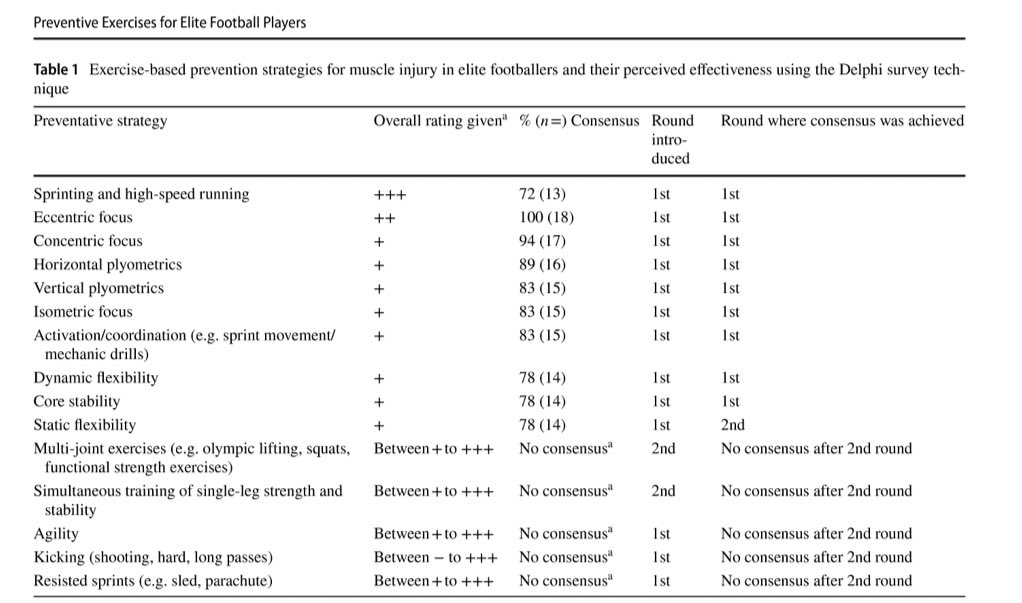
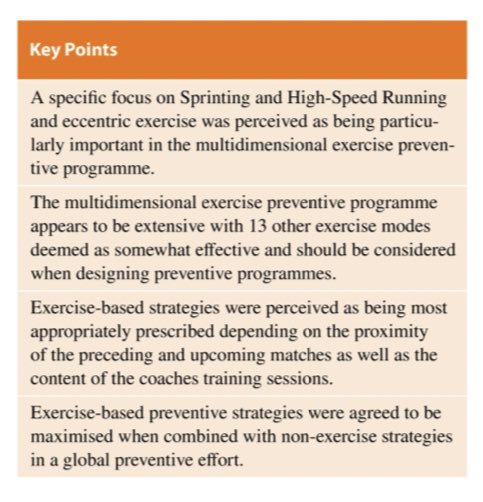
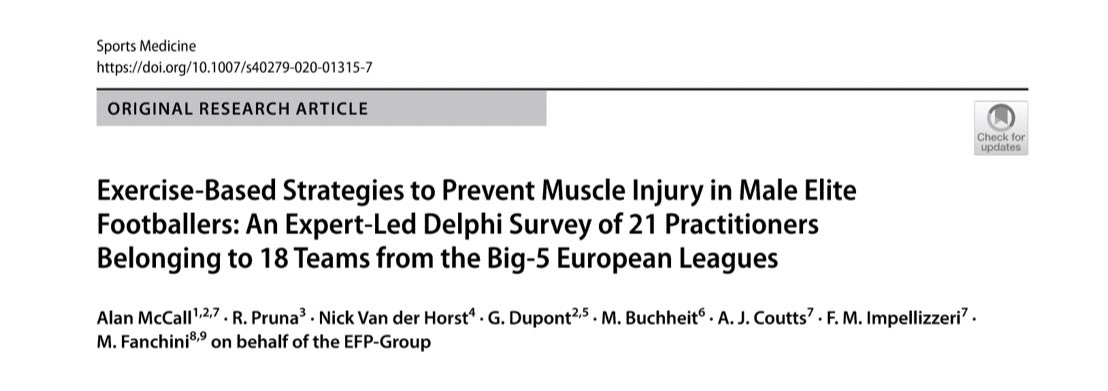
A unique collaboration🤝w’ 18 teams from Europe’s Big 5⚽️ Leagues
‘Exercise-Based Strategies to Prevent Muscle Injury in Male Elite Footballers: An Expert-Led Delphi Survey’
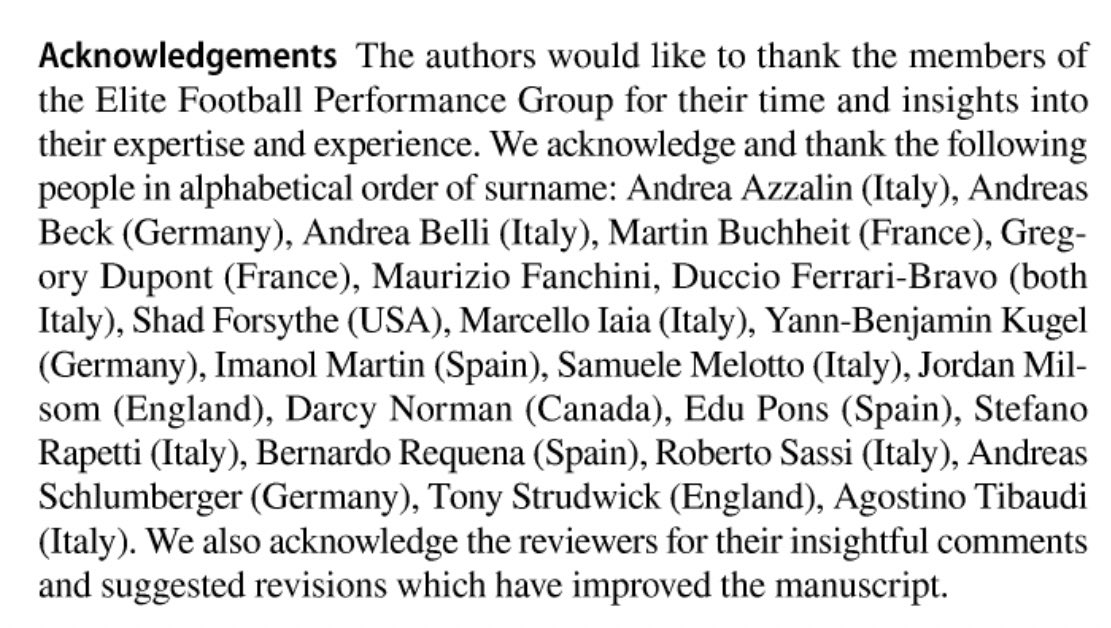
Huge🙏🏼to all experts involved who shared their time, knowledge& experience👇👀
https://t.co/BUj4YoecE8