dr of waste (and) paper. hunter of fragments. lecturer of things early modern. be excellent framework officer. sorry that’s my dog barking on Zoom. (she/her)
The news is out! I'm thrilled to share that I rediscovered eight 17th-century paper objects made by schoolgirls when @SuttonHouseNT was one of Hackney's many female academies. These paper cuts are an extremely rare example of an art form written about by Hannah Woolley (1/2)
Very much enjoying the angry annotations of an early 19C reader who thinks Malone is an ‘audacious despoiler’, possessed by a ‘licentious unauthorised spirit of alteration’. In short, ‘This fellow ought to be hang’d.’
Early mod. folks — has anyone, to your knowledge, written about the masque depicted in the memorial portrait of Sir Henry Unton? Painted c.1596 - 1606 according to the National Portrait Gallery and showing a masque of Mercury and Diana. My brief search only returns two articles.
Folks who regularly handle both early modern and modern handmade paper: does 100 gsm sound reasonable for a good-quality white paper sheet? More? Less?
*In service of a very exciting but wholly nascent project I hope will get started very soon*
Fellow paper nerds, does anyone know a source that specifies the weight of typical early modern paper sizes? I.e, how much a sheet of foolscap, pot, or royal paper might weigh?
Fellow paper nerds, does anyone know a source that specifies the weight of typical early modern paper sizes? I.e, how much a sheet of foolscap, pot, or royal paper might weigh?
A pleasure to read Victoria Button's review of our 2021 collection *The Paper Trade in Early Modern England* in the most recent Renaissance Quarterly 📖
The Little Apple Bookshop is 27 years old today! Wow, that means we must both have been 14 years old when we opened it. Impressive, huh? The Maths doesn't lie! 🎂🤔🧮 🪇
@paul_salzman Very excited to read more about this in the future! I don't suppose there are any hints you've come across of women re-using almanacs as waste? I expect it must have been quite common, but so rare for any evidence of such ephemeral practices to have survived...
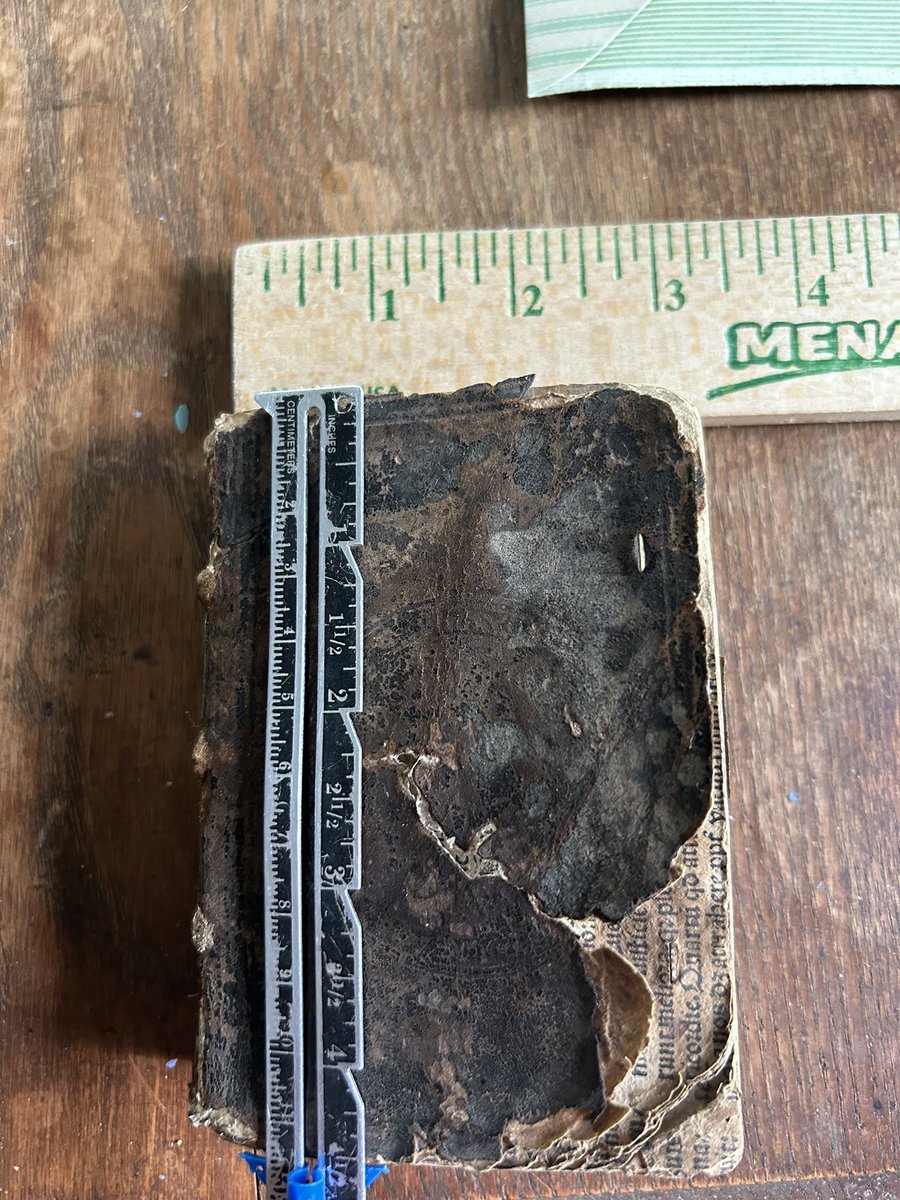
@shakedsetc So beautiful! These 'laminate' bindings are very common in the sixteenth century. I believe in the seventeenth century pulpboard becomes more common (when the waste paper is pulped and reconstituted into boards).
One nice little touch is though the front board is ripped, it allows you to see that it was made of compressed sheets of discarded pages from other books.
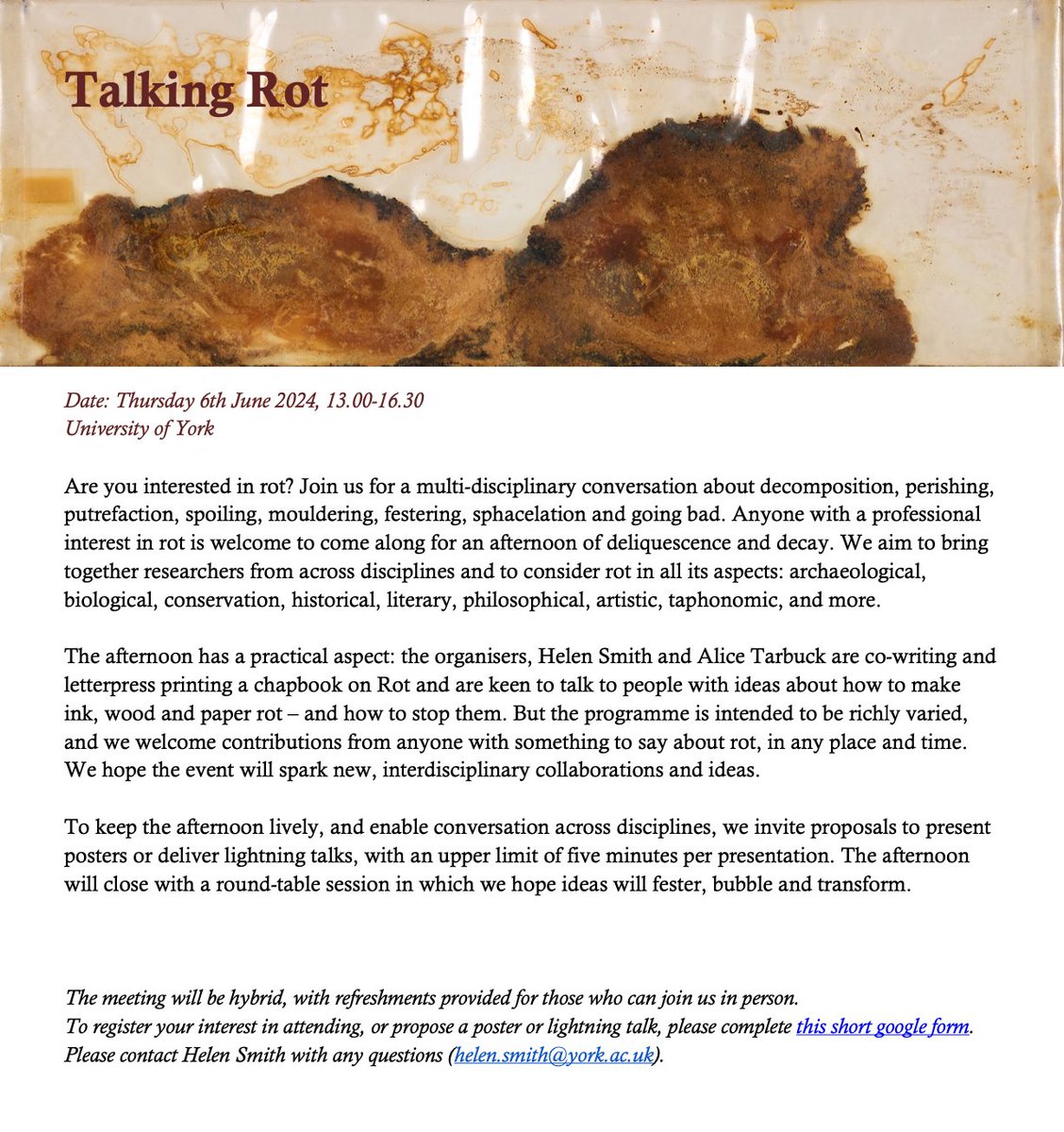
Are you interested in #rot? Join me and the fabulous
@atarbuck for a fun afternoon of deliquescence and decay! Please spread the word: we want to be omnidisciplinary, & warmly welcome all pertinent (& some impertinent) contributions.
https://t.co/GSQa84kv3F
@madeline_cct I study when books get wasted and thrown away, and there's a certainly type of person who finds the idea of a 'prestigious' (i.e. old) book being recycled or reused painful and offensive 🙄
@Tamarajatkin I discovered my great-great grandfather was a 'Calender Man', which I believe is part of the industrial papermaking process. Book history is obviously part of DNA! 😂