Jeff Bridges pulled up to John Goodman’s Walk of Fame ceremony in the actual Dude sweater.
Goodman’s reaction is pure joy. Cinema history hugging it out.
The final shot of BARTON FINK (1991) already felt surreal. Then a seabird unexpectedly flew into frame and landed in the shot. It wasn’t planned, but the Coens kept it, turning the film’s last image into something even stranger than they could have staged
František Vlacil's first feature film, "The White Dove" (1960) found itself under attack both at home and abroad. When the director of the Venice Film Festival selected it for competition in preference to Jiří Krejcik’s "Higher Principle" (1960) and Jiří Weiss’s "Romeo, Juliet, and Darkness" (1960), the Italian left wing linked this selection of a “nonpolitical fantasy” to a general attack on the management of the festival.
Vlacil himself felt that his film had an influence on New Wave directors, who, at that time, had scarcely started to study. He said,
“Not that they started to imitate what we did; they simply began to work freely, to create outside the given rules. Personally, I never submitted to any rules. It turned out that it is always possible to find a way.”
("The Czechoslovak new wave", Peter Hames, 1985)
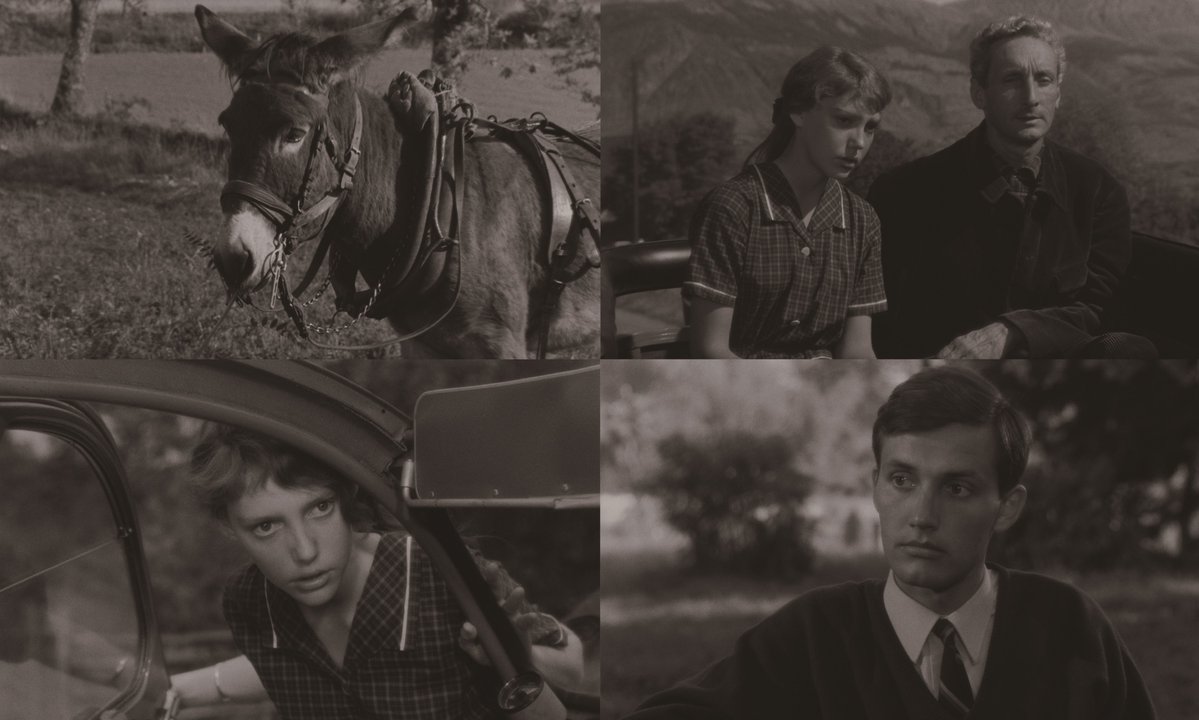
In 1977, Rainer Werner Fassbinder was a member of the jury at the Berlin Film Festival. He threatened to walk out with British critic Derek Malcolm unless their support for Bresson’s 'The Devil, Probably' (1977) for the top prize was made public. The movie ended up sharing the second prize, the Silver Bear, with two other films.
Fassbinder's thoughts on the film:
"Fassbinder: Robert Bresson's 'The Devil, Probably' (1977), which is the most shattering film I've seen in this Berlin Festival. I think it's a major film; but then people say - but what if you show a film like this to the man in the street and he doesn't understand it? First of all, I think that's wrong. But even if it's true, doesn't it mean that in the future - and this world will probably last for another few thousand years - this film will be more important than all the rubbish which is now considered important but which never really goes deep enough? The questions Bresson asks will never be unimportant.
Interviewer: What about the problems raised in Bresson's film - are they rejecting all existing political forms?
Fassbinder: Yes, rejecting every commitment. Because commitment for the film's young characters - whom he seems to understand so well - is mainly an escape into an 'occupation' which keeps that commitment alive. An escape from the awareness that everything goes on regardless of you and your commitment."
("Robert Bresson", Edited by James Quandt, 1998)
P.S: On this day, 49 years ago, 'The Devil, Probably' (1977) was released in France.