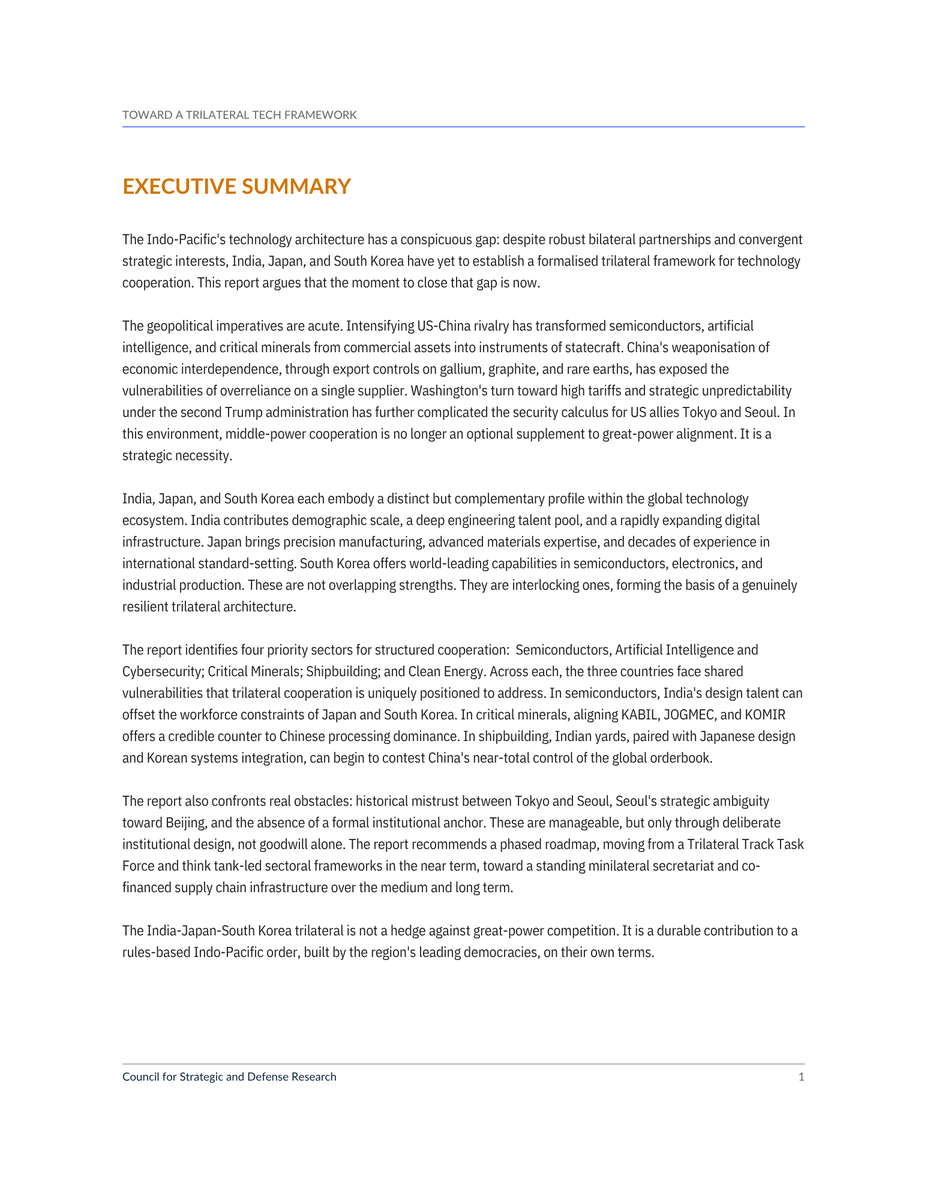
🚨🚨New Report🚨🚨
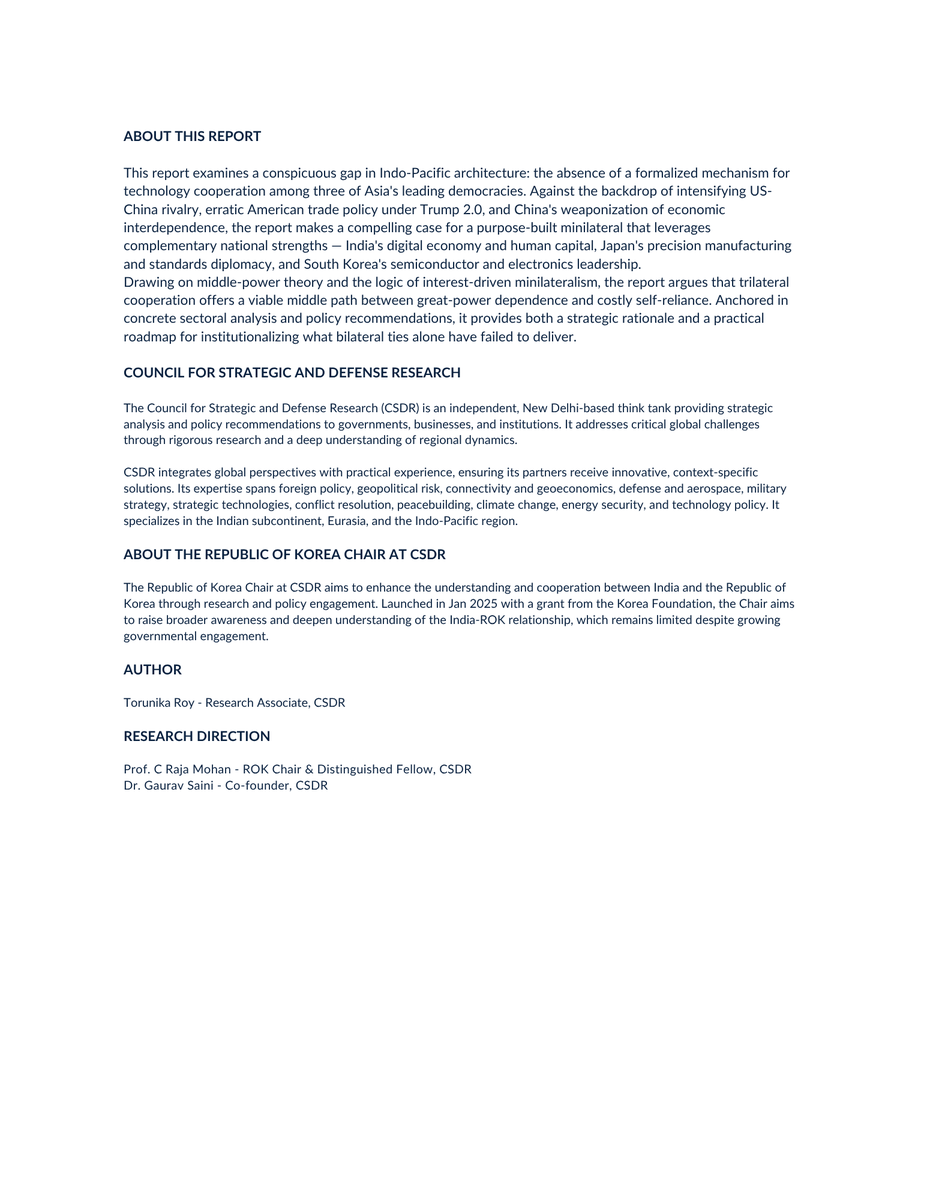
"Toward a Trilateral Tech Framework: Connecting India, Japan, and South Korea in the Indo-Pacific" by @TorunikaR, makes a compelling case for a purpose-built 🇮🇳🇰🇷🇯🇵minilateral that leverages complementary national strengths - India's digital economy and human capital, Japan's precision manufacturing and standards diplomacy, and South Korea's semiconductor and electronics leadership.
🔗https://t.co/5HxXTXTXa2
@HappymonJacob@LtGenHooda@MohanCRaja@Harpoonleader@KoreaFoundation@RokEmbIndia@JapaninIndia@IndianEmbTokyo@IndiainROK
🇰🇷🇦🇺 The G7’s Indo-Pacific Gap and Trump’s 2027 Opportunity
In his recent article, @CSISGeopolitics@VictorDCha argues that South Korea and Australia already outperform several current G7 members across 300+ indicators covering economic scale, tech capacity, defense contribution, and governance, but they remain outside the room where those issues get decided.
As he puts it, the G7's expansion into a "Democratic G9" would be a test of whether the advanced democracies can still adapt and rebuild global rules and norms before crisis makes such adaptation unavoidable.
Read the full piece @Diplomat_APAC: https://t.co/SMhbQDQ9aq
China-India relations appear to be on the mend.
But India's China challenge is not going to disappear.
So Delhi appears to have decided to engage & balance China, simultenously.
But is doing an act of doublespeak or lack of strategic clarity?
In my column in HT today, I make an argument from "political simultaneity".
Why Japan and South Korea Won’t Go Nuclear I @ForeignAffairs@CSIS@VictorDCha and @KristiGovella@JapanChair argue that while speculation among analysts, experts, and scholars that America’s two key allies in the Indo-Pacific could finally pursue nuclear weapons has intensified, despite the fever pitch of the debate, the worry that South Korea and Japan are on the brink of nuclearization is exaggerated.
📖 Read now: https://t.co/eArvX4U7Z1
📺 Watch our event: https://t.co/l0GqvODZKN
C Raja Mohan writes: Today’s wars in Iran and Ukraine remind us of the twin crises in Iraq and Soviet Union during 1991; The biggest lesson for India from 1991 is not about diplomacy but about internal reform.
https://t.co/OrhsPFZDiF
Major push for Indigenous Chip Design & IP Ownership - India aims to develop its own intellectual property (IP) in all six critical semiconductor segments, RF, compute, memory, power management, sensors, and network, to strengthen electronics and defence manufacturing. The goal is to move beyond assembly and services toward a ‘product nation’ with domestic chip design capabilities: Sources
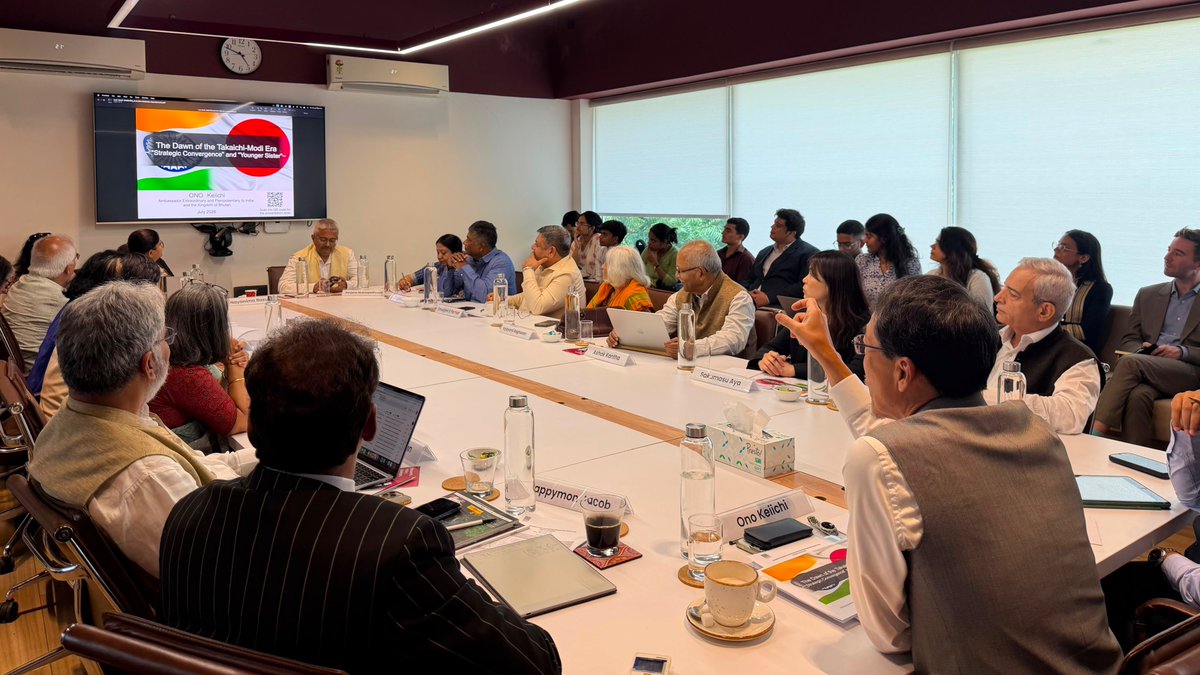
Asahi reported today that Minister of Defense Koizumi Shinjiro is arranging to travel to India in mid-August to discuss strengthening defense cooperation and cooperation on defense equipment transfers. PM Takaichi visited India earlier this month.
https://t.co/CLUBRBdNf2
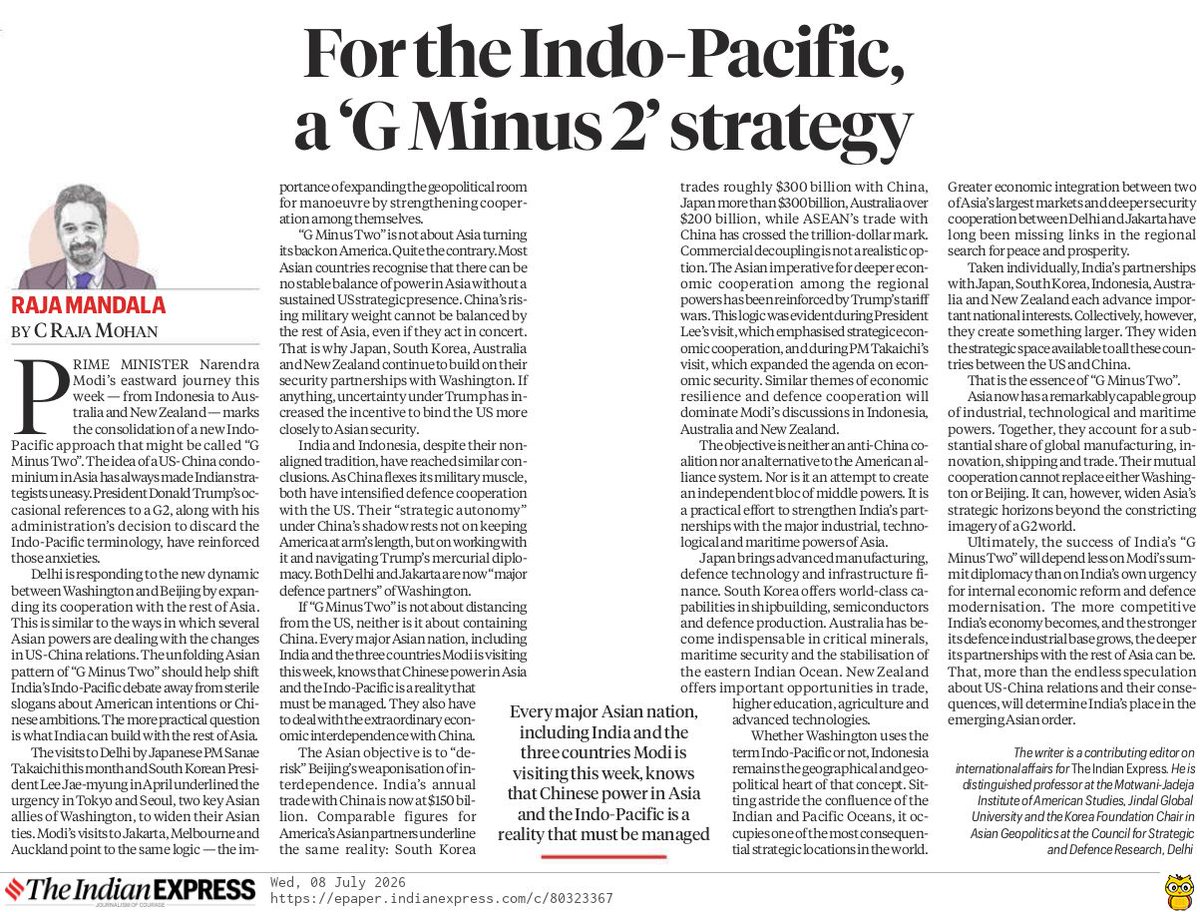
India–IAN Summits over!
PM Modi's visits to key Indo-Pacific partners have concluded.
The three summits produced an extensive set of outcomes:
20 items with Indonesia,
19 with Australia, and
18 with New Zealand.
A thread on key themes that stand out.
(1/n)
In my latest for @southkoreapro, I write that India's evolving defense priorities offer South Korea a major opportunity, but lasting success will require co-development, localization, and long-term partnerships.
🔗 https://t.co/Qh7NNGW3nk
@CSDR_India@MohanCRaja@HappymonJacob
For the past week, rumors have been circulating regarding the purchase of KF-21 by the Philippines or Malaysia, but nothing has been officially announced. The rumors suggest that Korea will provide a loan covering 70% of the cost and build MRO facilities for 20 KF-21s for the Philippine Air Force.
I am not saying the sources are incorrect at all. It simply means that the good news will become clear in a little while. Surprisingly, just a week ago, KAI officially announced plans to export over 200 KF-21s to countries associated with the T-50 and FA-50, as well as those close to KAI.
The countries mentioned were Indonesia, Poland, Malaysia, the Philippines, Saudi Arabia, the UAE, Iraq, Thailand, and Egypt.
Since KAI has been consistently coordinating pricing, loans, configurations, and timelines with specific nations for the past two years, the expected outcomes with each country are being evaluated positively.
In particular, this year is expected to be exciting in many ways, as KAI is presenting a bundle to various entities that includes not only the KF-21 but also additional FA-50 Block-70s, long-range missiles, and medium unmanned combat aircraft.
인도와 뉴질랜드 양국의 우정과 발전을 기원합니다.
भारत और न्यूजीलैंड दोनों देशों की दोस्ती और प्रगति के लिए शुभकामनाएं।
Wishing for the friendship and progress of both India and New Zealand
@narendramodi@chrisluxonmp
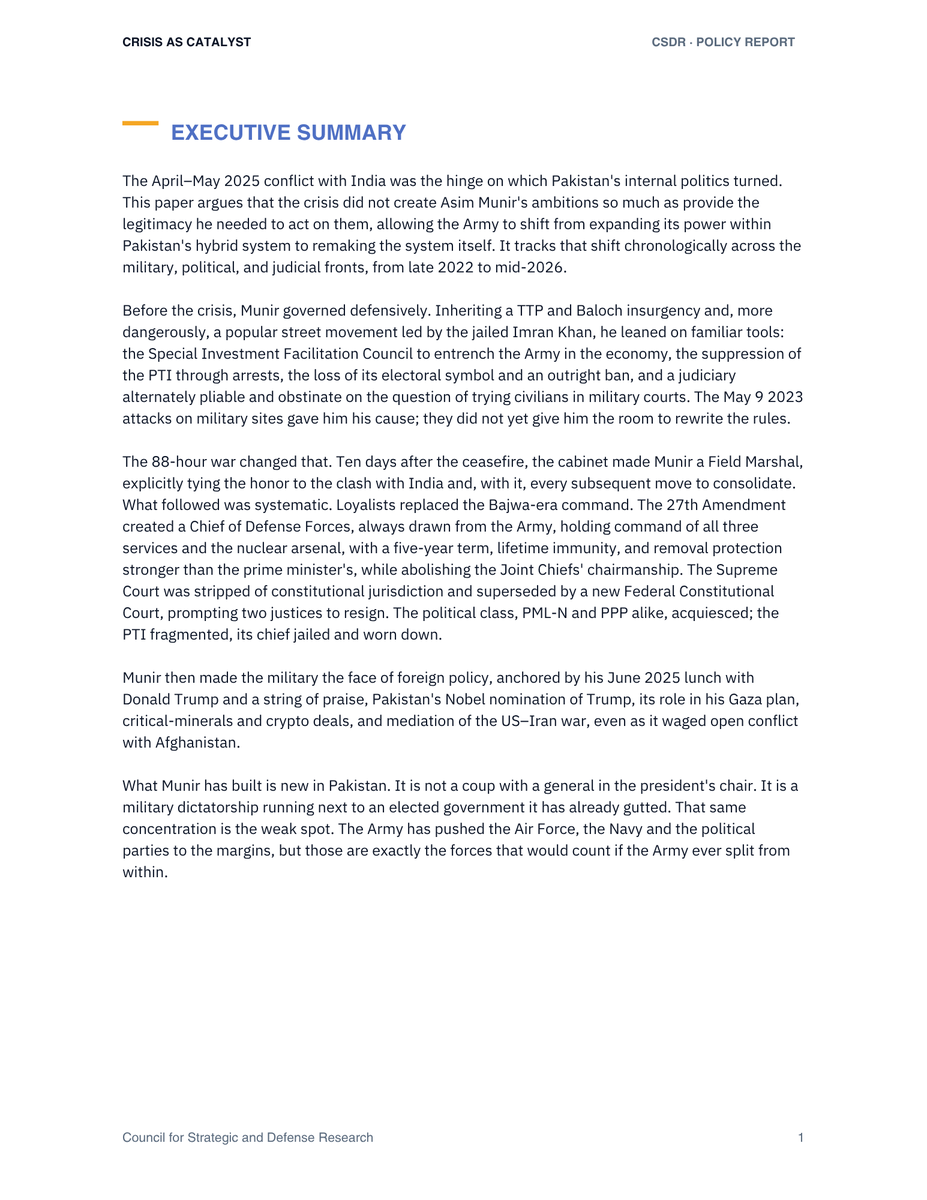
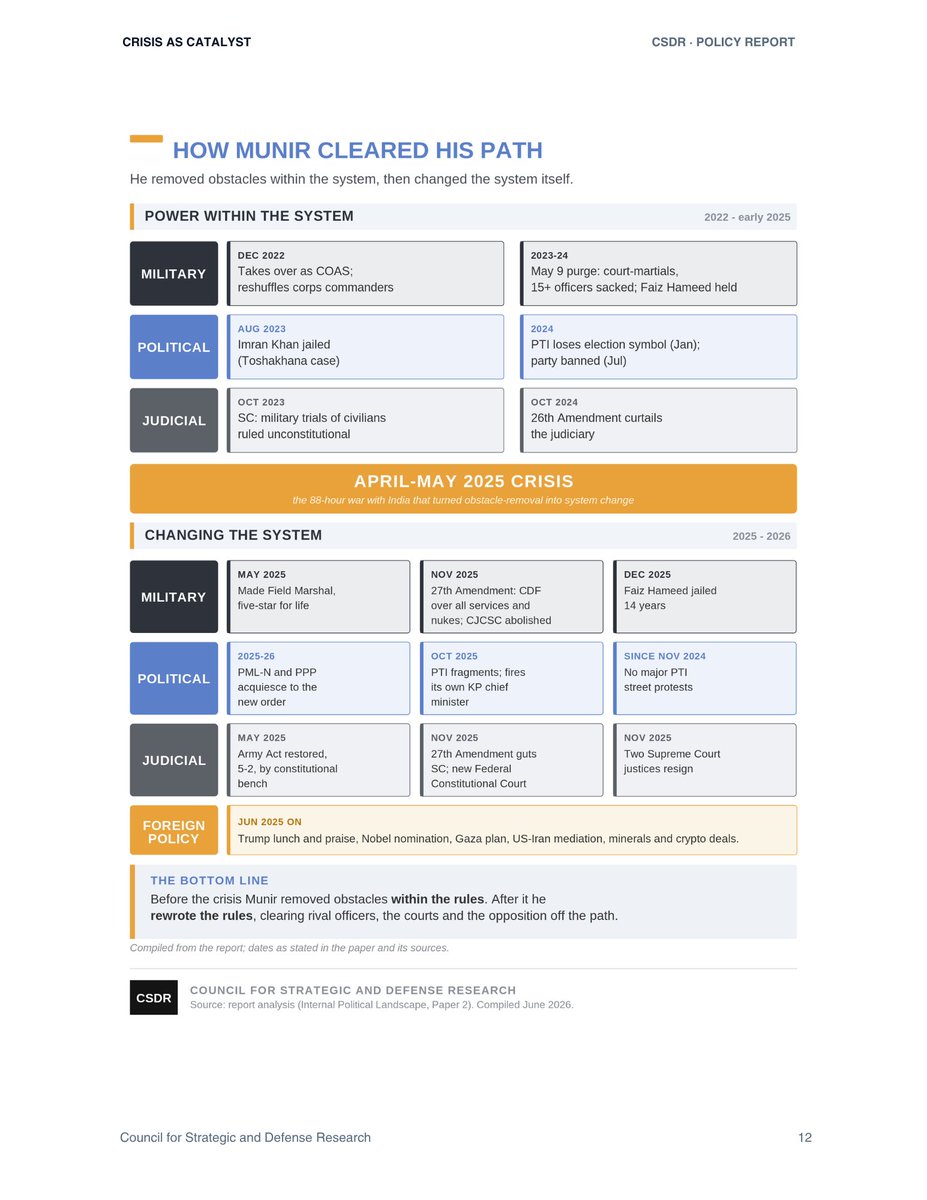
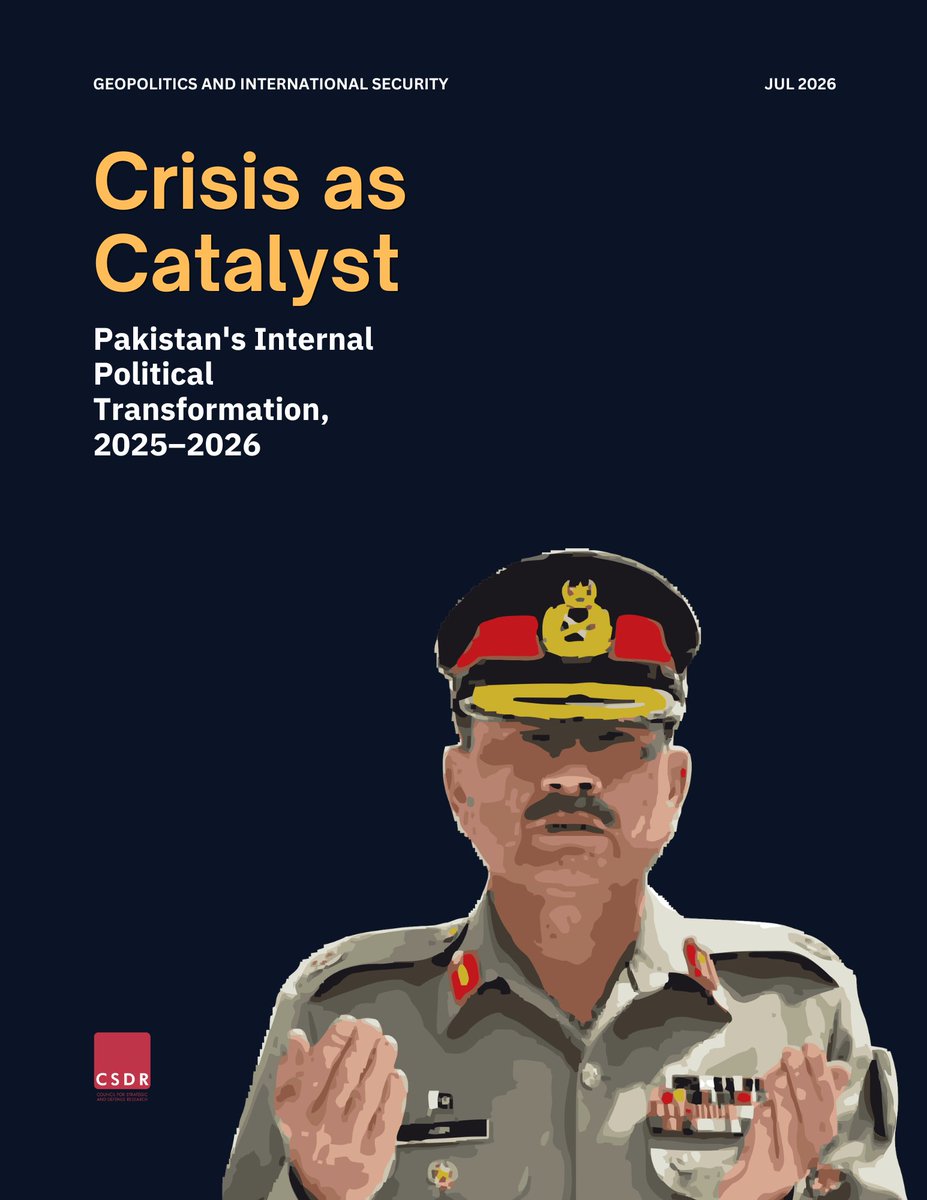
✨In our latest report, "Crisis as Catalyst: Pakistan’s Internal Political Transformation, 2025–2026",
@BashirAliAbbas examines how the April–May 2025 crisis with India catalyzed the Pakistan Army’s consolidation of domestic control under Asim Munir. Tracking developments chronologically across three fronts- military, political, and judicial- it argues that the crisis let Munir move from expanding power within Pakistan’s hybrid system to changing the system itself.
🔗https://t.co/SHONhY7JI0
@HappymonJacob@LtGenHooda@Harpoonleader@Ajaybis@rivagdas@rakeshnms@MohanCRaja