As AI-generated content expands, regulators everywhere face 3 politically contentious debates: what counts as a deepfake, where legitimate free expression ends and intentional deception begins, and whether any legal rule can be enforced at the speed of AI’s rapid evolution, write @CSIS_Tech experts.
Read: https://t.co/mUuaFEnjms
"Policymakers and industry leaders must address how the government and industry can exploit South Korea’s unique stack and export capabilities to effectively respond to the exponentially growing demand for compute and AI-enabled goods and services," write @CSISEST experts.
Read: https://t.co/XwMkYt8EN4
Previous analyses focused on munitions that have been used heavily in the war against Iran. A new report from @CSISDefense experts Mark Cancian and Chris Park updates inventory estimates and situates munitions expended in the Iran war among the full spectrum of U.S. munitions.
Read: https://t.co/mE24TOXym5
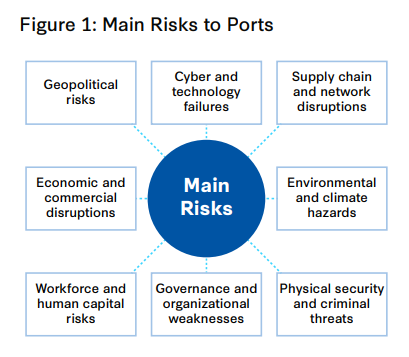
As global trade routes, supply chains, and geopolitical competition evolve, greater U.S. engagement in port infrastructure overseas will be increasingly important to advancing U.S. economic and national security interests.
For U.S. policymakers, this has several strategic implications. How can the U.S. take a strategic approach?
Learn more: https://t.co/Z7XuXjtSAa
With more than 2,000 commercial ports worldwide, seaports play a pivotal role in the global economy, processing 80% of all worldwide cargo by volume.
But the U.S. has a limited commercial presence in overseas ports. U.S. trade and military operations depend heavily on foreign infrastructure over which Washington has little influence or operational leverage, creating economic, security, and geostrategic risks.
🧵How can the U.S. strengthen engagement overseas? https://t.co/gnJ12h5z5q
Finally, “the U.S. should continue supporting strong multilateral rules through the International Maritime Organization, World Trade Organization, World Customs Organization, and related institutions.”
11/16 | Join @CSISKoreaChair for an event bringing together leading specialists on Russia and North Korea to examine the theory and calculus of the relationship and whether a tactical alignment of convenience is hardening into a lasting strategic alliance.
Register: https://t.co/5AxlafXAJ1
One year after Busan, China’s rare earth exports to the U.S. remain sharply below pre-restriction levels, even as global shipments hold steady. Beijing’s continued control over rare earth supplies raises the stakes for Trump-Xi meetings in Shenzhen and Miami.
More from @CSISMinerals: https://t.co/DRYqrj5oq6
There is no guarantee that past military success demonstrated in the campaign against Iran can be translated into larger, sustained political gains. @csisfutures expert Benjamin Jensen analyzes six options that are central to grand strategy in a democracy.
Read: https://t.co/cl4K4bHHHt