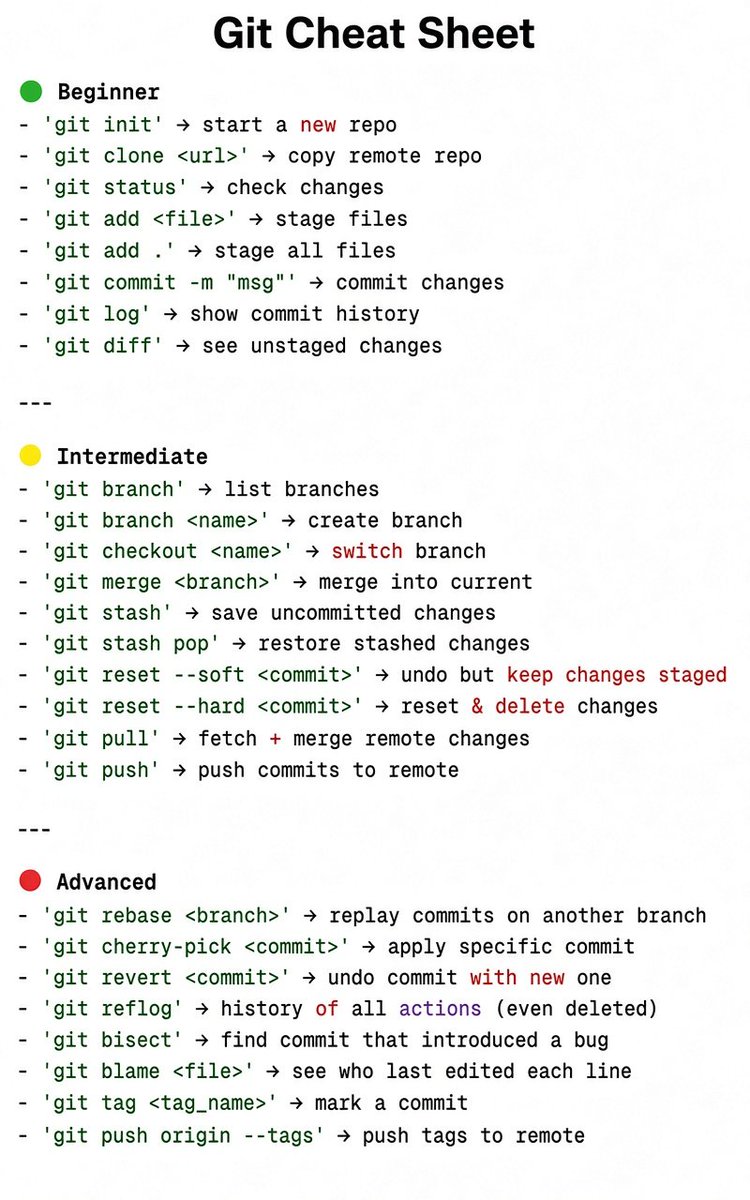
The naive "Bootcamp Grads" memorize basic Python and SQL cheat sheets thinking syntax proficiency equals data engineering architecture, completely blind to the catastrophic data frame mutation tax. Chaining unbuffered pandas or numpy array manipulations under high concurrent streams guarantees your production cloud servers will collapse under memory leakage limits long before processing your first big data lifecycle.
Why enterprise infrastructure requires deterministic vectorization memory guardrails:
🚨 These secret ChatGPT commands turn any photo into a magazine shoot, a product ad or an anime character.
No prompt engineering needed. Just one word.
Here are 24 shortcuts worth saving:
INSTEAD OF WATCHING NETFLIX TONIGHT.
Spend 1 hour with this.
Claude AI FULL COURSE that teaches you how to BUILD and AUTOMATE anything.
The people who watch this tonight will wake tomorrow with a new skill.
Watch it and bookmark it now
Here are websites that pay in USD for remote work:
1. Remotive
Curates active, fully remote tech jobs
Trusted by top global tech companies
https://t.co/y1nhmcNYBg…
2.Remote Rocketship
Free resource for companies looking for remote talent
Insights into flexible jobs and company culture.
https://t.co/e5J3HzxAxR
3. Eztrackr (Most Used)
→ Track job applications. Tailor resumes. Land your dream job faster.
→ One platform for your entire job search
→ 700,000+ jobs tracked
→ Get started here: https://t.co/lP3JTbC9zu
START WITH THE FOUNDATIONS
1. Crash Course on Python:
https://t.co/bKFeuBMX1F
2. Python for Data Science, AI & Development:
https://t.co/KLlaUm4Shz
3. Introduction to Data Analytics:
https://t.co/O71V4Wnjbn
4. Excel Basics for Data Analysis:
https://t.co/yRmbjLmUf0
5. Work Smarter with Microsoft Excel:
https://t.co/GSK0QxmpMW
6. Microsoft Excel Professional Certificate:
https://t.co/eJ6RkzaRiy
7. SQL Foundations:
https://t.co/wrIHpJC4bo
8. Databases and SQL for Data Science with Python:
https://t.co/DFEJAVBNEm
9. Principles of Finance Specialization:
https://t.co/c59rrfALgi
10. Business Finance and Data Analysis Fundamentals Specialization:
https://t.co/M9PIVS6QA0
11. Foundational Finance for Strategic Decision Making Specialization:
https://t.co/NNMdrJ6eDJ
12. Financial Management Specialization:
https://t.co/8SSMWlN9ZI
PHASE 2 - BECOME GOOD WITH DATA
13. Google Data Analytics Professional Certificate:
https://t.co/aUYlW2eK2l
14. Meta Data Analyst Professional Certificate:
https://t.co/MoHwkROGHn
15. Microsoft Power BI Data Analyst Professional Certificate:
https://t.co/Y4XBMg6UMs
16. Google Advanced Data Analytics Professional Certificate:
https://t.co/WnVr0jDTNw
17. ChatGPT + Excel: AI-Enhanced Data Analysis & Insight Specialization:
https://t.co/qO5M3usW5Q
18. Machine Learning Specialization:
https://t.co/k1xwfezwYi
19. Deep Learning Specialization:
https://t.co/unwJvnWiUJ
20. IBM Deep Learning with PyTorch, Keras and TensorFlow Professional Certificate:
https://t.co/DRYtpxlFFc
𝗠𝗼𝘀𝘁 𝗽𝗲𝗼𝗽𝗹𝗲 𝘁𝗵𝗶𝗻𝗸 𝗔𝗜 = 𝗖𝗵𝗮𝘁𝗚𝗣𝗧.
Not even close.
ChatGPT is what you see.
The real AI revolution is the massive ecosystem being built underneath it.
This AI Stack Map captures 100+ tools powering modern AI applications.
𝗧𝗵𝗲 𝗺𝗼𝗱𝗲𝗿𝗻 𝗔𝗜 𝘀𝘁𝗮𝗰𝗸 𝗹𝗼𝗼𝗸𝘀 𝘀𝗼𝗺𝗲𝘁𝗵𝗶𝗻𝗴 𝗹𝗶𝗸𝗲 𝘁𝗵𝗶𝘀:
LLMs → OpenAI, Claude, Gemini, Llama, Mistral
Agentic AI → LangGraph, CrewAI, AutoGen, CAMEL, Agno
RAG → LangChain, LlamaIndex, Haystack, GraphRAG
Embeddings → OpenAI, Voyage, Cohere, BGE
MCP → Connecting models with tools, data and systems
AI Security → Guardrails, Presidio, Lakera, Prompt Security
Observability & Evals → LangSmith, Langfuse, Phoenix, Ragas
Memory → Redis, Mem0, Zep, Neo4j, Chroma
Agent Frameworks → OpenAI SDK, Semantic Kernel, Google ADK, Bedrock
Automation → n8n, Zapier, Make, Airflow, Prefect
Vector Databases → Pinecone, Weaviate, Qdrant, Milvus, pgvector
But here’s the part that matters more than the logos.
𝗧𝗵𝗶𝘀 𝗶𝘀 𝗻𝗼𝘁 𝗮 𝘀𝗵𝗼𝗽𝗽𝗶𝗻𝗴 𝗹𝗶𝘀𝘁.
It’s a dependency graph.
Your RAG is only as good as your retrieval + embeddings.
Your agent is only as reliable as its tools + evaluations + guardrails.
Your memory is useless if you can’t observe when context becomes stale or wrong.
Your MCP layer becomes dangerous if permissions and governance are an afterthought.
And a “best-in-class” stack can still become a terrible production system.
Why?
Because AI systems rarely fail only inside one component.
𝗧𝗵𝗲𝘆 𝗳𝗮𝗶𝗹 𝗮𝘁 𝘁𝗵𝗲 𝗵𝗮𝗻𝗱𝗼𝗳𝗳𝘀.
Model → Retrieval
Retrieval → Context
Context → Agent
Agent → Tool
Tool → Memory
Memory → Evaluation
That’s where latency compounds, context gets lost, permissions leak, hallucinations propagate and reliability starts falling apart.
𝗧𝗵𝗲 𝗿𝗲𝗮𝗹 𝗺𝗼𝗮𝘁 𝗶𝘀𝗻’𝘁 𝗵𝗮𝘃𝗶𝗻𝗴 𝗺𝗼𝗿𝗲 𝗔𝗜 𝘁𝗼𝗼𝗹𝘀.
It’s designing how they work together.
A stack map tells you 𝗪𝗛𝗔𝗧 exists.
Production engineering decides 𝗛𝗢𝗪 it all survives contact with reality.
Which tool in your AI stack has become indispensable?
Save this map for your next AI build.
Repost it for someone designing an AI architecture.
#AI #ArtificialIntelligence #GenAI
10 Regression Models Every Quant Should Know 📊
Regression is a core tool in quantitative finance, risk management and investing.
Here are 10 useful models and their applications:
📈 Linear Regression: Models relationships between variables.
🧮 Multiple Regression: Uses multiple factors to explain returns.
🔄 Polynomial Regression: Captures nonlinear relationships.
🎯 Logistic Regression: Predicts probabilities, such as loan defaults.
🛡️ Ridge Regression: Helps handle multicollinearity and overfitting.
✂️ Lasso Regression: Identifies important variables through feature selection.
⚖️ Elastic Net: Combines Ridge and Lasso regularization.
📉 Quantile Regression: Studies different parts of a distribution, including downside risk.
🏢 Panel Regression: Analyzes data across companies and time.
⏳ Time-Series Regression: Models relationships involving time-dependent data
Key takeaway: Different models answer different questions. Choosing the right one depends on your data, objective and assumptions.
Want to learn more, get this Regression Models PDF for Free
https://t.co/F6aFjo36Jo
6 parallelism strategies for LLM inference in production:
(popular LLM interview question)
Running a model across four GPUs does not merge their memory into one shared pool.
Each GPU has its own memory, so data stored on another GPU must cross the interconnect before a layer can use it.
This is the central trade-off behind parallelism. It removes local memory or compute limits but adds communication overhead.
The visual below explains the six common strategies for parallelizing LLM inference:
- Data parallelism runs complete model replicas on separate GPU groups. It increases throughput, but cannot make an oversized model fit.
- Tensor parallelism splits matrix operations inside each transformer layer. It reduces weight memory per GPU, but the GPUs must combine partial results throughout the layer stack.
- Pipeline parallelism assigns layer groups to different GPUs. Activations move between stages, while insufficient micro-batching leaves some stages idle.
- Context parallelism splits sequence positions in two ways. Prefill context parallelism divides a long input across GPUs to target lower TTFT. Decode context parallelism divides the stored KV history to increase cache capacity, but every decoder layer must merge partial attention results.
- Expert parallelism distributes MoE experts across GPUs. Token routing and uneven expert load add network cost and idle time.
- Hybrid parallelism combines multiple strategies in one deployment. For example, tensor parallelism can operate within a node, pipeline parallelism across nodes, and data parallelism across model replicas. This matches each communication pattern to the available links, but adds more coordination paths.
Production deployments often combine methods, but each one should fix a measured bottleneck.
- If the weights do not fit, use tensor or pipeline parallelism.
- If long-prompt prefill or KV-cache capacity is the limit, use the corresponding form of context parallelism.
- MoE models may need expert parallelism to place expert weights.
- If one replica meets its latency target but requests still queue, add data-parallel replicas.
Keep tensor parallelism on the fastest links. After each change, measure memory, TTFT, TPOT, and other metrics again.
Add another method only when measurements reveal another bottleneck.
I wrote a detailed article explaining how each strategy works, where communication occurs, and how to choose a layout for a real deployment.
Read it below.