Vermont’s paraquat ban could have effects far beyond the state itself. The key debate: Is the evidence linking paraquat to Parkinson’s Disease strong enough to justify broader bans before EPA action?
One of the most damaging ideas in modern risk communication is that hazard equals risk.
IARC helped popularize this confusion.
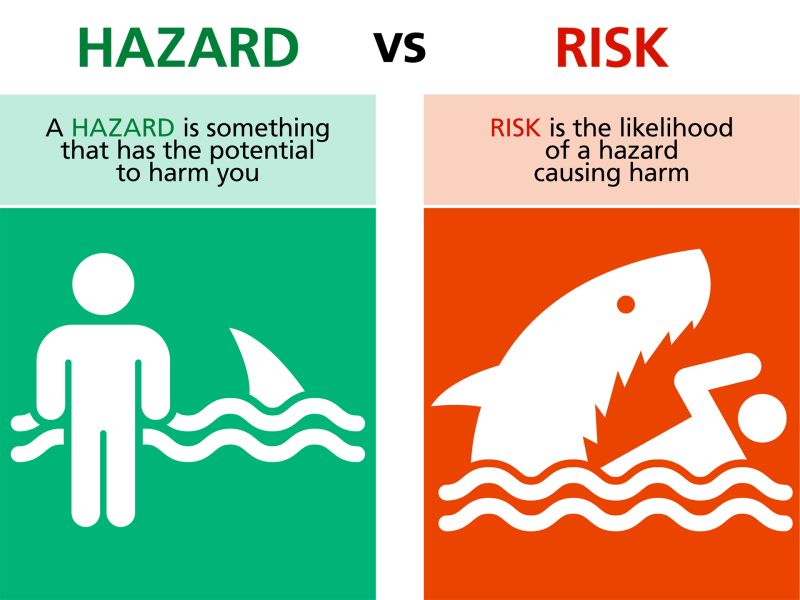
A hazard tells us what could cause harm. A risk tells us what is actually likely to cause harm at real-world exposure levels.
Those are not the same thing.
Yet for years, hazard classifications have been reported as if they were measures of real-world danger.
The consequences have been enormous:
• Public confusion.
• Sensational headlines.
• Multi-billion-dollar lawsuits.
• Erosion of trust in regulatory science.
And when everything looks dangerous, the public loses the ability to distinguish genuine risks from theoretical ones.
Good science requires both hazard identification and risk assessment. Ignoring either one leads to bad decisions.
The challenge is that only one of them tends to make headlines.
🏊 Pool chemicals keep swimmers safe, but only when used properly. A U.S. study found that nearly 72% of pool chemical incidents involved human error. Improper handling can cause eye & respiratory irritation, burns, headaches, and more.
EPA may gain flexibility and scientific currency, but it risks recreating the very inconsistency IRIS was designed to prevent. #ThursdayThoughts https://t.co/nQhwM4QC3S
The EPA’s decision to end the use of #IRIS for developing chemical risk assessments is a fundamental change in how the agency will decide what chemical hazards mean for regulation. By returning hazard and dose-response assessments to individual program offices,
A mother warns parents after her daughter was hospitalized when tiny #magnets from reusable water balloons became lodged in her nose. Doctors warn swallowed magnets can cause severe internal injuries.
The presence of a #chemical does not automatically mean harm will occur. Mineral sunscreens with zinc oxide and titanium dioxide are currently recognized as safe and effective when used as directed. #ThursdayThoughts
https://t.co/By5UEhub6p
make informed decisions, without fear. The science today supports sunscreen use as part of a healthy sun-protection strategy. UV exposure is a known risk factor for skin cancer, and sunscreen remains an important protective tool. Key toxicology principle:Risk = Hazard × Exposure
Memorial Day weekend is almost here ☀️
Some families are already buying sunscreen for summer activities, while others may be concerned about the chemicals found in some sunscreen products. At Toxicology Education Foundation, we believe science-based information helps families
For decades, agencies like @EPA have used the linear non-threshold (LNT) model, assuming any exposure increases cancer risk. Modern science suggests it’s not that simple. Is it time to rethink cancer risk assessment? #Toxicology#RiskAssessment#ScienceMatters#ThursdayThoughts
#Glyphosate debate = hazard vs. risk. 2,000+ studies, 50+ years of use, no causal #cancer link at real-world exposure. Yet confusion persists due to hazard-based classifications. Science matters. Context matters. #ThursdayThoughts#Toxicology https://t.co/iZYqQPyepl
How did #Tylenol become a legal + scientific flashpoint?
• Early studies showed correlation, not causation
• Stronger research finds no causal link
• Courts dismissed key expert testimony
• Lawsuits + headlines surged
• 📉 Sales have declined amid the controversy
Environmental Working Group just released their 2026 The “Dirty Dozen” list. The “Dirty Dozen” list isn’t about risk, it’s about detection.
👉Residues are far below safety limits
👉 Rankings ignore actual toxicity
👉 Fear may reduce fruit & veggie intake