An electronic engineer💡 programmer 💻 & neuroscientist 🧠 all convolved into one byte-sized packet @BionicsInst Tweets are my own. RT not endorsement. 🇦🇺🇱🇰
A remote-controlled implant to control type 2 diabetes is being developed by Melbourne bionics experts.
The device would be switched on after eating to control blood sugar levels, and improve the health of those with the disease. @emilyrice28#9News
We’re recruiting visionary medical device research leaders with the experience and skills needed to transform the way we treat disease.
If you’re looking for the next step up in your career, see what we have to offer here: https://t.co/3X7GoeoXMx
#MedicalDevices#research
🚨 New paper alert 🚨
In the first double-blind RCT of low-frequency STN-DBS to evaluate gait rhythmicity in Parkinson’s, results provide evidence for the potential efficacy for acute gait improvements.
Congratulations @ZacharyJConway, @Michael_H_Cole, @tpbionic and co.
@DBSThinkTank@BionicsInst We calculated error as Euclidean distance to a nominated STN "sweetspot". Although the error seems large, these patients had good clinical benefit with ventral DBS.
We did an audit of 113 #DBS#Parkinsons cases to determine the placement accuracy of electrodes. We found that #MER might help. Accurate methods to implant electrodes are needed. Devices developed @BionicsInst could help. 📜https://t.co/Uy6Z0sHkYV
Location error did not differ between electrodes positioned with (48/226), or without, a preceding microelectrode trajectory shift (suggesting such shifts were beneficial). There was no relationship between location error and case order, arguing against a learning effect. 3/3
The median electrode location error was 1.62mm. Location error did not differ between hemispheres implanted first or second, suggesting brain shift was minimised. 2/3
Today we’re launching Neo-Bionica - Australia’s first medical device manufacturing facility. A partnership between @BionicsInst and @UniMelb this highly specialised laboratory will fast-track new therapies for hard-to-treat diseases. #MedTech
Learn more: https://t.co/7prz1dBcSB
Published in @NatureBiotech, @UCSFHospitals neurosurgeon Philip Starr & colleagues describe the first human use of a #DBS device that allows chronic wireless streaming of brain activity at home. This is the first step towards adaptive DBS for #Parkinsons: https://t.co/Tn3OFGhzjT
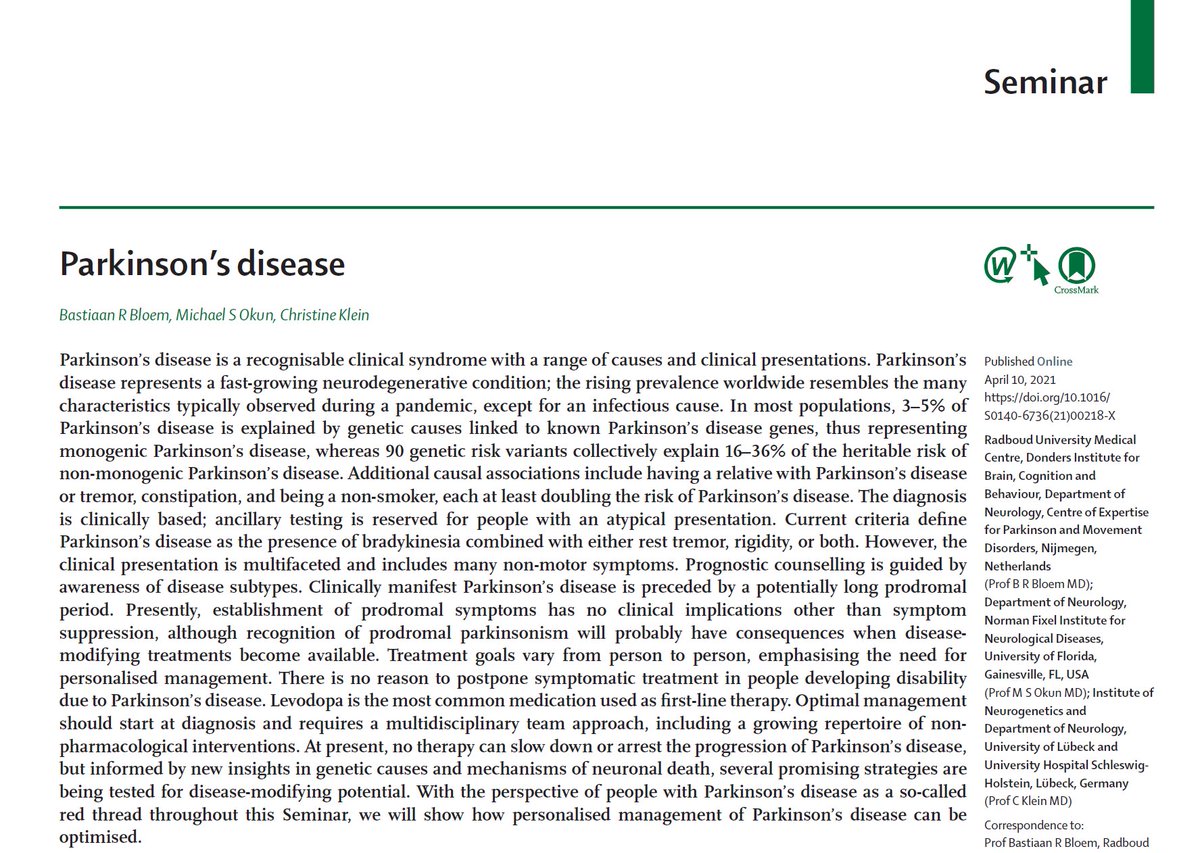
I have seen many posts by people who were eager to read the new Seminar on #Parkinson Disease that was just published in @TheLancet. The free downloadable version is here (limited time only) https://t.co/tJDn2TAIQ7
We are looking for a great #Electronics Design Engineer to join @mdpprogram @TonsleySA. Applications are open to 31 March. The position can be full or part time for the right person. @Flinders@flindersmdri https://t.co/zyvGFsmGKv
Huge thanks to @andreashorn_ for driving this forward. It was my pleasure to contribute a chapter. A sneak peak is available here: https://t.co/d6DQJ3exgR
This came about due to a @veskiorg travel fellowship and support from @BionicsInst
Join us to improve @leaddbs on March 3rd!
Contributions can have many forms – code, walkthrough videos, manual documentations, bug reports, management & website improvements, user interaction on the Slack channel. No need to be a developer to join the effort.
Very excited to see @BSCDBS sensor-integrated closed-loop programming algorithm significantly reducing the programming burden in PD patients undergoing #DBS. Read more @ https://t.co/c51a4RoBpO
Drumroll...! 🥁🥁🥁
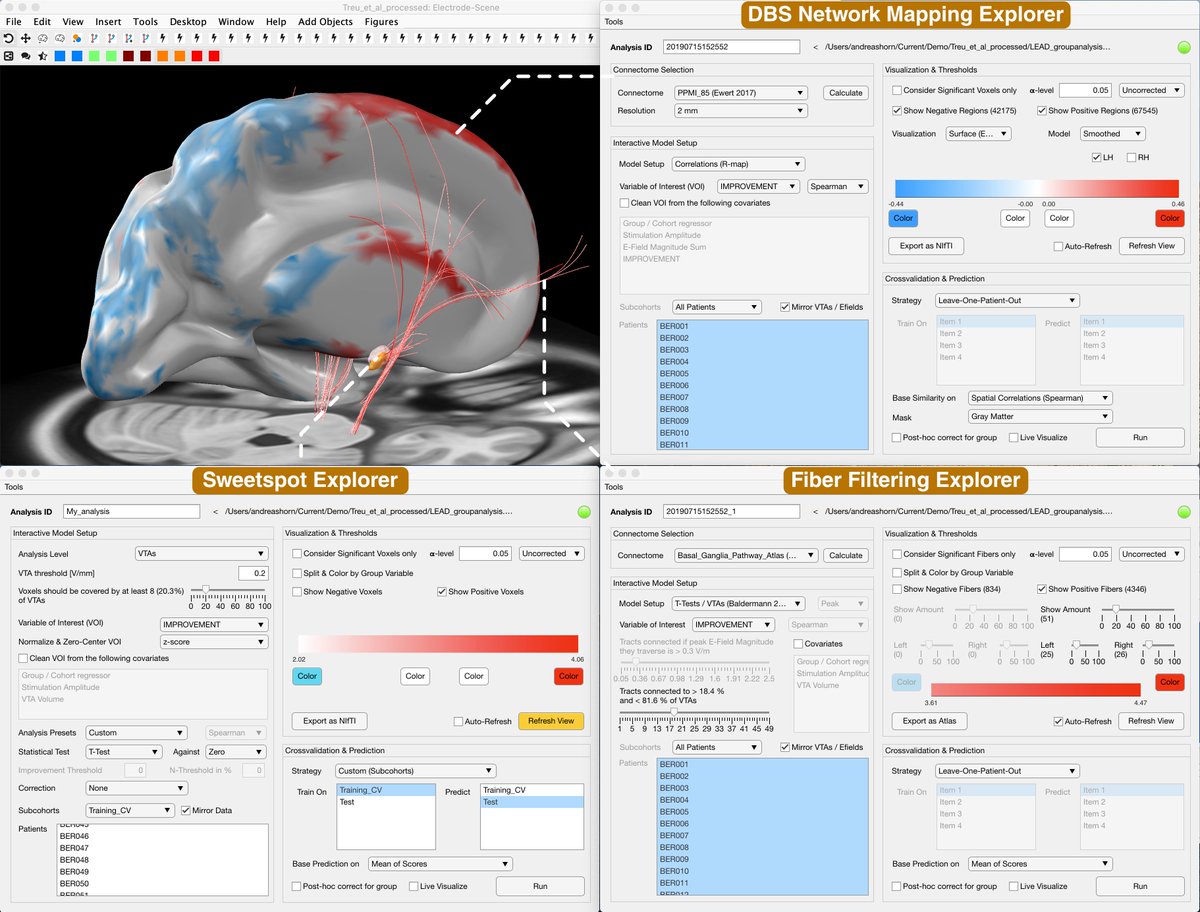
Lead-DBS v2.5 is finally online!
Tons of updates – read all about it in our newsletter that we are currently sending out to >4.2k colleagues, world-wide:
https://t.co/VlHUzlJhmO
Congratulations Nick Sinclair from all of us at the Bionics Institute! We are so proud and so happy for you. This is a well deserved award. Thank you @CSL