Remember when the tax-free allowance was £12,500?
That was in 2019.
Today, it’s £12,570…just £70 higher.
If it had simply kept up with inflation, it would be around £17,000 today.
Meanwhile, food, rent, energy, fuel and everyday bills have all risen sharply.
They can say they’ve “not raised taxes.”
But they haven’t needed to.
Freeze the threshold while wages and prices rise, and inflation quietly pushes more of your income into the tax system every year.
The Great Wall of China is not visible from space. The plastic roof over a Spanish desert that grows Britain's winter salad is.
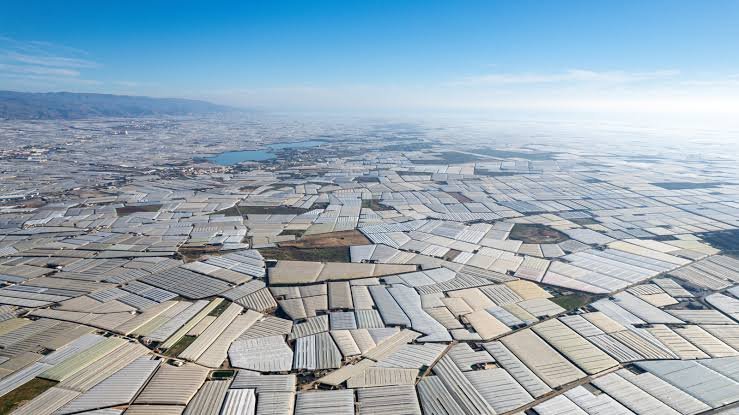
Pull up the satellite. The southeast corner of Spain has a white scab on it, hard-edged and geometric, bright enough that your eye reads it as a fault in the image. 40,000 hectares of plastic sheeting, packed frame to frame from the foothills of the Sierra Nevada to the Mediterranean. The Spanish astronaut Pedro Duque, asked about it in 2007, said you can see the greenhouses of Almería clearly from the space station. It is not a city, a dam or a wall. It is salad.
The first one went up in 1963.
The mirror is so vast it changed the weather. NASA's satellites show the reflectivity of the province rose by about 10 per cent between 1983 and 2006, and the surface cooled by 0.3°C a decade while the region around it warmed by 0.5°C. The change to the local energy balance is 20 watts per square metre, 30 in summer. Global warming's forcing is 1.66. Almería built a mirror an order of magnitude more powerful than climate change, by accident, to grow cucumbers.
Underneath is the only true hot desert in Europe. 200mm of rain a year. Every drop of the water comes out of the aquifers, and the aquifers are finishing. Wells sunk a kilometre down now bring up water that is no use to anybody, because as the fresh water drops the Mediterranean moves in behind it, and salt does not leave. Between a fifth and a half of the fertiliser applied up top leaches down into the same water table.
Almería is also one of the most water-efficient growing systems on the planet. Computer-controlled hydroponics, drip lines, dosing to the millilitre. It is done properly, and the efficiency is what drained it: efficiency cut the cost per plant, the cheaper plant justified another hectare, and the hectares kept arriving until demand outran the aquifer. Doing it well emptied it faster than doing it badly could have.
Around 100,000 migrant workers run the plastic sea, mostly Moroccan, Senegalese and Malian, and by Channel 4's count about half have no papers. A greenhouse in an Andalusian summer is a sealed box in a desert, and men spray pesticides inside that box in a paper mask or in nothing at all, in air they cannot leave. A Spanish government-funded report concluded that the export miracle would not exist without the exploitation.
They sleep in the packaging. The sheeting lasts a few years in that sun, and when it comes off the frames the people who worked under it drag it away and stretch it over pallets to make a roof. No running water, no sanitation, in a province that exports water by the tonne in the shape of a courgette. The blue plastic drums the pesticide came in get cut open and used as household water tanks. When a camp becomes too visible from the road the bulldozers clear it, and the same people build the next one a mile away out of the same material.
33,000 tonnes of greenhouse plastic a year, most of it dumped rather than processed, going into the soil and down the ravines as dust.
So the January shelf works like this. A desert, mirrored over. An aquifer emptied with exemplary precision and refilled with seawater. Men spraying poison in sealed heat and sleeping in the packaging. 3.5 million tonnes of produce chilled and driven 1,500 miles north, so that a tomato can exist in February and taste of nothing whatsoever.
Britain imports 83 per cent of its fruit and 45 per cent of its vegetables. Spain is the largest single supplier.
And a cow standing on a Welsh hillside in the rain, eating grass that grows back on its own, is what we are told to feel guilty about.
Go and look at it, then tell me which of those two systems is the one nobody is allowed to defend.
Palm oil is quietly replacing dairy fat in chocolate, biscuits, and processed dairy products across the UK — while British milk production sits at a surplus and some farmers are pouring milk away.
It’s absurd that Britain prioritises foreign food over what we can (and do) grow on our own soil.
Britain has some of the best farmland in Europe. We produce excellent wheat, potatoes, dairy, beef, lamb, apples, berries, brassicas and more. Our climate and soil are perfectly suited to a huge range of high-quality produce.
Yet year after year, supermarket shelves and government trade policy tilt toward imports — often at the direct expense of British farmers.
Cheap Spanish tomatoes, Dutch peppers, Polish chicken, New Zealand lamb and out-of-season fruit flown halfway around the world routinely undercut local growers.
Why? Lower production costs abroad, weaker environmental and animal-welfare standards in some cases, and a retail system that chases the lowest unit price above everything else.
The result: British producers face razor-thin margins, rising energy and labour costs, and the constant threat of being replaced by imports that would never meet the same rules if grown here.
This is not free trade in any meaningful sense. It’s a one-way preference for distance over quality, seasonality and national resilience.
Food security is treated as an afterthought until a supply shock hits. Carbon footprints from long-haul transport are waved away while British growers are lectured about sustainability. And rural communities that keep the countryside working are told to compete with subsidized or lower-standard overseas production while absorbing every new regulation.
Supporting what is grown here does not mean autarky or higher prices for everything. It means fair competition: applying the same standards to imports that we demand of our own farmers, prioritising seasonal British produce in public procurement and retail, and recognising that a country that cannot feed itself is strategically weak.
Preferring the imported option simply because it is slightly cheaper on the day is short-sighted policy dressed up as consumer choice.
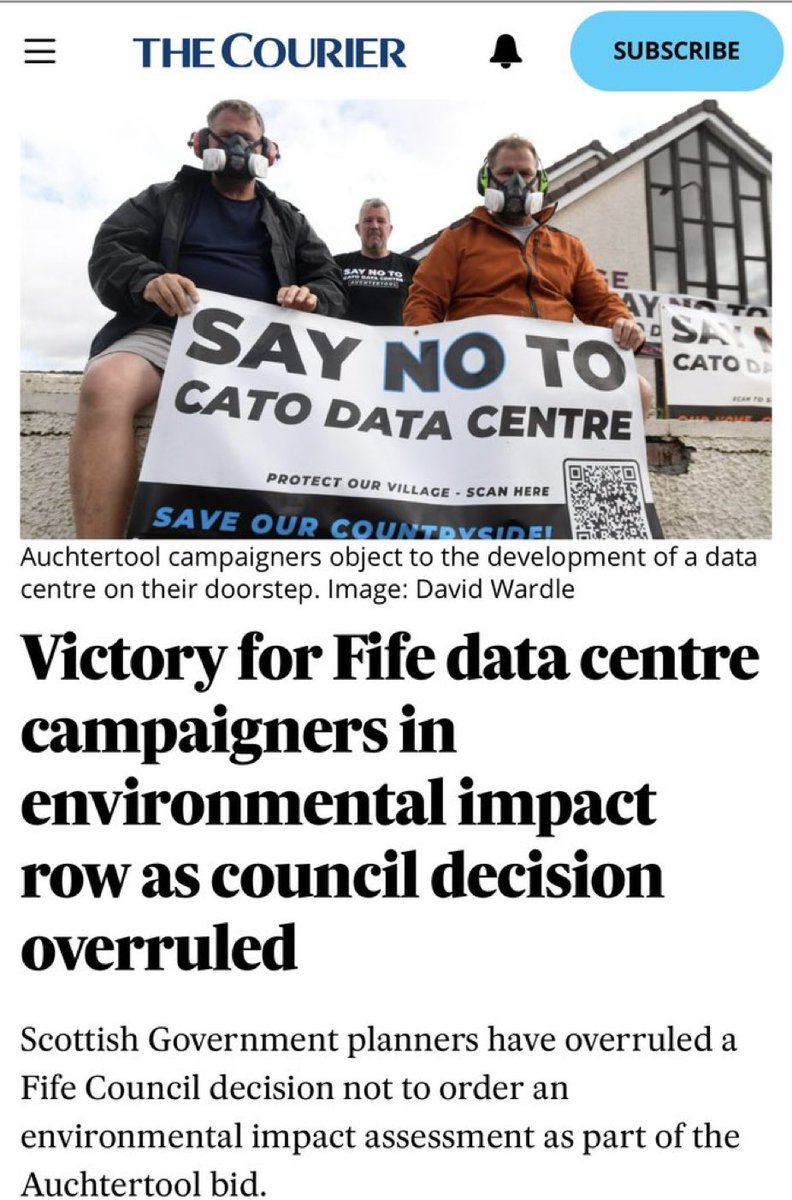
Plans for a “monstrous” data centre next to Auchtertool village in Fife must be subject to an environmental impact assessment, the Scottish Government has ruled. Good news. But the battle is still far from won.
Britain’s water strategy in a nutshell:
▪️Sell off 35 reservoirs since 2017.
▪️Build no new reservoirs for 34 years.
▪️Approve 500 data centres that drink water like camels on a bender.
Then, the second the sun shows its face for a few weeks in summer, the water companies slap hosepipe bans on us.
Ah yes. The sacred Great British summer ritual: standing in a parched garden while a giant data centre in Slough is quietly necking enough water to keep a small town’s lawns green forever…so that someone in California can generate another AI image of a cat wearing a monocle.
But don’t worry. When your roses finally croak, just remember: the cloud never goes thirsty.
Priorities, Britain.
The UK’s largest solar farm proposed on 2,000 acres of prime farmland between Perth & Dundee. The equivalent of 1,250 football pitches of food-producing land.
If the Scottish government cared about food security and the Scottish countryside, they will not let this happen.
RIP Jason Arday. I never met you, never knew you and what I read of your work I found unimpressive. And yet I feel a sadness and loss at your death. You never deserved for it to end this way. You were used and even abused by others for their own ends. I do not believe you were in any way a bad person. Indeed there are many reasons to believe you were a good person. You needed help. Yet when you needed help it never came. Despite the huge pile on, nobody seemed to be there for you. You were left to die on your own, which only adds to the sadness. RIP Jason Arday. You were failed by those who had a duty of care towards you.
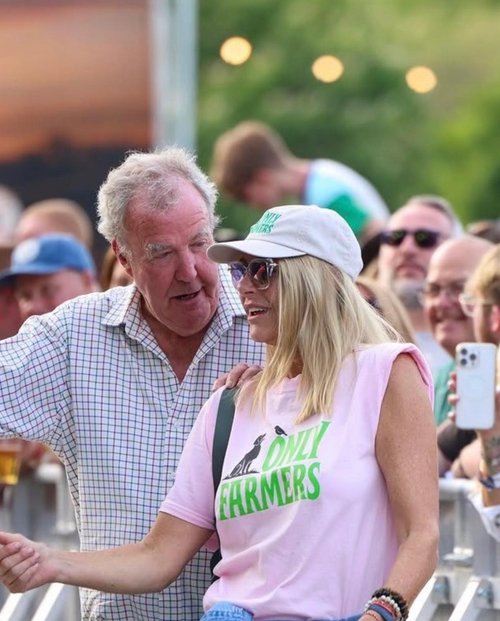
Over 1,300 British farms have joined a new app in about twelve weeks. It is called Only Farmers, it was named deliberately after OnlyFans, and the parallel runs deeper than the joke intends.
Both are platforms where the producer sells direct access to themselves, because the people who used to pay them stopped paying enough to live on.
Lisa Hogan built it with her son Wolfe Bentinck, after five years of farmers coming into the Diddly Squat shop to thank her for the programme and then tell her their own version of it. Her words: this is for smaller farmers who do not have a marketing budget or Amazon.
Look at what is being sold.
Farm stays. Vineyard tours. Cheese-making. Beekeeping. Weddings. Lambing days. Clarkson's own summary this week was that you could walk an alpaca or milk a cow.
Every item on that list is something a farmer does anyway. Unpaid, at four in the morning, in February, as part of a job that a government review found loses money on nearly a third of British farms.
The novelty version pays. The work does not.
A family will hand over real money to stand in a shed for two hours and watch a ewe give birth. That same lamb, reared for months and sold through the proper chain, goes at a price the farmer is not allowed to set.
The second half of the app is grimmer still, because it also runs farmer-to-farmer equipment rental. Farms hiring kit to each other, because too few can justify owning their own.
None of which is a criticism of Hogan. She has built something useful, after listening at a till for five years. Book the alpaca. The money goes where it should.
But 1,300 signups in twelve weeks is not enthusiasm for an app. It is 1,300 farms reaching the same conclusion in the same season, which is that the dependable money is in the experience rather than the food.
We have arrived at a country where a farm earns more reliably from charging strangers to watch it farm.
Nobody thought that was worth remarking on.
Oh pleeeease… Burnham is NOT scrapping Britain’s digital identity architecture, don’t fall for this!
He is scrapping the unpopular name and one proposed national credential.
▪️https://t.co/JJzSYSvdZC One Login stays.
▪️The Government Wallet stays.
▪️Digital driving licences stay.
▪️Police access to DVLA records stays.
▪️eVisas and digital right-to-work checks stay.
▪️Mandatory Companies House identity verification stays.
▪️The statutory Digital Identity Trust Framework stays.
▪️NHS Login, the NHS App and the Single Patient Record stay.
▪️A unique identifying number for every child stays.
▪️Plans for universal newborn genomic testing and DNA storage stay.
The framework, legislation and machinery are already embedded across government departments.
And he certainly won’t dismantle the systems and legislation already being assembled to link your government “you” file together.
Betcha 🔥
So …
Please explain to all of us why out of 125 places at Glasgow Vet School the number of Scottish students are capped at 15 ..???
We have no Vets because of you and your ilks corruption , greed and madness ..
Nobody wants data centers everywhere. Nobody wants flying cars. Nobody wants a city on Mars. Nobody wants AI in every app. Nobody wants a robot butler. All we want is clean water, we want bees to survive, and we want a habitable planet.
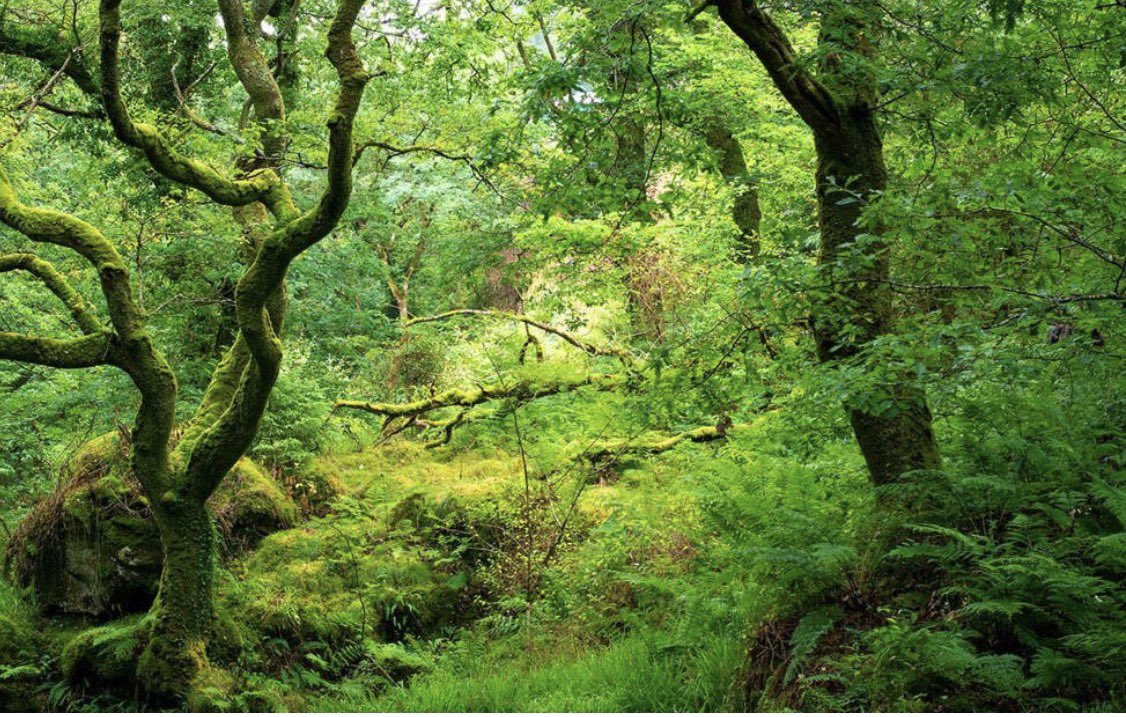
This used to be Little Lyntus an ancient woodland in Staffordshire. It had stood for 400 years, part of our beautiful and vital nature.
So it was chopped down for HS2 …. Which was then cancelled!
Don’t lecture me about net zero & the environment when we are destroying the irreplaceable for profit 🔥