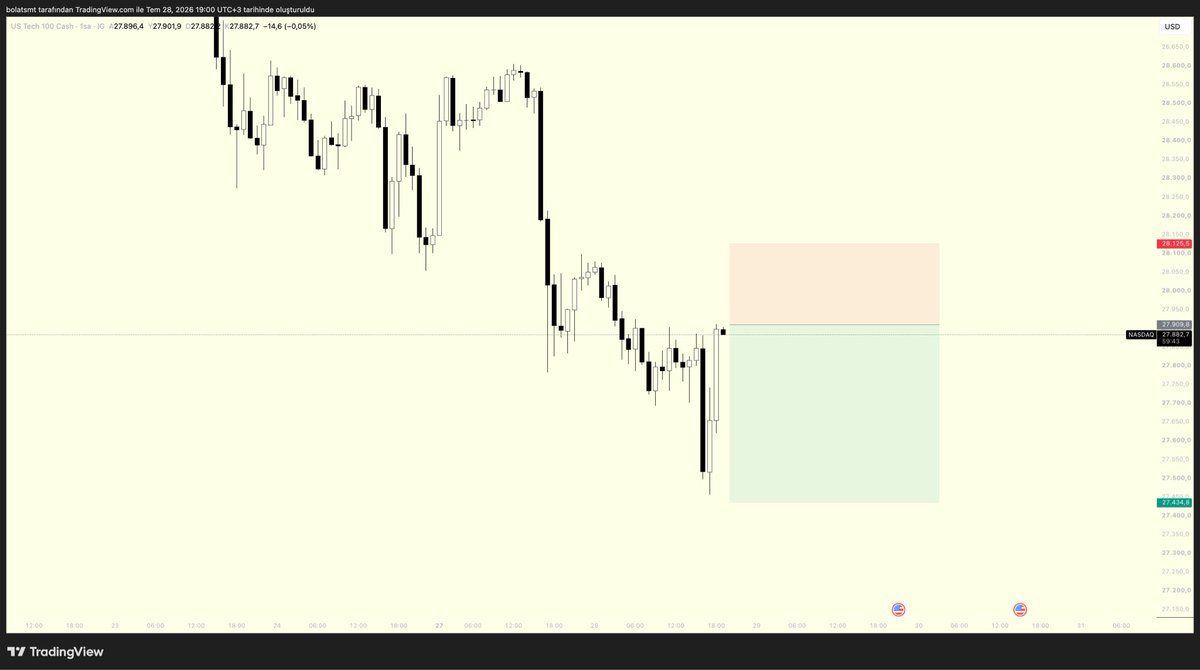
@Trader_Dante I understand your first entry at LHPH, but what did you see that made you take a second entry? As your student for four years, I honestly didn’t see anything at your second entry point.
@Trader_Dante There is no doubt that if your father were still alive today and could see what a successful and kind-hearted person you have become, he would be proud of you every single time. May he rest in peace once again.
There is a famous experiment from a 10 years ago. Researchers gave a group of finance graduates and traders a simple game.
A coin biased to land heads 60% of the time. $25 to start. Half an hour to bet however they wanted. Maximum payout capped at a generous number so the prize was real.
A 60% coin is a gigantic edge. Anyone who sized properly should have walked out with the cap. However 28% of the participants went to zero. A third of supposedly numerate adults blew up a game that was rigged in their favour, in half an hour, with real money on the line.
What happened to them is what happens to most. They had an edge and they treated it like a certainty and they oversized.
The Kelly Criterion is the answer to this problem and you have probably seen the formula. In its general form for a position with a defined win and a defined loss, the optimal fraction of your capital to risk is:
f* = p/l minus q/g
Where p is your win probability, q is one minus p, g is the fractional gain on a winner, and l is the fractional loss on a loser. The formula gives you the bet size that maximises long term geometric growth. Bet more than f* and you simultaneously lower your expected growth rate and raise your probability of going to zero, which is the worst outcome.
Three things matter about Kelly that are essential before you use the formula.
The first is that you do not actually know p. You estimate p from a backtest, tracked trades, your intuition about the setup. Your estimate is always wrong. The question is how wrong your estimate could be before ruining you.
The second is that Full Kelly produces drawdowns that will trigger chemical responses. A strategy sized at Full Kelly with a real edge will routinely give back 50% of peak equity on its way to its long term growth rate. The drawdown is emotionally taxing even if you survive it mathematically. Your grin will be gone.
The third is the only thing you need to remember. Half Kelly is the answer. Half Kelly captures roughly 75% of the long term growth of Full Kelly with roughly half the volatility. Quarter Kelly is even safer but gives up more growth. Pros are running fractions of a Kelly, and the fraction is set by how much they trust their estimate of p, not by how aggressive they want to feel.
The deeper point is that position sizing is an estimation problem, a mixture of math and pattern recognition.
The reason Half Kelly works is that the formula provides more airbags at half scale. The drawdowns it produces stay below the threshold that triggers your cortisol response to keep yourself thinking clearly enough to take the next trade. You are positioning yourself for the next best high probability idea.
This is the trick the 28% of bust participants in the coin flip experiment missed. They had the edge but no skill.
[The experiment was the Haghani and Dewey coin-flip study (2016). 28% went bust, 21% hit the cap and 51% landed in the middle.]
There is a part of trading nobody can teach you.
You have to find out what you do under pressure, after drawdown, after a big win, after being wrong for longer than feels reasonable.
But you can absolutely be taught how to interpret those moments better.