Got a 2/2/3 on my paper. Since GPT-6, it feels like every reviewer has turned into a math genius, precisely attacking my assumptions and constructing increasingly sophisticated numerical counterexamples.
@DireDoge1029 But human judgments of novelty don’t follow any fixed standards either. They can be highly subjective and inconsistent, potentially even less reliable than evaluations based on a well-defined set of criteria.
Do we still need conferences? Do we even need human peer reviewers?
Could we develop something like Lean-style formal verification for research papers, verifying validity, novelty, etc., and accepting papers based on verifiable guarantees rather than noisy human judgments?
1/n Within 15 months of publication, most of the LLM claims we tested either no longer held or showed substantially diminished effects. How long does our knowledge of AI hold up? In our new study, we revisit 50 findings to see what fades, what persists, and what gets stronger. 🧵
Check out our book on statistical foundations of RL! It took us quite a while, but procrastination allows us to use AI at the final stage to polish a few things. We appreciate your feedback.
We are announcing three new discoveries in mathematics, computer science, and physics about harmonic analysis, complexity theory, and quantum field theory.
https://t.co/9BX8HWQDTJ
If expectations aren’t met, the fallout from capital markets could be brutal.
Maybe it’s time for us to slow down, consolidate what we’ve achieved, and focus on delivering real results.
Scary to think about, but it might be true.
I feel like OpenAI has pulled too much optimism forward—announcing too many results before they were fully mature and raising enormous amounts of capital on those expectations.
The media can hype things up, but reality doesn’t care.
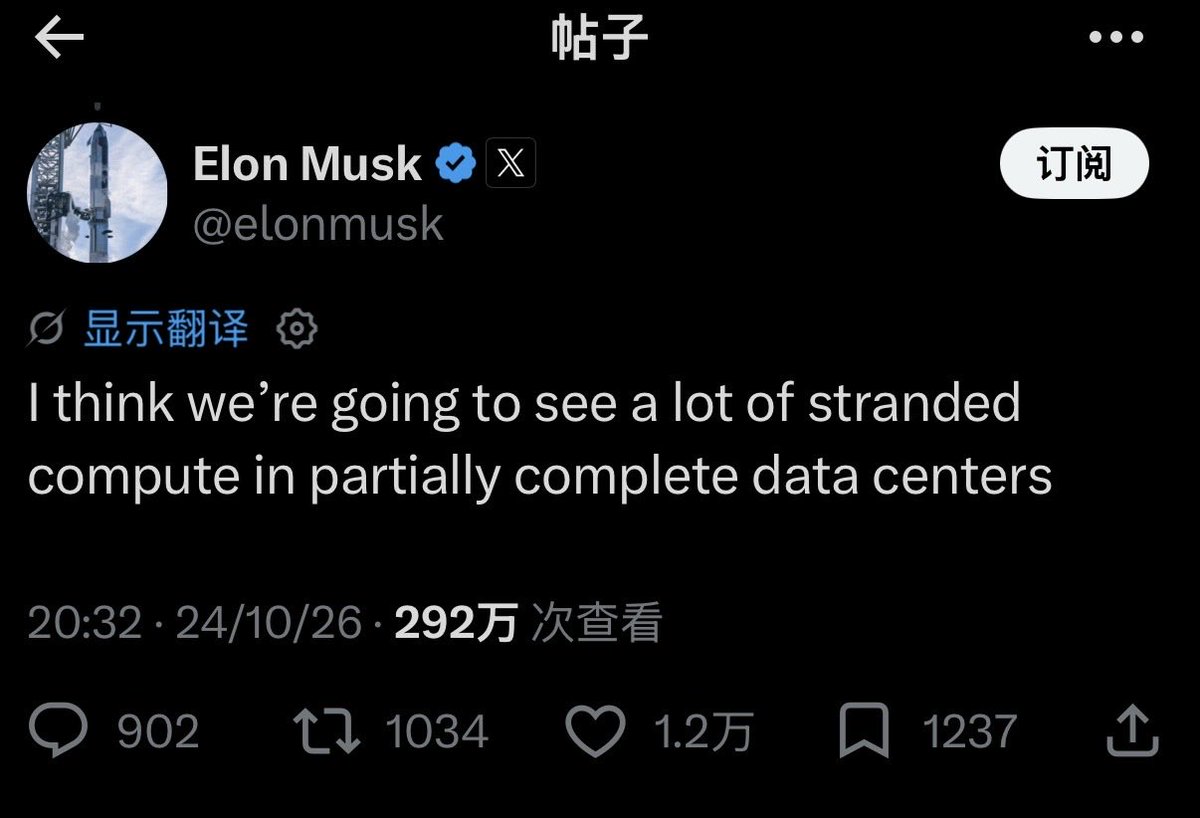
@elonmusk@Yuchenj_UW Scary to think about, but it might be true.
I feel like OpenAI has pulled too much optimism forward—announcing too many results before they were fully mature and raising enormous amounts of capital on those expectations.
The media can hype things up, but reality doesn’t care.
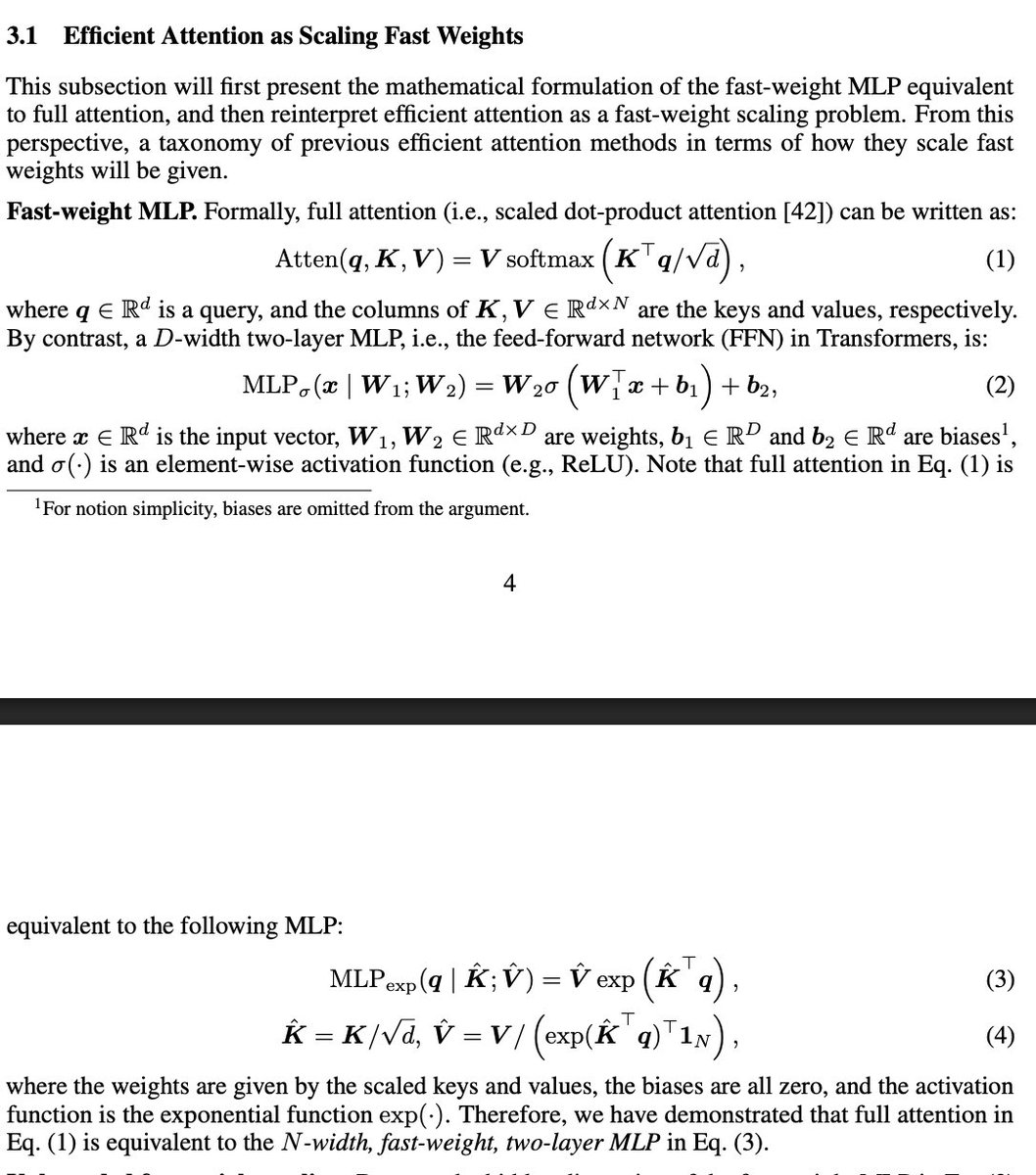
Actually, I have provide a similar conclusion in my previous paper published on ICML2026 from a feature learning perspective . The attention or softmax is an Adaptive-Weight MLP. It is used to accelerate convergence as the weight of signal is growing quickly.
First time reviewing for ICLR. Spent an entire day carefully reading three papers, trying my best to write fair, thoughtful reviews that AI could NEVER have generated.@iclr_conf
We released "The Newton--Muon Optimizer" . We show that Muon is secretly an implicit Newton method, and use this insight to build a better one. 1/n
Paper: https://t.co/Ua54426bWB