THE VIX IS LOW FOR A REASON AND THAT REASON IS BULLISH!
One of the most interesting things about this selloff is how relatively subdued VIX futures have remained despite the magnitude and speed of the decline.
imo, that’s actually a bullish sign despite so many retail traders arguing that the shoe is yet to drop, arguing that the low vix is a sign that this is just the beginning.
Just the beginning?? $QQQ has fallen like 20% in a month lol. What would the end look like then? The Stone Age??
My view of the low vix is that much of this move is simply deleveraging following a sharp shift in sentiment and a string of negative but relatively contained headlines.
After a prolonged structural bull market driven by the AI theme, investors were heavily positioned in one direction. When sentiment shifted, a lot of people got caught offsides and were forced to reduce exposure.
Compare that to the Iran conflict earlier this year, when markets had to price enormous uncertainty around geopolitical escalation and potentially catastrophic tail risks that were extremely difficult to handicap.
This selloff feels much more like a positioning unwind than the market pricing some massive, unknown systemic risk.
The relatively muted demand for volatility and crash protection, despite the severity of the decline, supports that interpretation.
And if this is primarily a deleveraging event rather than a fundamental repricing of systemic risk, that’s a much more constructive setup for equities once the forced selling runs its course.
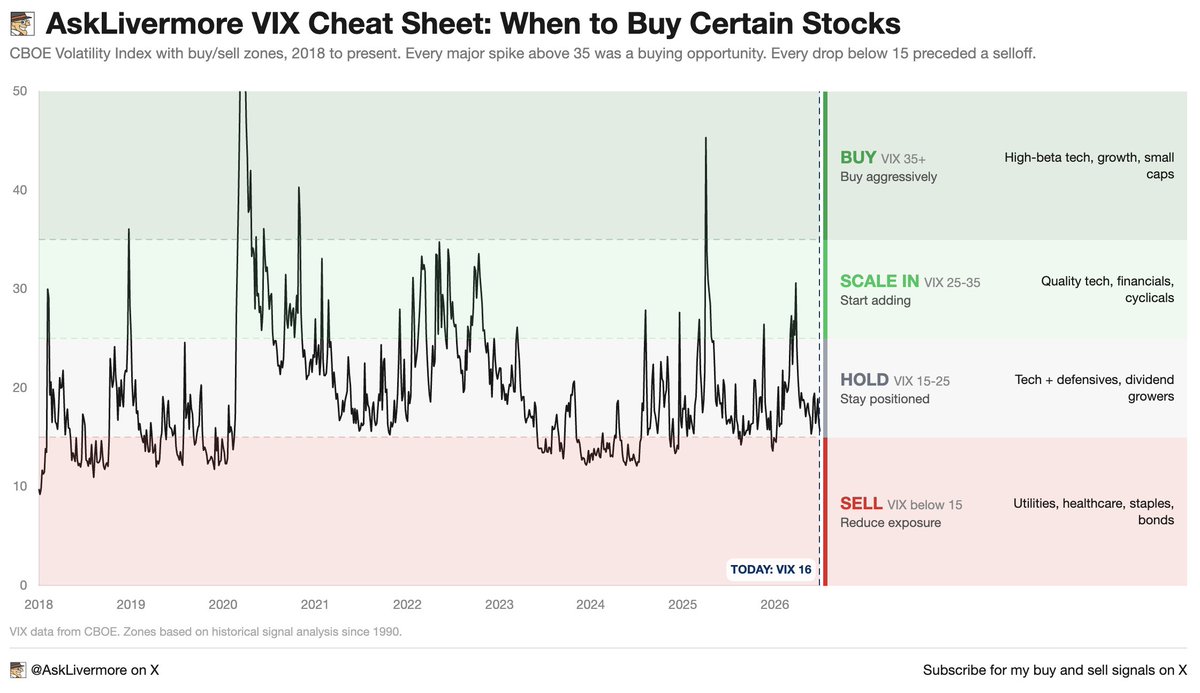
This is all you need to do to make millions in the stock market. Save this. Screenshot it. You will need it.
1. VIX above 35: buy aggressively
- High-beta tech, growth, small caps
- Every single time the VIX spiked above 35 since 2018 was a generational buying opportunity. COVID bottom. Oct 2022 bottom. Tariff crash. If you bought when everyone else was panicking, you made a fortune.
2. VIX 25 to 35: start scaling in
- Quality tech, financials, industrials, cyclicals
- This is where smart money starts building positions. Not all at once. Gradually. The fear is real but the opportunity is bigger.
3. VIX 15 to 25: hold
- Balanced: tech + defensives, dividend growers
- This is normal. Stay positioned. Don't chase, don't panic. Let your winners run.
4. VIX below 15: reduce exposure
- Rotate to: utilities, healthcare, staples, bonds
- This is when everyone is comfortable. Nobody is hedging. Nobody is worried. That's exactly when you should be.
- Every major crash in market history was preceded by the VIX sitting below 15 for weeks.
Right now the VIX is at 16. We're in the hold zone. Stay positioned but stay alert.
Bookmark this. The next time the VIX spikes above 35, don't freeze. Buy.
$SPY weekly chart 📝
It’s not the end of the world…
It’s actually pretty typical to get a few weeks of selling following a 13ema break.
I posted that as soon as it happened.
It will bounce back.
For now enjoy the awesome day trading conditions it’s providing! 🙌
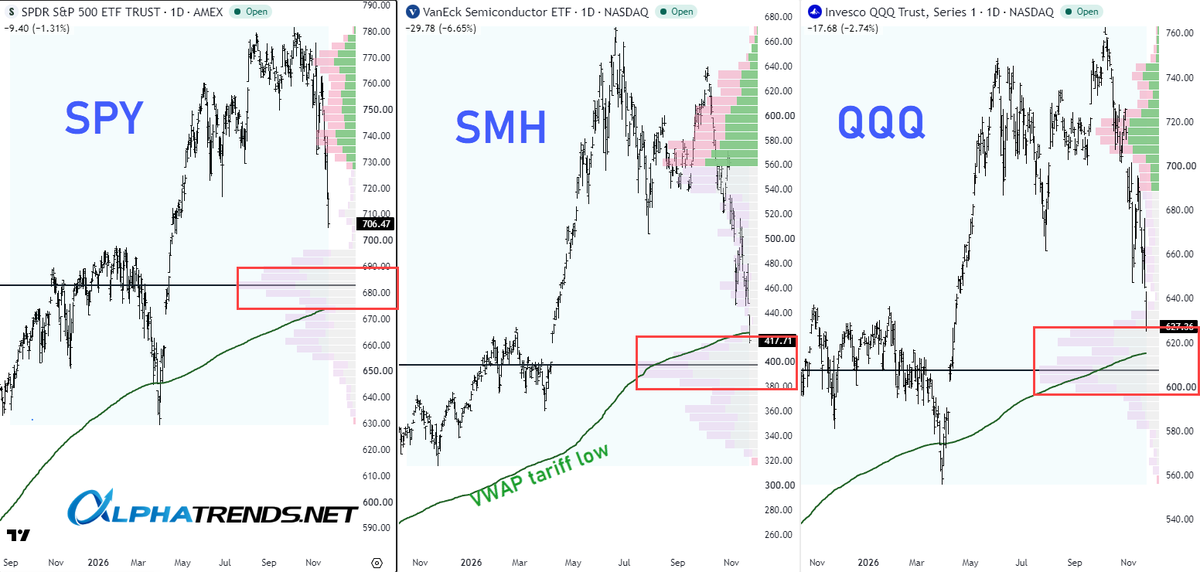
Volume by price charts show where the crowd has the strongest "memory."
More people are anchored to those levels as important because that's where the most shares changed hands.
They're another way, like the 200 SMA, the YTD VWAP or the 🟢VWAP from the 2025 tariff low, to find LEVELS of INTEREST.
We don't treat downside levels of interest as support to stick a bid in. They're places where there may be enough demand to offset supply and absorb it without further price deterioration.
That process usually starts with short covering, slowly at first. Then come bargain hunters who are guessing. Finally, large institutions slow their selling, and smarter institutions with plenty of cash start building positions.
Wait for evidence the flames have died down and the embers have cooled before you jump into the fire pit.
$SPY $SMH $QQQ
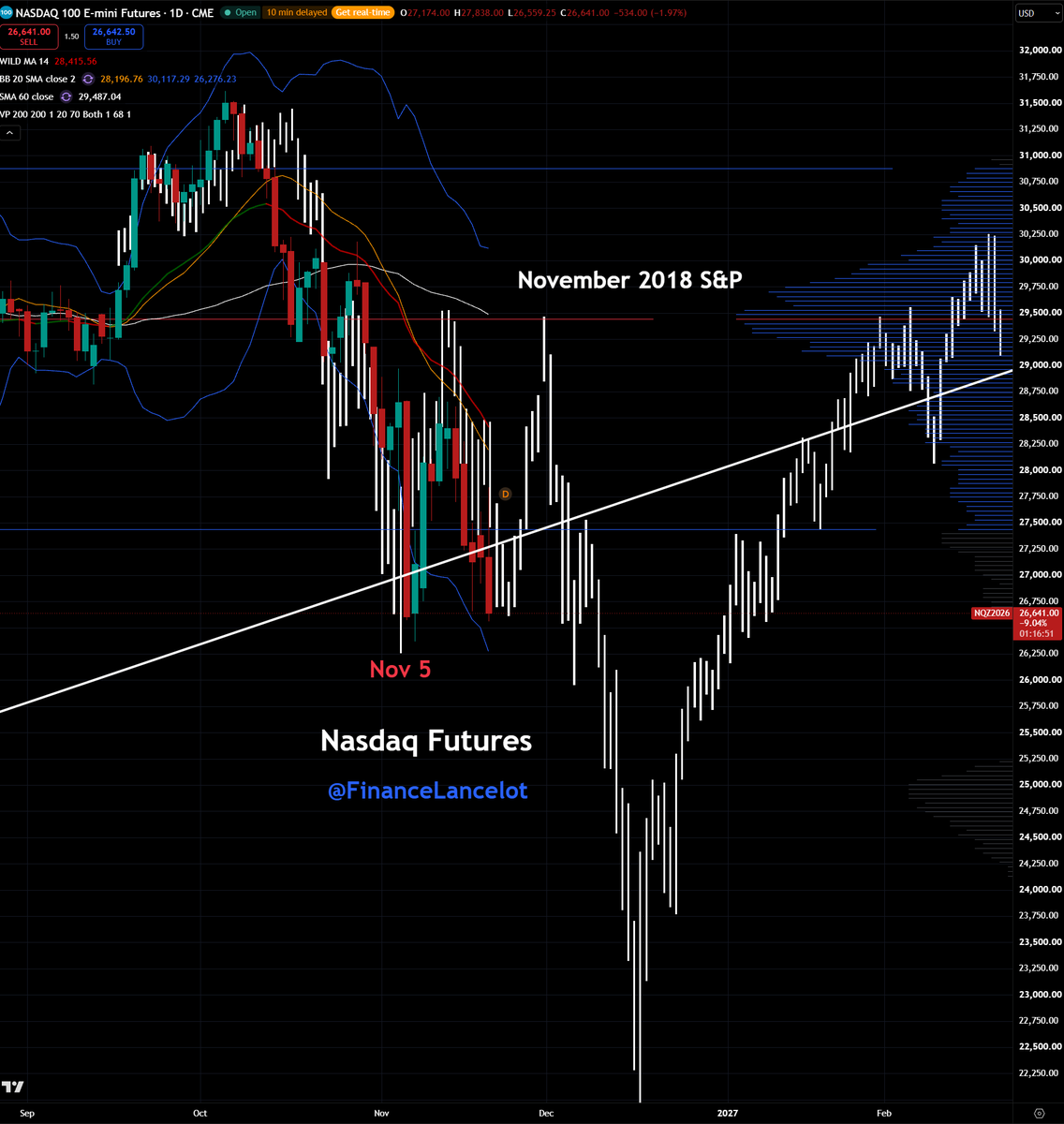
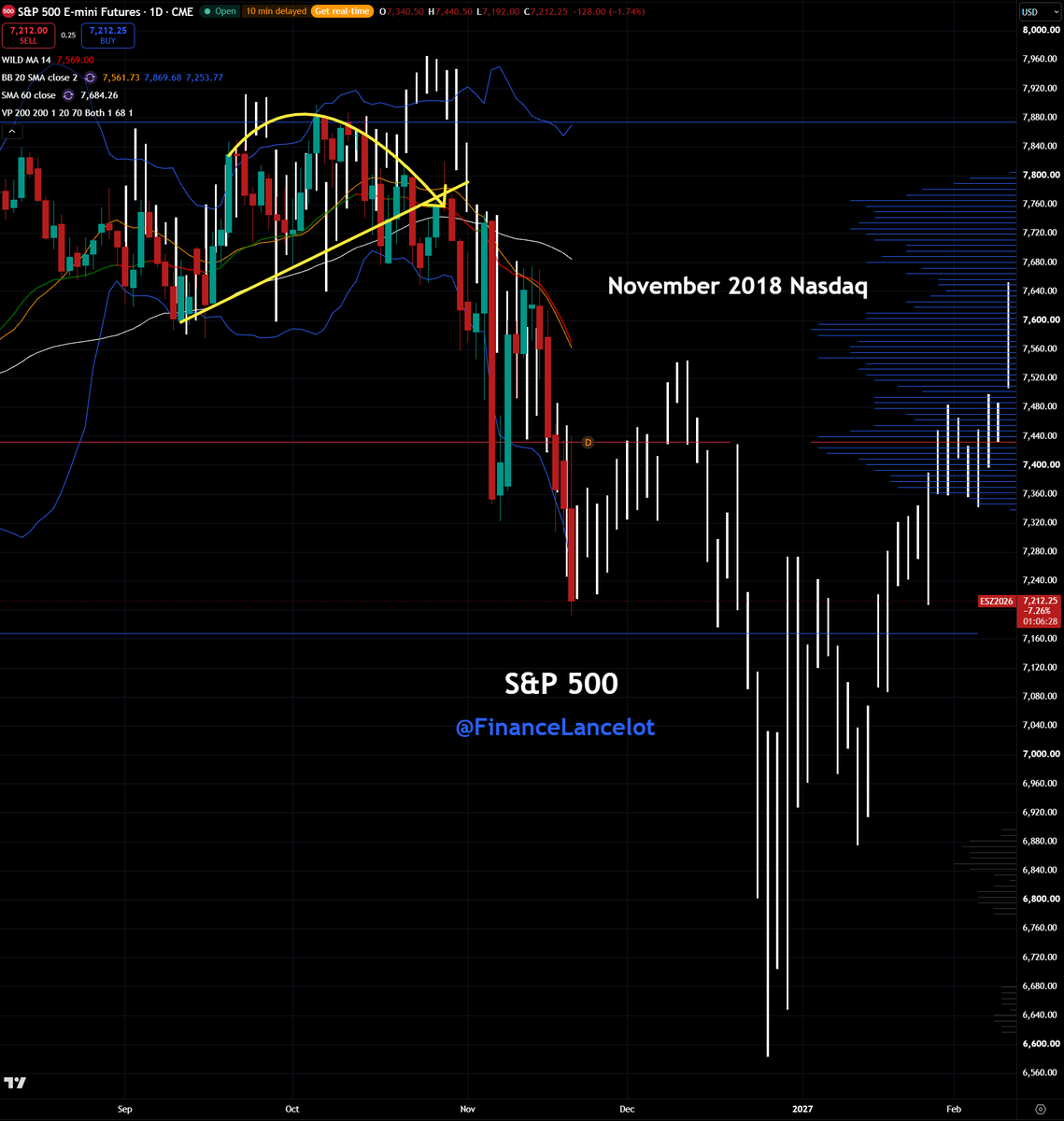
Holy shit... I just realized the algo flipped the indices 👀
It's using the November 2018 S&P pattern on the Nasdaq and the 2018 $NDX pattern on $SPX.
If true, the Nasdaq bottoms today at the exact same level it bottomed on November 5th, 2026.
Could this be happening because Walmart $WMT and Palantir $PLTR moved from the NYSE to Nasdaq, and AstraZeneca $AZN and Kraft Heinz $KHC moved from the Nasdaq to NYSE? 🤔
This would carry us into December.
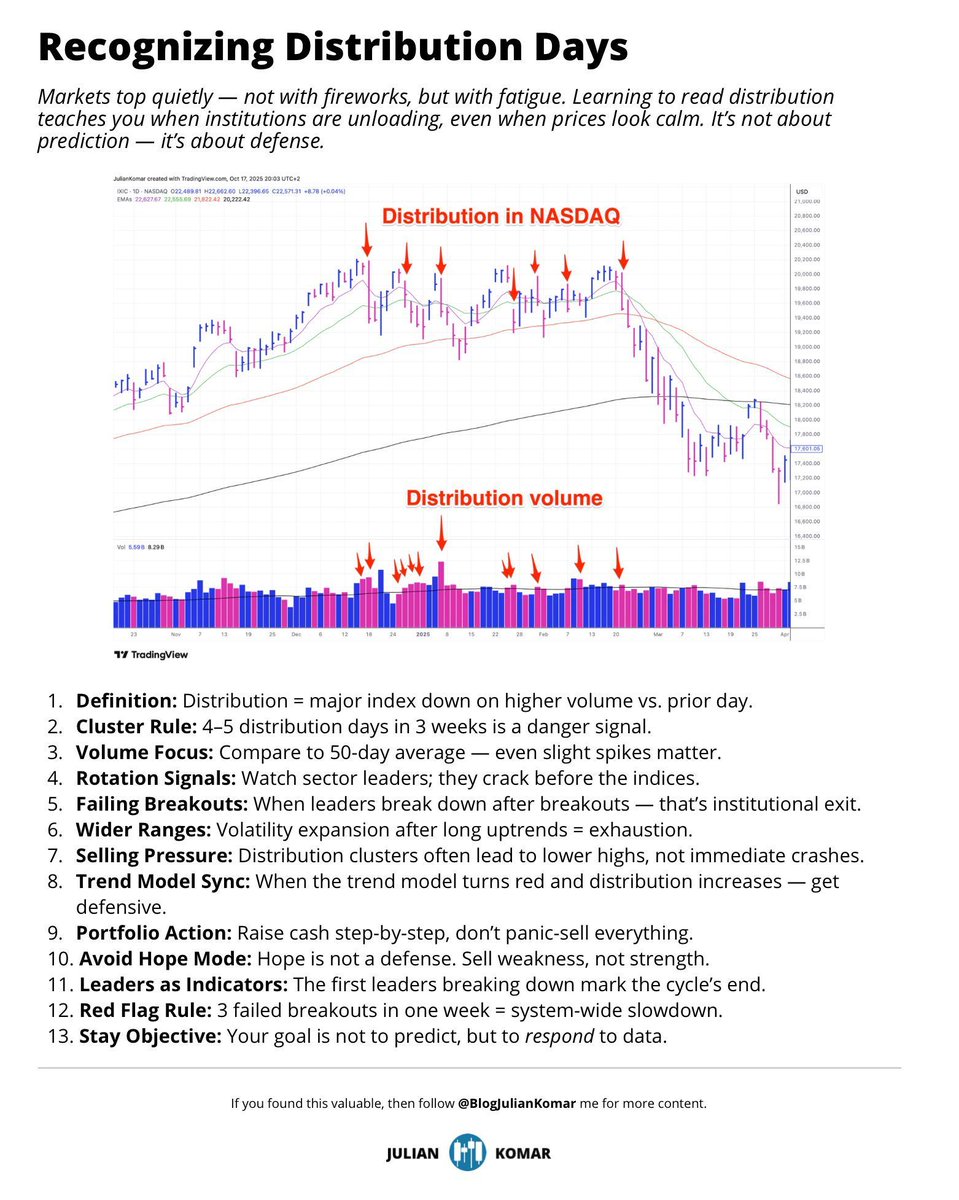
I've traded through 20+ years of market corrections.
And I've seen the same pattern play out again and again:
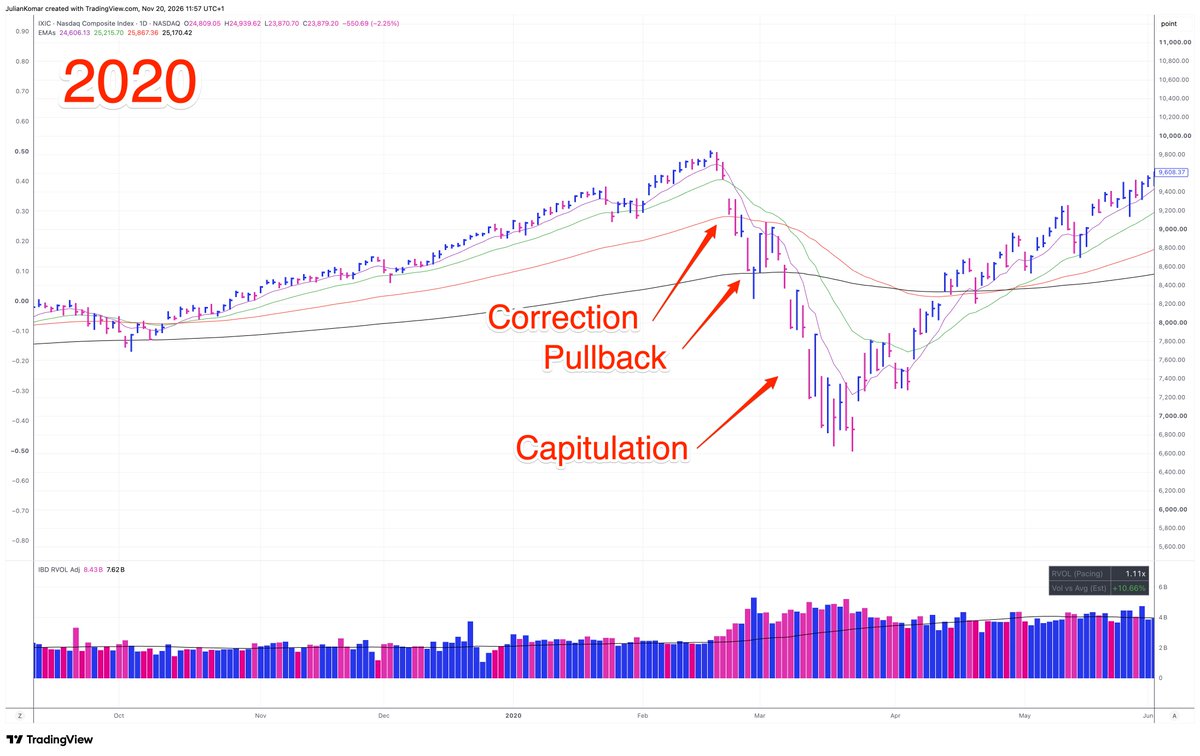
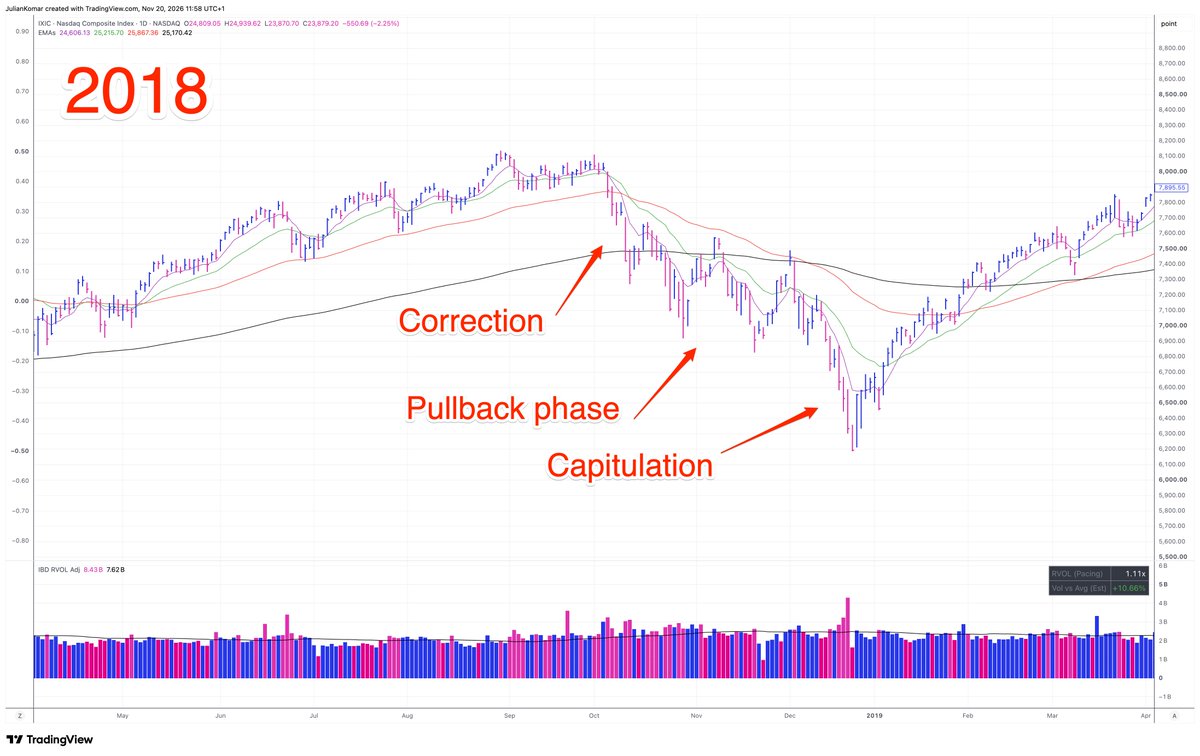
1. The market starts correcting.
2. The market stabilizes and moves sideways.
3. A BRUTAL FINAL SELLOFF shakes out the remaining buyers.
That third phase is particularly important.
Here's what I've learned:
1. THE INITIAL CORRECTION
The market starts declining.
Leading stocks begin to break down. Breakouts fail. More and more stocks lose their momentum.
But there's a problem:
There will ALWAYS be stocks moving higher, even during a correction.
And that's exactly why so many traders underestimate the risk.
They keep buying because individual setups still look attractive.
I've learned that a few strong stocks don't necessarily mean the overall market is healthy.
2. THE SIDEWAYS PHASE
After the initial decline, the market stabilizes.
The indexes bounce, move sideways, or attempt to recover.
Selling pressure appears to ease.
Traders become optimistic again.
Maybe the correction is already over?
But this is where things can become particularly dangerous.
The market can spend days or weeks moving sideways before the next wave of selling begins.
And traders who have been buying during this period may suddenly find themselves exposed to another sharp decline.
3. THE BRUTAL FINAL SELLOFF
This is the phase I pay particularly close attention to.
The market breaks lower again.
Selling accelerates.
Sometimes the major indexes decline 3–4% in a single session. Sometimes the weakness continues for two or three days.
Fear increases. Pessimism spreads. Even relatively strong stocks come under pressure.
This is what I call a possible capitulation move.
I've observed this type of behavior around many important market lows.
Look at the historical charts I've attached, including April 2025.
Notice how the initial correction and the sideways period were followed by an aggressive final decline.
And notice what happened afterward.
Of course, not every correction follows this pattern. And not every sharp sell-off marks a bottom.
But recognizing this sequence helps me prepare for what could come next.
4. HOW I TRADE A POSSIBLE CAPITULATION
When I see signs of a possible capitulation move, I don't automatically start buying stocks.
My first priority is to reassess my short positions and look to cover them.
Why?
Because after an aggressive decline, the risk of a powerful rebound increases significantly.
But covering shorts is NOT the same as getting bullish.
I can close my shorts and remain entirely in cash.
Then I wait for my market trend model to give me a new signal on the long side.
In the meantime, I'm preparing my watchlist.
I'm looking for growth and momentum stocks showing relative strength and developing constructive setups.
When market conditions improve, I want to be ready.
I don't want to start searching for stocks after the rally is already underway.
5. WHAT I'M WATCHING RIGHT NOW
We could experience a similar acceleration in selling in the coming days.
I don't know whether that will happen.
And I certainly don't know where the exact bottom will be.
But I know what kind of market behavior deserves my attention.
In my latest MARKET UPDATE Premium Weekend Report, I discussed this possibility and what I'm watching as the correction develops.
Throughout the week, I'll continue sharing my market assessments, observations, and the reasoning behind my trading decisions with members.
My goal isn't to predict the next bottom.
It's to help traders understand changing market conditions and make better decisions independently
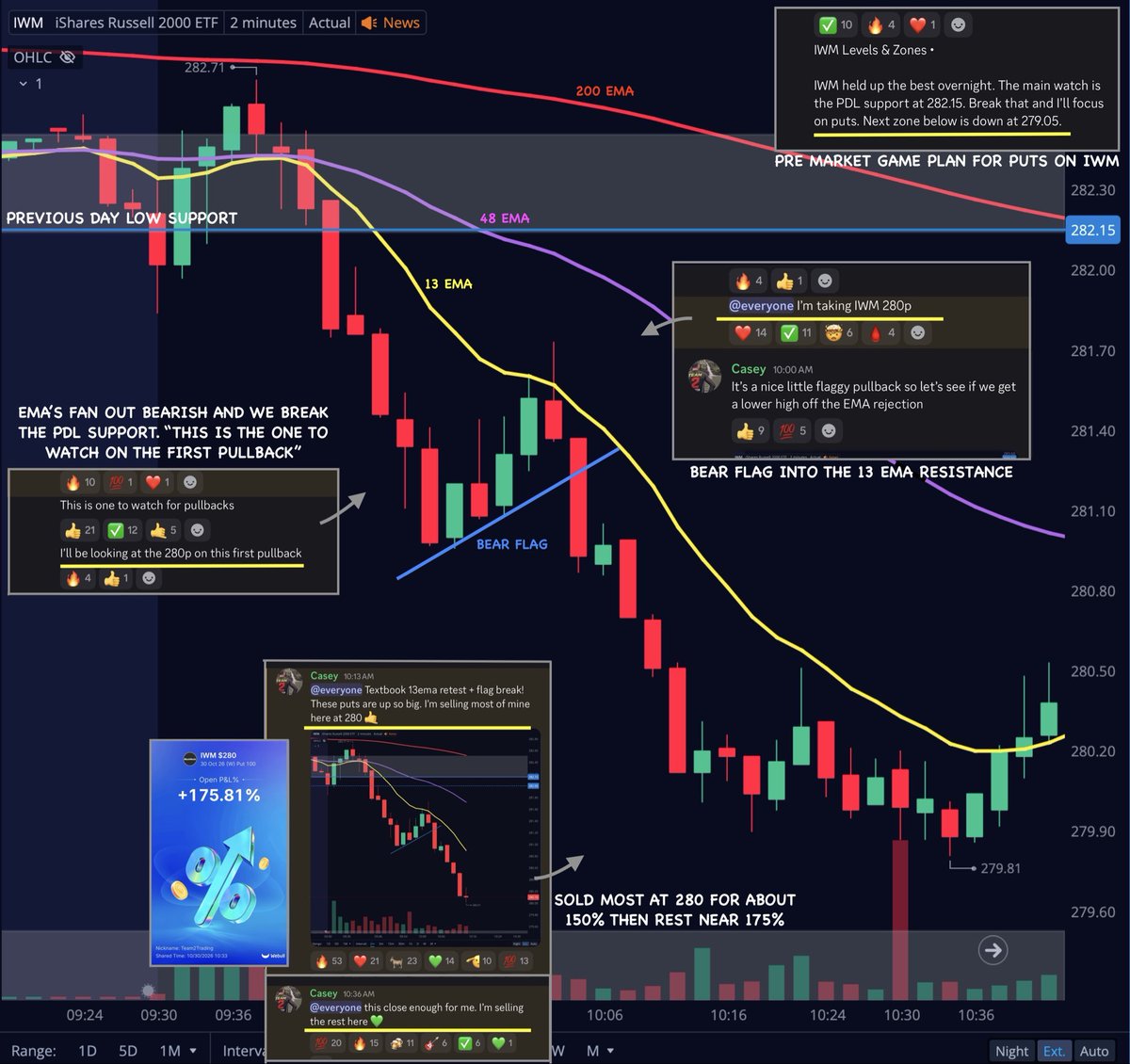
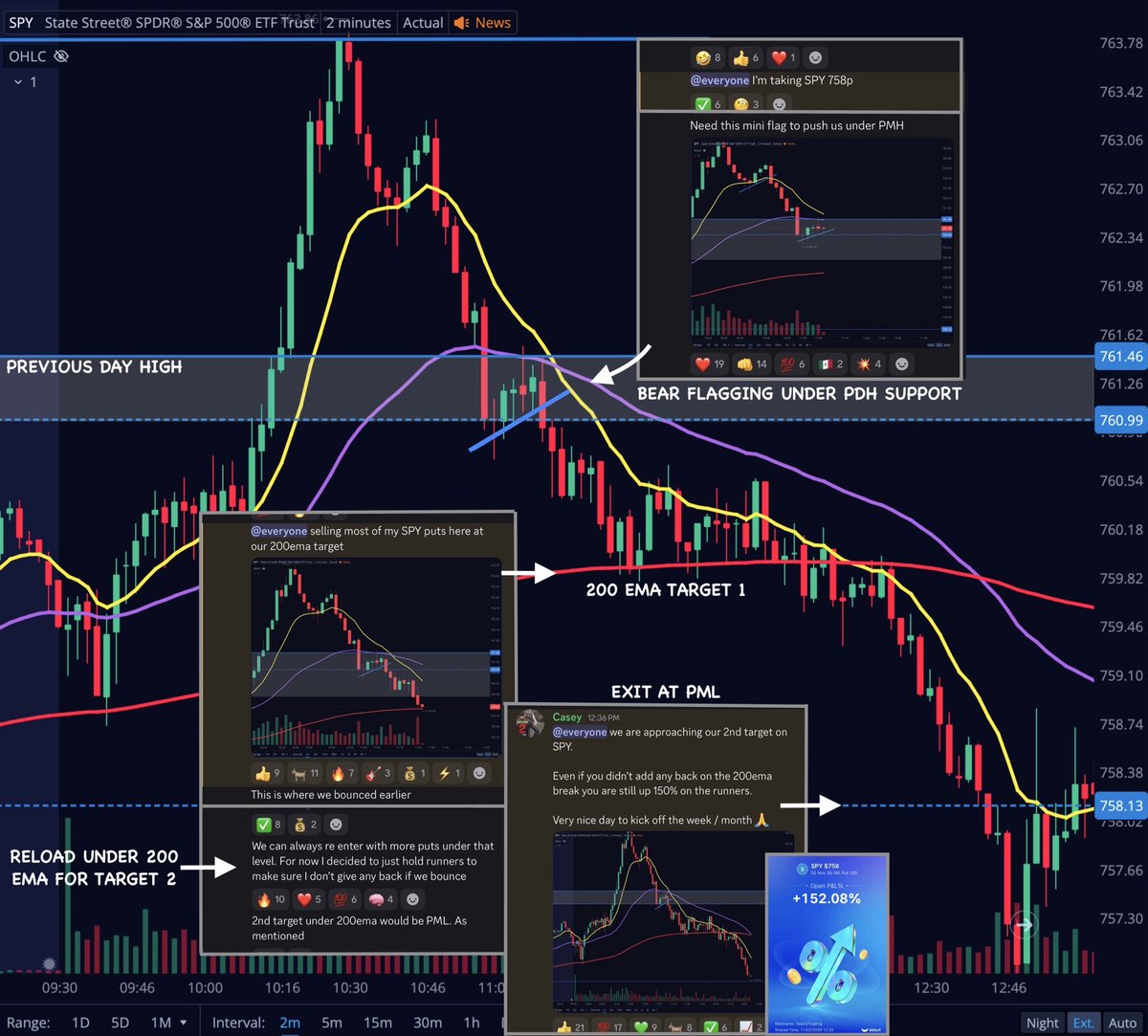
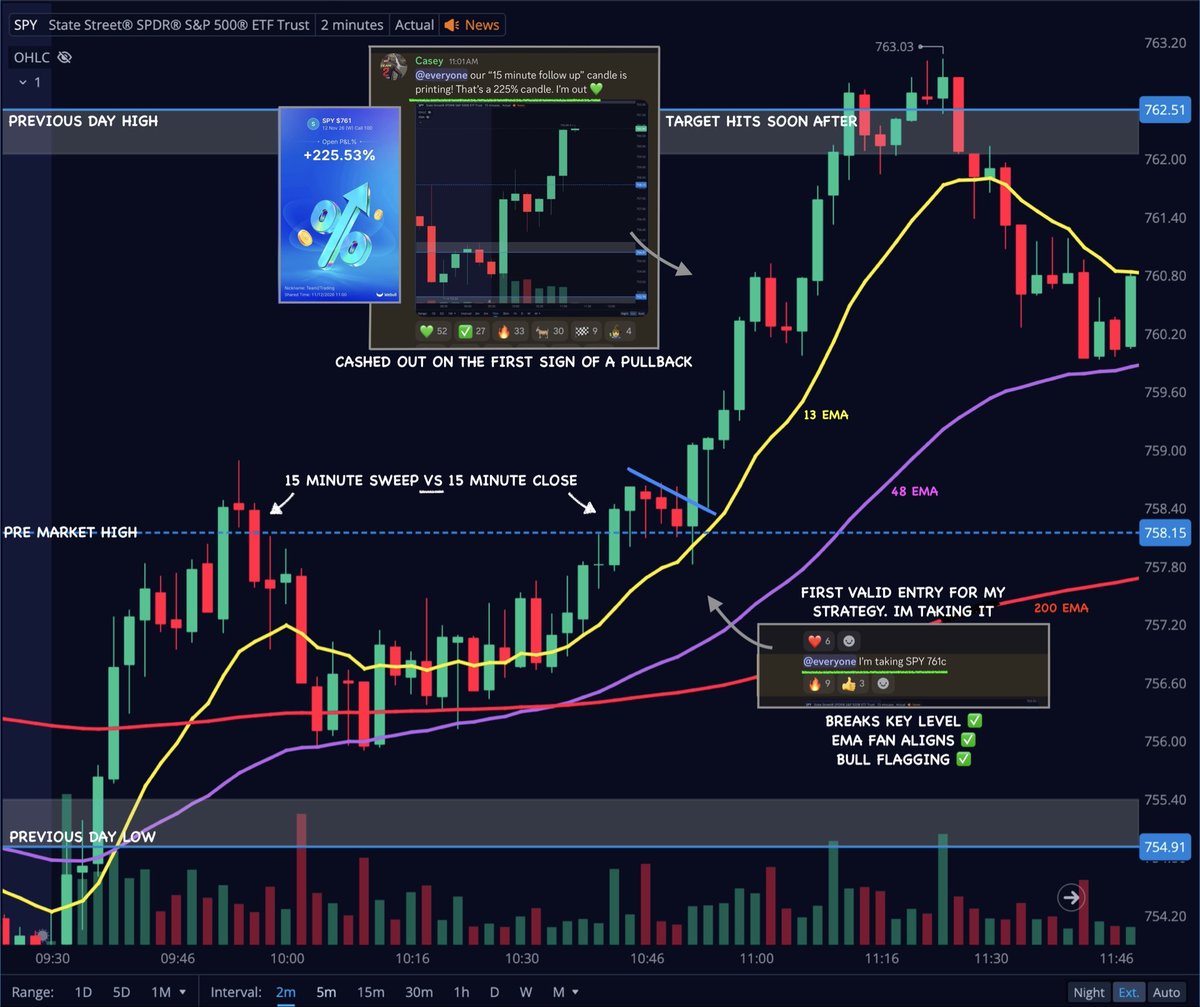
This simple checklist has landed us on the right side of nearly every big move lately 📝
We’ve been absolutely killing these trends both up and down!
Here’s how👇
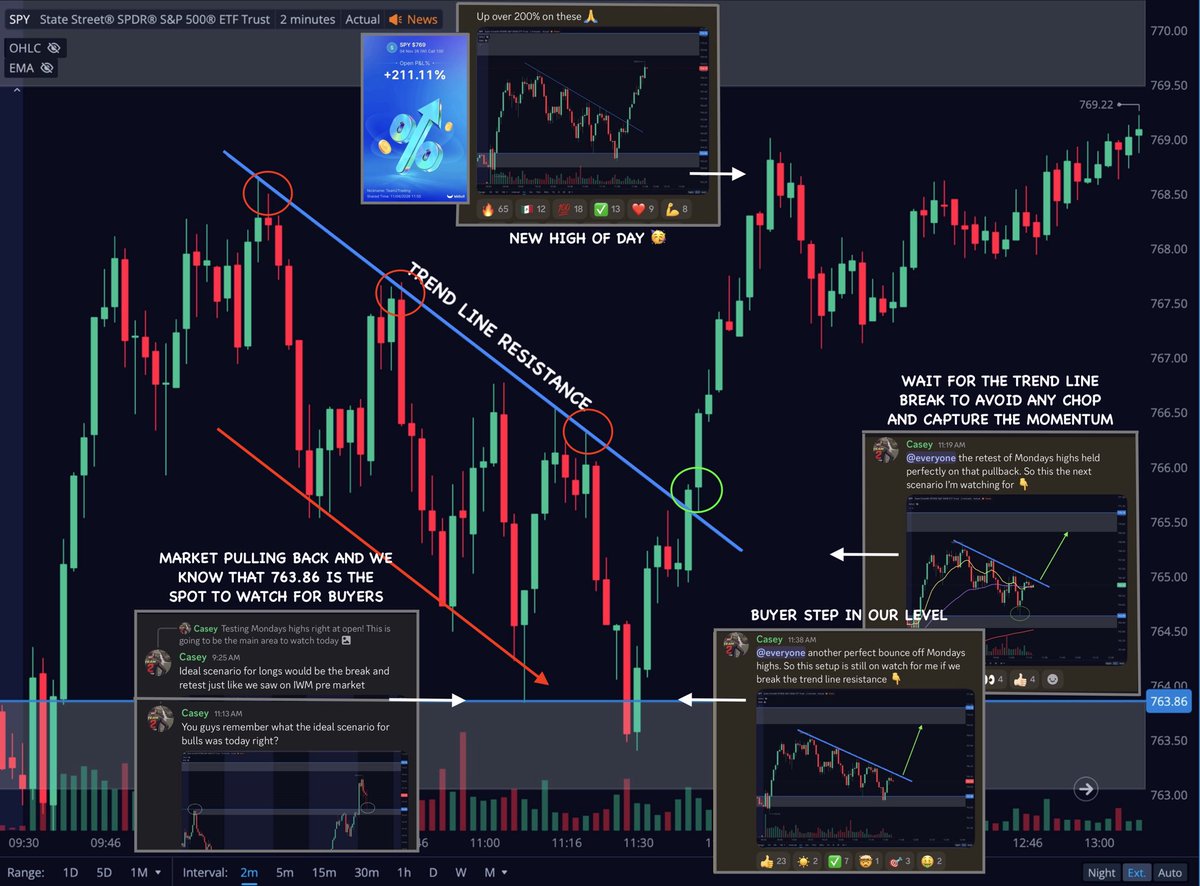
We focus on calls and remain bullish when price is…
Above the Previous Day High ✅
Above the Pre Market High ✅
Bullish 13/48/200 EMA’s ✅
Bull flagging pullbacks ✅
We focus on puts and remain bearish when price is…
Below the Previous Day Low ✅
Below the Pre Market Low ✅
Bearish 13/48/200 EMA’s✅
Bear flagging pullbacks ✅
This has kept my win rate above 80%+ all month long and the winners have been huge 🙏
$SPY $QQQ $IWM
Martin Luk made 150%+ in a multi-million dollar account in a month.
Almost the entire gain came on just 5 days.
No options. No 0DTEs. No Futures.
I reconstructed his epic Shortober run to see how he actually traded it. https://t.co/A7w9H9Hs0u
I attached a weekly chart of the S&P I created with yearly volume overlay. The HVN (high volume nodes) can be major decision points where revesals can occur.
A picture is worth a thousand words. 😉🧐https://t.co/wfqwXK32J2
#ES_F $SPY $QQQ #NQ_F#EC_F#CL_F#US_F#ZB_F
I don't think we're going to see an '87-style crash in percentage terms, but today could set the stage for some form of market meltdown that could potentially last a week or two. If the decline picks up steam, throw your oversold indicators out the window. My guess would be $SPY 10%-15% from peak with 20% as a worst case. Nasdaq could drop 20-25%. Possible 1998 cyclical bear market.
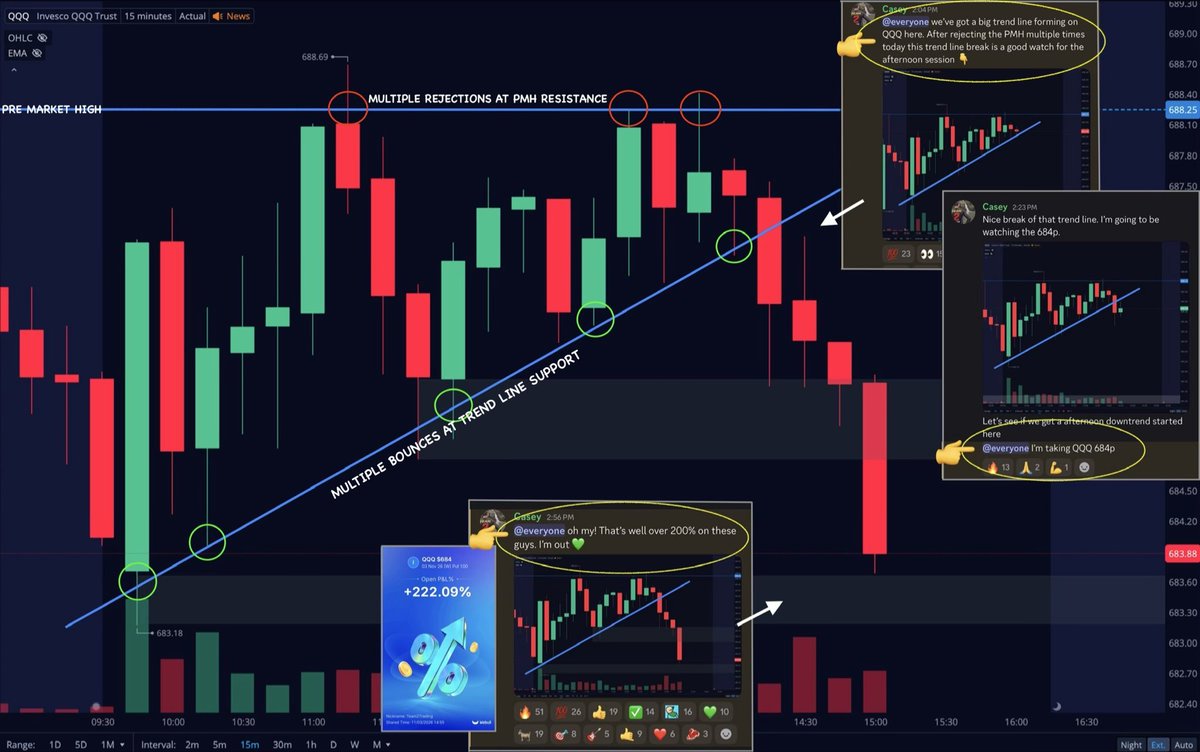
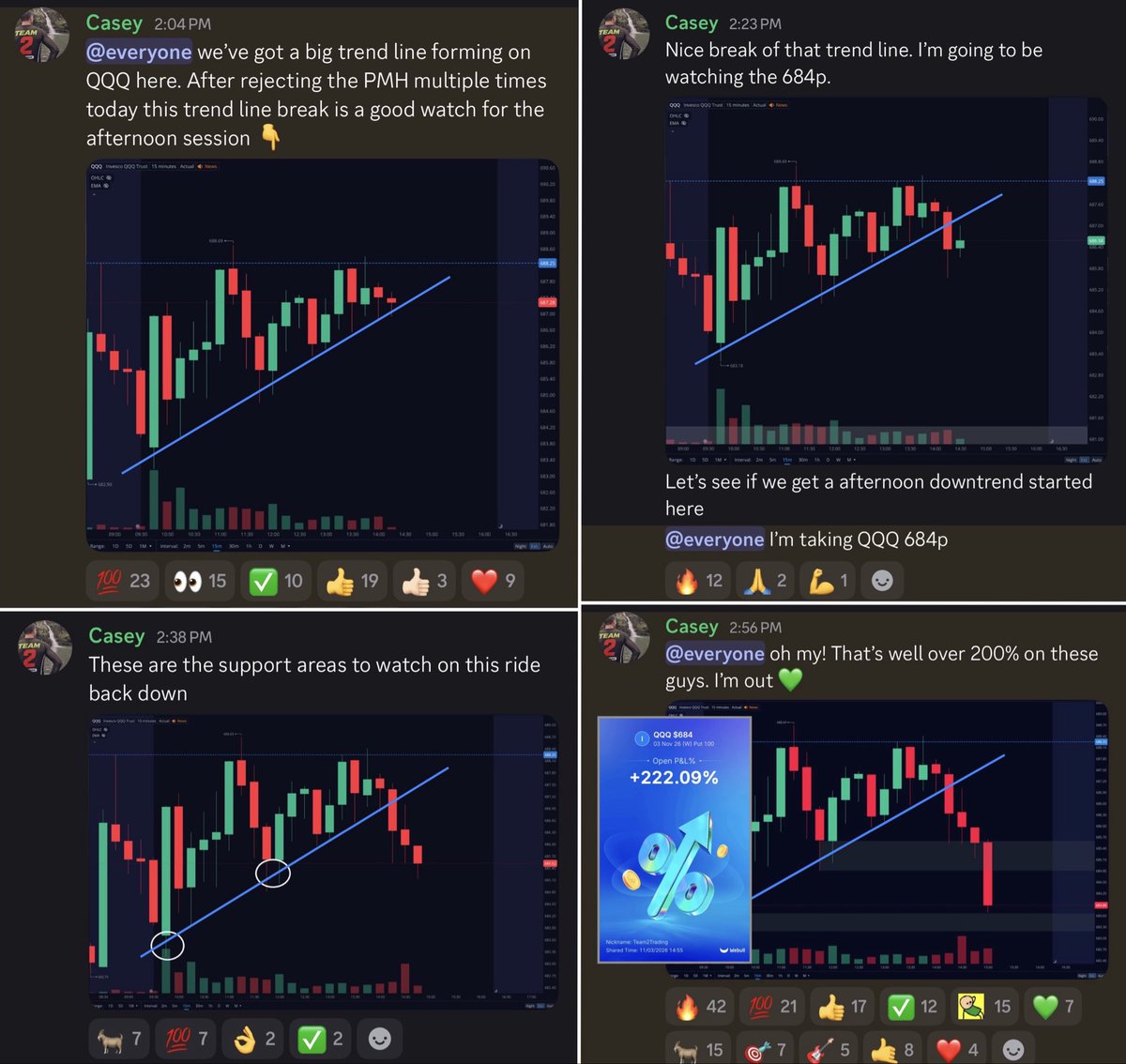
Here’s a little mid week recap from the Team2 discord 📝
Monday $SPY puts for +150%💰
Tuesday $QQQ puts for +225%💰
Wednesday $SPY calls for +220%💰
Haven’t had time to recap all the wins but we also hit +70% on $SPY calls and +65% on $IWM puts ✅
I took 2 losses. $SPY calls for -15% and $QQQ puts for -30% ❌
So I’m sitting at 6 wins, 2 losses.
That’s a 75% win rate which is about average for me. I never expect to win them all.
I’d say we’re off to a great start to November!
In fact, the only stats you’ll find better than this are going to be from the hindsight traders on twitter who wouldn’t dare post an actual entry.
But you better believe they’ll critique your trades from the sidelines 😉
Block the noise. Keep killing it 💚
$QQQ Levels & Zones 🎯
If you watch the charts long enough, you will notice that the market plays out the same couple of scenarios every single day.
And this is one of them 👇
How to read a $SPY chart 📝
FOMC edition.
Wider chart. Phones sideways 📲
Just going over the day the way I saw and played it with the team. Never cherry picking in hindsight 🤙
21 short pieces of advice from 20+ years of trading 👇
1. Protect your capital first. You cannot compound money you no longer have.
2. Master one system before searching for another one.
3. Trade less when the market is weak. A great setup does not exist in isolation.
4. Stop trying to avoid losses. Learn to keep them small.
5. Your best trades should make multiples of what your average losing trade costs you.
6. Study your winners as deeply as your losers. You need to understand what you did right.
7. Judge the quality of your decision separately from the outcome. A good trade can lose money. A bad trade can make money.
8. Become extremely selective. "Tradable" and "worth trading" are two completely different standards.
9. Focus on genuine market leaders. Average stocks rarely produce exceptional results.
10. Look at what happened before the setup. The prior move and price action matter as much as the breakout itself.
11. Never chase a stock because you are afraid of missing it. There will always be another trade.
12. Decide your entry, position size and risk before you buy.
13. Let the market determine your exposure. You don't need the same level of aggression in every environment.
14. Learn to sit in cash without feeling that something is wrong. No position can be the correct position.
15. Don't confuse activity with progress. More trades can simply mean more opportunities to make mistakes.
16. Give your strongest winners enough time and room to become meaningful winners.
17. Keep your watchlist small enough that you actually know the stocks on it.
18. Review your trades regularly. Your own trading history can teach you more about your weaknesses than another trading book.
19. Stop judging yourself by a few trades. Think in samples of dozens or hundreds of decisions.
20. Build confidence from evidence, not from your recent P&L. Know why you trust your rules.
21. Never stop improving your process. I still review, test and question my own trading after more than 20 years.
The biggest change experience made to my trading wasn't adding more.
It was learning what I could remove.