Top Performers in US Stock Market since 2000
I want to share a self-hosted stock research tool that identifies and visualizes the most powerful price moves in US equity market from 2000 to current date. It processes raw daily OHLCV data for over 12,000 US tickers — including delisted stocks — and surfaces the top 7% performers each year for in-depth chart study.
Github link: https://t.co/5u4KpuhhSx
The project is inspired by the trading methodology of Kristjan Kullamägi (Qullamaggie), which focuses on learning from stocks that made exceptional gains in a short period of time. By studying these historical moves in detail — their price structure, volume behavior, and timing — traders can develop a sharper eye for recognizing similar setups as they form in real time.
This is also a use case for my open-source charting platform. https://t.co/QCg04LytjE
If you find this project helpful, welcome to buy me a coffee. https://t.co/txMJM1c0tM
Disclaimer
Stock data and any statistics or charts derived from it are not guaranteed to be 100% accurate or complete. You are responsible for independently verifying the accuracy and suitability of the data before using it for any purpose.
Thanks to AI coding, a complex learning process is now much simpler. I filtered the top 7% YTD stocks from 2000–2026 (including delisted ones), get 1400+ stocks, and visualized them with TradingView Lightweight Charts, featuring auto-marked highs/lows and direct period displays. Browse by year or symbol, even delisted stocks from the last decade like $LVGO and $TWTR are fully accessible.
Once I refine the charting and annotation features, I will open-source this learning project.
One of my biggest regrets in my 27 years of trading wasn't losing money.
It was the up and downs.
It was being physically with someone I loved, but mentally I was somewhere else.
I want to share something else about my past, because after reading all your comments on my previous post, I realized how many people have experienced similar things.
For many years, being in a relationship with me wasn't easy. And I can admit that today.
I had two big passions in my life. Bodybuilding and trading.
Bodybuilding was already demanding enough. Cardio in the morning, training, preparing my meals, eating at certain times, following my routine every single day.
Even when we went out for dinner, most of the time I had my chicken and rice with me.
Imagine being with someone who organizes almost everything around his training and meals.
And then add trading to that.
I was constantly watching the markets. Checking positions on my phone, looking at charts, sometimes even bringing a tablet to dinner.
I can understand today how annoying and frustrating that must have been.
But you know what?
The biggest problem wasn't any of that. It was me. How I felt inside.
Sometimes I would finish a terrible trading day. Maybe I had lost a lot of money. Maybe I was frustrated, disappointed, or simply exhausted.
Then I would go home, or go out with my partner, and pretend everything was normal.
But it wasn't.
I could be quiet, distant, irritated. Sometimes I didn't want to talk. Sometimes even a simple question could annoy me.
And the person next to me didn't understand why.
Because I wasn't sharing what was happening inside me.
Maybe it was pride. Maybe I didn't want to admit I had lost money. Maybe I just wanted to forget about the day.
But I couldn't.
I was still thinking about my positions, what I did wrong, what I could have done differently.
I had left the trading desk, but the trading desk hadn't left me.
And something I learned later is that this isn't only psychological.
There is a physical side to it.
When you experience extreme financial stress, your body releases adrenaline and noradrenaline. Cortisol is also involved in the stress response.
Your heart rate can increase, your nervous system becomes more alert, and your body prepares to deal with a threat.
Studies on professional traders have actually measured how cortisol changes with market volatility and trading uncertainty.
And this is what I find interesting.
You can close your computer in one second. But you cannot necessarily switch off what is happening inside your body in one second.
When that stress continues day after day, it can affect your sleep, your patience, your mood, and the way you treat other people.
I experienced it.
And looking back, I realize that sometimes I was a piece of shit to the people who loved me.
Not because I didn't love them.
But because I was so absorbed in my own world
Today I still love trading. I still love bodybuilding. I still have my routines, my discipline, my ambitions.
That's part of who I am, and it will probably never change.
But what has changed is how I look at life, at money, and especially at the people around me.
I don't want to spend my life making money and then realize I wasn't really living it.
And if you're a trader reading this, especially if you're young and extremely ambitious like I was, think about it.
Sometimes we become so obsessed with building the life we want that we forget the people who are supposed to share that life with us.
Money can be made again. A losing trade can be recovered.
BUt time and people around us won't be there forever.
That's it, hope you can do and be better then me
Oct 13, 2026
This type of dispersed and fragmented market in volatile momentum names requires even more caution and mindfulness in what you are doing.
The last thing you want is forcing trades, over-trading, and revenge trading. You will either end up on tilt and losing capital, or mentally exhausted from a thousand cuts or simply over managing your positions.
Knowing yourself, your timeframe and the strengths and weaknesses of your process is key.
If you have no edge, stay away. If your process says do nothing, then mindfully do nothing.
Not every candle requires your action. The market is likely still open in 3-6 month time and likely still a bull market if you have the patience for it.
Be consistent and discipline, don’t mix up your timeframe, and each trader is different.
Less is more, slow is smooth, smooth is fast.
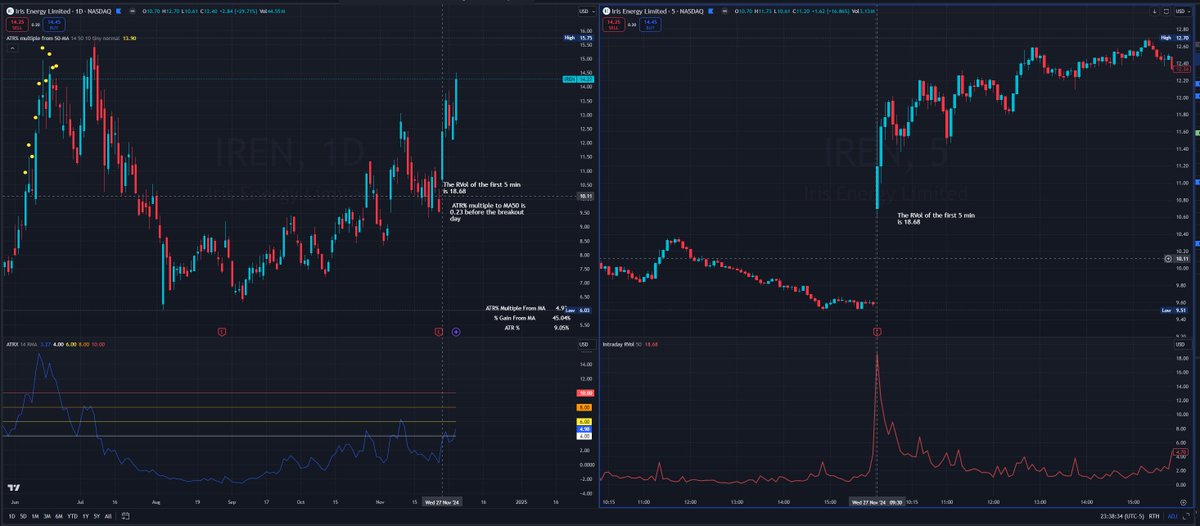
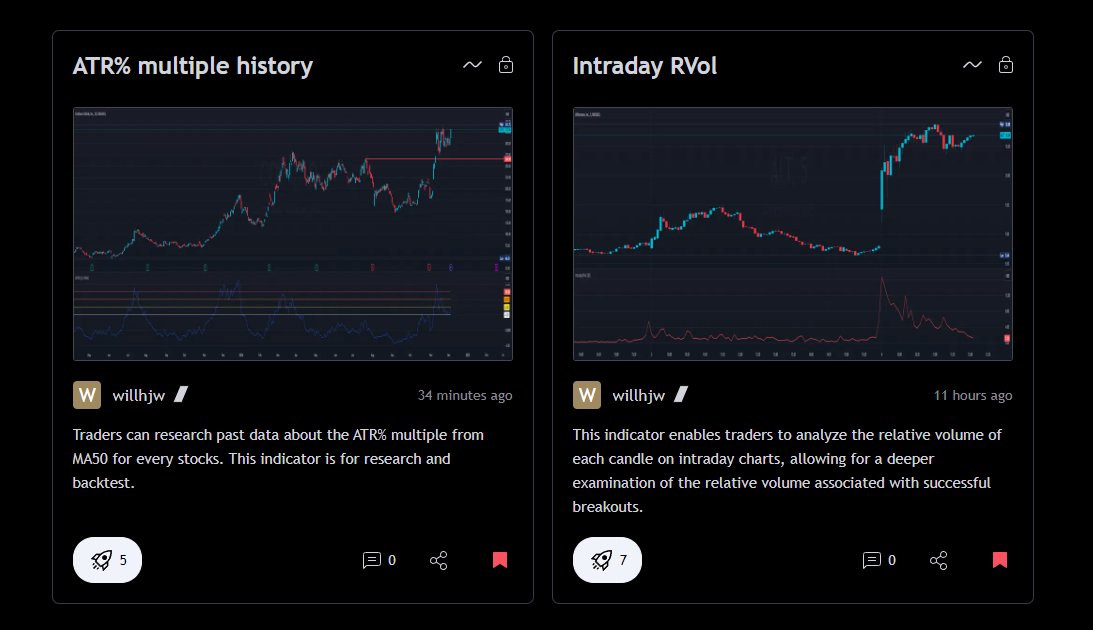
How to study Jeff's method with the 2 indicators.
Find a stock and make sure its ATR% extension is under 4 before breakout, like $iren a few days ago.
Open the intraday charts like 5 min chart. "intraday RVol" can show the RVOL of first 5mis 18% to its 50 day average vol.
And I don't know who needs to hear this, but tune out the noise. Reading posts of someone 200% long when you're having a rough time is of no benefit.
1) It's just ego feeding.
2) One strategy is likely in vogue while another isn't. There is nothing wrong with that.
3) If you're making money in this environment, great! Keep going!
If not, take this time to really reflect and refine edge. There's no shame and not a reflection of you as a person if you're struggling.
Like life, there will be ups and downs in trading - embrace it! Importantly, be kind and stay humble because the market will always humble you when you least expect it. 😆
Very difficult environment. I am trading extremely small now having drawn down for the last few months.
Mega cap tech (Mag 7+AMD SPCX MU AVGO) the trillion $ club are rallying the QQQ higher.
In my experience, during periods like this in my trading, I just need to keep cutting size and reduce monthly max losses more and more to prevent excessive drawdown. The good times will return again, you just have to wait!
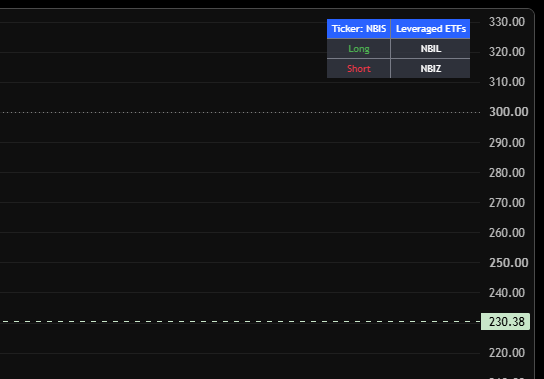
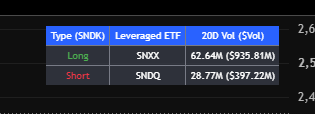
Track Leveraged ETFs directly on your chart
Automatically detects the ticker on your chart and displays its corresponding Long & Short Leveraged ETFs (1.5x–3x) in a clean panel.
70+ Core Tickers / 200+ Leveraged ETFs
Supports Mega-cap Stocks, Indices (SPY/QQQ), Sectors (SMH/XBI), Commodities (GLD/USO), Crypto (IBIT/MSOS) and Countries(EEM/FXI)
https://t.co/332GggV2jf
Clement and Martin both said flipping charts is very important and a lot of people underestimate it.
"Flipping charts is the most important learning method and a lot of people underestimate it. After learning other people's stuffs and absorbing the new knowledge, you have to reapply it. The easiest way would be going through the charts and see what works or not." @martinlukkt
I won't say there isn't anything particularly 'underrated' or special! But if I would have to point one out, its flipping through charts routinely + watchlist management.
Having a daily and weekly routine where you become a 'chart junkie' and flip through hundreds upon hundreds of charts is where you will develop that feel for the market. You won't feel it in one day, but doing it over time for many days and many market cycles: you will develop a feel for the market that is irreplaceable.
That I believe is the discretionary edge in trading that many are looking for!
This is a tough one, and a great question! Honestly something I still struggle with (though much better compared to earlier years).
The difficulty isn't because you can't sit out of a choppy environment, its exponentially increased because the market eggs you enough to keep you engaged enough just to rug you, toiling on your mental capital until the real turn comes and you're too exhausted to engage again.
My solution thus far:
(1) Think very deep about your trading system:
When are you allowed to be aggressive and chase for opening range entries? When are you not allowed to and should only engage 30-minutes after the market open?
Which type of entry styles (breakouts or pullbacks) favor a choppy market environment? Within each entry style, what is the entry tactic? (5-min 6/20 MACD turns, or 30-min pullback pivots, etc...)
What type of profit taking rules should you have in a chop market? (say take half position off at 3R instead of 1/3 in trending environments).
How many new trades are you allowed per day? Max risk per session?
Importantly: What is your A+ setup? What filtering criteria do you have that differentiates this setup vs the rest? (In choppy markets, you won't find that many A+ setups).
Having this clarity allows you to engage a chop market without doing too much damage to the account.
(2) The next part of this is situational awareness: How do market cycles start? You will have conduct deep dives to find the answer to this. This article may help!
https://t.co/XGg1CMCepj
Common misconception: Single-stock leveraged ETFs are just for gamblers.
Reality: They are capital efficiency tools. The goal is to minimize capital commitment while maintaining the desired exposure.
Key rules when trading them: Liquidity First
Stick to liquid tickers with tight bid-ask spreads. Slippage will eat your compound returns.
Here’s a curated lookup table of liquid stocks & their leveraged (Long/Short) counterpart ETFs.
Track Leveraged ETFs directly on your chart
Automatically detects the ticker on your chart and displays its corresponding Long & Short Leveraged ETFs (1.5x–3x) in a clean panel.
70+ Core Tickers / 200+ Leveraged ETFs
Supports Mega-cap Stocks, Indices (SPY/QQQ), Sectors (SMH/XBI), Commodities (GLD/USO), Crypto (IBIT/MSOS) and Countries(EEM/FXI)
https://t.co/332GggV2jf