🚨 Jensen Huang has stepped down as NVIDIA CEO, President, and board member after 33 years.
This is confirmed — Reuters reported it and NVIDIA filed with the SEC on November 12, 2026.
The $4T AI giant is now in the middle of a major leadership transition, and the implications go far beyond one executive exit.
Colette Kress (CFO since 2013) has been named interim CEO while keeping her CFO role. Harvey C. Jones, a board member since 1993, becomes NVIDIA’s first Chairman. A permanent CEO search is underway (internal + external candidates).
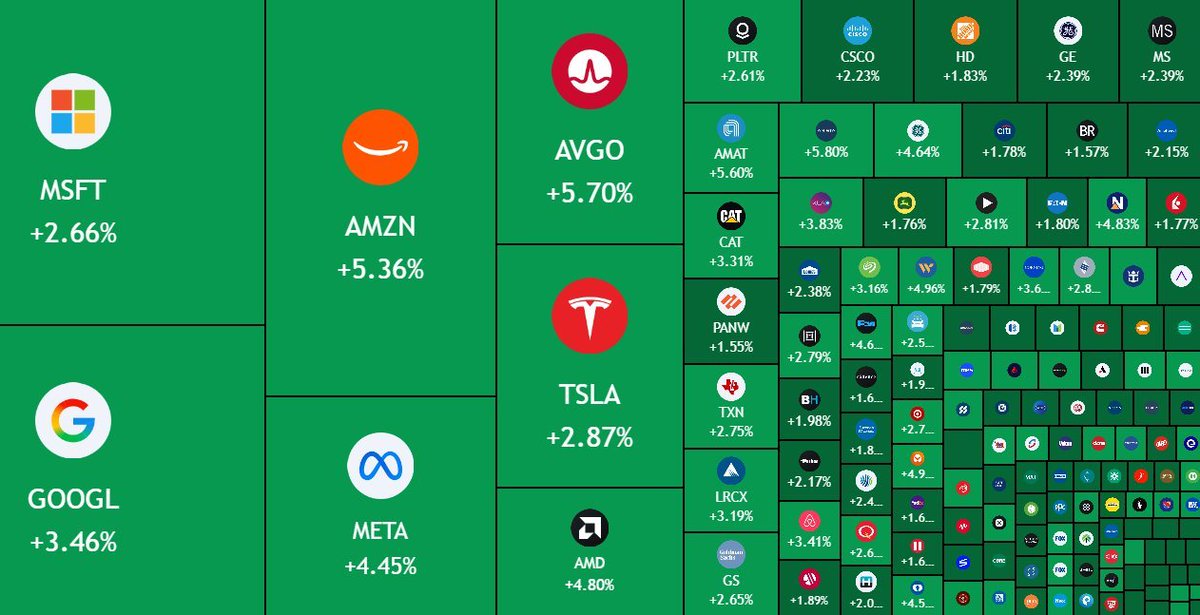
The stock dropped more than 12% at one point, putting roughly $500B in market cap at risk. Investors have long priced NVIDIA as much on Huang’s leadership as on the chips themselves.
At the same time, Anthropic shared a notable technical result: using Claude, they ported the prompt-processing portion of a model onto AMD MI355X GPUs in roughly three days, with very little human intervention. Claude reportedly wrote or converted nearly 100% of the required kernels.
Traditional hardware porting work has historically taken 6–12 months.
Important context: this was specifically prompt processing of one model at useful performance — not a full training + inference + optimization stack across every workload. Still, it’s a clear signal that AI is starting to compress deep systems engineering work.
This raises a real question about NVIDIA’s CUDA moat.
CUDA isn’t just software — it’s years of libraries, tools, frameworks, and developer mindshare that made switching to other chips painful. If AI can meaningfully reduce the time and effort to port and optimize across architectures, that switching cost starts to shrink.
Anthropic is already running Claude across multiple platforms (AWS Trainium, Google TPU, NVIDIA, and AMD) and has a potential large-scale AMD relationship that could involve up to $5B. They’re deliberately trying to avoid single-vendor dependence.
NVIDIA still has major advantages in performance, networking, software maturity, and ecosystem. This doesn’t mean the moat is gone. But an advantage that once took months or years to overcome may become less durable as AI itself gets better at systems work.
The interesting tension: AI created massive demand for NVIDIA’s GPUs — and is now becoming a tool that could help others close part of the software gap.
How long do you think the CUDA advantage holds if AI keeps improving at cross-chip porting and optimization?
Is the next phase of the AI infrastructure race more about who has the best chips… or who can deliver reliable compute at the lowest cost?
$100/month into Nvidia from Jan 2008 to Oct 2026:
$22,600 invested. Calculated value: about $6.3M as of Oct 30, 2026.
3-month US T-bill rate proxy: ~$27.6K.
Source: Yahoo Finance adjusted prices. Assumes fractional shares; no taxes or trading fees. Past returns do not predict future results.
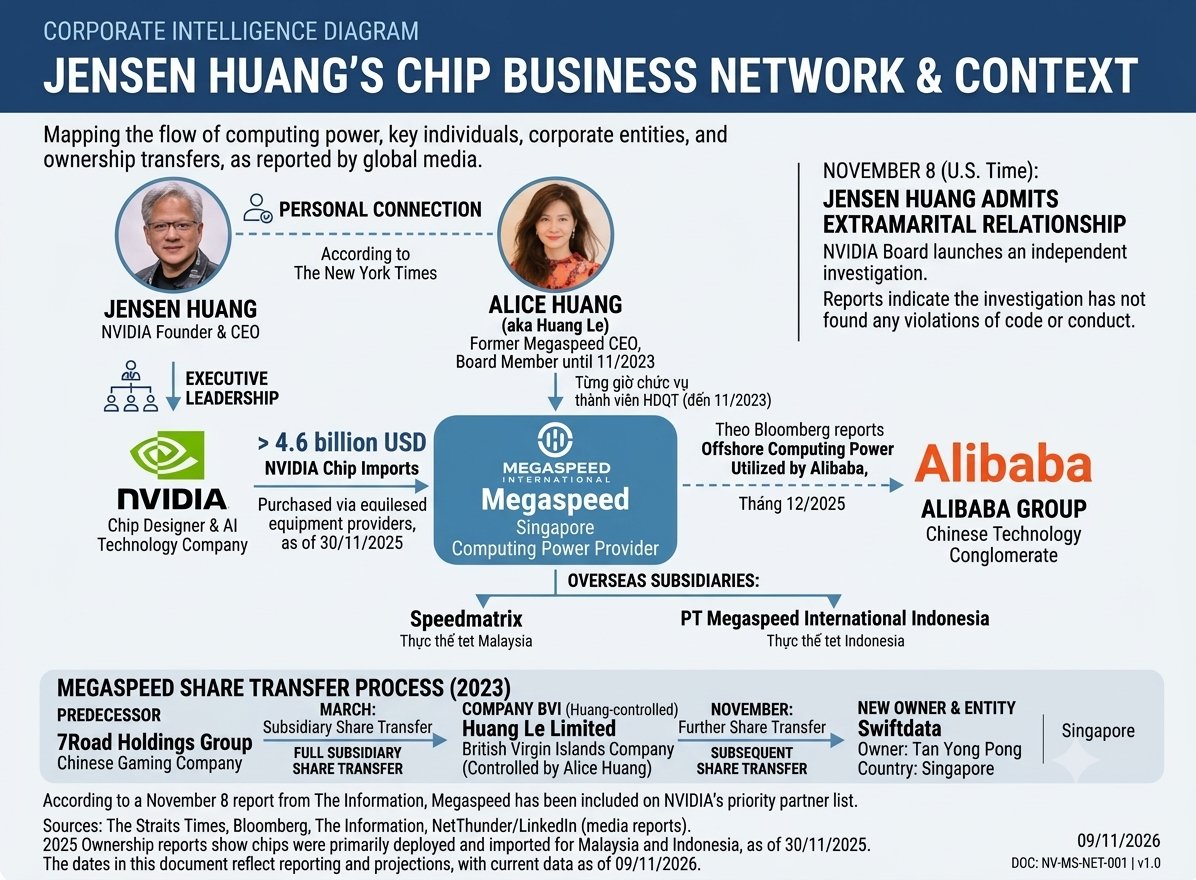
The business network behind the Jensen Huang scandal.
Jensen Huang, founder and CEO of NVIDIA, admitted on November 8 (US time) that he had been unfaithful to his wife of more than 40 years. In a memo to employees he wrote that his actions hurt his wife and children, that there is no excuse, and that he takes full responsibility.
NVIDIA’s board has opened an independent investigation into whether he was the target of a foreign intelligence effort.
At the center of the story is Alice Huang (also known as Huang Le), former Managing Director of Megaspeed, a Singapore-based computing power provider.
According to reporting by The New York Times, U.S. intelligence officials concluded she was a Chinese intelligence asset (linked to the Ministry of State Security) who developed a close personal relationship with Jensen.
Photos and videos from events in Taipei in 2024 and 2025 show them together at industry gatherings. Both Jensen and NVIDIA previously described the interactions as normal customer contact.
Megaspeed’s origins and ownership trail (2023):
- It began as the Singapore subsidiary of Chinese gaming company 7Road Holdings.
- In March 2023 it was renamed Megaspeed and shares were transferred to Huang Le Limited (a British Virgin Islands company controlled by Alice Huang). She became managing director.
- In November 2023 the shares were transferred again to Swiftdata, a Singapore company owned by Tan Yong Pong. Alice Huang resigned as director around the same time.
- Shortly afterward, Megaspeed became an official NVIDIA Cloud Partner.
The scale of the business is significant. Trade records cited by The New York Times and Bloomberg show Megaspeed (mainly through its Malaysian affiliate Speedmatrix) imported more than $4.6 billion (some reports put it at $4.8 billion) worth of NVIDIA chips and related equipment, primarily deployed in data centers in Malaysia and Indonesia. Bloomberg reported that Megaspeed rented this overseas computing capacity to Chinese companies, including Alibaba. Because the chips themselves stayed outside China while Chinese users accessed the power remotely, this structure sits in a gray area of U.S. export controls.
NVIDIA has stated that earlier investigations into possible chip diversion found no violations, and that Megaspeed is treated like any other regional customer. Megaspeed has denied wrongdoing and said multiple inspections (by U.S. Commerce Department, Malaysian authorities, and NVIDIA) found no evidence of illicit transfers. Singapore authorities have also looked into the company.
The Information reported that Megaspeed is listed among NVIDIA’s preferred partners. The combination of the rapid rise from a Chinese gaming spin-off, the ownership changes through a BVI entity controlled by Alice Huang, the large chip purchases, the remote access model serving Chinese customers, and the personal relationship with Jensen is what has drawn intense scrutiny.
Sources: The New York Times, Bloomberg, The Information, The Straits Times, and corporate filings.
This is a developing story involving national security questions, export controls, and personal conduct at the highest level of the AI industry.