I’m Derek. I’ve been trading for over 10 years, and I lost more than $70,000 in my first few years doing it.
What turned it around wasn’t a better indicator. It was rules. Boring, mechanical rules I follow every day, even on days I don’t feel like it.
I also run real estate development companies, so trading has to fit around my life. I can’t sit and stare at screens all day. My system tells me when to get in and when to get out, and I do what it says.
Every morning I post my ORB watchlist. During the day I post the trades I actually take in SPY, QQQ, SLV, GDX and EUR/USD, with entries and exits, wins and losses. On Fridays I write up a strategy I’ve been testing.
Capital preservation first. Strategy second. PnL last.
If that’s how you want to trade, follow along.
Not financial advice. These are my own trades and opinions. I’m not a registered investment adviser. Trading is risky, so do your own research.
My whole EUR/USD system fits on a sticky note. In at 2am CST. If I'm red at 4am, I'm out. No debate. If I'm still in, I'm out by 11am CST no matter what. I place it, go run my other businesses, and the clock does the deciding. Boring is the point.
Your stop loss is not a guess. It is the exact price that proves your idea was wrong.
If you let a trade go past that point because you hope it will come back, you are just gambling.
The best traders are the ones who are really good at taking tiny, quick losses. They get out, keep their risk small, and save their money for the next opportunity.
Honest question for anyone trading part time:
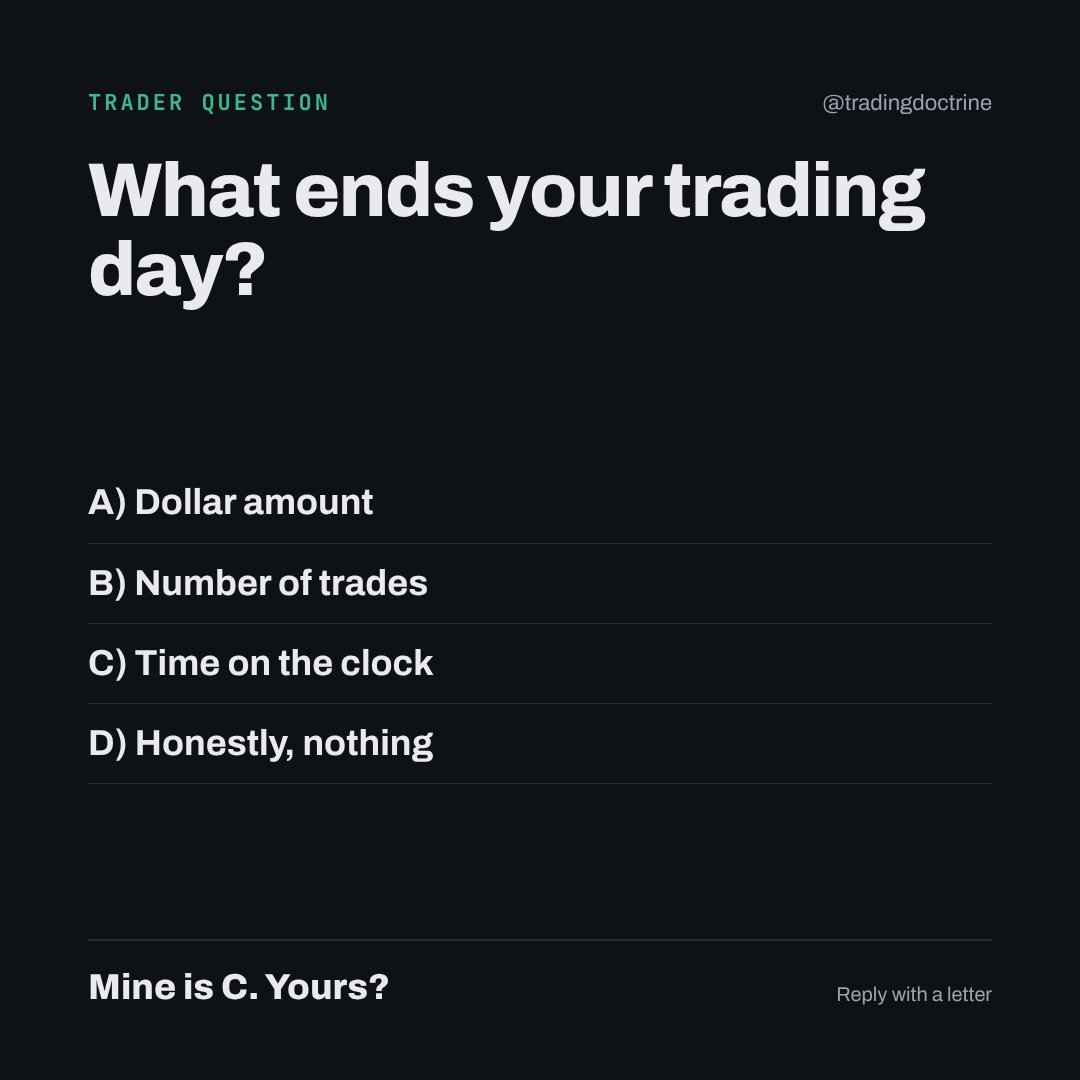
What's your hard stop for the day? A dollar amount, a number of trades, or a time on the clock?
Mine is time. For EUR/USD I'm out by 11am CST every day, win or lose. I've got businesses to run and I'm not going to babysit a chart.
@EliteOptions2 Trading becomes significantly easier when you simplify your chart work. Focus on the core foundational factors that actually drive price, eliminate indicator clutter, and execute with clarity.
Just got back from Panama and I’m still thinking about the ceviche.
We had a local chef cooking for us part of the trip, and honestly it was some of the best food I’ve had anywhere. The seafood there is on another level.
I’m going to start sharing some pictures and stories from places I’ve been.
Where’s your favorite place you’ve traveled? And what’s the one meal you still think about?
@MoneyTradeEdge Emotional composure is the foundation of long-term trading success. Control your emotional reactions at the screen, follow your plan without panic, and let disciplined execution drive your results.
@iamdakejr Every strategy experiences unfavorable market cycles. A bad month for your setup might be a great month for another model; stick to your verified rules and avoid dropping your system during normal drawdowns.
@TheProfInvestor Do not obsess over picking the exact bottom. If a company is fundamentally sound and price is holding major structural support, scale into the position patiently while managing downside risk.
@Langerius Do not let your daily trading results dictate your mood. Standardize your risk, manage your downside with composure, and keep an even emotional state across all market conditions.
Consistent trading begins when you let go of the pressure to know what the next candle will do. Accepting that anything can happen eliminates the frustration of taking a clean stop loss. Embracing market uncertainty allows you to execute your rules with calm detachment, treating each trade as one independent opportunity among hundreds.
@TheH0n3stTrader Trading is simple in concept, but demanding in execution. Keep your technical rules straightforward, respect your risk parameters, and focus on the discipline of consistent execution.
@toni__iyke Technical analysis is easy to study, but mastering the discipline and patience to execute it is the real work. Commit to the trial and error, manage your risk, and let steady self-development build your edge.
@trad_ISABEL You are reacting to human behavior, not predicting price. Master your own discipline and risk parameters first; the ability to read and navigate the market follows self-control.
@TedHZhang You do not need to be in the market all the time. Step aside when economic conditions are unclear or when you need an emotional reset, preserving capital for favorable opportunities.
@Teddy_meshak Cap your drawdowns before they damage your mindset. A small drawdown is easy to recover through normal trading; protect your mental health and account balance by cutting risk early.
@NavTrading1 Internalize the math of probabilities. An edge is just higher probability across a random distribution of wins and losses; manage your risk cleanly and let the sample size work.
The feeling that you must participate in every market expansion creates impatience and unforced losses. Professional trading is about selective waiting; price moving without you carries zero financial cost. Cultivate the confidence to let random market swings pass, saving your capital for the setups designed for your edge.
@PJtrades_NQ Trading is not an overnight fix. It takes extensive time, disciplined effort, and persistence, but building a real edge pays dividends for the rest of your career.