Stanley Druckenmiller: ~30 years at ~30% a year, no losing year.
Then he bought the dot-com top he had already called, and lost $3B in six weeks.
"I was just an emotional basketcase and couldn't help myself."
Sizing built the record, not being right.
https://t.co/PWFkfODdyY
The SEC just declared Evernorth's S-4 effective, clearing the path for its ~$1B SPAC merger with Armada Acquisition Corp. II and a Nasdaq listing under $XRPN. If shareholders approve on Sept 30, Evernorth launches holding 473M+ XRP, backed by Ripple, SBI, Pantera Capital and Kraken — the largest publicly traded XRP treasury vehicle to date. Worth watching less as a price signal and more as a template: crypto-native firms increasingly using the SPAC/public-markets route to build regulated balance sheets. Not investment advice, just tracking the structure of the deal.
https://t.co/165MDZFCu3
JUST IN: The SEC clears @evernorthxrp's registration to list as an $XRP treasury company on Nasdaq under ticker $XRPN.
Backed by @Ripple, @PanteraCapital, @Krakenfx and SBI Group, with a shareholder vote on September 30.
A crypto withdrawal is the only action in trading you can't undo. No chargeback, no recall, no one to appeal to.
Four fields decide it — address, network, memo, amount — and three of them fail silently.
The 7-step checklist, plus the two attacks that beat careful people:
https://t.co/F7MP3PG3A1
Nobody "sets" the price of Bitcoin.
The number on your screen is just the last trade that crossed the spread — on that one exchange.
Which is why your 5 BTC market order fills at $60,027.90 when you clicked $60,000. The book, the makers, the slippage:
https://t.co/W98tax6XJQ
Two traders. Same $3,000 account. Same six-loss streak.
At 1% risk it costs $176.
At 10% risk it costs $1,406.
Identical lesson. 8x the invoice.
Early on, position size isn't how you make money — it's the price you pay per lesson.
https://t.co/jlxzv22dFV
SOLANA JUST HELD ITS FIRST BINDING GOVERNANCE VOTE — SOL UP 8.5% AS RESULT
SOL is one of today's biggest movers as validators and stakers closed voting on SIMD-550 and SIMD-553, the first binding, stake-weighted vote in Solana's new governance framework. SIMD-550 would roughly double the annual issuance-decay rate (15%→30%), pulling the inflation floor forward from 2032 to 2029 — about 18.9M fewer SOL minted over six years. SIMD-553 redirects priority fees to burn, with daily burn potentially jumping from ~650 SOL to as much as 9,000 SOL. No confirmed final tally yet as of this writing — Solana Company (the validator entity behind HSDT) has already come out against both changes, arguing predictable staking yield still matters to institutional stakers.
Also today:
— BlackRock cut the minimum for converting self-custodied BTC directly into IBIT shares from $25M to $1M. Over $5B has moved through the channel so far; Bitwise cut its own threshold $100M→$3M. This is an existing in-kind mechanism (live since mid-2025) getting far more accessible, not a new single-day inflow number.
— Charles Schwab says it will add SOL, AVAX and LINK to its direct crypto platform "in coming months" — not live yet.
— Ledger disclosed and patched an Ethereum app bug that could let an attacker show one transaction on screen while signing another. Fixed Aug 13–21, before the lab exploit was published. No confirmed real-world losses — a disclosure, not a hack.
— A new NY Fed staff report found stablecoin inflows to country-tagged wallets rise ~1.8% during currency/banking-crisis weeks, evidence they're becoming a real dollar-access channel outside the banking system.
BTC $80,291 (+1.7%) · ETH $2,513 (+0.3%) · SOL $109.46 (+8.5%) · SUI $0.781 (+2.4%)
My take: three of today's four stories are really one story — Wall Street (BlackRock, Schwab) and SOL's own token holders are both building more formal, rule-bound infrastructure around crypto at the same time. Slower and less exciting than a price pump, but the kind of trend that tends to stick. Watch the SOL vote closest: an 18.9M-SOL cut in six-year issuance is a real structural change if it lands, but "up 8.5% the day voting closes" and "the policy is confirmed" are two different claims — wait for the final tally. On BlackRock: don't confuse a cumulative $5B conversion figure with a $5B single-day inflow, they're different metrics and headlines blending them are misreading it. None of this changes the risk profile of self-custody or stablecoin holdings overnight — it just adds more regulated doors in and out of the ecosystem.
Not financial advice — for information purposes only.
bitcoin:native $ETH $SOL #Solana #Bitcoin #CryptoNews
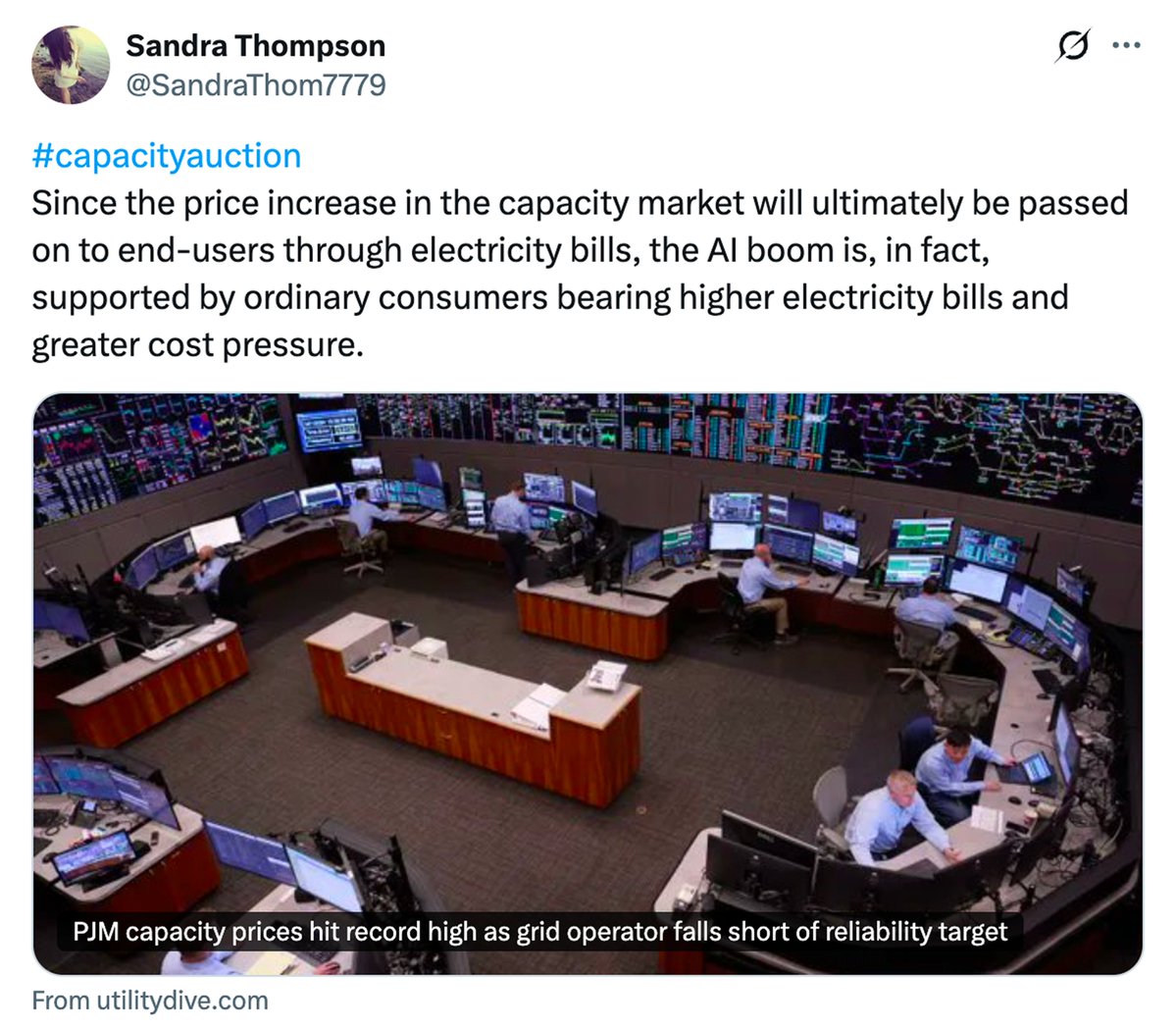
X's own Safety team says it dismantled a ~200,000-account Chinese bot farm, with 200 of those accounts pushing AI-generated content that framed data centers as the reason household power bills are rising. That's a useful reminder for the AI-energy debate: some of the loudest "public anger" online may be manufactured, not organic. It doesn't make the underlying grid-strain concern fake — US data-center power demand is a real, well-documented issue — it just means the volume of a real debate can be inflated by inauthentic accounts. Worth watching whether other platforms disclose similar takedowns as AI infrastructure buildout keeps colliding with electricity prices.
https://t.co/vxhFKvPdvK
The X Safety team conducted an investigation into suspected Chinese inauthentic accounts involved in influence operations:
We identified a bot farm of approximately 200,000 accounts. Within this farm, we found 200 accounts posting in a manner that could manipulate a legitimate debate about American AI and energy policy.
These posts contained claims that AI data centers are driving up household electricity prices and straining the grid. Others included AI-generated cartoons that depicted data-center operators enriching themselves at the public's expense.
We remain committed to maintaining an open and authentic platform where people debate topics of public interest. We take seriously any attempts to undermine the integrity of the global town square and suspend accounts that violate our Authenticity policy.
AI'S BIGGEST WEEK YET: A $12.9B DEAL, A $60B CHIP LOAN, AND A LAWSUIT THAT COULD DEFINE WHO'S LIABLE FOR AI TRAINING DATA
Four storylines from the last 24-48h show the AI industry locking up control of distribution, physical infrastructure and capital — while xAI is having its worst stretch of the year.
• Nvidia is reportedly close to buying Hugging Face, the open-source AI model/dataset hub, for $12.9B (The Information, via TechCrunch). Business Insider says nothing is signed yet and talks could still collapse. If it closes, Nvidia wouldn't just sell chips — it would own the distribution layer open-weight models run through (Hugging Face makes ~$150M/year, so the price is almost entirely strategic, not financial).
• Broadcom is reportedly seeking $60-100B in debt through a special-purpose vehicle to fund AI chips it will lease — not sell — to Anthropic and others. Anthropic never owns the hardware; investors finance it, then lease it out. Same off-balance-sheet playbook Broadcom, Apollo and Blackstone opened with a $35B deal in June, aiming to finance 20+ gigawatts of AI compute by 2028.
• Anthropic opened a research preview of a "Model Hardware Standard" — a common driver spec letting AI agents operate lab equipment and robotics (microscopes, liquid handlers, robotic arms), built with HHMI Janelia, testing with Genentech and AWS. Clearest step yet from "AI writes code" to "AI runs physical hardware."
• xAI's rough stretch: a lawsuit now alleges Grok was trained on CSAM (allegations only, unproven in court) — and separately, researchers at Adversa AI disclosed a "cryptographic context injection" flaw that can turn a simple "summarize this page" request into Grok quietly leaking your name, location, subscription tier and chat history to an attacker's URL. Reported to xAI June 3. Still unpatched as of Aug 19.
My take: the real story this week isn't model quality — it's who controls distribution (Nvidia-HF), physical execution (Anthropic's MHS) and the capital stack (Broadcom's lease structure) underneath AI, all moving at once. xAI's problems are the useful contrast: a disclosed security bug sat unpatched for 2.5+ months while the company kept shipping features — that gap between "move fast" and "actually fix what's been reported" is where the next real incident comes from, not some novel attack nobody saw coming. Pushback on the framing though: the Nvidia-HF deal isn't signed and the Grok flaw has no confirmed real-world exploit — both are "developing," not "done," so treat the headlines with a grain of salt. Worth watching if you hold anything AI-compute-adjacent: Broadcom's structure (debt-funded leasing instead of capex-funded ownership) is the template other AI infra deals will likely copy — if that pattern spreads, credit spreads on AI-linked debt become a better early signal than any single earnings call. None of this moves crypto directly today, but it's the same capital-intensity story that's been driving crypto-adjacent compute/infra token narratives all year.
Not financial or investment advice — for information purposes only.
#AI #Nvidia #xAI #TechNews
@lily_lamnz Agreed — the drawing part is easy, proving the 3 conditions is where the real work is. And without an expiry on the zone, "valid" turns into "still valid because I want it to be," which is how old boxes on a chart become noise.
Vẽ được một chiếc hộp chưa có nghĩa bạn đã tìm ra Order Block. Bộ tiêu chí quan sát được TRƯỚC khi biết kết quả: ba điều kiện bắt buộc, tám bước xác định, nhãn khung thời gian, điểm vô hiệu và hạn sử dụng của một vùng cản. https://t.co/YKem7zTk0M
@Sam_kwankz Exactly — a box that only gets "confirmed" after price already moved is just hindsight drawn as a shape. Checking the invalidation level and writing down an expiry for the zone before entering is the habit that actually separates a plan from a guess.
Schwab (~$13T in client assets) is adding Solana, Avalanche, and Chainlink to its crypto platform, expanding past BTC/ETH just months after launch. Another sign legacy brokerages are racing to catch up on crypto access.
VIETNAM PUBLISHES 15 AML RED FLAGS FOR CRYPTO FIRMS AHEAD OF ITS DEC 1 REPORTING LAW
Three different jurisdictions moved on crypto oversight/finance today — different tools, same direction: build the compliance rails before more money moves through them.
• Vietnam: local outlet CafeF broke down 15 "suspicious transaction" red flags today — structuring, mixer use, shared device/IP across accounts, high-risk counterparties. Context: the underlying AML law already passed the National Assembly on Aug 24 (473/476 votes); this is a compliance explainer ahead of the Dec 1 effective date, not a new rule dropped today. From then, crypto service providers become formal AML reporting entities.
• UK: Treasury plans to give the Bank of England a secondary statutory objective to support payments/crypto innovation, stablecoins included — financial stability stays the primary mandate, and BoE/FCA are still building the joint framework for systemic stablecoin issuers.
• Bitfinex Securities: closed a record $50M raise for ALKN, a security token tied to a stake in ~7,000 tonnes of refined nickel held via a Luxembourg partnership (~$1.64B independently-appraised asset value). Biggest raise on the platform yet, topping its $30M tokenized T-bill product.
• Price check: a hot US PCE print (3.7%) knocked $BTC briefly under $78K intraday; it's back to ~$79,660 (+1.4%) this evening even as spot ETF inflows kept extending their multi-day streak — flow and price didn't move in lockstep today.
Take: Vietnam legislating red flags, the UK expanding its central bank's remit, and Bitfinex tokenizing an industrial metal are really one story — regulators and issuers racing to build compliant rails under crypto before, not after, more capital shows up. If you're in Vietnam trading on an offshore exchange, "reporting entity" duties landing on that platform's compliance desk from Dec 1 is worth knowing even if you've done nothing wrong. The nickel-backed token is a real expansion of tokenization into industrial commodities, but secondary trading hasn't opened yet — a $1.64B appraisal on the underlying metal isn't the same as $1.64B of liquid, tradeable token. And today's PCE-driven dip under $78K while ETF inflows kept climbing shows spot price and institutional flow can diverge on any single day — one hot inflation print doesn't cancel a multi-day accumulation trend, but it doesn't confirm one either.
First daily market wrap now live: https://t.co/uYxiHxlDVl
Not financial advice — information only. $BTC $ETH #CryptoRegulation #Bitcoin
BITCOIN'S SECURITY WEEK: A LIGHTNING WARNING AND A QUANTUM-PROOF TEST ON THE SAME DAY $BTC $ETH
Two very different security stories broke on Aug 27 — one's a warning, one's a breakthrough, and neither is a hack (yet).
• Core Lightning: after wading through a flood of AI-generated vulnerability reports over the past 10 days, the team confirmed several are real. Their advice: upgrade immediately, or restart your node with --offline to block payments in/out/through until patched. No exploit or stolen funds confirmed — this is a pre-emptive warning, not a breach.
• StarkWare: researcher Avihu Levy pushed a genuine quantum-resistant transaction onto Bitcoin mainnet (block 964,199) using "Quantum Safe Bitcoin" — hash-based signatures instead of elliptic-curve crypto, no protocol change required. Cost: ~$150-200 per tx, works only on old pre-SegWit addresses, doesn't touch Taproot or Lightning.
• Money keeps flowing in: US spot $BTC and $ETH ETFs just logged an 8th straight day of net inflows — $232M into BTC funds, $192M into ETH funds on Wednesday alone (~$2.8B streak for BTC). Price briefly poked above $80K before settling near $79,600.
• Pyth Network: developers calling its price-feed service directly now need an API key after Tuesday's migration deadline — Sui apps especially must resync endpoints, tokens and Move package references. No outage or lost funds confirmed, but a botched integration risks frozen price feeds.
• Bithumb: a Seoul court sided with the exchange in two of four lawsuits tied to February's payroll bug that mistakenly credited 620,000 BTC to 249 employees. It's suing to recover cash from BTC that was already sold, not the coins themselves.
My take: What stands out is that neither of today's two Bitcoin-stack stories is a confirmed loss — both are disclosures made before exploitation, which is rarer (and healthier) than most of what fills this slot. The Core Lightning episode also flags a new operational reality: small open-source teams are now being tested by both real researchers and a flood of AI-generated reports, and triage capacity — not code review alone — may become the real security bottleneck. On StarkWare, be skeptical of anyone calling this "Bitcoin is now quantum-proof": it protects one legacy-address output at a time, costs real money per transaction, and doesn't touch Taproot or Lightning — a bridge, not a fix. Zoom out to the ETF flows: an eighth straight day of net buying while price holds near $80K without a breakout reads more like steady institutional accumulation than retail momentum — worth watching into next week's Fed commentary, not a certainty. If you run a Lightning node or build on Pyth, patch or migrate now — both workarounds (offline mode, the API cutover) are temporary bridges, not permanent fixes.
Not financial advice — for information purposes only.
#Bitcoin #CryptoSecurity #DeFi #Web3
Bối cảnh: đây là trích từ bức thư dài ~6.000 chữ Bill Gates công bố cuối tháng 8/2026, nêu 3 nhóm rủi ro AI — mất việc hàng loạt, tấn công mạng và nguy cơ vũ khí sinh học khi rào cản kỹ thuật bị hạ thấp. Ông cho rằng ngành công nghệ đang giảm nhẹ mức độ rủi ro vì lợi ích tài chính quá lớn, và đề xuất lập cơ quan giám sát quốc tế, đánh thuế AI, giữ một số công việc chăm sóc con người dành riêng cho con người. Đáng chú ý đây là sự đảo chiều so với những phát biểu khá lạc quan về AI của chính ông trước đây. Thông tin mang tính tổng hợp tin tức, không phải khuyến nghị đầu tư hay dự báo chính sách.
"Đầu tư không phải cuộc thi xem ai thông minh nhất, mà xem ai ít ngu ngốc lâu dài nhất."
CHARLIE MUNGER — người đàn ông đứng cạnh Warren Buffett suốt hơn nửa thế kỷ, và là bộ não thầm lặng phía sau Berkshire Hathaway.
Sinh năm 1924 ở Omaha, mất cuối 2023 — thọ 99 tuổi. Ông học luật ở Harvard, hành nghề luật sư, rồi rẽ sang đầu tư. Năm 1978 ông vào hội đồng quản trị Berkshire, cùng Buffett biến nó thành đế chế trị giá gần 800 tỷ USD.
Điều khiến Munger đặc biệt không phải công thức bí mật nào, mà là cách ông TỪ CHỐI. Từ chối deal không hiểu. Từ chối chạy theo đám đông. Từ chối tỏ ra thông minh khi chưa đủ hiểu.
TRIẾT LÝ CỐT LÕI
1. Đảo ngược vấn đề. Đừng chỉ hỏi "làm sao để thắng". Hãy liệt kê mọi cách để THUA — rồi tránh chúng. "Invert, always invert."
2. "Đống quá khó". Việc gì không hiểu rõ, ông xếp vào chồng "too hard pile" và bước tiếp. Không cần có ý kiến về mọi thứ.
3. Tư duy đa mô hình. Kinh tế, tâm lý, xác suất, lịch sử... gộp lại thành một mạng lưới. Nhìn đời qua một lăng kính duy nhất là tự bịt mắt mình.
4. Kỷ luật là lợi thế. Tránh ghen tị, tránh nợ dại, tránh những cái ngu có thể tránh.
CÂU NÓI ĐỂ ĐỜI
"It is remarkable how much long-term advantage people like us have gotten by trying to be consistently not stupid, instead of trying to be very intelligent."
→ Lợi thế dài hạn đến từ việc cố ĐỪNG NGU một cách nhất quán, thay vì cố tỏ ra thật thông minh.
"I put them in what I call my 'too hard pile,' and just leave them there."
→ Cái gì quá khó, tôi bỏ vào chồng "quá khó" và để yên nó ở đó.
BÀI HỌC CHO NHÀ ĐẦU TƯ HÔM NAY
- Thu hẹp vũ trụ quyết định. Bạn không cần trade mọi coin đang hot. Cặp nào không đủ hiểu → xếp vào "too hard pile".
- Trước mỗi lệnh, hãy "đảo ngược": điều gì có thể khiến mình mất sạch? Rồi phòng đúng thứ đó.
- Một checklist tránh lỗi đáng giá hơn mười mẹo làm giàu nhanh.
Di sản lớn nhất Munger để lại là một lời nhắc giản dị: đừng cố thông minh mỗi ngày — chỉ cần đừng dại dột trong thời gian đủ dài.
📚 Kiến thức tham khảo về lịch sử và triết lý đầu tư. Không phải lời khuyên đầu tư.
#dautu #chungkhoan #baihocdautu #CharlieMunger #Berkshirev
Lịch mua trái phiếu ngắn hạn (T-bill) 4-12 tháng của NY Fed ngày 27/08 ở mức 2,122 tỷ USD — đây là hoạt động quản lý dự trữ định kỳ theo lịch công bố sẵn, không phải gói kích thích khẩn cấp mới. Đáng chú ý vì diễn ra cùng lúc PCE nóng và BTC thủng mốc 78.000 USD trong phiên — thanh khoản và dữ liệu lạm phát đang kéo ngược chiều nhau.
📊 ĐIỂM TIN CRYPTO 27/08 — THỊ TRƯỜNG & DÒNG VỐN
PCE MỸ NÓNG 3,7% KÉO BTC THỦNG MỐC 78.000 USD TRONG PHIÊN, DÒNG ETF 7 PHIÊN LIÊN TIẾP VẪN HÚT RÒNG HƠN 3 TỶ USD $BTC $ETH $SOL. Người giữ tài sản số ở Việt Nam nên nhìn kỹ 2 lực đang kéo ngược chiều nhau trước khi chỉ nhìn vào con số giá.
— Vĩ mô/giá: PCE tháng 7 Mỹ tăng 3,7% svck (dự báo 3,6%), BTC rơi dưới 78.000 USD ngay sau dữ liệu rồi hồi lên 79.017 USDT lúc 6h42 sáng nay (+0,51%/24h). Chiều nay giá quanh 78.700-79.000 USD, gần đi ngang. ETH +2,38% lên 2.504 USD, SOL tăng mạnh nhất nhóm +4-5,7% lên ~100 USD, SUI +0,5% lên 0,76 USD.
— Dòng vốn tổ chức: ETF BTC spot Mỹ hút ròng 314 triệu USD phiên 25/08 (chuỗi 7 phiên, tổng tháng 8 đạt 3,03 tỷ USD); ETF ETH hút ròng 179,8 triệu USD cùng phiên (~1 tỷ USD/7 phiên). Số liệu chốt tới 25/08, chưa có phiên 26/08.
— Jackson Hole (Mỹ): hội nghị chính sách Fed diễn ra 27-29/08, Chủ tịch Fed Kevin Warsh (nổi tiếng diều hâu, nhậm chức từ tháng 5) phát biểu chính thứ Sáu 28/08. Thị trường đang định giá xác suất Fed TĂNG lãi suất tháng 9 khoảng 33% — tỷ lệ đáng chú ý so với kỳ vọng cắt giảm quen thuộc của các chu kỳ trước.
— Pháp lý Mỹ: SEC gửi dự thảo sửa "Quy tắc lưu ký" (Custody Rules) — có thể mở rộng chuẩn lưu ký crypto cho quỹ/cố vấn đầu tư — sang Nhà Trắng (OIRA) rà soát ngày 25/08. Đây mới là bước thủ tục, dự thảo đầy đủ chưa công bố, còn phải qua vòng lấy ý kiến công chúng.
— Ethereum: nhóm phát triển đề xuất draft EIP thay deposit contract, mở đường cho staking hậu lượng tử; đồng tác giả Thomas Coratger nói đây "không phải nâng cấp đơn giản" — mới là bản thảo, chưa có thuật toán chữ ký cuối cùng, chưa kích hoạt.
Điểm đáng chú ý: PCE nóng và dòng ETF hút ròng đang kéo NGƯỢC chiều nhau — đây là lý do BTC giảm trong phiên nhưng chưa gãy xu hướng. Với người giữ tài sản số ở Việt Nam, tín hiệu đáng theo dõi nhất tuần này không phải giá coin mà là bài phát biểu của ông Warsh thứ Sáu: nếu ông xác nhận giọng điệu diều hâu, dòng vốn ETF có thể chững lại; ngược lại nếu để ngỏ khả năng nới lỏng, chuỗi hút ròng 7 phiên nhiều khả năng còn tiếp diễn — đây là kịch bản có điều kiện, không phải điều chắc chắn. Phản biện: xác suất Fed tăng lãi tháng 9 mới ở mức 33%, vẫn là thiểu số so với kỳ vọng thị trường, đừng vội kết luận "Fed sắp tăng lãi". SOL tăng mạnh nhất nhóm nhưng chưa có catalyst riêng được xác nhận — nên đặt trong bối cảnh thị trường chung, không suy diễn thành tín hiệu riêng. Dự thảo custody của SEC là bước dài hơi có thể định hình chuẩn lưu ký tổ chức toàn cầu, gián tiếp ảnh hưởng các sàn quốc tế người Việt đang ký gửi tài sản.
#Bitcoin #Crypto #Vietnam
⚠️ Nội dung chỉ nhằm mục đích thông tin, không phải lời khuyên đầu tư.