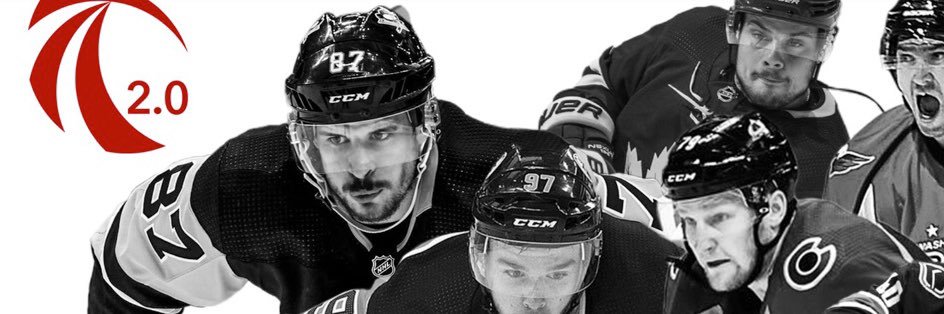
Connor McDavid’s lean is the engine behind the best crossunders in the world, and it’s far more trainable than it looks.
When McDavid goes into a turn he’s falling with heel pressure and letting gravity and centrifugal force pull him around faster than any push could.
Want to skate with that deep, effortless lean where it looks like you're defying gravity around every turn?
First thing you want to change is your mindset to stop leaning and start falling. You want to feel like you’re falling toward the center of the circle with every step.
The Downhill Skating System is the mechanics-first approach that unlocks your speed on the ice without extra conditioning, pushing or “trying harder.”
Inspired by the movement signatures of players like McDavid, MacKinnon and Hughes.
Skate faster with less effort inside DSS.
If your shin angle isn’t right, you’re leaking speed. All squats in the world won’t change your stride mechanics.
The best skaters get their knees over their toes creating the perfect forward shin angle to load the calf spring.
Everyone thinks Jack Eichel’s zone entries are all about speed, and it plays a role but it’s how he uses that speed that makes him so dangerous.
In this short, we break down three learnable mechanics that you can learn from Eichel to start having more successful zone entries.
Goalies are going to hate this. As a kinesiologist, I’ve studied the three mechanics that consistently beat goalies by exposing their weight shifts and most players have never been taught them.
Elite scorers like McDavid master all three, but even many NHLers struggle with them.
Is Jack Eichel about to become a two time cup champion? He is one of the most dangerous players on the rush but what makes him special isn’t just speed.
It’s his ability to be both wide and dynamic which is a rare combination that allows him to move laterally, attack the middle.
There’s something Rasmus Dahlin does that even Cale Makar and Quinn Hughes don’t really use the same way.
Dahlin is doing something different at the blue line when he is quarterbacking the powerplay. Check out the new breakdown below.
If your cross-unders feel slow no matter how hard you push, you’re missing a cue that 90% of players have never been taught.
NHL stars do it without thinking. Most coaches don’t even know it exists.
And once you see it, you��ll spot it in every Connor McDavid clip from now on.
When you watch McDavid or MacKinnon, it looks like magic which is exactly why most players never try to replicate it.
But it’s not magic. It’s mechanics. And mechanics can be broken down into learnable pieces, practiced until they’re automatic, and turned into instinct.
No better time to breakdown and rebuild your mechanics than the offseason.
Precise Puck Control in Train 2.0+ is a dedicated module designed to elevate stickhandling and puck control mastery like the world’s best players.
Are you able to supinate your grip like Connor McDavid?
In hockey, speed is about how you generate ground reaction forces.
While basketball players rely heavily on vertical forces to jump and explode upward.
Hockey players need to maximize their ability to create horizontal forces into the ice.
The crossover has even been called a “look–feel paradox”: it looks like your leg is crossing over, but it should actually feel like you’re crossing under.
Instead of dragging his back leg across the midline, his front foot works under his body, and the back foot steps forward.
Troy Terry has mastered two key strategies for attacking triangles and exposing defenders.
What I realized is if you pay attention to where defenders’ sticks are positioned and if you bait your opponent correctly, you can actually use their stick momentum against them.
Look where his top hand ends up on the one-timer, basically tucked right into his back hip pocket, almost like he’s reaching back to grab his wallet.
That pull is where the leverage on the stick comes from, and the leverage is where the mechanical advantage is made.
Ever wonder the technique players are using to have these world class NHL releases? The key lies in the flex of the stick and the body’s rotation.
So what not to do? Lean on your stick. Jason is quick to break down why leaning on your stick is not the way to go.
Most players think speed comes from pushing harder but that actually slows you down. If you want to reach your true top speed, you need to let your ankle collapse so your body naturally spirals at a 45° angle, creating effortless acceleration without a bunch of tension.
New footwork technique that is no longer only reserved for McDavid and MacKinnon.
Hockey footwork has evolved beyond simple crossovers and pivots into something closer to basketball or lacrosse: dynamic, in-place movements that create forward, backward, and lateral options.
Want to learn how to accelerate faster? Forget about swinging your arms harder or pushing with more tension. This is about understanding the game of hockey and adjusting your movement patterns accordingly to match the NHL’s best.