2026-05-16 release of TRAK metamodel. Changes - https://t.co/kAiz12EA4L...
Graph shows graph describing the changes made. Held in Neo4J graph database as part of the model of TRAK https://t.co/qdP9DMVXfV
#trak#opensource#architectureframework#neo4j#knowledgegraph
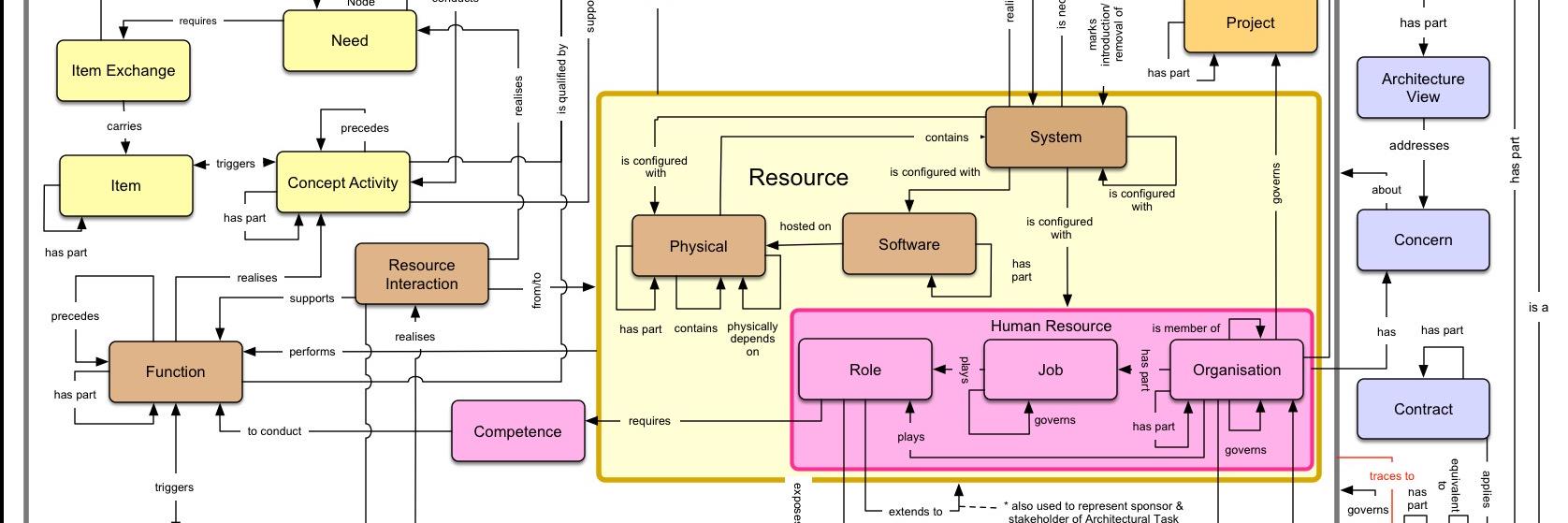
This version of the TRAK metamodel. Defines enumerated values and links them to trusted vocabularies or sources (so that the graph of TRAK can then produce a richer ontology description using RDF(S) + OWL ).
https://t.co/KCmicMDoqS
#trak#mbse#opensource#metamodel
A description of the changes made to the metamodel at this version. The "tail" is the set of versions of the TRAK metamodel back to the original issue.
Uses the Model Configuration & Change Viewpoint from https://t.co/ApJ6816FzE
#neo4j#mbse#trak#architectureframework#entarch
Bottom-up UAF - 82 undefined architecture views - the magic happens in the tools not the ‘specification’. The supposedly agnostic DMM also includes a BPMN semantics architecture view.
And TRAK managed this some 14 years ago. So what’s stopping others ? Putting something in a folder named ‘view specification’ isn’t a definition in the UML. Not even close.
@ruthmalan Interesting. Most people use System of Systems even when it doesn’t meet the criteria - each independent, capable of operating on its own. But a SoS is a System. It’s the uncontrollable nature of the whole that’s the issue. As with any uncontrollable system.
@simonbrown@domdorn Why do you make it a binary choice between modelling tool and diagram(s)? The modelling tool can produce diagrams. False dichotomy.
Update. Added 'frames' relationship, 'software type', 'verification method', changed a couple of definitions.
Download the new version of TRAK Metamodel at
https://t.co/n2APRJGrQc