Our spring issue is out now! With articles on Black geographies and ecological care, educational reform, institutional exclusion, and residential segregation, this issue moves across sites of US Empire while insisting on conjuring geographies of our own.
The book offers important insights into race, sexuality, embodiment, and care while centering Black queer resilience and community.
https://t.co/moBZ2F5ho0
#Anthropology#MedicalAnthropology#BlackQueerStudies
Check out this book review in our new issue!
Unseen Flesh is an ethnographic account of Black lesbian experiences with health, well-being, and medical discrimination in Brazil.
Drawing on ethnographic research, Ferman-Leon examines how developers and real estate actors use market data to shape rental prices, target middle-class white residents, and reinforce racial segregation by excluding Black and lower-income communities.
https://t.co/dVGGsKjeri
🥳 my new article on financialization and spatialized anti-Blackness just dropped in the new issue of Transforming Anthro! big shoutout to the editors and anonymous reviewers 🙏🏽
Our spring issue is out now! With articles on Black geographies and ecological care, educational reform, institutional exclusion, and residential segregation, this issue moves across sites of US Empire while insisting on conjuring geographies of our own.
Our haunting cover image, Marshalltown School, Mannington, New Jersey, by artist Wendel White, is part of a larger project, Schools for the Colored, that documents the “architecture and geography of America’s educational apartheid.” Find more on White at https://t.co/AhOwy2tq4p
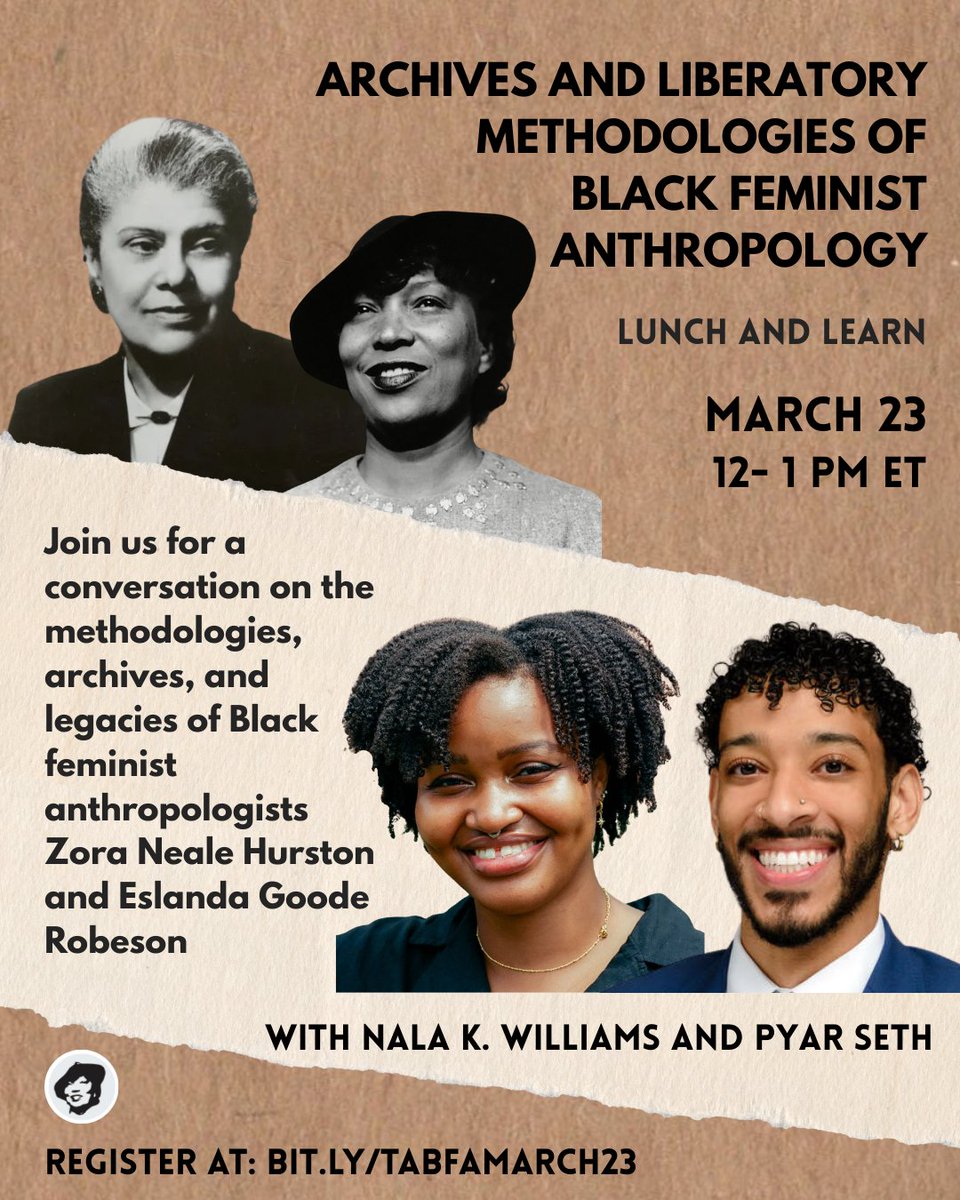
Join us this Women’s History Month on March 23 (12-1 pm ET) for a lunch and learn honoring and engaging with the archives and scholarship of Black feminist anthropologists Zora Neale Hurston and Eslanda Goode Robeson!
Register here: https://t.co/YMsVRUHp5m
Drawing on their respective articles in our current issue, Nala K. Williams and Pyar Seth will be exploring archival research as well as Zora Neale Hurston and Eslanda Goode Robeson’s methodologies, including their forms of “feather-bed resistance” and critical fabulation.
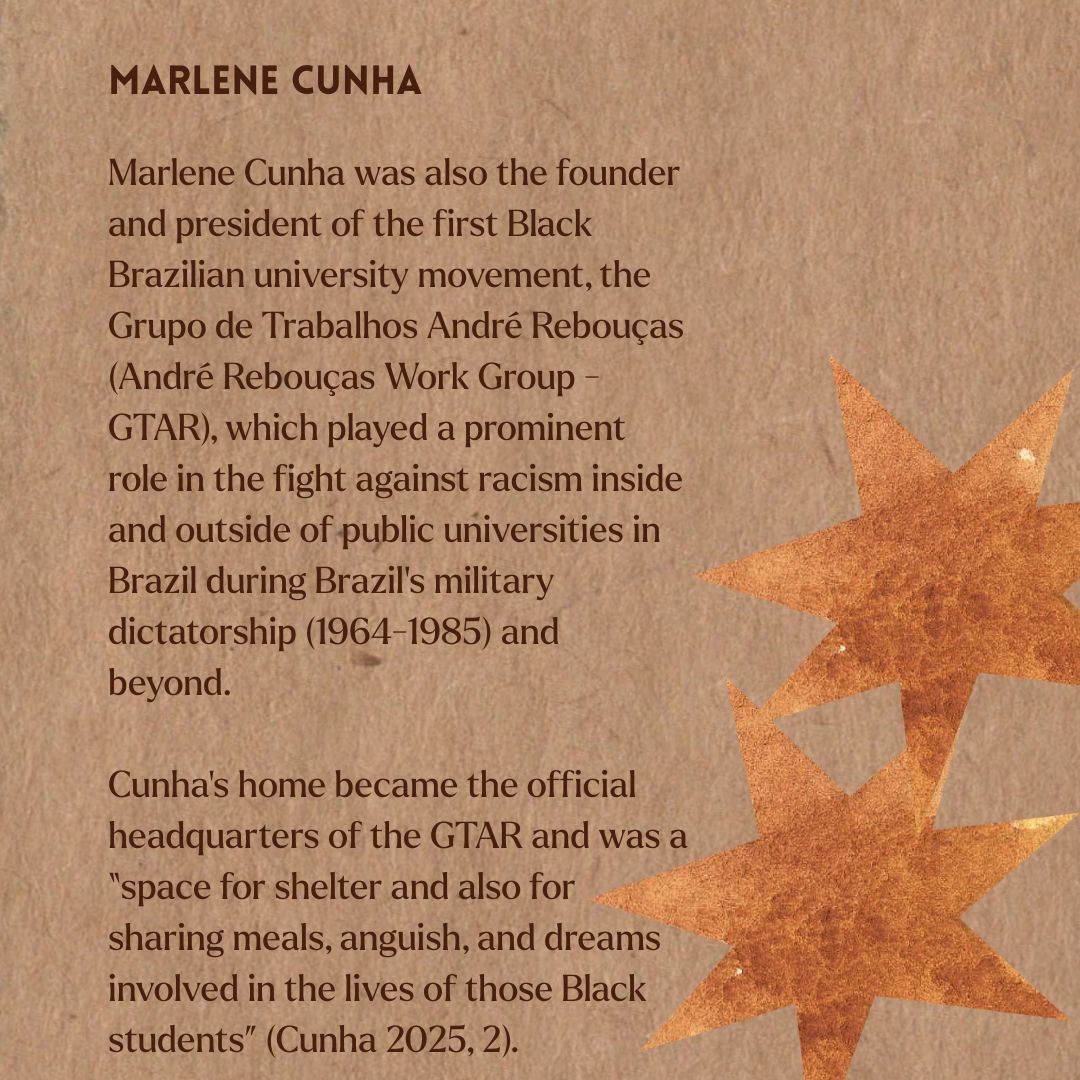
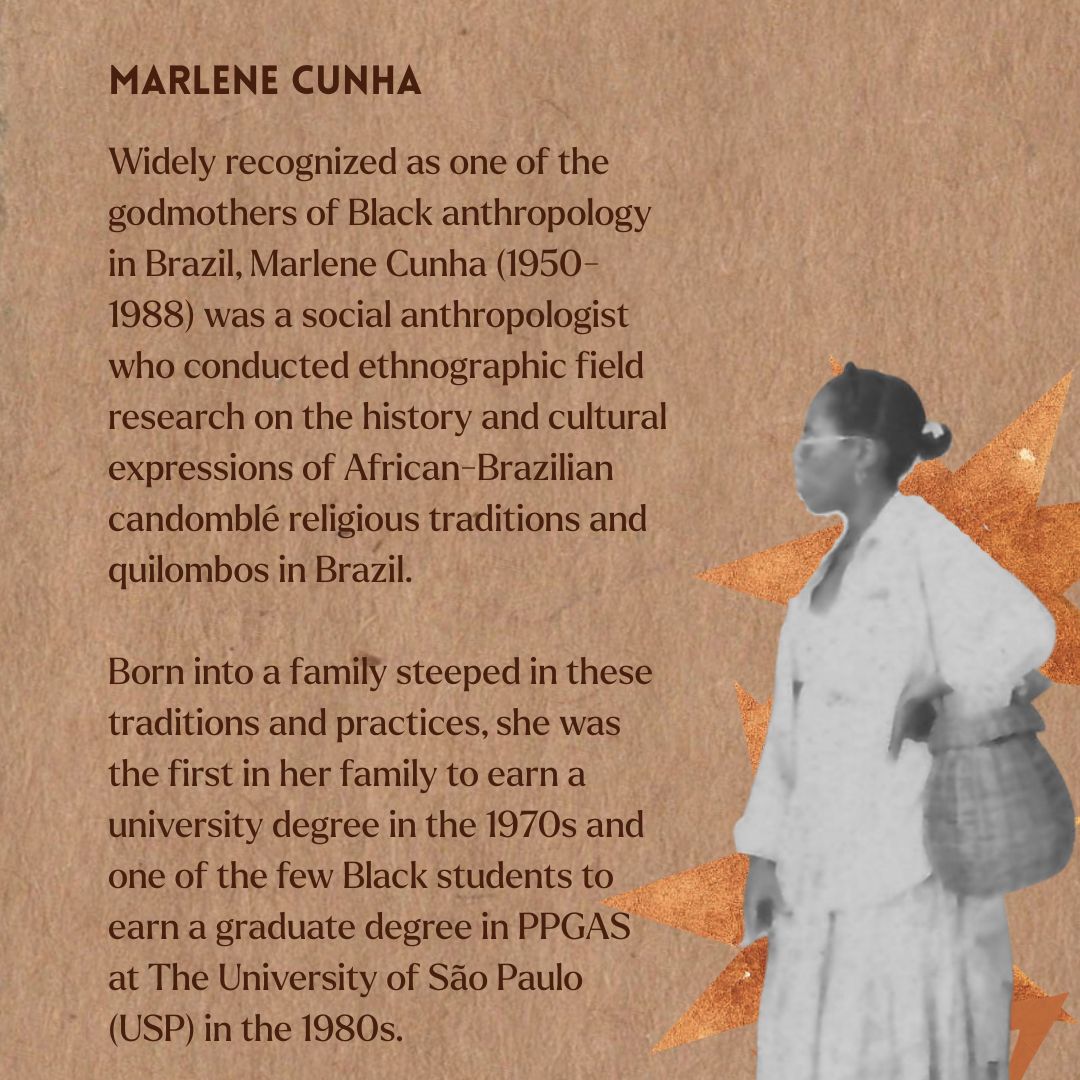
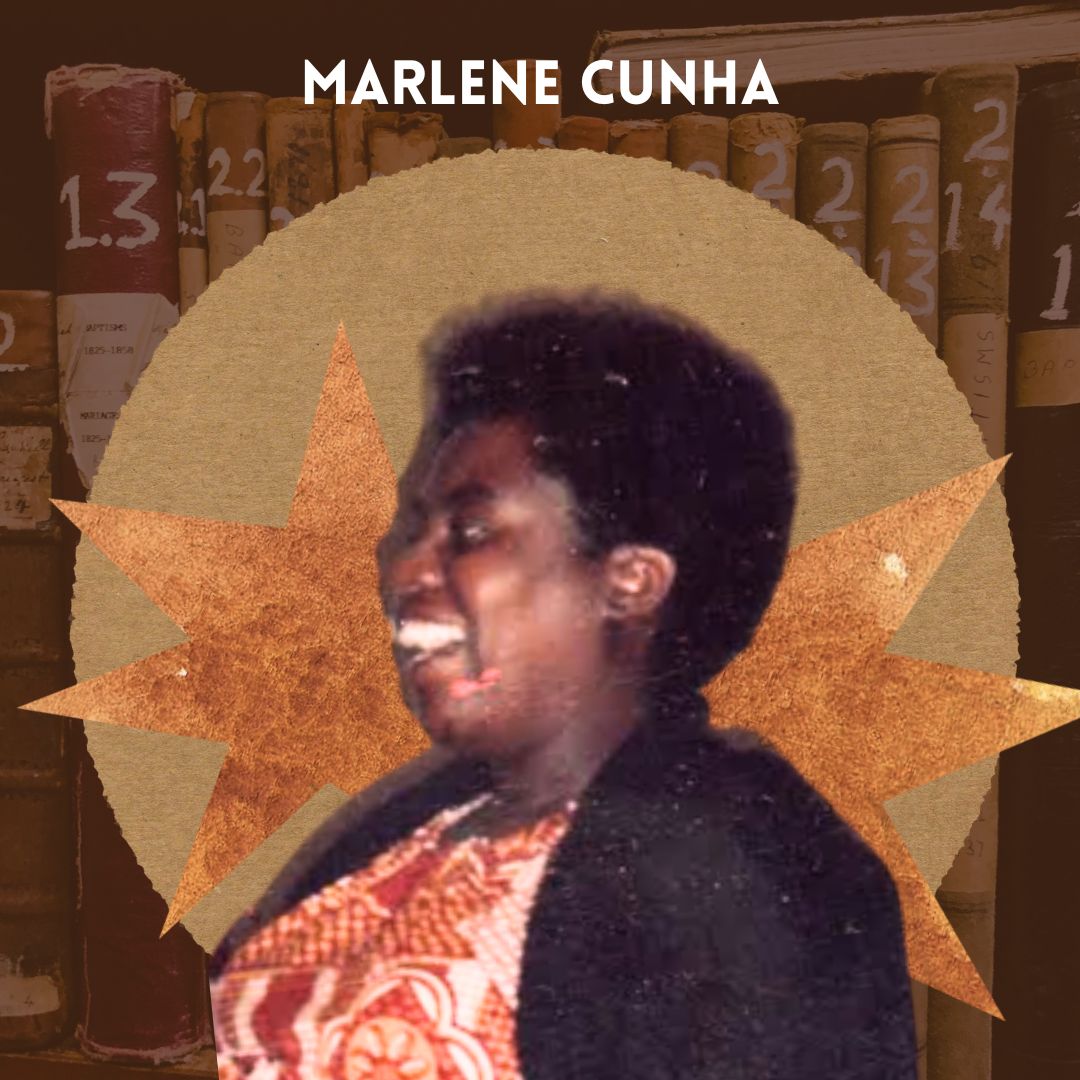
Marlene Cunha is widely recognized as one of the godmothers of Black anthropology in Brazil. We encourage you to read about her life and cite her work! You can start by reading a chapter of her thesis and a commentary by her son, João Alípio Cunha, via the link in our bio!
In our current issue, we uplift and celebrate the legacy and scholarship of Marlene Cunha, a pathfinding Black Brazilian anthropologist and activist whose work has often been under-recognized in the Brazilian academy and in anglophone North American anthropology.
We are honored to publish a chapter from Marlene's thesis and to have a commentary from João in our current issue. Following João, we hope to make Marlene's activism and intellectual contributions visible to Brazilian society and to the larger anglophone anthropological academy.
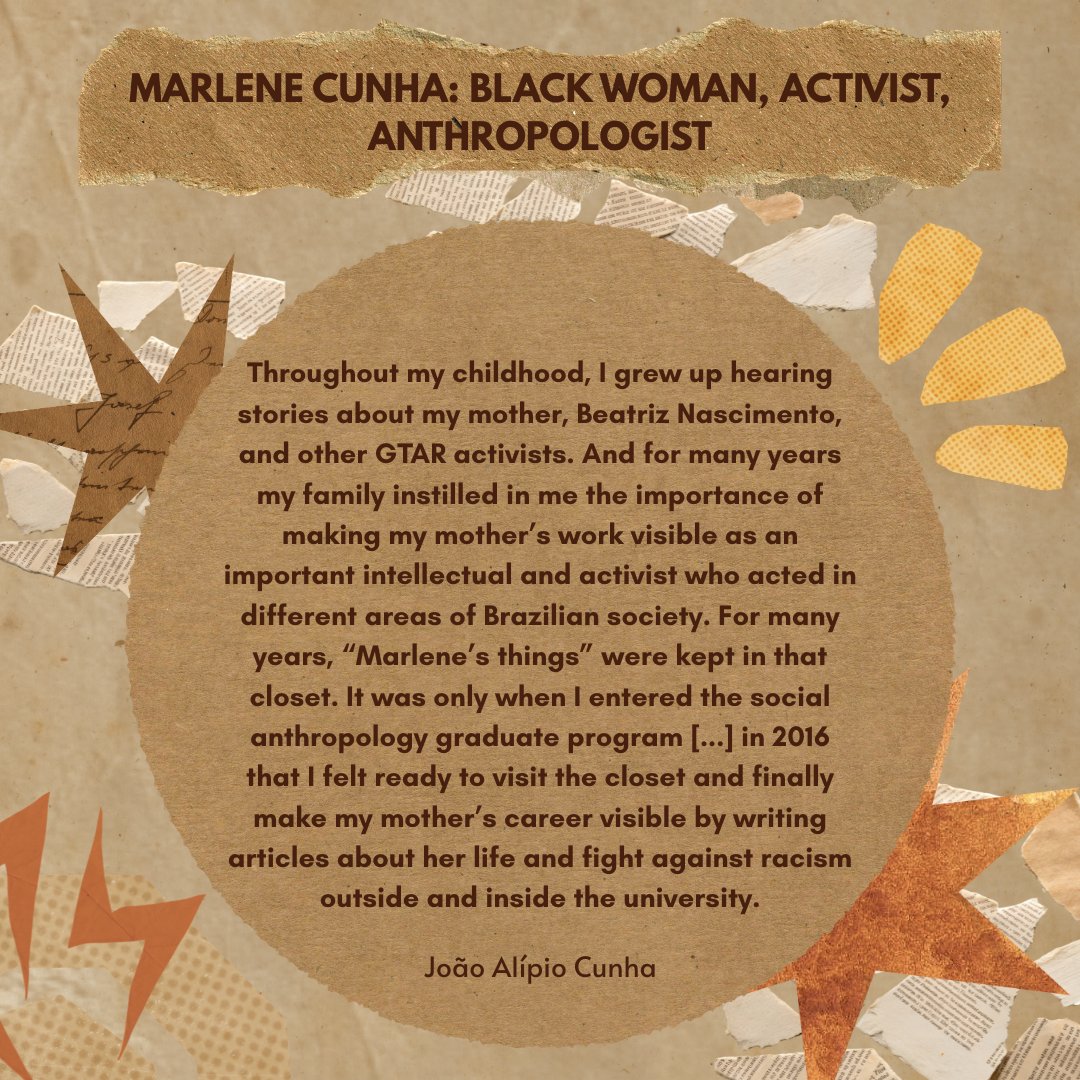
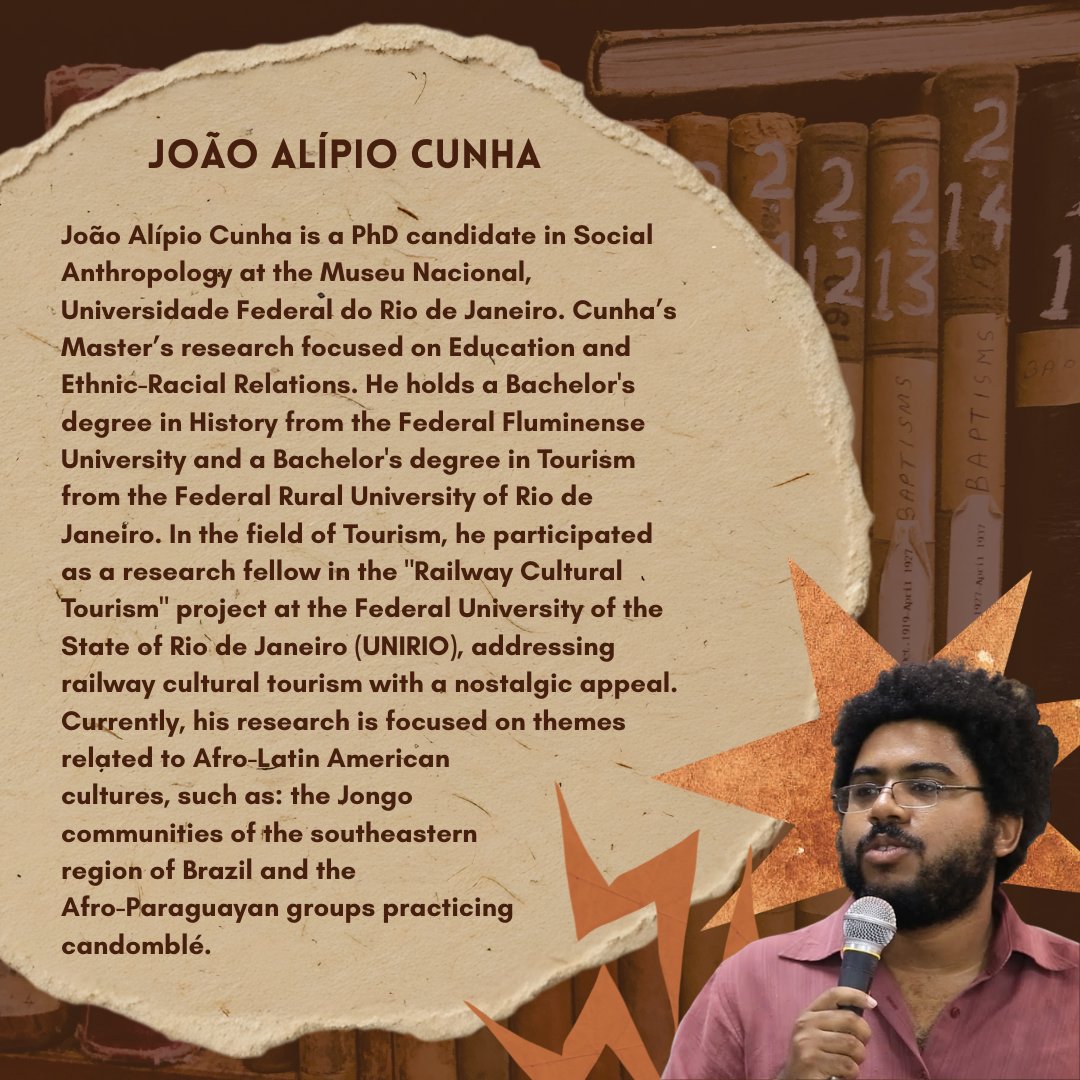
Only a few days after João Alípio Cunha’s birth, his mother, the pathfinding Black Brazilian anthropologist and activist Marlene Cunha, passed away. Marlene Cunha’s archive was safeguarded by Marlene’s mother in a closet until João was ready to share his mother’s legacy.
In 2016, after entering the social anthropology graduate program at the Museu Nacional, Universidade Federal do Rio de Janeiro, João began to visit Marlene’s closet and write articles about her life and work. In 2022, João published Marlene Cunha’s master’s thesis as a book.
The essay, translated for the first time into English by Christen A. Smith, was initially a chapter of Cunha’s master’s thesis, which was recently published for her posthumously as a book in 2022 by her son, João Alípio Cunha.
Read the full essay here:
https://t.co/q7RRHqvWR0
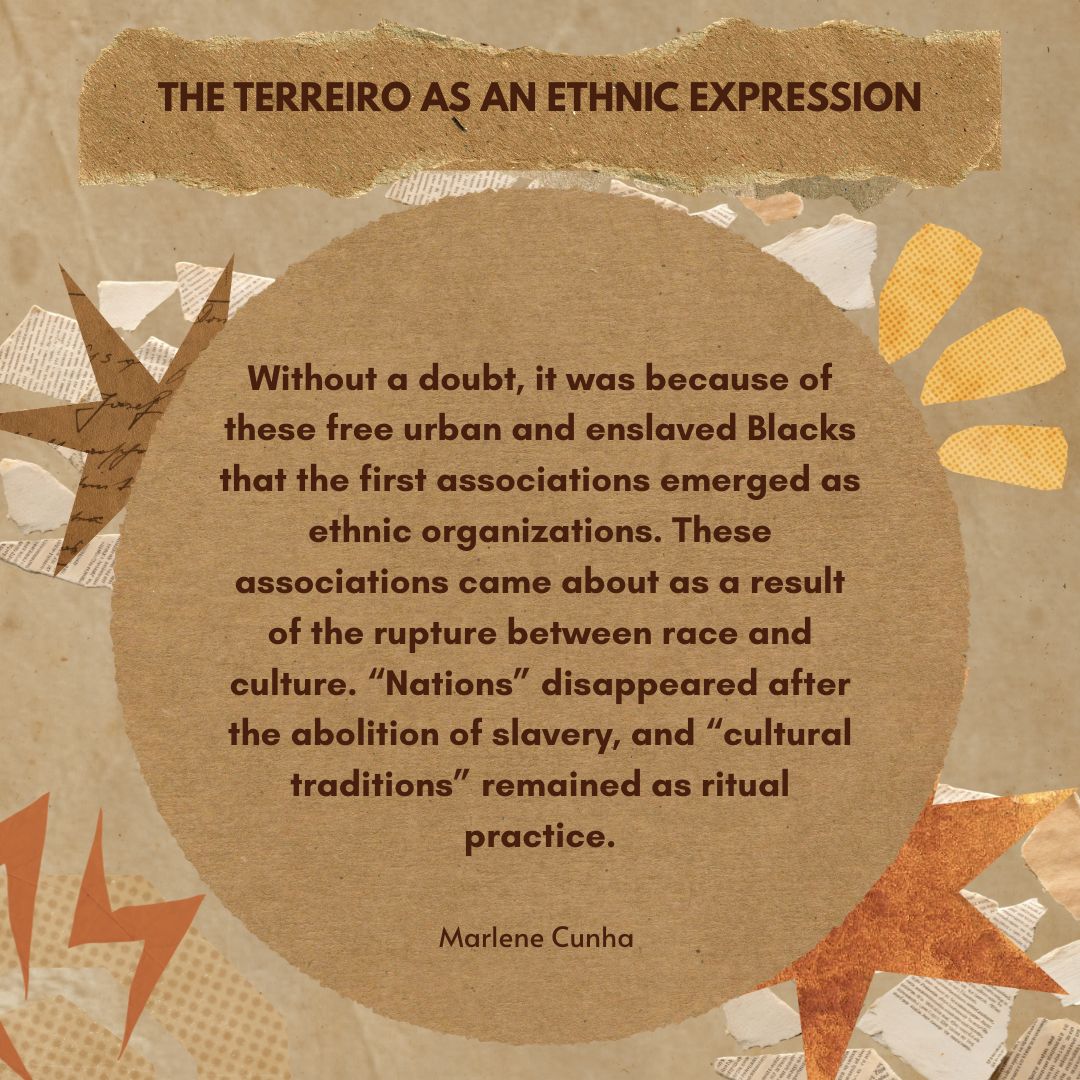
In “The Terreiro as an Ethnic Expression,” Black Brazilian anthropologist and activist Marlene Cunha examines the history and culture of African-Brazilian religious houses (also called terreiros do candomblé) in Brazil’s modern urban cities.
Michel-Rolph Trouillot’s Silencing the Past fundamentally rewired how I analyze historical narratives. The reminder that power shapes not just the story, but the archive itself, is indispensable.