Our latest blog post by @JonathanACBrown explores discussions of the sale of children into slavery by premodern Muslim jurists.
https://t.co/TIldHrnpK4
This month's guest post by Turkana Allahverdiyeva explores a legal case involving slavery-like practices in the Crimean Khanate in the early eighteenth century: https://t.co/wXaiBKtyNq
After a brief hiatus, we have resumed posting on our blog! This month's guest post by Teresa Peláez-Domínguez (PhD candidate, University of Valencia) explores the fascinating manumission petition of a slave on the Spanish galleys:
https://t.co/IJvDgSEP4J
The TraSIS team had a fantastic time in Vienna last week at the 29th annual DAVO Congress, alongside the 4th annual Turkologentag! 🇦🇹📚 Read more about traSIS participation and reflections here: https://t.co/lM8UiKFG3r
@SerenaTolino @emunds_laura @IslamicateBRs @AliSonay84
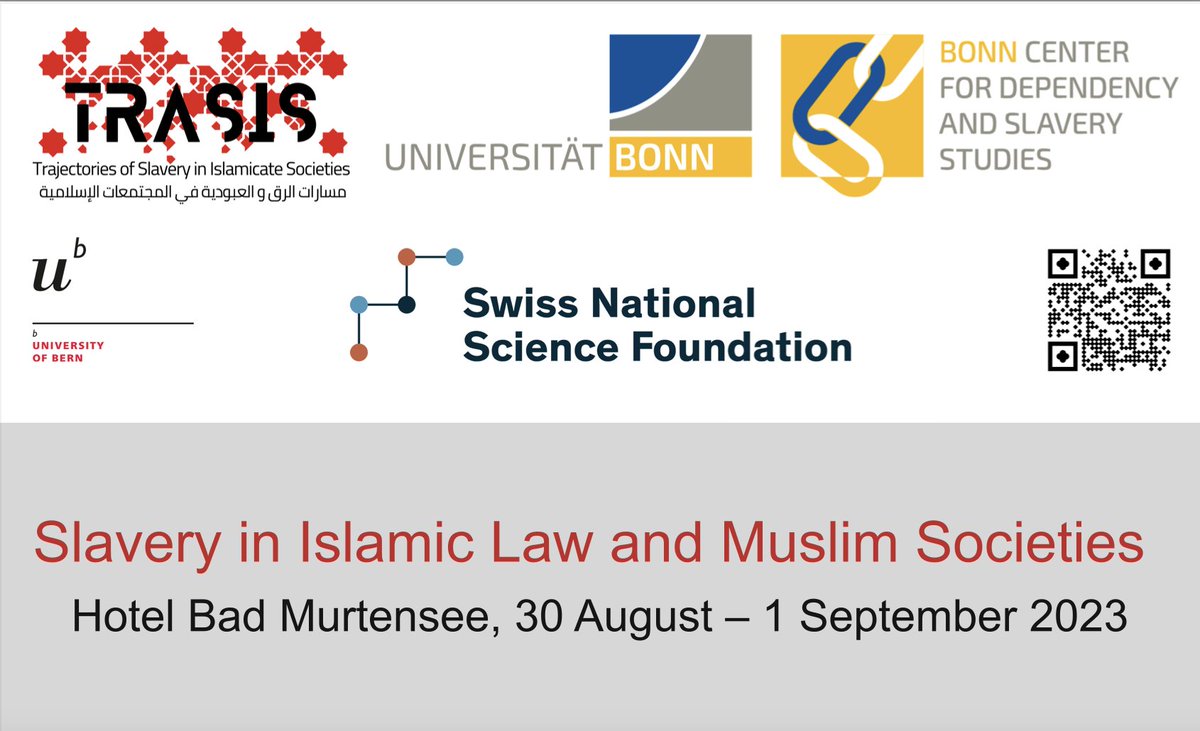
The final program for our Slavery in Islamic Law and Muslim Societies Conference is now available! Check out the impressive list of delegates and papers being presented from August 30-September 1:
https://t.co/06o5p7inHz
@ISNO_UniBe @SerenaTolino @DependencyBonn
Source of the month by @AuroraMagliozz_ : Explore Al-Maghribī's (d. 570/1175) elite coitus manual with insights on slave purchasing. Unveiling hidden resistance among the enslaved.
A very interesting read: https://t.co/rjgI8zjJaQ
The Work Contract for Migrant Domestic Workers in Lebanon: Recognition of Rights and Responsibilities or Facilitation of ‘Modern Slavery’?
In her analysis of TraSIS source of the month, Laura Rowitz endeavors to provide an answer to this question:
https://t.co/LpWouJpCvG
The Work Contract for Migrant Domestic Workers in Lebanon: Recognition of Rights and Responsibilities or Facilitation of ‘Modern Slavery’?
In her analysis of TraSIS source of the month, Laura Rowitz endeavors to provide an answer to this question:
https://t.co/LpWouJpCvG
TraSIS PI @SerenaTolino & postdoc @IslamicateBRs presented at a workshop hosted by the Institute of History & the Center for Global Studies, University of Bern, organised by Sibylle Marti (University of Bern, SNSF Ambizione Fellow).
Read more: https://t.co/AdO7gDu13x
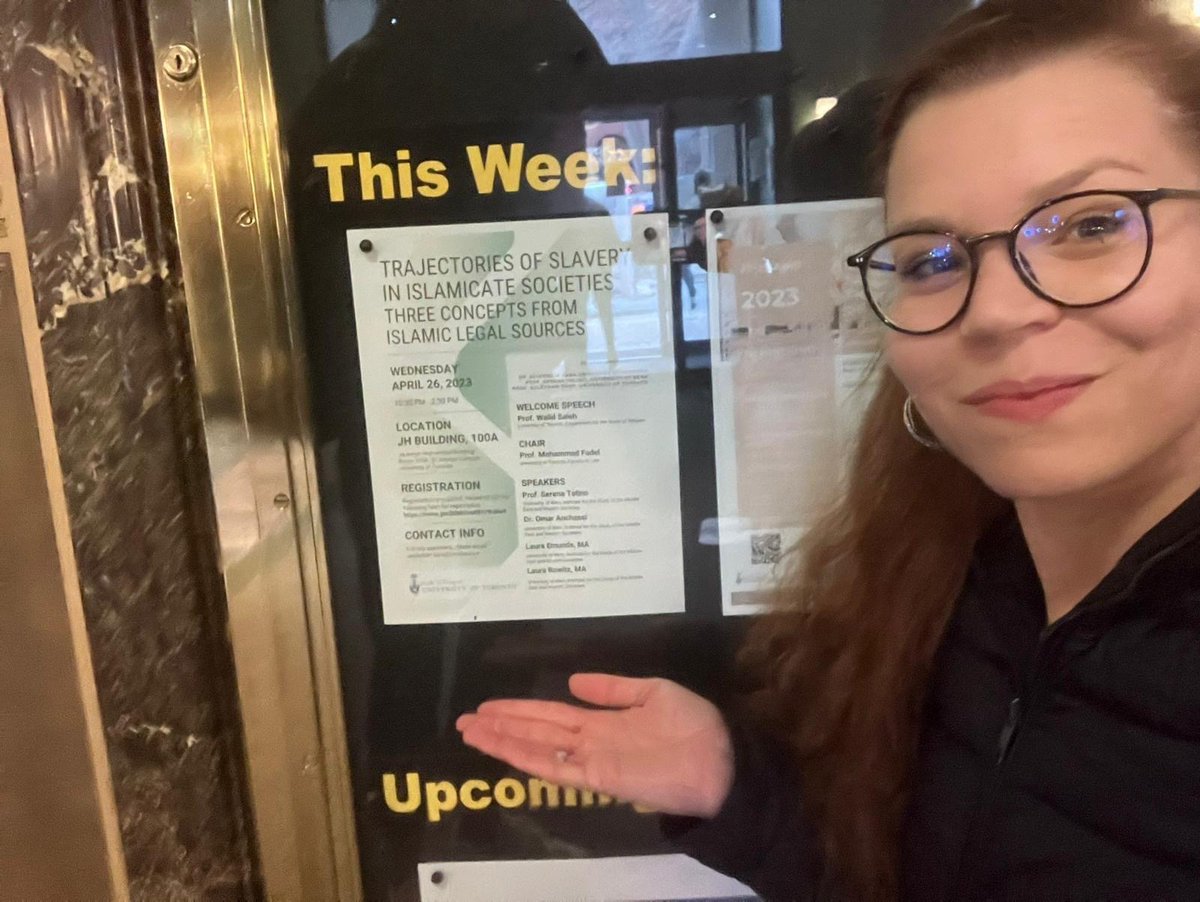
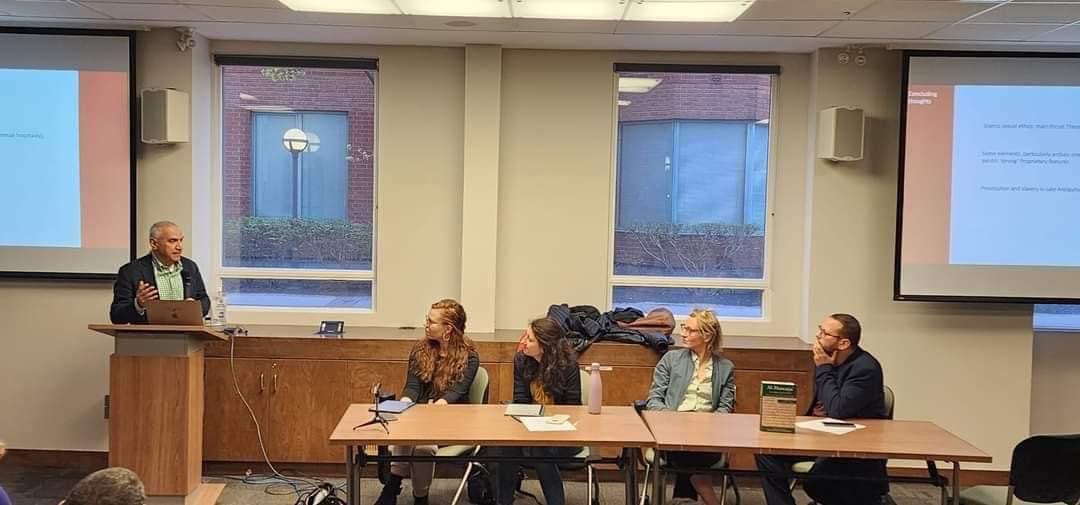
The TraSIS team gave a presentation at the University of Toronto on their project methodology and early research findings.
Read more: https://t.co/joJIeiZpm6
@SerenaTolino @emunds_laura @IslamicateBRs
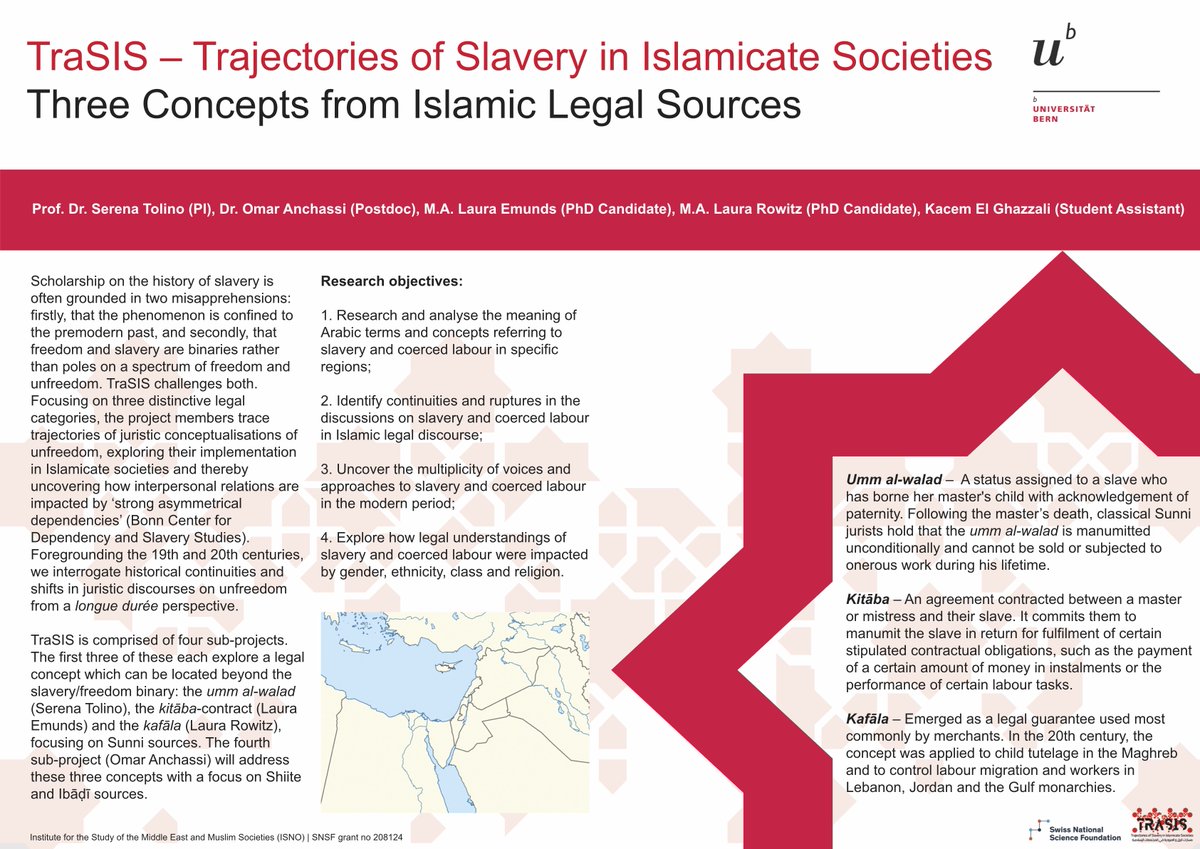
TraSIS won this year’s award for Best Scientific Poster at the Research Day of the Faculty of Humanities at the University of Bern, organised by the Walter Benjamin Kolleg, an inter- and transdisciplinary research centre.
https://t.co/gcnssUHjIv
Intersectionality Matters: @SerenaTolino will be discussing new perspectives on the study of Islamic legal sources on May 25th at 4pm CEST.
Don't miss out!
@MPIPRIV
Intersectionality Matters: @SerenaTolino will be discussing new perspectives on the study of Islamic legal sources on May 25th at 4pm CEST.
Don't miss out!
@MPIPRIV
In this Source of the Month, @emunds_laura presents and analyzes a "proof of ownership" from the context of the recent genocide of the Yezidis documenting the sale of a woman enslaved by the Islamic State:
https://t.co/uMsPunOwGX
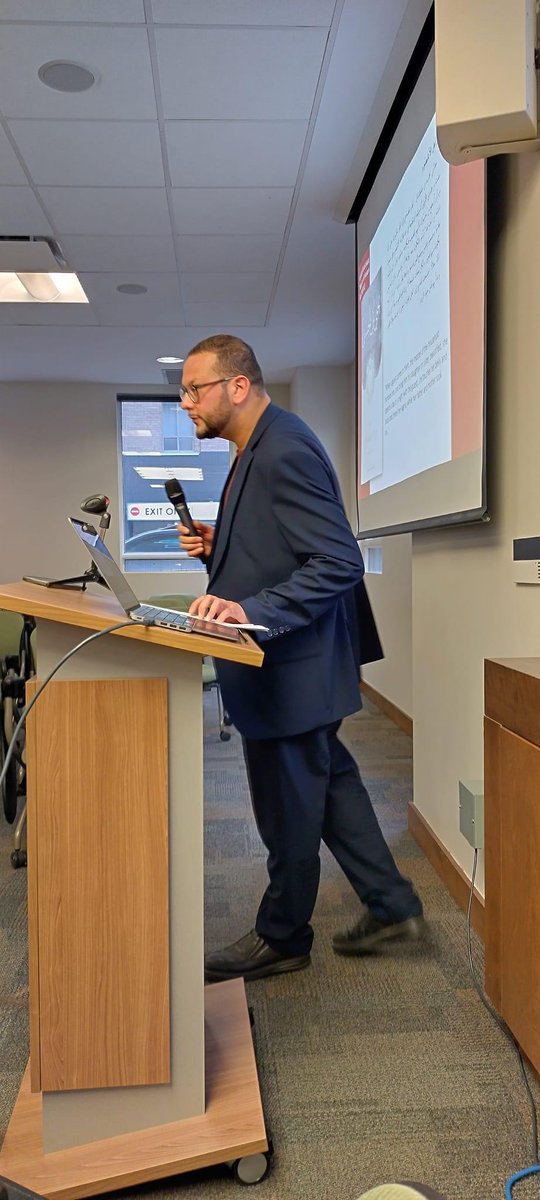
“It was indeed delightful to present the preliminary findings of TraSIS project (funded by @snf_ch ) at the @UofTReligion conference organized by @KaraSeyfeddin@afzaque Karen Ruffle and Waled Saleh” Prof. @SerenaTolino
Today, the TraSIS team in Toronto had an opportunity to present their project which was hospitably hosted by
@KaraSeyfeddin
Many thanks to Walid Saleh for taking photographs and introducing the project, as well as to Mohammad Fadel for chairing the workshop ! #Trasis
In this Source of the Month, @emunds_laura presents and analyzes a "proof of ownership" from the context of the recent genocide of the Yezidis documenting the sale of a woman enslaved by the Islamic State:
https://t.co/uMsPunOwGX
At the Phil.-hist. Research Day, organized by the Walter Benjamin College on behalf of the faculty, a poster copmetetion for research projects took place. TraSIS won the prize! Many thanks to Laura Emunds for the fantastic design.
https://t.co/ijhVdtPeeO
Why would an Italian medical doctor draw on Islamic law to make his argument against the practice of castration? TraSIS source of the month presented and discussed by @SerenaTolino :
"On Eunuchs: An Italian Medical Doctor’s View (Cairo, 1902)"
https://t.co/bAxmK1ATTE