On Monday @AkbarSAhmed will be in conversation with @MearsheimerJ at UChicago, they'll discuss Akbar's new book "Crossing the Red Line: Biden, His Advisors, and Israel's War on Gaza." Join us! 5-6:30 pm, Kent 107.
https://t.co/3SNGfSnjhR
REVIEW: The Color of the Arabs: How Blackness Became an Insult in Early Islam by Abdulaziz M. Abdi @remember.yourselves examines how early Arabs described their own skin tones and how attitudes toward dark skin shifted in early Islamic history. The author argues that the early Arabs were brown (samra) and dark (udma) in a relative sense as that is how they described themselves, according to pre-Islamic poets and early Muslim historians. Drawing upon early Arabic literature, hadiths (prophetic traditions), and lexicographers, the author illustrates how the early Arabs saw themselves as a dark-skinned peoples in comparison to the fair-skinned foreigners (Persians and Greeks). Darkness was associated with the early Arabs to the extent that a medieval Persian scholar tarred his face to look more Arab, and a descendant of the Prophet (pbuh) was described as intensely dark. Black women were highly desired and slavery wasn't linked to blackness in early Arabia.
However within a few centuries, attitudes changed amongst Arabs-Muslims as dark skin was associated with contempt, ugliness and negativity. The social stigma towards darkness continued in the Arab-Muslim world as forged anti-black hadiths promoted racial stereotypes and anti-black tropes. Abdi contends that biased claims, including fabricated prophetic sayings, emerged alongside later dictionaries and commentaries that reinterpreted earlier figures and histories. This book is welcome contribution to the virtues of blacks (fada'il al-Sudan) literary genre that emerged in the 9th century to defend the dignity of Black Arabs, Black Africans and dark-skinned peoples.
In summary, the author argues that white supremacy has colonised Arab and Muslim consciousnes where blackness was made an insult. For the author, blackness did not become an insult, it was made one. And as a result, it can be unmade with education. This book, The Color of the Arabs can help revive the honourable status of blackness in the hearts and minds of Arabs and Muslims alike. A recommended read for anyone interested in race relations, Islamic history and Arab civilisations.
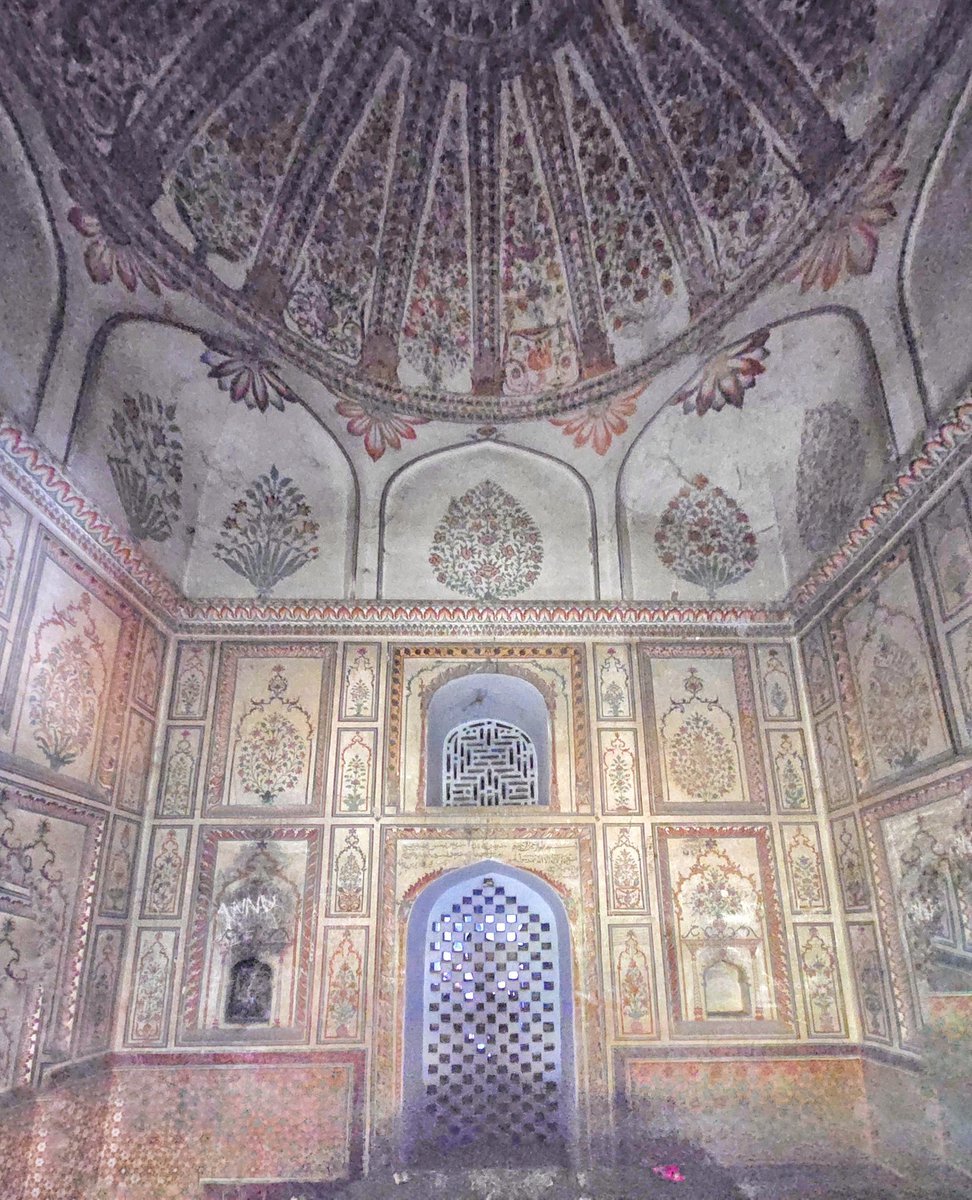
The Kali Masjid at Gogi, Yadgir District, Karnataka.
Built by the sister of Ali Adil Shah I (1558-80), it's a mosque next to a tomb complex of Sufi Syed Shah Chanda Husaini and several Adil Shahi family members, including the founder of Bijapur Sultanate Yusuf Adil Shah.
@timurkuran Hello Professor, the hollowing out of Islami Bank in Bangladesh has little to do with Islamic lending but a state-backed takeover by an oligarch close to the previous Awami regime in 2017 and then total looting of the bank. https://t.co/LkkaoeQ7Hm
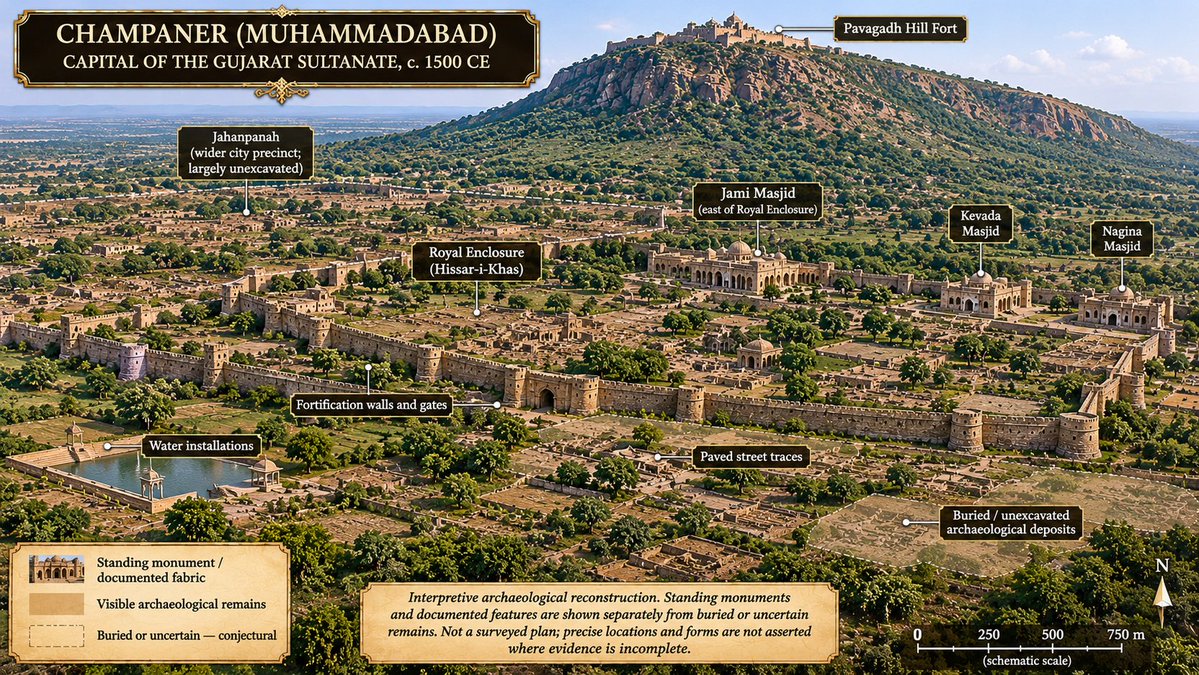
Champaner Muhammadabad Gujarat Sultanate Established as Sultan Mahmud Begada's capital after its conquest in 1484 Champaner contained royal palaces fortified enclosures mosques residential quarters markets gardens stepwells and elaborate water systems
UNESCO recognized site
"Under Montefiore’s steady hand, The Cauldron marshals every cliché from the last two decades of popular punditry, then sends them riding out in glittering array, like Bedouin horsemen bursting forth from the gates of Arabia."
Very pleased finally to visit the tomb of Shah Zaman Durrani at Sirhind. Shah Zaman was the elder brother of Shah Shuja, the hero of my book, Return if a King. He was also once the owner of the Koh-i-Noor diamond.
I am deeply honoured to have my calligraphy works included in the special exhibition “Ash Shams wal Qamar (The Sun and the Moon)” at the Cambridge Festival of Islamic Arts 2026.