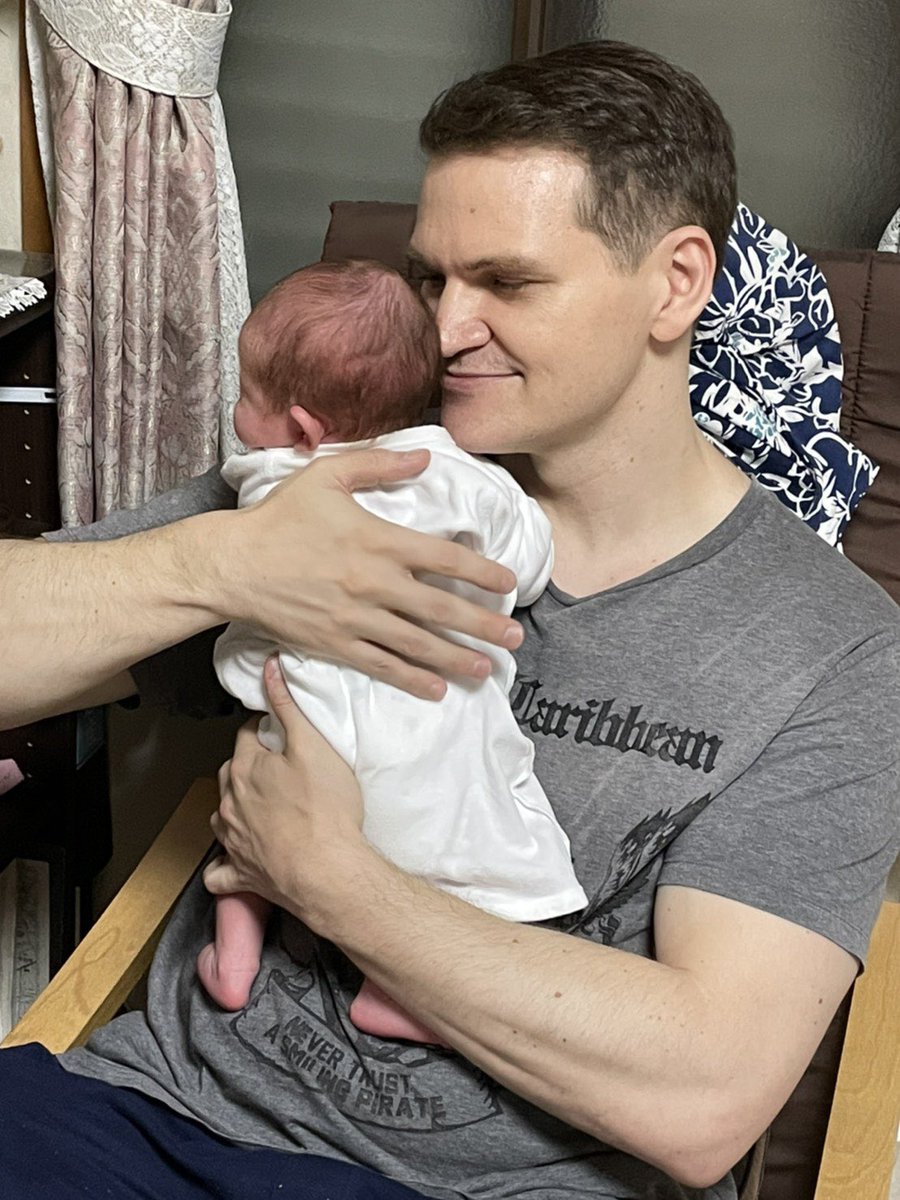
Loving my baby and loving Dad life ๐ถ๐ป My wife and I are under-slept, but overjoyed nonetheless.
I used to think family life would be boring, but this is the best. ๐
Luke is a beast, and I would never say that him learning to speak Latin and Ancient Greek is pointless. If nothing else, it brings those languages to life and inspires his students and other learners, which is great.
But few people have the will to learn to *speak* Latin or Ancient Greek fluently. And the will is important for a revival.
Could Latin ever be revived as a native spoken language?
(meaning in its Classical or Ecclesiastical form, not modern Romance languages)
I think it would be possible if the will were there, but it would end up being different from Latin as we know it. And if that were the case, what would the point be, since there are already modern descendants of Latin (the Romance languages)?
I was talking specifically about reviving it as a native spoken language. But yeah, like in the past, it could also be implemented as a formal/written standard thatโs still nobodyโs native language but can unite countries linguistically to some extent (arguably like Standard Arabic today). But that too would require the political will to do it, and these days I donโt think anyone wants it that badly.
@yitzgood Most of them know very little about Hebrew. They just hear something about it on Tiktok and repeat it. Of course some people pushing that idea to them are doing it with malice.
"Is Modern Hebrew Totally Different from Biblical Hebrew?"
These days I see a lot of comments online about Modern Hebrew being a FAKE language, that it's NOT Hebrew, that it's a constructed language based on Arabic and Yiddish, and so on.
Of course there's often a political intention behind such statements. But there IS something different about Modern Hebrew: the fact that it's the result of a LANGUAGE REVIVAL.
Some people try to spin that to mean that Modern Hebrew is fake Hebrew, but it's clear to me that Modern Hebrew is MUCH more similar to Biblical Hebrew than other modern languages are to their ancient antecedents over a similar time frame.
This is in large part because of the revival. And the revival was possible because of extensive body of Hebrew literature that never stopped being produced.
Of course there are differences though.
In my new video that's premiering today, I dive in and look at the similarities and the differences.
The link to the premiere in the first comment.
Yes, I do touch on Mishnaic Hebrew a little bit in the video and point out that itโs more similar to Modern Hebrew. I originally planned to make the video a comparison of Modern Hebrew and both Biblical anf Mishnaic Hebrew, but I realized it was going to be far too complicated to do in one video.
Argentinian Spanish (Rioplatense Spanish, specifically) is known as one of the varieties of Spanish that stands out as quite different from the others.
This is how that came to be.
My theory is that most Japanese people never properly learn the basics of English phonetics at the start, which sabotages them at every point along the way after that. If you slow down a bit and pronounce every English word as though it's a Japanese word, like "Ai wento tsuu za mouru" (="I went to the mall") they often understand everything you say. But they have no speaking confidence.
Kids who go to international schools in Japan are like this too. Even if English isn't their first language, they acquire English as native speakers ("acquire" as opposed to "study/learn"). Their school environment is basically a native English environment, with classmates who don't speak the local language (ie. kids of expats).
@SantiPerales76 Yeah, it's one of those little things that differs across the pond. But even within North America and from person to person a little bit.
@mynameprada I'm not able to do it myself. But maybe you can ask the guy who did the audio for my Frisian video. He's "learnfrisian" on Instagram. (It's up to him, of course.)