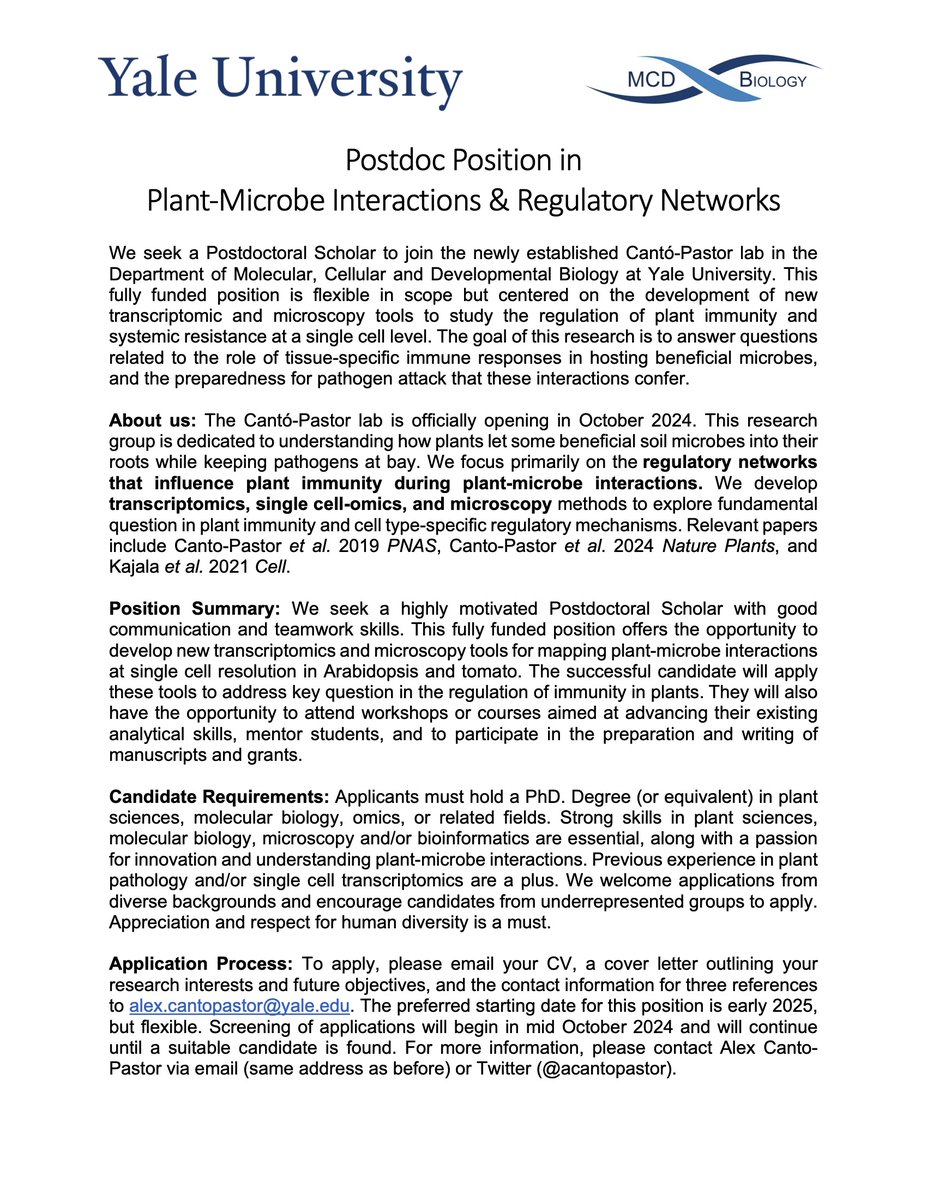
In need of a post doc? The #Ewel Postdoctoral Fellowship - Office of Postdoctoral Affairs - University of Florida is a great opportunity to do a post doc at @UF. #gatorNation 🐊 @UFBiology rocks! https://t.co/wDmZE4t0IL
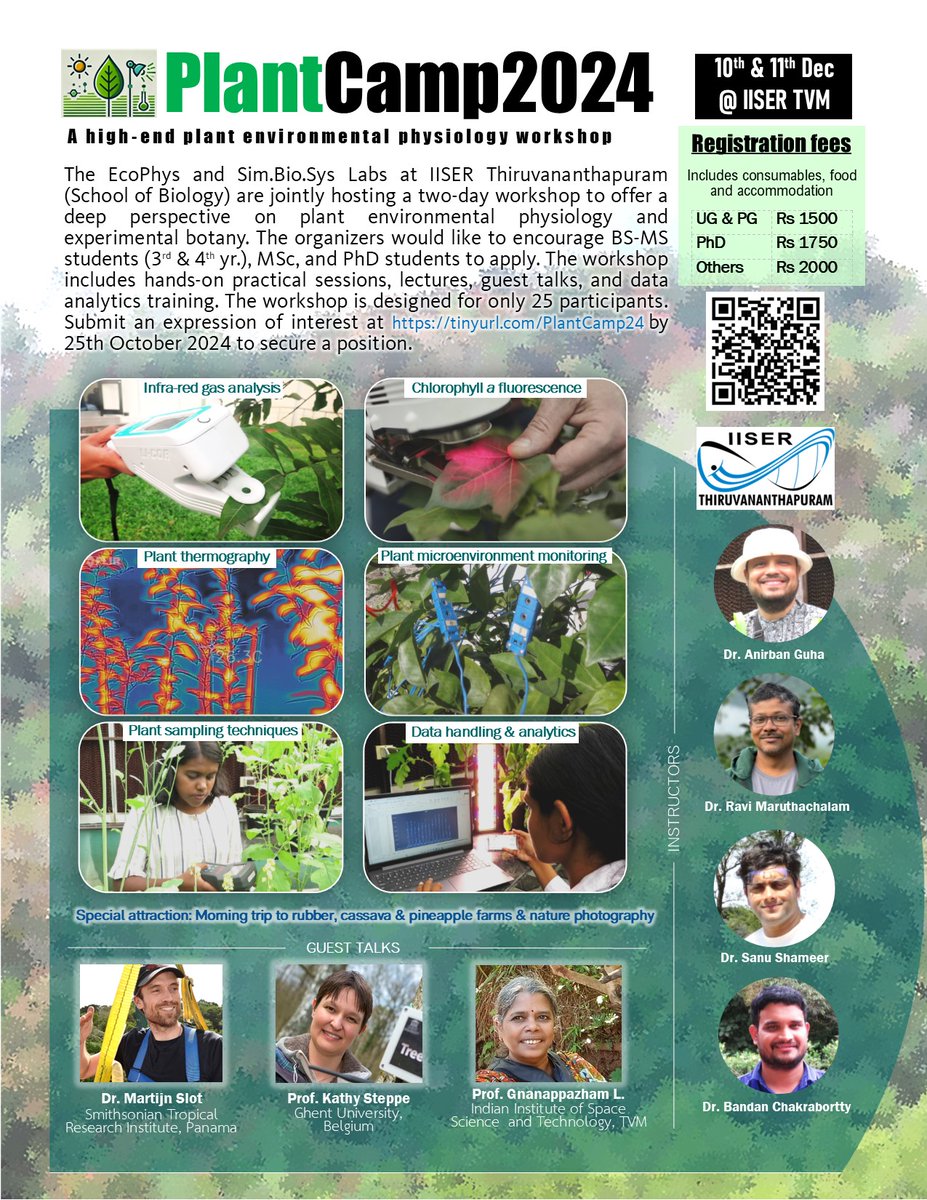
Join our 'PlantCamp 2024' - an exclusive, two day ecophysiology workshop @tvmiiser on Dec 10-11, 2024. Experience 'ecophysiology in action' amidst the scenic splendor of misty hills and remarkable rainforest. Please, submit an expression of interest to secure a place by Oct 25.
New paper with @DanBruhn1 & Lina Mercado @GlobalChangeBio on a simple method for calculating cumulative nighttime respiratory carbon loss from plants, taking into account the temperature-independent decrease in respiration as the night progresses.
https://t.co/glYyYeXY1X
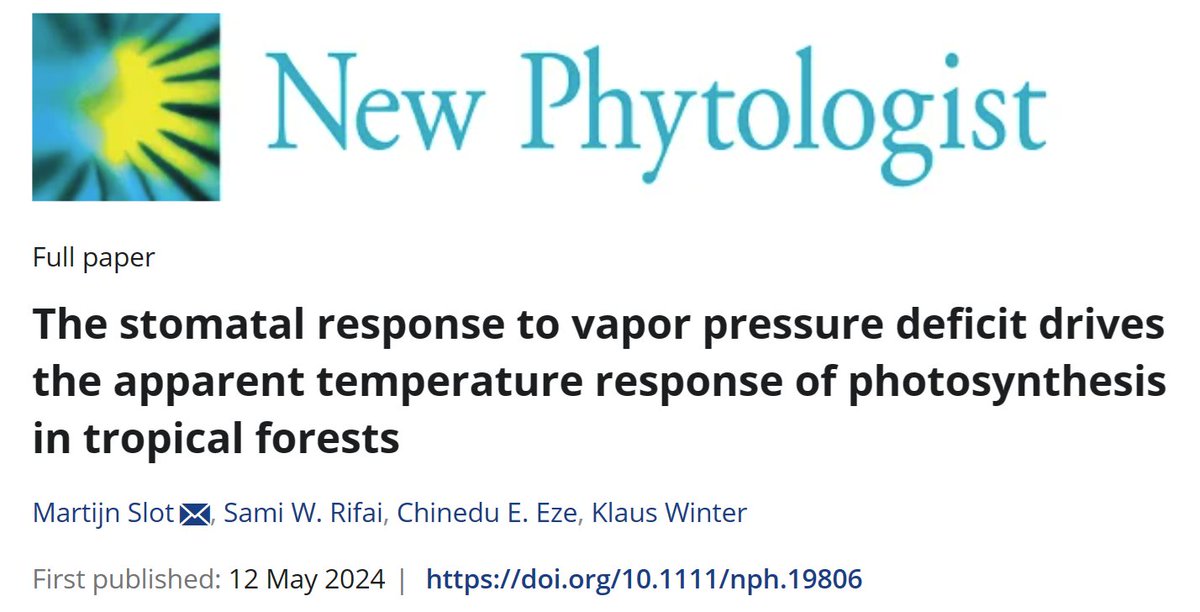
New paper @NewPhyt, with @Sami_Rifai, @Nedunsk15 & Klaus Winter.
"The stomatal response to vapor pressure deficit drives the apparent temperature response of photosynthesis in tropical forests"
https://t.co/TLeRKKgjja
(1/5)
This is particularly important for species that close stomata in response to elevated CO2, but we were also surprised to see that even in high conductance species Ci estimates were affected by accounting for cuticular conductance.
This is because the ratio of H20:CO2 conductance of the cuticle is much higher than that of the cuticle. If you don't account for this difference, you can dramatically overestimate Ci, systematically shifting Vcmax and Jmax estimates.
Proud of this work led by @SyedBilal1240: Cuticular conductance is important in estimating rates of carboxilation and electron transport. It's especially important if you are studying low stomatal conductance conditions. Enjoy! @ASPB@EnvEcoPlant https://t.co/iy22J91DsZ
Our new paper is out! We show that source:sink-induced increases in photosynthesis in citrus are not accompanied by changes in leaf export or stem transport speeds. Congrats to Shen-yang Li, this was from his dissertation. @EnvEcoPlant
https://t.co/QtwOKTUtbx
Researchers in @LongLab have proven in a model crop that an increase in mesophyll conductance can be engineered, & that it leads to an increase in photosynthesis.
Their work was published in the @PlantBiotechJ.
DOI: https://t.co/w2Ow239U03
News story: https://t.co/sC3oZkcZTb