Once upon a time, Billy Graham got a speeding ticket.
He showed up to court and experienced the most unexpected lesson that mirrors the gospel.
(Shout out to my friend Pastor @Ed_Newton who I heard this illustration from last week!)
Jesus offered the "rich young ruler" the greatest deal of all-time... and he said NO.
This man had no idea what he lost in that moment. Don't let that be you. Don't waste your life.
Golf legend Scottie Scheffler was asked about his professional success and he literally does the INVERSE "rich young ruler" from the Bible.
This video is worth your time 👇
You have got to listen to this former Navy seal, and Senator Tim Sheehy give a speech on the Senate floor in July of this year .
He speaks about terrorism and Islam with bravery like no one I have ever heard !
You will CHEER !
5 THINGS TO ASK GOD FOR IN THIS SEASON:
1. WISDOM to make the right decisions. — James 1:5
2. FAVOR that opens the right doors. — Psalm 5:12
3. DISCERNMENT to recognize what’s not for you. — Philippians 1:9–10
4. DIVINE CONNECTIONS with the right people. — Proverbs 13:20
5. PROVISION to meet your needs and bless others. — Philippians 4:19
DON’T JUST PRAY FOR THE BLESSING. PRAY TO BECOME READY FOR IT.
True story:
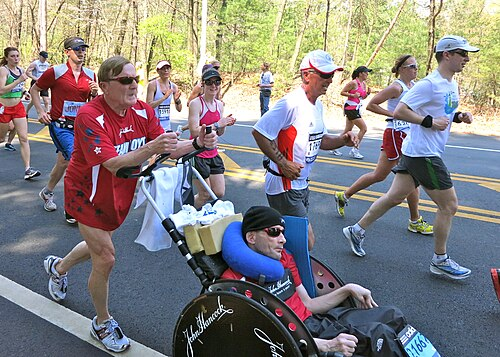
In 1962, doctors in Massachusetts looked at a newborn boy named Rick Hoyt and told his parents to lock him away in an institution. His umbilical cord had twisted around his neck during birth, cutting off oxygen to his brain and leaving him a quadriplegic with severe cerebral palsy.
"He will be a vegetable for the rest of his life," the physicians said.
His father, Dick Hoyt, looked at the way Rick’s eyes tracked movement across the room and refused to believe the diagnosis. He and his wife brought Rick home, read to him, taught him the alphabet, and treated him like any other boy.
When Rick turned eleven, a group of engineers at Tufts University built a specialized computer that allowed him to select letters on a screen by tapping the side of his head against a metal switch. Skeptics doubted he would understand how to use it. Everyone crowded around the monitor, waiting for his first words—expecting "Hi Mom" or "Hi Dad."
Instead, Rick tapped out two words: "Go Bruins."
It was the year the Boston Bruins were in the Stanley Cup Finals. Rick had understood every word spoken around him for eleven years.
Four years later, a local five-mile charity run was organized for a classmate who had been paralyzed in a sporting accident. Using his computer, Rick typed a message to his father: "Dad, I want to do that."
Dick Hoyt was thirty-seven years old, out of shape, and had never run more than a mile at a time. Still, the next morning, he gripped the handles of Rick’s heavy, clunky wheelchair and pushed his son across all five miles, wheezing across the finish line next to last.
That night, Dick was iced down and aching when Rick called him over to the computer screen and tapped out the sentence that altered the trajectory of both their lives:
"Dad, when I’m running, it feels like I’m not handicapped."
Dick Hoyt made a silent vow in that room: if speed made his son feel free, he would lend Rick his own body for as long as his heart could beat.
Dick began training before dawn every day, strapping a hundred-pound bag of cement into the wheelchair while Rick was at school just to build his lungs. Over the next four decades, father and son completed 1,130 endurance races together—including 32 Boston Marathons, a 3,735-mile run and bike across the United States in 45 days, and six grueling Ironman Triathlons.
During an Ironman, Dick would swim 2.4 miles in open water while towing Rick behind him in a small rubber boat tied to his waist, immediately transition to a custom two-seater bicycle to pedal both of them 112 miles, and then strap on running shoes to push Rick 26.2 miles to the finish line.
At the height of their racing years, elite marathoners asked Dick why he never entered a single race alone just to see how many trophies he could win without pushing over a hundred pounds of extra weight.
Dick didn't hesitate. "I have zero desire to take a single step out there by myself," he said. "I am only lending Rick my arms and legs. He is the one lending me his heart."
Most people hit a wall in life because they are only fighting for their own comfort. Self-interest is a fragile fuel; the moment pain, exhaustion, or failure sets in, the mind looks for an exit because it is easy to negotiate with your own excuses.
True endurance is unlocked the moment your discipline becomes the vessel for someone else’s survival, dignity, or freedom. When the people you love depend on your strength, exhaustion loses its vote. Find a mission larger than your own comfort, and you become nearly impossible to break.
Donald Trump just dropped one of the best videos he’s EVER posted. Giving me CHILLS listening
“Remember nothing worth doing is ever easy”
NEVER GIVE UP 💯
Life is strange. You arrive with nothing, spend your whole life chasing everything, and still leave with nothing. Make sure your soul gains more than your hands.
I have a dream. I dream of a day when men in the West will find their spines and testicles, and rise up against parasitized suicidal empathy. I dream of a day when the populace will rise up against parasitic taxation whereby a large chunk of an individual's hard-earned money is stolen. I dream of a day when universities recommit to intellectual enrichment void of ideological activism. I dream of a day when people recognize that all religions are not equally congruent with our liberties and freedoms. I dream of a day when our grandchildren will live in freer societies than those of our grandparents. I dream of a day when people who fail to recognize the two phenotypes (male and female) are laughed out of public discourse. I dream of a day when every single person who adheres to a religious ideology that wishes to exterminate us is removed from our midst. Freedom and truth are the ideals from which all else that is good flows. I have a dream.
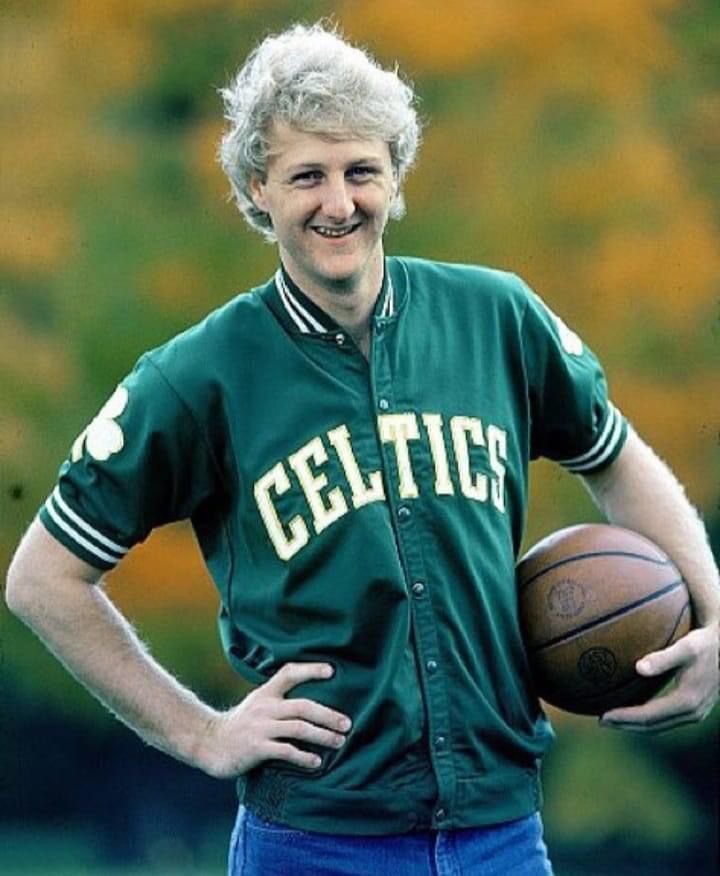
League had Kareem Abdul-Jabbar, Julius Erving, Michael Jordan, Magic Johnson, Moses Malone, Dominique Wilkins, and Hakeem Olajuwon. Who won MVP three times in a row? This redneck.
The man who carried the cross for Jesus didn't volunteer.
He was grabbed.
Mark 15:21. And they compelled one Simon the Cyrenian, who passed by, coming out of the country, the father of Alexander and Rufus, to bear his cross.
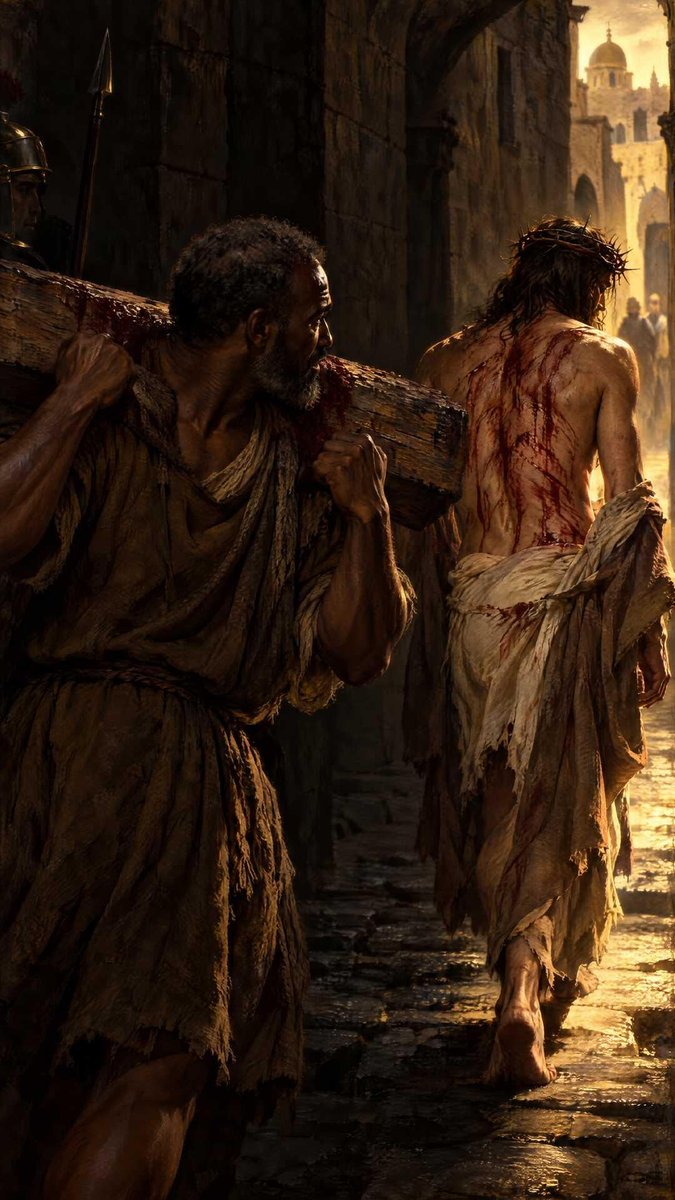
Picture it. A man walking into Jerusalem from the fields, minding his own business, and a Roman soldier's hand lands on his shoulder. You. The beam. Now.
Cyrene was in North Africa, modern Libya. Over a thousand kilometers from Jerusalem. Simon had made that journey for Passover, the holiest week of the year, and on the biggest morning of the feast he took the wrong street.
Now look at the word Mark uses. Compel.
In Greek it's angareuō. It comes from the old Persian courier system: a royal messenger could stop any civilian and requisition his horse, his cart, his back. Rome kept the custom. A legionary could grab any man on the road and make him carry the army's load, no questions asked. It was the most hated power the occupier had.
You've heard that word before. Jesus used it.
Matthew 5:41. And whosoever shall compel thee to go a mile, go with him twain.
Same verb. Angareuō.
Jesus stood on a hillside and told a crowd: when the soldier grabs you and makes you carry his load, don't just go the one mile the law requires. Go two.
Two years later, a soldier grabbed a man who had never heard that sermon and made him carry the Preacher's own cross.
Then Luke adds his detail.
Luke 23:26. On him they laid the cross, that he might bear it after Jesus.
After Jesus. Behind Him. Following.
Now flip back fourteen chapters in the same book. Luke 9:23. If any man will come after me, let him deny himself, and take up his cross daily, and follow me.
Luke wrote both sentences. He knew exactly what he was doing. Jesus preached take up your cross and follow me and the first human being in history to do it literally was a stranger from Libya who was forced.
Think about what Simon actually carried.
By the time the soldiers grabbed him, Jesus had already been scourged. Roman whips had lead and bone in the tips. His back was open. He'd been carrying the beam on it. The wood was wet.
Simon put that wood on his own shoulders. And walked behind Jesus, close enough to watch His back, the back Isaiah had written about seven hundred years earlier. I gave my back to the smiters.
He went to Golgotha with the blood of Christ soaked into his clothes.
Not a disciple. Not a believer. Not a volunteer. Just the man closest to the wrong soldier at the wrong moment.
And then Mark does something strange.
He names Simon's sons. Alexander and Rufus.
Why? Mark doesn't name the thieves on the cross. He doesn't name the centurion. He doesn't name the servant girl who broke Peter. But he stops the crucifixion narrative to tell you who Simon's kids were.
There's only one reason a writer does that.
His readers knew them.
The early church was unanimous that Mark wrote his gospel in Rome. And Paul, writing to the church in Rome, ends his letter with a list of greetings.
Romans 16:13. Salute Rufus, chosen in the Lord, and his mother and mine.
Rufus. In Rome. A man Paul singles out as chosen. And a mother Paul says had mothered him too.
Many scholars think that's Simon's son and Simon's wife.
If they're right, and it is the simplest explanation for Mark's detail, then here is what happened to the man who was grabbed on the road.
He went home to a wife and two boys, with another man's blood on his coat, and something he saw on that hill went through the whole household. Thirty years later his sons are known by name in the church in the capital of the empire. His wife is looking after the apostle Paul like a son.
Simon never says a word in the Bible. We have no record of his conversion, no sermon, no prayer. We only have the fruit. Two boys the church knew. A mother Paul loved.
He was forced to carry the cross one mile.
His family carried it for the rest of their lives.
Now you.
You didn't volunteer for the thing on your back either. Nobody does. You were walking in from the country, minding your own life, and a hand landed on your shoulder. The diagnosis. The child who needs more than you have. The grief you're still standing in. The debt. The parent who can't remember your name.
Ask Simon how it felt on Friday morning. Worst luck of his life. Ruined his Passover. A stranger's blood on his shoulders.
Ask him by Sunday.
The thing you were forced to carry is the only reason his name is in the Bible.
And notice where he was standing while he carried it.
Luke told you. After Jesus.
The forced cross is never carried alone. You're behind Him. He's already walked that road with a worse version of the same beam, and He's in front of you right now, close enough to see His back.
You didn't choose it.
Pick it up anyway.
He's in front of you.
On a February morning in 1986, a Georgia farmer named Leonard Hill walked out of his house twenty minutes before the bank was set to auction off his land. He never came back inside.
He took his own life that morning, believing his life insurance policy would cover the debts that had buried his family. It did not come close.
Leonard left behind a widow.
Annabel Hill was 66 years old, and the farm her husband died trying to save had been in her family for five generations.
Years of drought had wiped out the crops and the income that came with them. By the time Leonard died, the family owed the bank more than $300,000. His death did nothing to change that number.
The auction was still coming, and Annabel was now facing it alone.
That fall, an Atlanta businessman named Frank Argenbright heard what had happened to the Hills. He did not know the family.
He simply decided that a widow in her sixties should not lose five generations of land because it stopped raining. So he started making phone calls, looking for anyone with the money and the will to step in.
Those calls eventually reached a New York developer whose name the Hill family had never heard. Donald Trump was 40 years old and building his reputation in Manhattan real estate.
A Georgia farm foreclosure was as far from his world as anything could be.
Trump later wrote about what happened next in The Art of the Deal. He said the story hit him hard. Here was a family that had worked honestly for their entire lives, and they were about to watch everything they owned disappear because of weather they could not control and a bank that would not bend. He decided to make a call of his own.
He phoned the bank directly.
The loan officer told him there was nothing anyone could do. The paperwork was done, the debt was real, and the auction would go forward. Trump did not accept that answer. By his own account, he told the banker that if the foreclosure went ahead, he would sue the bank for wrongful death.
Leonard Hill had killed himself under the financial pressure the bank had applied, and Trump was prepared to argue in court that the two were connected.
The bank backed down and agreed to delay the foreclosure. That bought time, but time alone would not pay off $300,000.
A public fundraising drive was organized next, and Americans who had read about Annabel Hill sent checks to an account with a Trump Tower address. The response was strong, but when the counting was done, the total still fell short of what the bank was owed. Rather than let the effort die a few dollars from the finish line, Trump and a Texas oilman quietly covered the remaining $78,000 between them. No press release announced it.
The story did not end when the cameras left. Annabel Hill's descendants still live on that Georgia farm today. One of her granddaughters chose a career in agriculture, and she has said the land her family nearly lost is the reason she did.
The five-generation streak Leonard Hill died trying to protect kept going because a stranger in Atlanta would not stop dialing and a stranger in New York picked up.
More than thirty years later, Annabel Hill's daughter stood on a campaign stage and told the story of that phone call to a crowd that had mostly never heard it.
By then, the man who made the call had spent decades as one of the most talked-about people in America, and the headlines about him had come and gone thousands of times.
This story had never been one of them. It stayed private for most of that time, remembered mainly by the family that lived it.
That is worth remembering when people claim they already know everything about the man.
A rancher's widow in Georgia did not have a lobbyist or a press agent. She had a farm, a debt, and a husband in the ground.
What she got, without asking, was a phone call to a bank and $78,000 she never had to repay. This is the side of President Trump the media never tells you about!
We’ve never seen anything like this before. A man was conscripted into jury duty by the government. He performed his civic duty and followed his conscience, refusing to acquit a woman who confessed to systematically executing her three children. The defense attorney immediately launched a public smear campaign against the juror. Soon several other jurors joined the campaign. Then the media. Even the defense attorney’s wife has joined. Now they’re doxxing the man, digging into his past, contacting his family, showing up at his house. All of this both to punish him for refusing to go with their program, and to pollute any future jury pool by making it clear that anyone who votes to convict Clancy will have their life destroyed. It’s truly one of the most outrageously evil things we’ve ever seen from the Left, and that’s saying something. A direct assault on the integrity of our justice system. They are burning down every boundary and standard in their path. And doing it all for the sake of a child murdering psychopath. Unfathomable.