German elections are in 10 days. My guess is that even more Germans will vote AfD than polls predict. In the privacy of the voting booth, I hope they vote for the one party that insists that Germany stay German.
@jk_rowling This made me feel like someone with a voice finally said exactly what we needed to be said, and I might be shedding a tear of relief that our hope of better things to come finally will.
This 'why do you care about a tiny fraction of the population?' line is, and always was, utterly ridiculous.
Gender ideology has undermined freedom of speech, scientific truth, gay rights, and women's and girls' safety, privacy and dignity. It's also caused irreparable physical damage to vulnerable kids.
Nobody voted for it, the vast majority of people disagree with it, yet it has been imposed, top down, by politicians, healthcare bodies, academia, sections of the media, celebrities and even the police. Its activists have threatened and enacted violence on those who've dared oppose it. People have been defamed and discriminated against for questioning it. Jobs have been lost and lives have been ruined, all for the crime of knowing that sex is real and matters.
When the smoke clears, it will be only too evident that this was never about a so-called vulnerable minority, notwithstanding the fact that some very vulnerable people have been harmed. The power dynamics underpinning our society have been reinforced, not dismantled. The loudest voices throughout this entire fiasco have been people insulated from consequences by their wealth and/or status. They aren't likely to find themselves locked in a prison cell with a 6'4" rapist who's decided his name's now Dolores. They don't need state-funded rape crisis centres, nor do they ever frequent high street changing rooms. They simper from talk show sofas about those nasty far-right bigots who don't want penises swinging around the girls' showers, secure in the knowledge that their private pool remains the safe place it always was.
Those who've benefited most from gender identity ideology are men, both trans-identified and not. Some have been rewarded for having a cross-dressing kink by access to all spaces previously reserved for women. Others have parlayed their delicious new victim status into an excuse to threaten, assault and harass women. Non-trans-identified leftybros have found a magnificent platform from which to display their own impeccably progressive credentials, by jeering and sneering at the needs of women and girls, all while patting themselves on the back for giving away rights that aren't theirs.
The actual victims in this mess have been women and children, especially the most vulnerable, gay people who've resisted the movement and paid a horrible price, and regular people working in environments where one misplaced pronoun could see you vilified or constructively dismissed. Do not tell me this is about a tiny minority. This movement has impacted society in disastrous ways, and if you had any sense, you'd be quietly deleting every trace of activist mantras, ad hominem attacks, false equivalence and circular arguments from your X feeds, because the day is fast approaching when you'll want to pretend you always saw through the craziness and never believed it for a second.
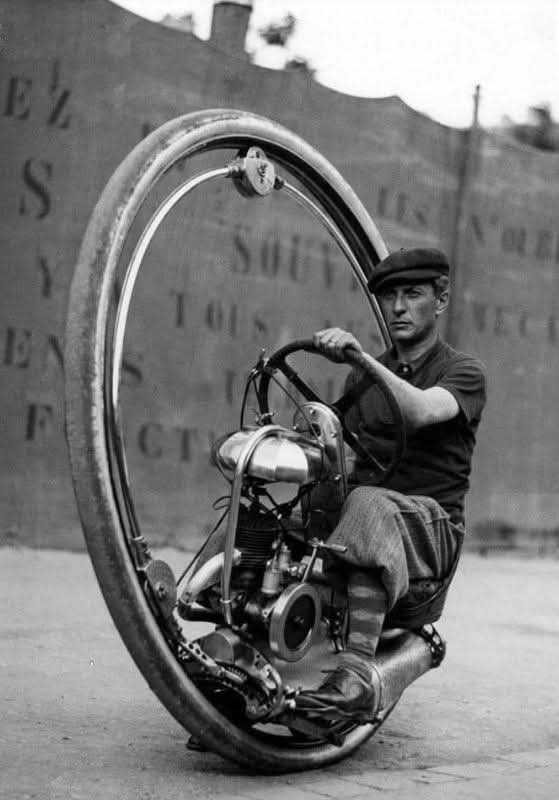
In 1931, M. Goventosa de Udine introduced a groundbreaking invention: the one-wheeled motorcycle. This unconventional design defied traditional motorcycle engineering, which relied on two wheels for stability. Instead, Goventosa’s creation featured a single, massive wheel, challenging perceptions of balance and control while showcasing the era’s innovative spirit. It was an ambitious leap in transportation design, reflecting a bold attempt to rethink personal mobility in a rapidly changing world.
Although the one-wheeled motorcycle never became a practical mode of transport, its creation symbolized the early 20th century’s fascination with futuristic technology. Engineers and inventors were constantly pushing boundaries, experimenting with alternative forms of transportation. The challenges of maintaining balance and maneuverability ultimately prevented widespread adoption, but the concept fueled further exploration into unique vehicle designs.
Despite its limitations, the one-wheeled motorcycle remains a remarkable piece of engineering history. It serves as a testament to human ingenuity and the relentless pursuit of innovation. While it may not have revolutionized transportation, it stands as a reminder that progress often comes from daring ideas—even those that seem impractical at first glance.
#archaeohistories
A remarkable piece of gold jewelry
(1st Century AD), was discovered in Pompeii: a bracelet weighing 610 grams, featuring a two-headed snake with glass eyes. The serpent is depicted holding a medallion of the goddess Diana, adding both mystique and symbolism to the piece. Its intricate design reflects the artistic craftsmanship of the time, combining beauty with powerful iconography, common in Roman jewelry of the era.
The bracelet was found in a tragic context, on the arm of a woman who perished during the eruption of Mount Vesuvius in 79 AD. Alongside her, another adult and a child also lost their lives when a balcony in their home collapsed. The discovery of the bracelet, along with the remains of the victims, offers a poignant glimpse into the final moments of Pompeii's inhabitants, forever preserved in the volcanic ash.
This bracelet later gave its name to one of the most famous houses in Pompeii: "The House of the Gold Bracelet." Excavations of the site revealed the luxury and opulence that defined the house, with the bracelet serving as a symbol of the wealth and status of its inhabitants. Today, it stands as a significant archaeological artifact, linking the artistry of Pompeian craftsmanship to the tragic history of the city’s destruction.
National Archaeological Museum, Naples
#archaeohistories
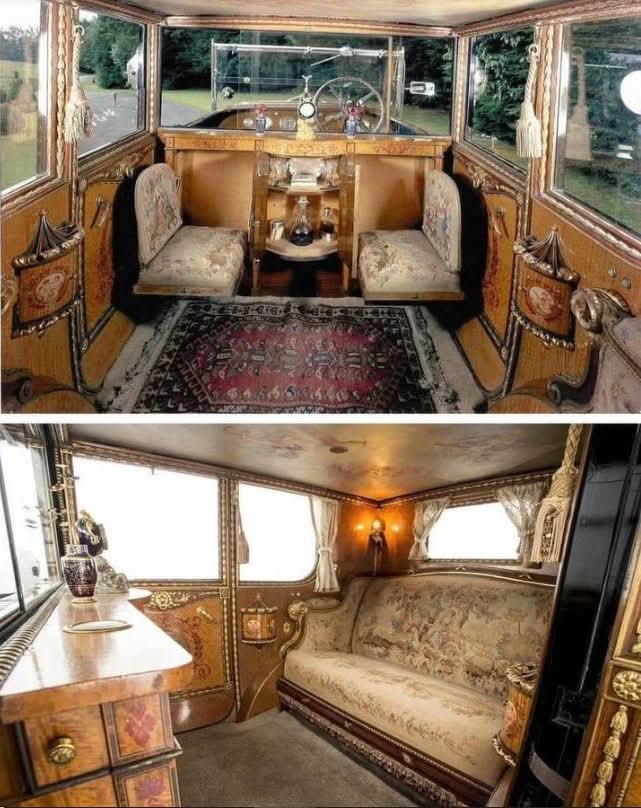
The 1926 Rolls-Royce Phantom stands as a timeless icon of luxury, craftsmanship, and performance. Designed to deliver the utmost in comfort and prestige, it epitomized the height of automotive excellence in the 1920s. With its sleek, elegant design and meticulous attention to detail, the Phantom quickly became a status symbol, favored by royalty, aristocrats, and Hollywood elites. Its long, graceful hood and refined styling showcased the unparalleled quality and sophistication that defined Rolls-Royce.
Beneath its distinguished exterior, the 1926 Phantom housed a powerful 7.7-liter straight-six engine, providing smooth yet formidable performance. This engineering marvel allowed for impressive speeds while maintaining an effortless, quiet ride—thanks to its advanced suspension and soundproofed cabin. The combination of power and refinement ensured that passengers experienced an unrivaled sense of luxury on every journey.
Beyond performance, the Phantom was a masterpiece of craftsmanship. From its hand-stitched leather interiors to its polished chrome accents, every detail reflected Rolls-Royce’s dedication to perfection. Many owners customized their Phantoms with bespoke features, making each one a unique work of art. Today, the 1926 Rolls-Royce Phantom remains a coveted collector’s item, embodying the golden age of automotive elegance and standing as a testament to timeless design and engineering brilliance.
#archaeohistories
Rosalia Lombardo - the Sleeping Beauty of Sicily :
She's known by many names: the Girl in the Glass Coffin, Sleeping Beauty, the World's Most Beautiful Mummy, and the Best Preserved Mummy in the World. In death, she's become something larger than life. Thousands of visitors each year flock to the Sicilian Catacombs just to catch a glimpse of her tiny body.
Nearly 100 years after her death, Rosalia has changed little. Still sealed inside her tiny glass coffin, Rosalia sleeps, her little head poking above a fading silk blanket. Tufts of blonde hair still flowed down her cheeks, and a silk bow was still tied firmly around her head. The only sign of time has passed is an oxidizing amulet of the Virgin Mary, which rests atop Rosalia's blanket. It's so faded that it's almost unrecognizable. This is Rosalia Lombardo, the famous child mummy.
In the 100 years since her death in 1920, Rosalia has become interwoven with Sicilian lore. They tell of a young child, born frail and weak, who endured more pain and sickness throughout her short life than most do in their lifetimes. Her premature death at age two left her father grief-stricken. Unable to lose his daughter, the father sought the help of embalmer Alfredo Salafia to preserve Rosalia for eternity. The result was nothing short of miraculous. Through Salafia's embalming process, Rosalia was perfectly preserved. Fitting to her new state of immortality, she was placed inside a glass coffin and interred inside the Capuchin Catacombs of Sicily.
Veritably, the truth about Rosalia's life has been lost to time. Some say she was the daughter of a wealthy Sicilian noble, a general in the Italian military named Mario Lombardo. The general, according to legend, wanted to preserve his only daughter for eternity and consequentially contacted Alfredo Salafia to embalm her. There are no known photographs of Rosalia alive nor any official documents confirming definitively who her parents were.
Embalmer Alfredo Salafia performed the procedure that would preserve Rosalia. For nearly a century, the exact formula remained a mystery, lost to the grave with Salafia. In 2009, a biological anthropologist named Dario Piombino-Mascali tracked down the eternal formula through Salafia's living descendants. The chemicals included formalin, zinc salt, alcohol, salicylic acid, and glycerin. The combination of alcohol and the climate conditions within the catacombs would have dried Rosalia's body, Glycerin would have allowed the body to mummify, and salicylic acid prevented the growth of mold. The magic ingredient was zinc, which gave the body rigidity, essentially turning it into wax.
Because of the near-perfect nature of Rosalia's body, some skeptics claimed that the real body was replaced with a realistic wax replica. Such a theory became one of the topics of a History Channel documentary in the 2000s. In it, x-ray equipment was brought to the catacombs, and Rosalia's coffin was x-rayed for the first time in its existence. They discovered not only a skeletal structure but that her organs were still intact. Her brain was perfectly visible, only having shrunk 50% due to the mummification process. In 2009, a National Geographic documentary had an MRI performed on the body, producing the first 3D images of Rosalia both inside and out. The MRI confirmed all of her organs were perfectly intact. It also showed her arms at her sides. Nobody has ever looked underneath the blanket that covers Rosalia's body since she was sealed inside her coffin 90 years ago.
Rosalia's perfect mummy exemplifies humans' fascination with death. As the innocence of the young toddler is forever frozen in time, the quality of her beauty captures the imagination of generation after generation. Her corpse receives more visitors than any other mummy in the Catacombs. Many artists have used Rosalia as an inspiration over the years.
#archaeohistories
@ryan_landay@websnacker@Aella_Girl Did it change when transgender men started taking over women's sports or enter their bathrooms or when some were found to be predatory to children and by some I mean many.