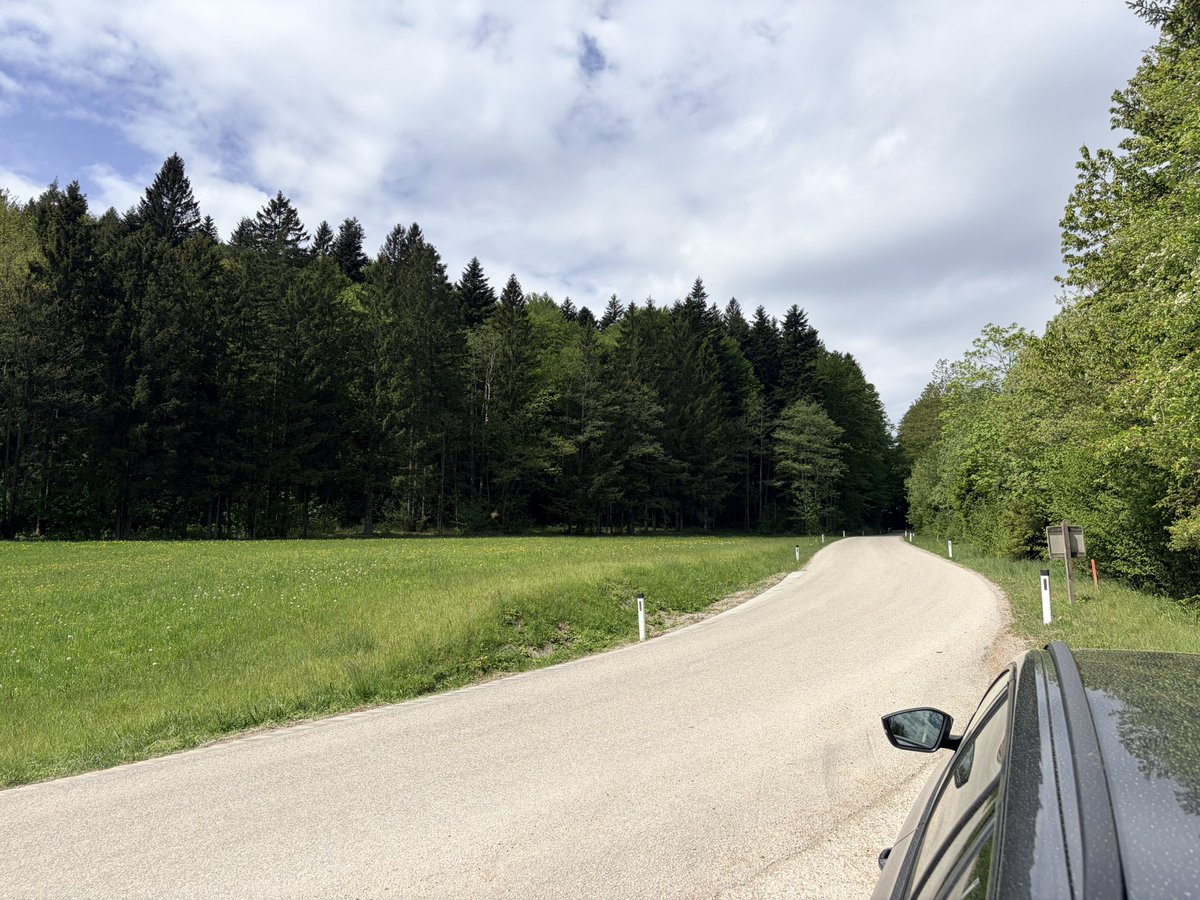
#nifty50 this year's view – one more high in the next 2-3 months. Everything is great, narrative sets in, euphoric moves… that will mark the high for good 2-3 quarters followed by cooling-off time, 10-20% drop from the high.
Abhijeet dipke could have lived a greatest life in America..with over 22 million followers he could have earned millions just by making online videos from there...like many others..
But instead he is sitting on a protest at Jantar Mantar risking his life and career for the sake of your children...
🔥🔥
Respect and best wishes @abhijeet_dipke
Join the peaceful protest dosto...
Dharmendra Pradhan Must Resign...
#Nifty50 Indian markets are turning into a circus. Foreign investors and powerful nations act as the ringmasters, while domestic policymakers appear either absent or focused on value destruction rather than value creation.
#nifty50#investing Monday gap up or gap down? Don't really know, a gap up will surely boost the open position. But for the time being, let's enjoy the best that humanity has to offer in this broken world.
#nifty50#sharemarket#TradingStrategies markets are never in clear trend or direction
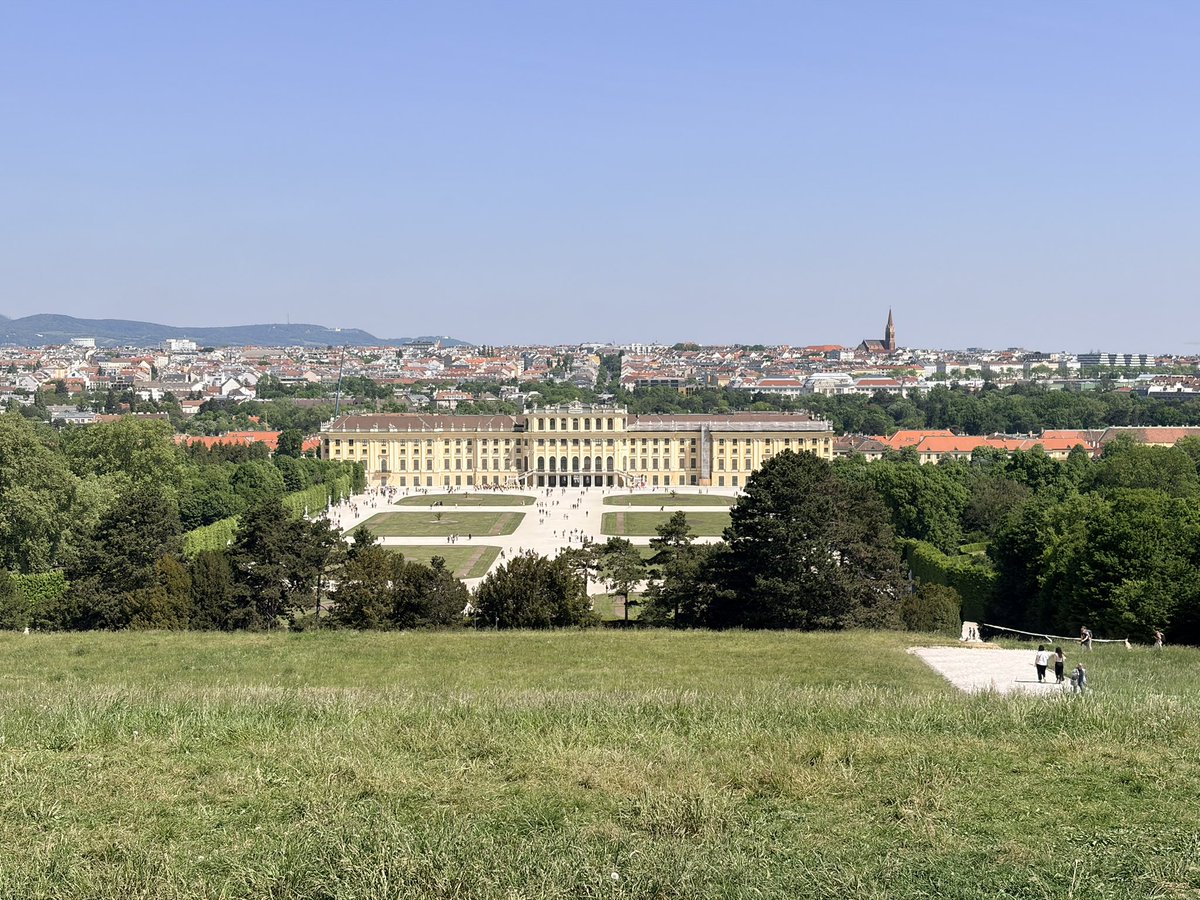
mode. One may always feel confused about its moves. We need to have some luck, a bit of institution and absolutely tight risk Management system. You will thrive. ...... midnight thoughts.... on the way to Vienna for a week
Every Fortune 500 executive is buying AI subscriptions and calling it a strategy.
Palantir CEO Alex Karp has a word for that.
Karp: “The general approach of just buying models is going to be essentially self-pleasuring for an enterprise at the cost of the enterprise.”
Karp: “You buy some large language model, you party with it basically, and the next day you have a hangover.”
The entire corporate world is mispricing the AI transition.
They are renting intelligence with no foundation to run it on.
A raw model floating in a vacuum hallucinates over your unstructured data, generates the illusion of work, and executes nothing.
The party ends. The hangover begins. Nothing changed.
Karp identified exactly where the value actually goes.
Karp: “All the value in the market is going to go to chips and what we call ontology.”
Not the models. Not the subscriptions. Not the chatbot interfaces layered on top of them.
The ontology.
The precise digital architecture of how an organization actually operates. Its security permissions. Its supply chain physics. It’s operational logic.
Karp: “The ontology will allow you to take a large language model and use it, refine it, and then impose it on your enterprise in the logic of your enterprise, in the security model of your enterprise.”
When you bind a frontier model to the strict underlying logic of a specific enterprise, something fundamental shifts.
It stops generating text.
It starts generating action.
Karp: “We’re using it on the battlefield, we’re using it to compress margins. We’re making engineers better engineers. We’re making people who are not engineers into engineers using our ontology and a large language model.”
The traditional engineering bottleneck does not slow down.
It disappears.
Karp: “We are sitting on the only thing that actually creates quantifiable, transformational value.”
The companies renting models are paying for the feeling of transformation.
The companies building ontologies are executing the actual thing.
One of them will define the next decade.
The other will wake up in 2030 wondering where their market share went.
Exactly like a hangover.
The CEO of a $95 billion company just said something that should TERRIFY every software executive on the planet.
Patrick Collison, the man who built Stripe, went on TBPN last week and compared the entire software industry to frozen food.
His words: "Software has been created years beforehand, freeze-dried, and then prepared at the moment of consumption."
That era is ending.
His new model for software? Pizza.
Fresh pizza, made to order, right then and there.
Exactly what you need, the moment you need it.
That is the future Collison sees for all software.
What does that actually mean?
It means AI agents will build you custom software in real time.
No subscriptions, bloated dashboards and one size fits all.
Software cooked for you, that moment, then gone.
This is already happening.
Anthropic launched Claude Cowork in January.
Within weeks, $2 trillion in software stocks evaporated.
IBM had its worst trading day in 26 years, legalZoom dropped 20% and the entire SaaS sector is in freefall.
They're calling it the SaaSpocalypse.
The old software model was simple, spend millions building a product, sell it to everyone and collect subscriptions forever.
Fixed cost, infinite monetization and winner takes all.
That game created trillion dollar companies: Salesforce. Adobe, Oracle, Microsoft.
Collison says that game is now breaking.
Why? Because AI introduces real cost at every use.
Inference costs, custom creation costs, every single interaction has a price tag.
No more build once, sell forever and he called it the non-Walrasian software regime.
Translation: The winner take all economics that built Big Software are collapsing.
When every user gets custom software built on demand, there is no single winner.
There are thousands of winners or none.
Think about what this does to pricing.
No more $50/seat/month or enterprise contracts worth millions.
Instead, you pay per task, outcome and for what the AI actually built you.
The entire revenue model of SaaS is being rewritten.
Klarna already ripped out Salesforce and replaced it with AI.
Cursor ditched its paid CMS and built a replacement from scratch.
Companies are doing this now.
The dominoes are falling.
The entire industry is being rewritten in real time.
Silicon Valley got a HUGE warning from one of its own founders.
Not about regulation or about competition.
About the entire belief system the tech industry was built on.
Peter Thiel says AI is not coming for the writers first.
It is coming for the math people.
The coders, quants, engineers.
The people Silicon Valley put on a pedestal for two decades.
His argument is devastatingly simple.
Within a few years, AI will solve the hardest math problems on Earth faster than any human alive.
Google DeepMind already won gold at the International Math Olympiad last summer.
Solving five of six problems in natural language within the time limit.
Here is the part nobody talks about.
Math has been the gatekeeper of power for over 200 years.
It started during the French Revolution, verbal ability ran in aristocratic families.
Math was seen as the great equalizer, distributed randomly, impossible to inherit.
So society made math the test for everything.
Medical school, engineering, finance, tech hiring.
Want to be a neurosurgeon? First prove you can do calculus.
Thiel asks the obvious question: What does calculus have to do with operating on someone's brain?
Then he goes darker.
By the Soviet era, putting math geniuses and chess grandmasters on pedestals was not about celebrating intelligence.
It was about control.
The math people, Thiel says, are singularly clueless about the world.
Elevating them keeps everyone else trying to be like them instead of questioning the system.
Sound familiar? Silicon Valley in the 21st century took this bias and supercharged it.
Leetcode interviews, algorithmic screening and the entire industry filters for one type of mind.
And that type of mind is about to be replicated by a machine for pennies.
Thiel has seen this movie before.
In the late 1980s, he was a competitive chess player.
He believed chess should be the universal test of intelligence.
Then IBM's Deep Blue crushed Garry Kasparov in 1997.
Chess mastery went from pinnacle of human genius to party trick overnight.
And math is next.
So who wins? The word people, he says.
The communicators, storytellers, negotiators.
The ones who understand context, nuance, and human complexity.
LinkedIn's 2026 data already shows it.
Communication skills appear twice as often in job postings.
Leadership, public speaking, and storytelling are the fastest rising demands.
The creator of Anthropic's coding tool admitted he has not written a single line of code himself since November.
Companies are cutting thousands of technical workers.
Block went from 10,000 employees to under 6,000.
The math moat is not shrinking, it is gone.
For 20 years, society told liberal arts majors they were wasting their time.
Barista degrees, they called them.
Turns out the people who learned to think in words, not numbers, may have been training for exactly this moment.
The question is whether the institutions built on math supremacy universities, tech companies, hiring pipelines can adapt before they become obsolete.
Peter Thiel is betting they cannot and he has been right before.