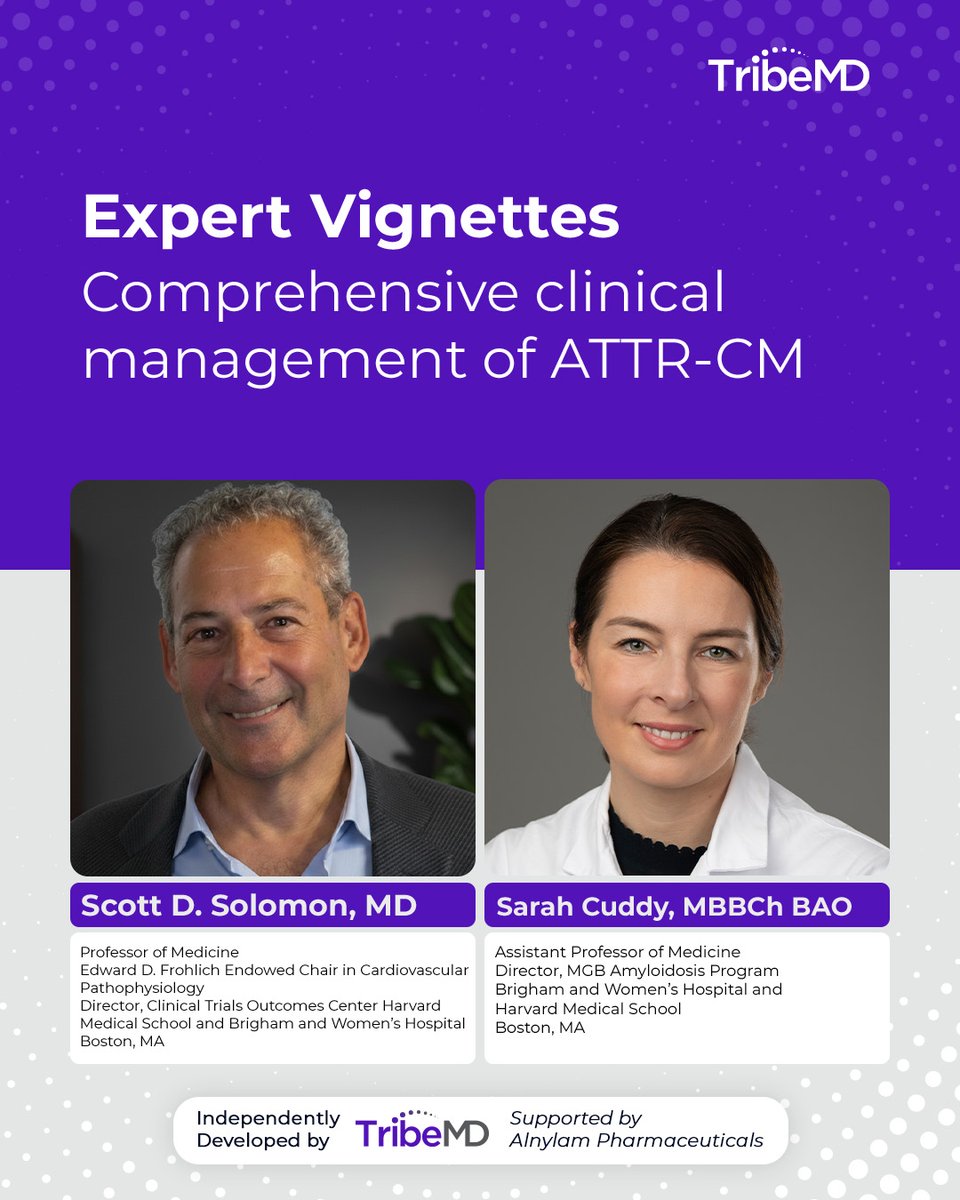
Managing ATTR-CM extends beyond disease-modifying therapy.
Dr. Scott Solomon and Dr. Sarah Cuddy discuss therapeutic selection, heart failure management, arrhythmias, and cardiac complications in clinical practice.
📌 Read more on the TribeMD Portal. Link: https://t.co/sG6anv7kjb
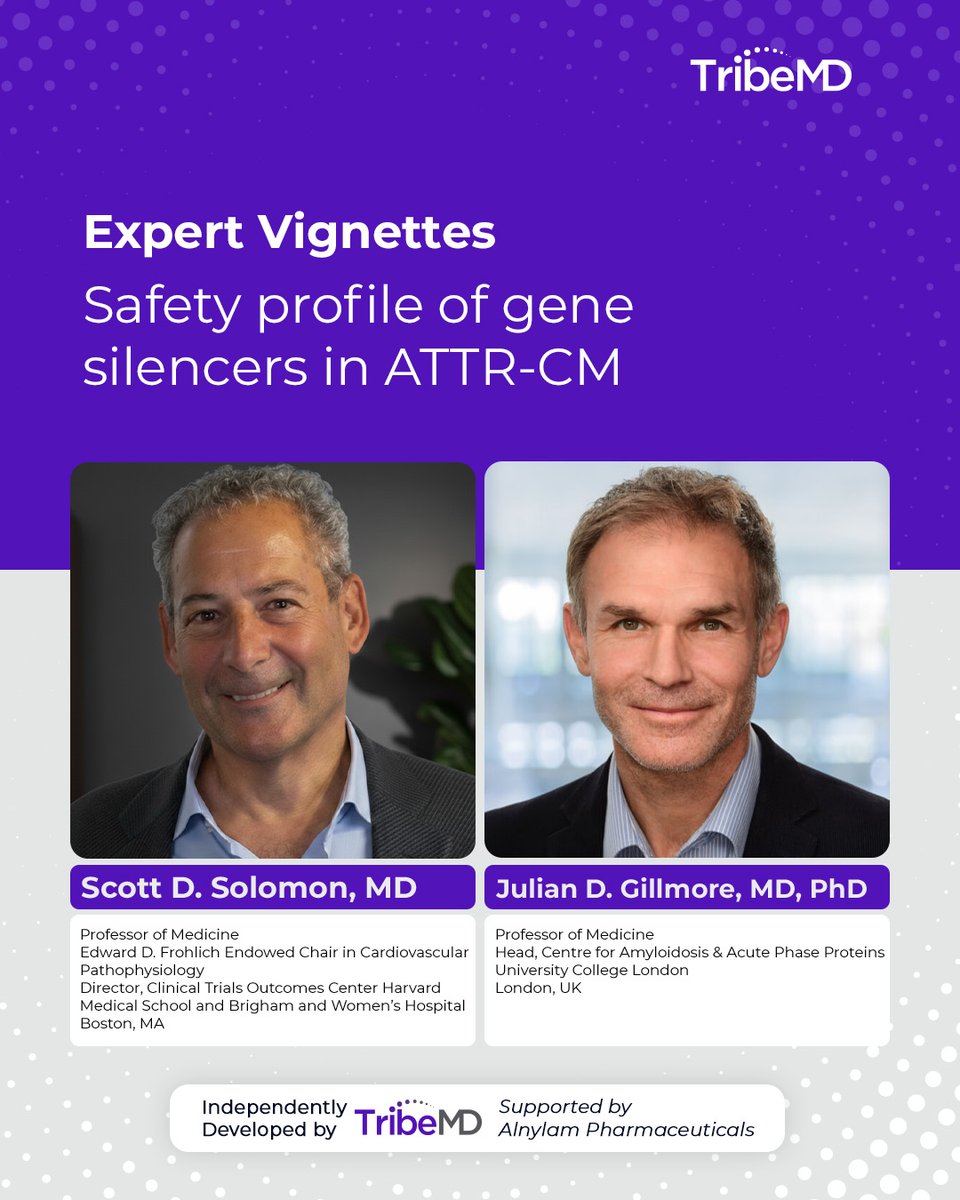
What are the safety implications of reducing TTR in ATTR-CM?
Dr. Scott Solomon and Prof. Julian Gillmore discuss vutrisiran, HELIOS-B, and key safety considerations: thyroid function, vitamin A, and tolerability.
Watch the discussion: https://t.co/MTmPQw3eSi
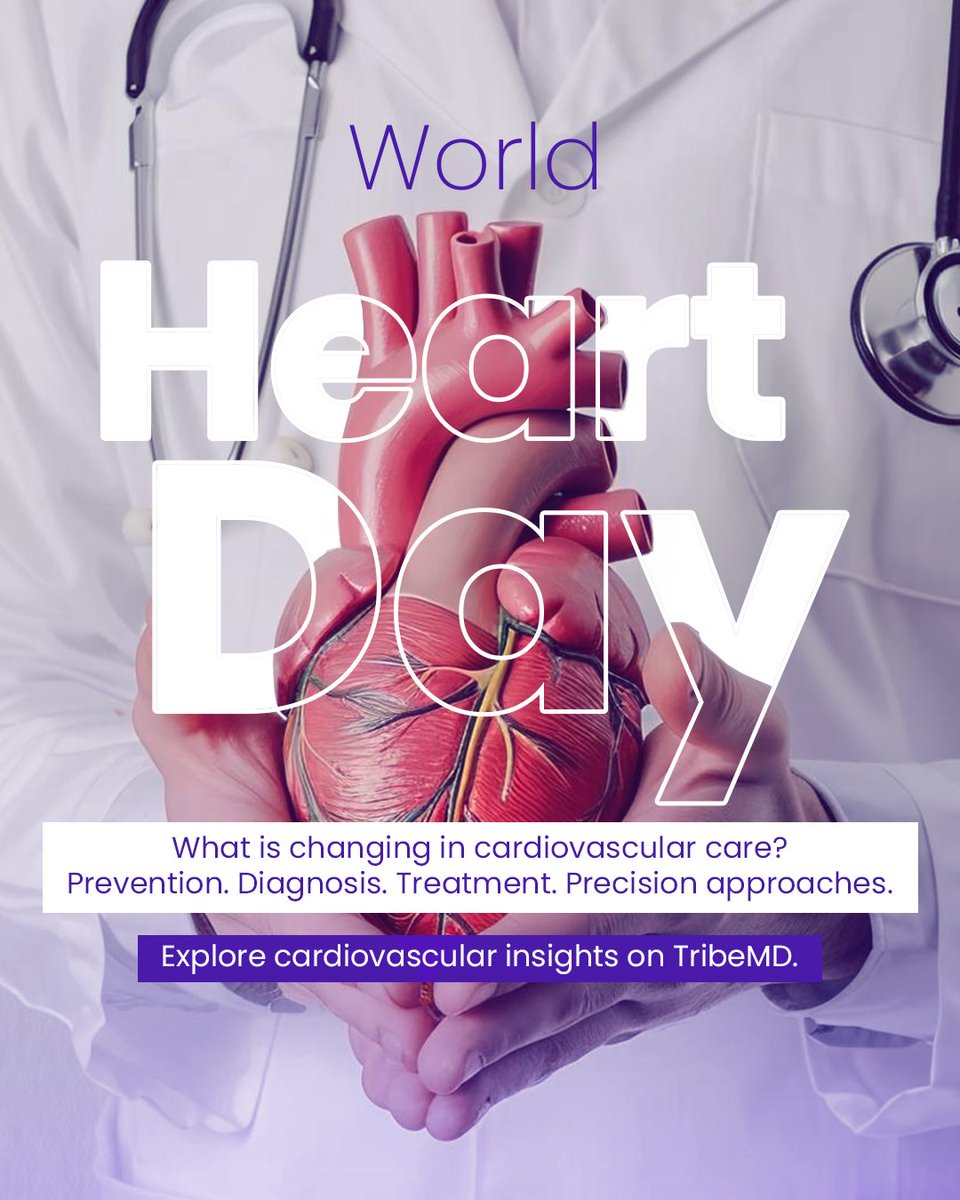
Cardiovascular care continues to evolve as new evidence reshapes prevention, diagnosis, and treatment.
From advances in cardiometabolic care to new therapeutic strategies and precision approaches, the field is moving toward increasingly individualized decision-making. This World Heart Day, we look beyond awareness to the scientific developments shaping the future of cardiovascular care.
Explore more cardiovascular insights on TribeMD.
How do therapies for ATTR-CM target the disease?
In this episode of TribeMD Pulse, Dr. Scott Solomon and Prof. Marianna Fontana discuss the role of TTR, the differences between TTR stabilizers and gene silencers, and how these therapies help reduce new amyloid deposition.
▶️ Watch the full video: https://t.co/piRWrlSvbR
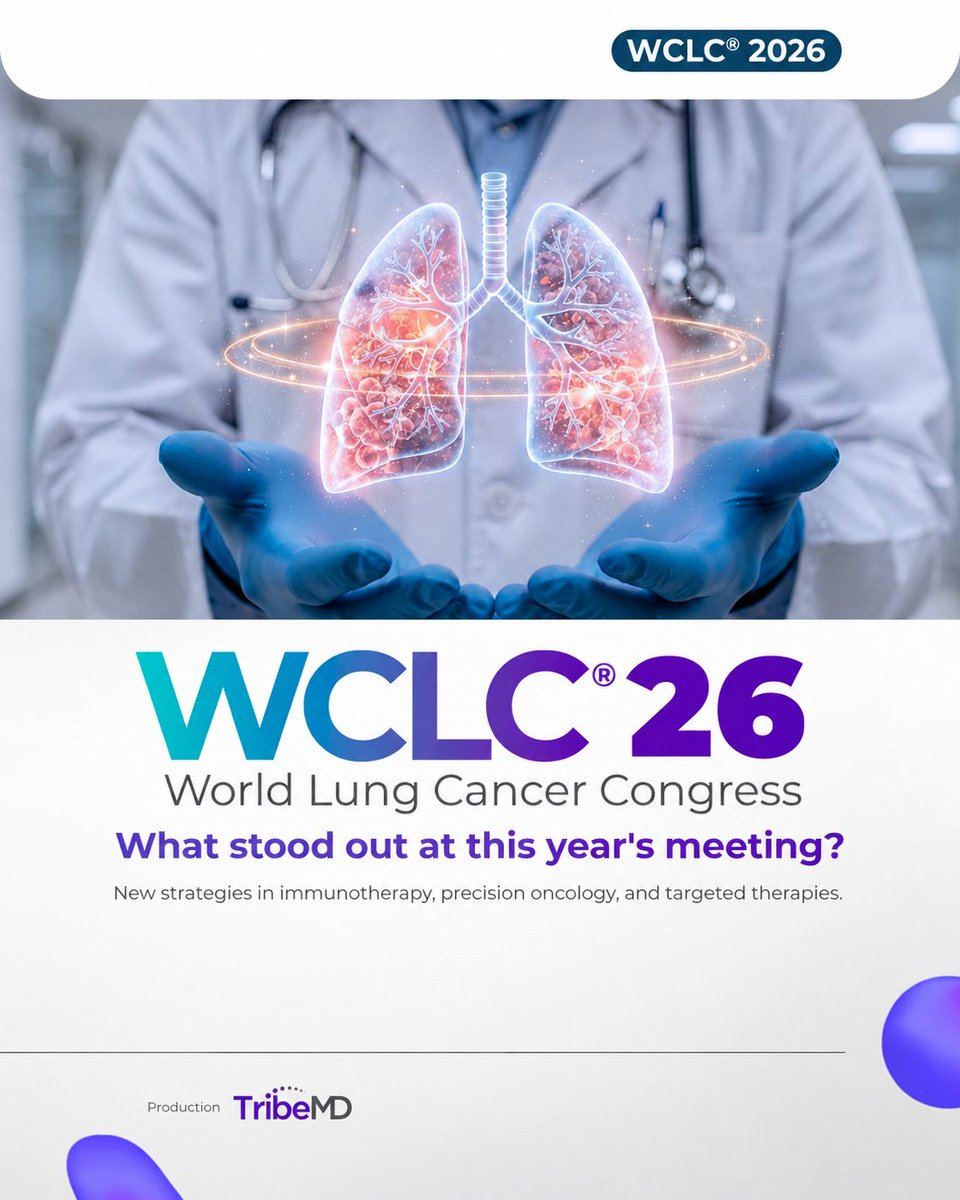
WCLC 2026 brought new data pointing to a rapidly evolving landscape in thoracic oncology.
Among the highlights, HARMONi-2 presented new overall survival results with ivonescimab versus pembrolizumab in advanced, PD-L1-positive NSCLC, placing the PD-1/VEGF bispecific strategy among the key discussions at this year's meeting.
Advances in precision oncology, new data with B7-H3-targeted ADCs in SCLC, and emerging strategies directed at new therapeutic targets also marked this edition.
In this post, we highlight some of the key findings presented at WCLC 2026 and the new perspectives they bring to thoracic oncology.
👉 Explore the highlights and follow TribeMD for more scientific updates.
What are the safety implications of reducing TTR in ATTR-CM?
Dr. Scott Solomon and Prof. Julian Gillmore discuss vutrisiran, HELIOS-B, and key safety considerations: thyroid function, vitamin A, and tolerability.
Watch the discussion: https://t.co/MTmPQw3eSi
What can cardiac function reveal about treatment effects in ATTR-CM?
Dr. Scott Solomon and Dr. Karola Jering explore findings on diastolic function, cardiac structure, and how these changes may relate to clinical outcomes.
▶️ Watch the full video: https://t.co/SbvdnaLs6n
What can cardiac structure and function tell us about ATTR-CM? 🫀
In this episode, Dr. Scott Solomon and Dr. Carola Jering discuss echocardiographic findings from HELIOS-B and their relationship with clinical outcomes.
Full discussion in the comments. 👇
Staying up to date with global medical literature is a real challenge in day-to-day clinical practice — between studies, congresses, and guidelines, it's easy to miss what actually matters.
That's why TribeMD exists: trusted curation, rapid updates, and connection with specialists worldwide, all in one place.
Explore the full portal.
Managing ATTR-CM extends beyond disease-modifying therapy.
Dr. Scott Solomon and Dr. Sarah Cuddy discuss therapeutic selection, heart failure management, arrhythmias, and cardiac complications in clinical practice.
📌 Read more on the TribeMD Portal. Link: https://t.co/Uurl2dvztW
Understanding ATTR-CM starts with understanding its pathophysiology.
Explore expert insights from Dr. Scott Solomon and Dra. Marianna Fontana deepen your knowledge of the mechanisms behind the disease.
Complete a short knowledge check to access the video.
🎦Watch now: https://t.co/DtDxSW3qFc
Understanding ATTR-CM starts with understanding its pathophysiology.
Explore expert insights from Dr. Scott Solomon and Dra. Marianna Fontana deepen your knowledge of the mechanisms behind the disease.
Complete a short knowledge check to access the video.
🎦Watch now: https://t.co/iKCJPLut8v
The post-KRAS G12C landscape is rapidly evolving.
New agents like elisrasib and zoldonrasib, along with pan-RAS strategies, show that resistance is no longer the end, but the start of a new therapeutic line.
🔗 Read the full analysis on our website - https://t.co/02YrNBYkVj
Personalized mRNA vaccines are gaining real momentum in oncology.
With a 49% reduction in recurrence risk in melanoma and expansion into challenging tumors like PDAC and NSCLC, AACR 2026 highlights a major step forward for this approach.
🔗 Read the full analysis on our website - https://t.co/WEeD3nsqA6
AI is reshaping oncology and computational pathology is at the center of this transformation.
From foundation models predicting biomarkers directly from H&E to digital twins and spatial AI, AACR 2026 signals a shift from innovation to real clinical application.
🔗 Read the full analysis at the link - https://t.co/IgiEKMbjBg
ctDNA is redefining the adjuvant treatment landscape in solid tumors.
With up to a 10-month lead time over clinical relapse, MRD detection creates a real window to act earlier — before disease becomes clinically evident.
🔗 Read the full analysis at the link - https://t.co/rLHcNjMN8E
Cell therapy in solid tumors is entering a new phase.
From KIR-CAR tackling T cell exhaustion to smart armoring and in vivo CAR-T, #AACR2026 marks the shift from experimental to clinically actionable innovation.
Focus now: optimization, combinations, real-world impact.
🔗 https://t.co/QP7T9tsGND