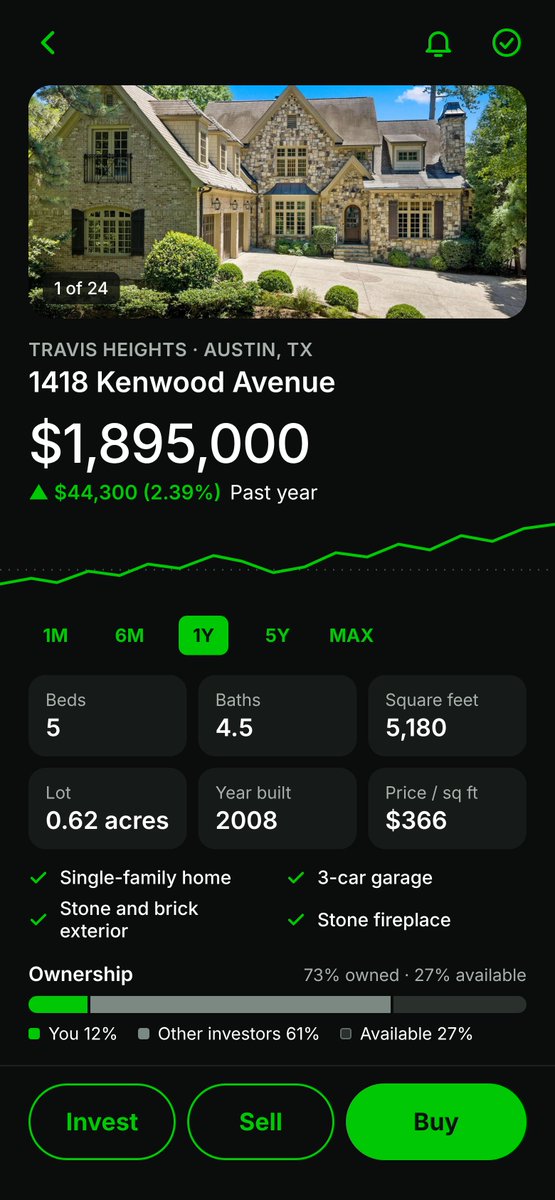
$HOOD: Buying a home in America should be as easy as buying a stock
• Buy, sell, or invest in any US home in 30 seconds
• One open marketplace for every buyer and seller
• List your own house in minutes
• Invest in any neighborhood you believe in
• No middlemen
Homeownership built the American middle class. Today the process is slow, expensive, and full of people taking a cut. The technology already exists. It's time to open up residential real estate to every American.
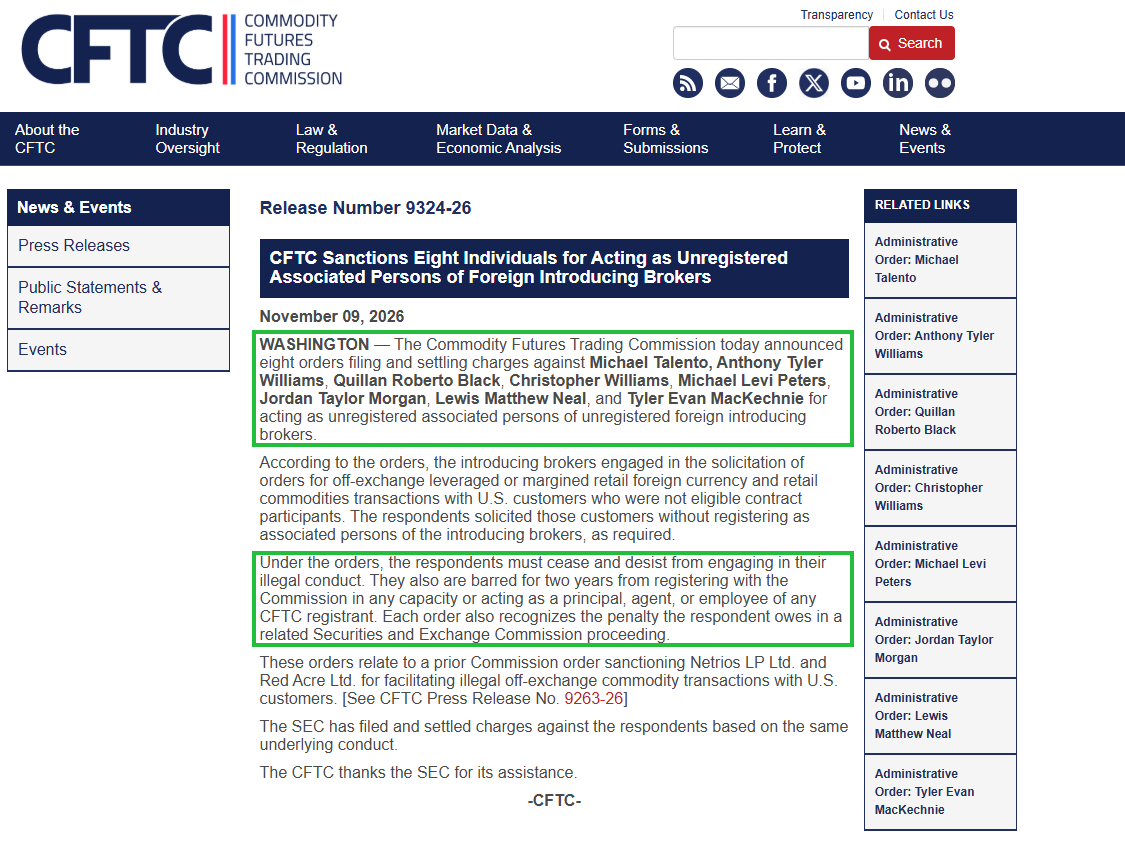
🚨Breaking: CFTC sanctions both co-founders of @tx3funding, along with six other trading influencers
Cue Banks (@CueBanks) and AnthonysWorld (@_Anthonysworld) were hit for soliciting U.S. retail traders into KOT4X, the offshore broker they co-owned, without registering. Swaggy C, Lewis Neal, Tyler MacKechnie, Michael Talento, Levi Peters and Jordan Morgan were sanctioned for running their own brokers.
CFTC orders, Nov. 9, 2026.
🧵
Do not trade @EliteTraderFund - they moved me to live before my first payout and now are taking my $1803 Live account ($2k minus $197 data fee) away from me after I lost $300 and my second red day. What a fuck joke. They are getting moved to #DoNotTrade list on https://t.co/1P9eSn0uJJ. Don’t ever waste your money with this firm.
My momentum bot just crushed this pop after the dems were called to control the senate. The election reversal appears to be underway, but RTH session will confirm/deny that call tomorrow. What a night to trade the ETH market though. $QQQ
$PLTR - $167.10 was just too juicy not to buy tonight. Might have made my first bottom tick purchase of my career. We will see if we continue this bounce tomorrow from the elections fade tonight.
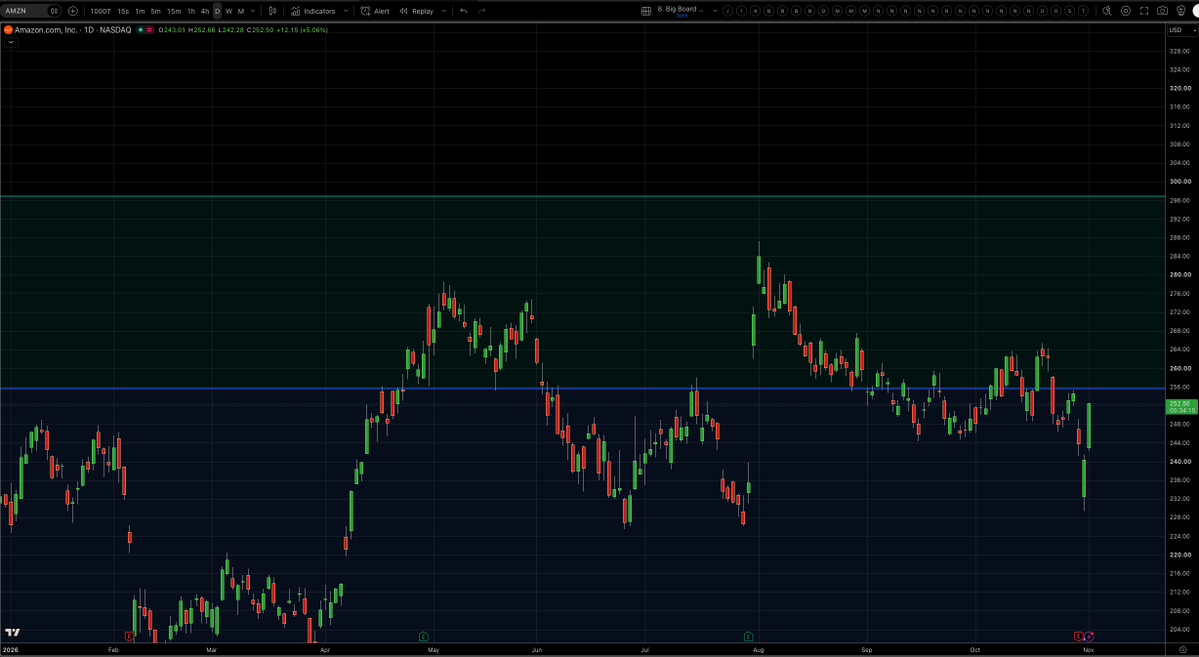
$AMZN is a beast. After a big gap down on earnings and a quick reclaim of that move, I remained very bullish, if not more bullish on the name. Now the stock is back above $250 and cooking.
Inverse Cramer - The bounce already started, so I am bullish this week. Probably slow until we see the likely locked up government outcome, which is historically bullish for the market knowing that status quo continues.
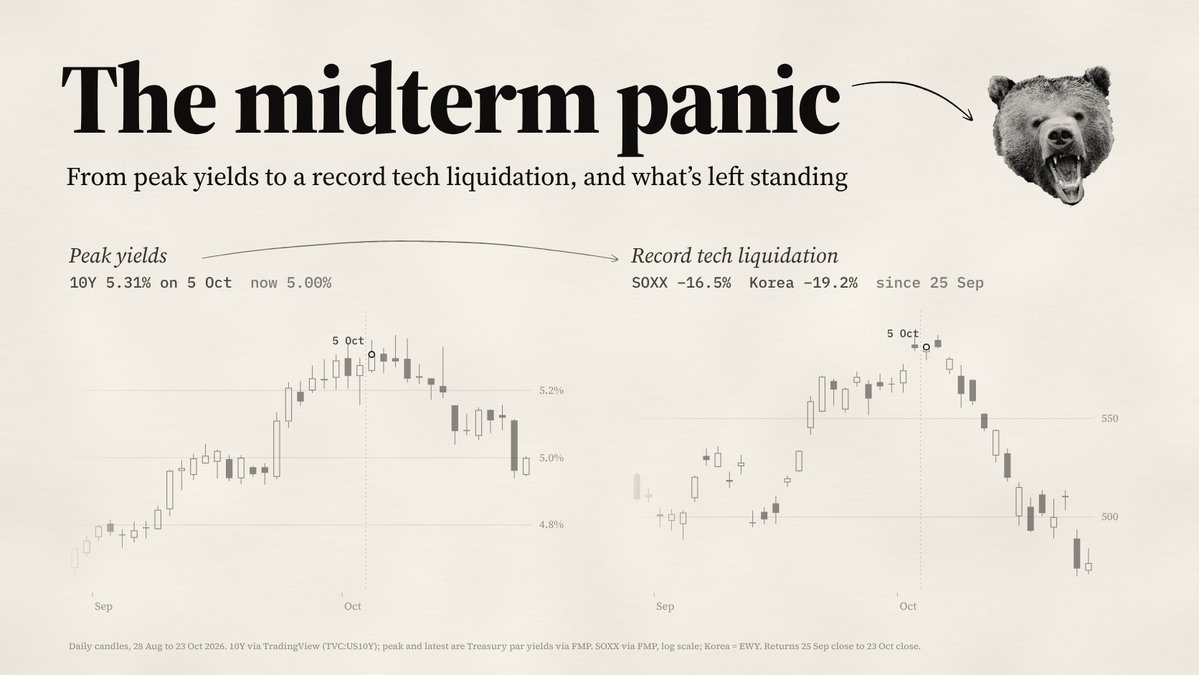
There is nothing special about this pullback.
Much of the panic surrounding neoclouds, AI capital expenditures, and the sustainability of the infrastructure buildout is simply the market searching for explanations for falling stock prices.
When AI stocks were rising, record capex was evidence of extraordinary demand. When those same stocks started falling, suddenly the same spending became evidence of an impending financial disaster.
One fact with two interpretations that depend entirely on the price action of the market.
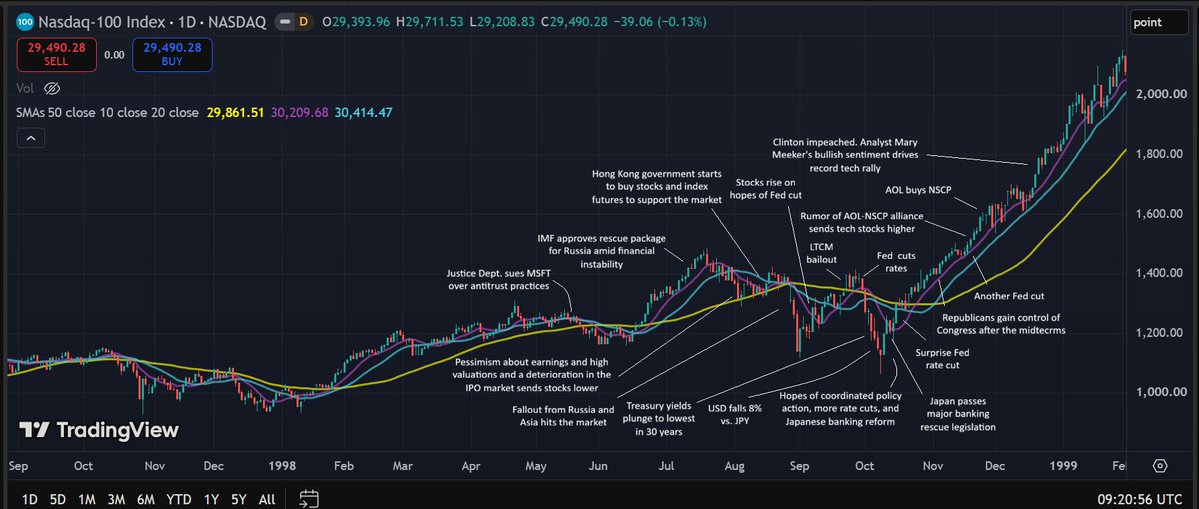
Go back to August 1998.
The technology bull market had been running for about three years.Amid fallout from the Asian financial crisis and Russian ruble crisis, earnings expectations were deteriorating, valuations were elevated, and investors were becoming increasingly concerned about unprofitable Internet companies.
On August 6, the New York Times published an article titled "Market Gyrations May Point to Shift in Investor Strategy." One fund manager declared, "Boring is going to outperform sexy."
Investors were supposedly abandoning momentum and speculative technology shares in favor of profitable businesses, balance sheets, dividends, and traditional valuations.
Russia defaulted on its debt. The Asian financial crisis was spreading internationally. The yen carry trade had imploded as the USD plunged 8% against the yen in a single day. US embassies were being bombed.
President Clinton ordered missile strikes against Afghanistan and Sudan while simultaneously facing a scandal that would result in his impeachment. Major financial institutions suffered enormous losses, and the spectacular collapse of Long-Term Capital Management threatened the stability of the global financial system.
Corporate earnings forecasts were falling. Investors feared a U.S. recession. Many of the same technology companies that had driven the bull market were now leading the decline. Many of them had fallen 40-60% from their 1998 highs.
Even the Federal Reserve's first interest-rate cut on September 29 initially disappointed investors. The Dow fell that day and plunged another 238 points the following session.
The news seemed almost uniformly terrible.
But the market didn't care forever.
After a violent reversal in early October, improving confidence in corporate earnings, Japanese banking reforms, and a surprise emergency Fed cut on October 15 helped restore risk appetite.
By November, the Dow was making new all-time highs. Internet stocks were exploding higher again.
What had looked like the end of the internet trade was, within about a month, actually a correction preceding one of the most extraordinary speculative advances in stock-market history.
In today’s market, Microsoft just reported 48% Azure growth. Google Cloud revenue more than doubled. Meta expects $135–145 billion in capex this year and has announced plans for a potentially record-sized $97.5 billion equity capital raise.
If the market really was that concerned over capex spending, instead of using it as an excuse to explain the pullback, the market would have sold off on the META news.
Anthropic has now filed its IPO registration statement. We have midterm elections approaching, another consequential round of earnings, and a Fed that just held rates steady even as another hike is widely anticipated in December.
There are plenty of potential catalysts over the coming two months.
More importantly, this does not resemble the sentiment backdrop of a speculative bubble climax. Generational bull markets don't die midway through a basing period, but typically after euphoric saturation and a parabolic rally in leading names.
Consensus on AI is deeply divided. Being loudly anti-AI has practically become fashionable. Some AI critics have even built enormous audiences around the idea that the economics of the industry are unsustainable. Plenty of investors seem almost eager to watch the entire trade collapse.
That isn't the sentiment or narrative around which tops are typically made.
The Internet trade didn't end in the panic of 1998. It ended after the extraordinary acceleration of 1999 and early 2000 when being bearish was the market equivalent of wearing a dunce cap.
History never repeats perfectly, and today's rate environment is very different. But I think the resemblance in investor psychology is striking.
I’d be genuinely surprised if we don't have at least one more months-long rally into new highs during this cycle.
Whether it begins into the midterms, after the elections, around Anthropic's anticipated listing, or following further earnings confirmation, I suspect this correction will eventually look more like an interruption in a generational bull market than the bursting of a "bubble."
The $NDX took four months to bottom in 1998. With the exception of a handful of leaders, most stocks that are holding up have been basing out since the May-July period. We could certainly go lower, but most of the signs point to another new high before this cycle rolls over.
However, I’d place the odds of any additional powerful rallies afterward as increasingly unlikely given the fact we are already about to enter the fifth year of this bull market. I'd be careful about buying the dips next year, at least with meaningful size.
There is nothing special about this pullback.
Much of the panic surrounding neoclouds, AI capital expenditures, and the sustainability of the infrastructure buildout is simply the market searching for explanations for falling stock prices.
When AI stocks were rising, record capex was evidence of extraordinary demand. When those same stocks started falling, suddenly the same spending became evidence of an impending financial disaster.
One fact with two interpretations that depend entirely on the price action of the market.
Go back to August 1998.
The technology bull market had been running for about three years.Amid fallout from the Asian financial crisis and Russian ruble crisis, earnings expectations were deteriorating, valuations were elevated, and investors were becoming increasingly concerned about unprofitable Internet companies.
On August 6, the New York Times published an article titled "Market Gyrations May Point to Shift in Investor Strategy." One fund manager declared, "Boring is going to outperform sexy."
Investors were supposedly abandoning momentum and speculative technology shares in favor of profitable businesses, balance sheets, dividends, and traditional valuations.
Russia defaulted on its debt. The Asian financial crisis was spreading internationally. The yen carry trade had imploded as the USD plunged 8% against the yen in a single day. US embassies were being bombed.
President Clinton ordered missile strikes against Afghanistan and Sudan while simultaneously facing a scandal that would result in his impeachment. Major financial institutions suffered enormous losses, and the spectacular collapse of Long-Term Capital Management threatened the stability of the global financial system.
Corporate earnings forecasts were falling. Investors feared a U.S. recession. Many of the same technology companies that had driven the bull market were now leading the decline. Many of them had fallen 40-60% from their 1998 highs.
Even the Federal Reserve's first interest-rate cut on September 29 initially disappointed investors. The Dow fell that day and plunged another 238 points the following session.
The news seemed almost uniformly terrible.
But the market didn't care forever.
After a violent reversal in early October, improving confidence in corporate earnings, Japanese banking reforms, and a surprise emergency Fed cut on October 15 helped restore risk appetite.
By November, the Dow was making new all-time highs. Internet stocks were exploding higher again.
What had looked like the end of the internet trade was, within about a month, actually a correction preceding one of the most extraordinary speculative advances in stock-market history.
In today’s market, Microsoft just reported 48% Azure growth. Google Cloud revenue more than doubled. Meta expects $135–145 billion in capex this year and has announced plans for a potentially record-sized $97.5 billion equity capital raise.
If the market really was that concerned over capex spending, instead of using it as an excuse to explain the pullback, the market would have sold off on the META news.
Anthropic has now filed its IPO registration statement. We have midterm elections approaching, another consequential round of earnings, and a Fed that just held rates steady even as another hike is widely anticipated in December.
There are plenty of potential catalysts over the coming two months.
More importantly, this does not resemble the sentiment backdrop of a speculative bubble climax. Generational bull markets don't die midway through a basing period, but typically after euphoric saturation and a parabolic rally in leading names.
Consensus on AI is deeply divided. Being loudly anti-AI has practically become fashionable. Some AI critics have even built enormous audiences around the idea that the economics of the industry are unsustainable. Plenty of investors seem almost eager to watch the entire trade collapse.
That isn't the sentiment or narrative around which tops are typically made.
The Internet trade didn't end in the panic of 1998. It ended after the extraordinary acceleration of 1999 and early 2000 when being bearish was the market equivalent of wearing a dunce cap.
History never repeats perfectly, and today's rate environment is very different. But I think the resemblance in investor psychology is striking.
I’d be genuinely surprised if we don't have at least one more months-long rally into new highs during this cycle.
Whether it begins into the midterms, after the elections, around Anthropic's anticipated listing, or following further earnings confirmation, I suspect this correction will eventually look more like an interruption in a generational bull market than the bursting of a "bubble."
The $NDX took four months to bottom in 1998. With the exception of a handful of leaders, most stocks that are holding up have been basing out since the May-July period. We could certainly go lower, but most of the signs point to another new high before this cycle rolls over.
However, I’d place the odds of any additional powerful rallies afterward as increasingly unlikely given the fact we are already about to enter the fifth year of this bull market. I'd be careful about buying the dips next year, at least with meaningful size.
This is how AI will hit the bottom line for tech. It is starting. 2027 is a year of climbing a wall of worry. AI has replaced a lot of tech work, there is no doubt about it. It is a good time to be a creative, driven person. $MSFT
Anthropic has filed an S-1 registration statement with the SEC related to its proposed IPO.
Read more: https://t.co/ofhv0DK3Zp
Legal disclaimer: A registration statement relating to these securities has been filed with the SEC but has not yet become effective. These securities may not be sold, nor may offers to buy be accepted, prior to the time the registration statement becomes effective. This post does not constitute an offer to sell or the solicitation of an offer to buy these securities, nor shall there be any sale of these securities in any state or jurisdiction in which such offer, solicitation or sale would be unlawful prior to registration or qualification under the securities laws of any such state or jurisdiction.
New blog!
Before we start this week, I wanted to make sure to publish a new blog as we head into the elections.
These markets are deeply scared, uncertain and I wanted to create a real overview of all aspects.
How we got here, what the market is showing us and how to navigate these times.
This should give clarity as to how I have been and am trading through this volatility.
Hope you like it, if you do please don't hesitate to share it around!
https://t.co/AAgDkT4vLP
Well what a fun day in the market. We will see if the sell off is more than just a day, like it has been all year. I am still long calls/long stock $META
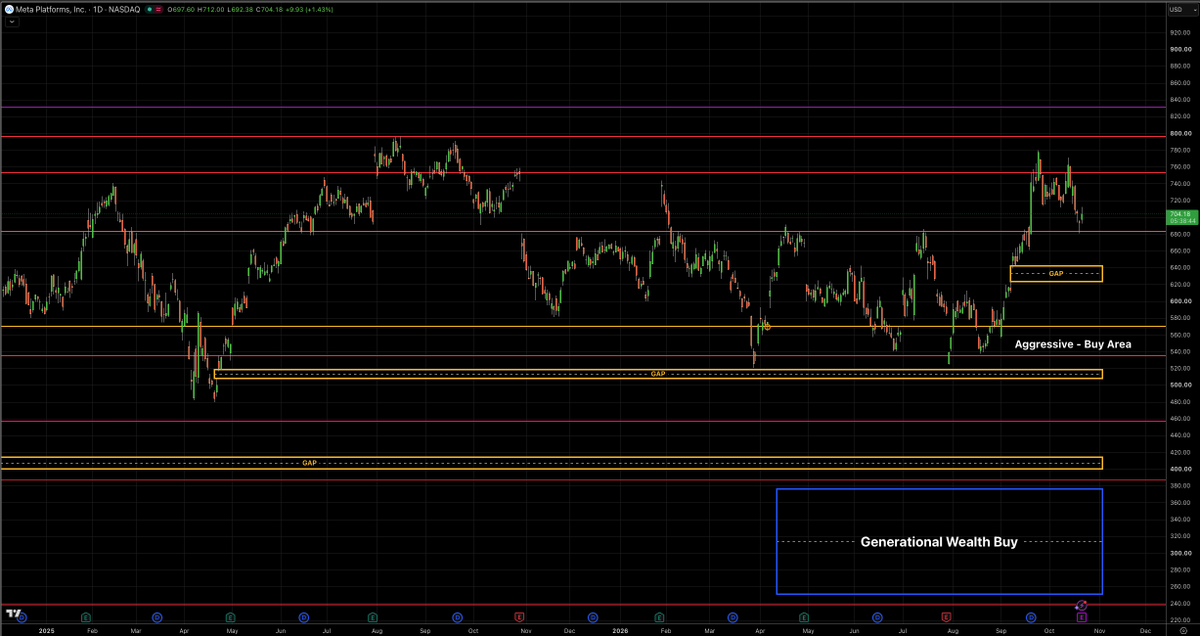
$META - Earnings this afternoon. I am not confident in this report. Price action has me concerned we want to see the gap in the $625-$638 area from September. I want to have some ammo for adding if that is the case. #Earnings
1. $META has never gapped down 3 Q's in a row from earnings.
2. They have had had several instances where final earnings of the year reversed the previous two Q's.
The last two Q's were gap downs.
3. Zuck loves his stock price and reacts to down moves from previous earnings.