(Re)introducing the inaugural six, as you've never seen them before:
Boston Fleet
Minnesota Frost
Victoire de Montreal
New York Sirens
Ottawa Charge
Toronto Sceptres
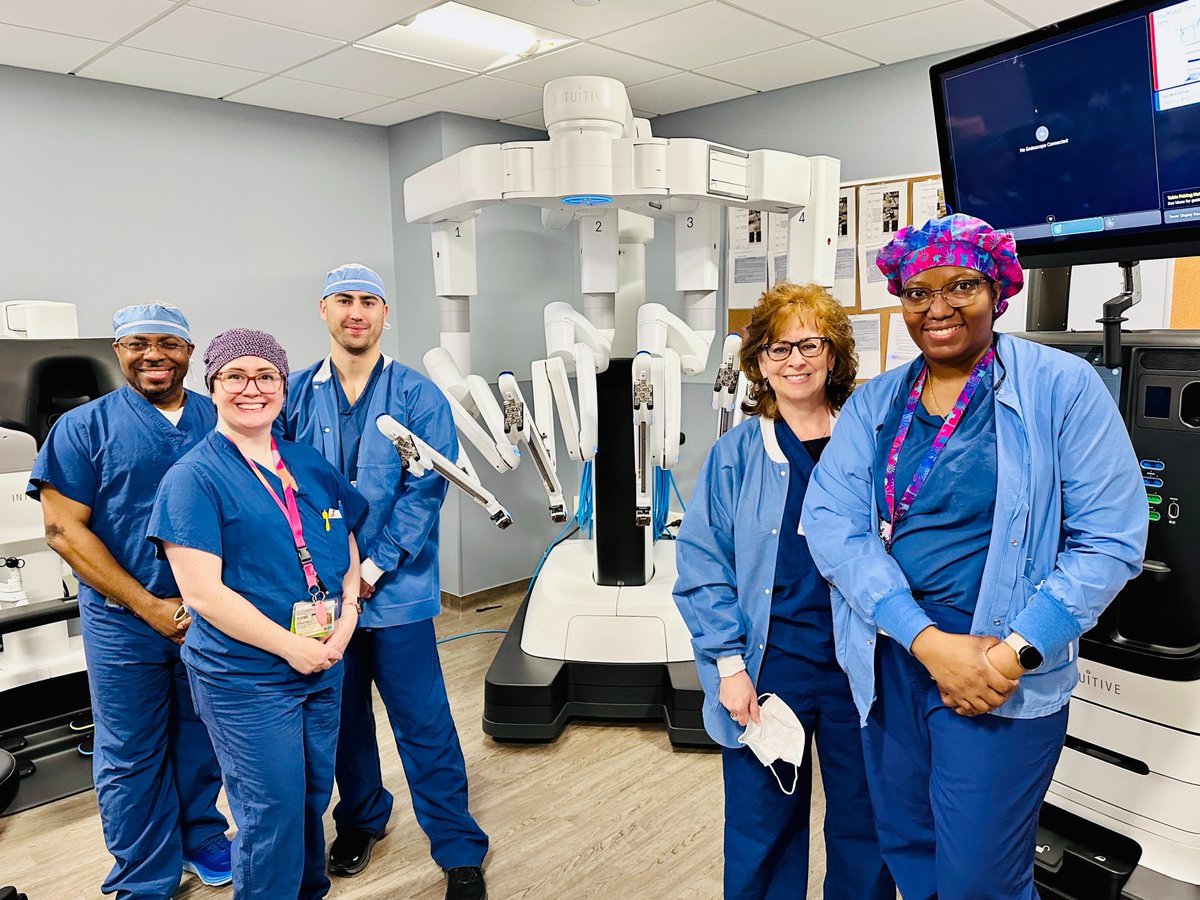
We're excited to share the arrival of the state-of-the-art da Vinci 5 robot, expanding our robotic fleet to four here in Burlington! We are one of only 14 locations in the country with this technology & the exclusive hospital in New England to offer such advanced capabilities.
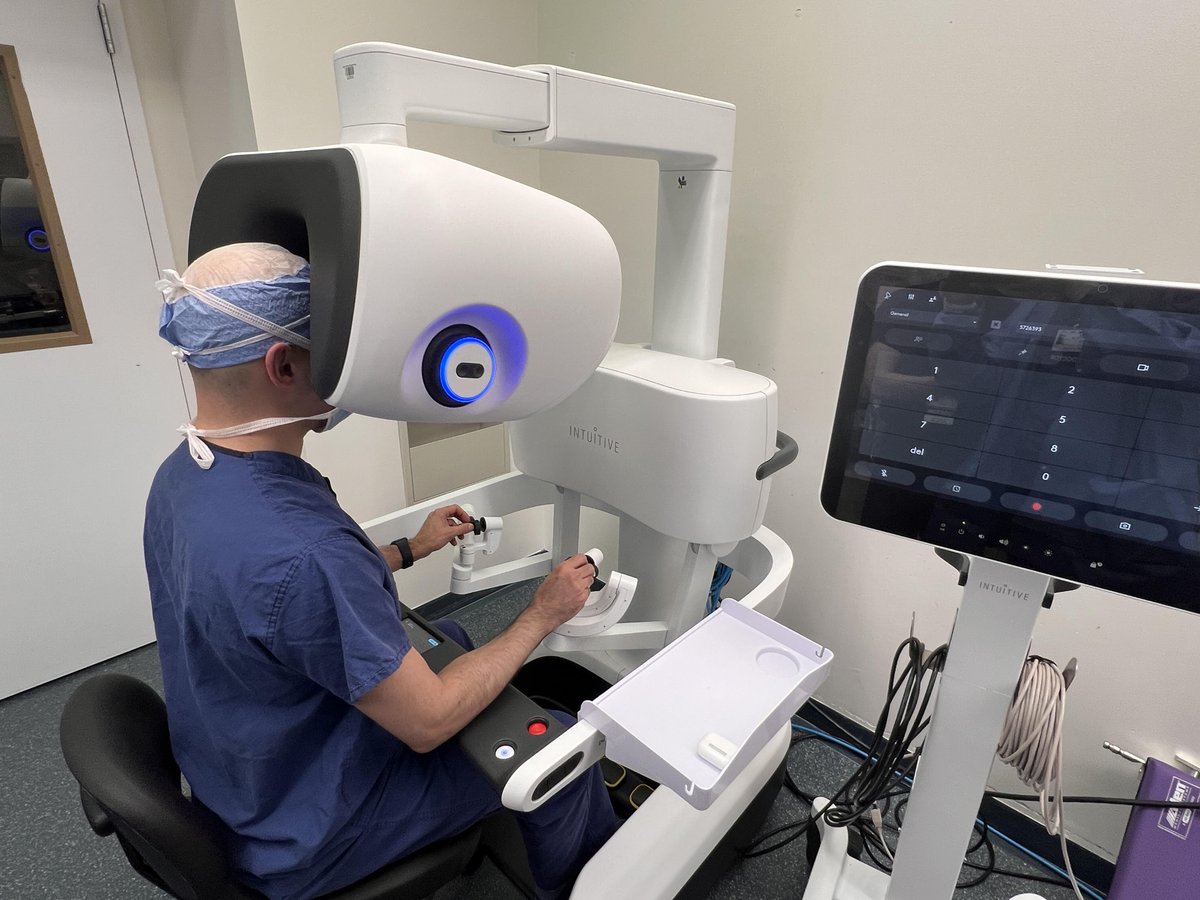
DV5 from @IntuitiveSurg first case, first impressions.
I have parts of my DNA that force me to be a baseline curmudgeon. Still, it's a clear improvement and overall I'm impressed!
Here are some top level thoughts:
1. I can finally sit up straight: Ok, this is the thing I'm happiest about. 18 years of robotic surgery has done a number on my upper and lower back. Sitting up straight is glorious.
2. Arm movements are smooth and fast: I noticed this particularly when making really big movements. Large sweeps across distances. In Xi and prior, I used to really feel the drag of the pulleys responding. Here it's smooth and instantaneous.
3. The masters have no rough edges: This is in the weeds, but there are a lot of rough edges on the Xi master. I sort of "palm" the masters constantly switching fingers, and I never use the velcro straps. I just notice here that with all the silicone, nothing catches. It's smooth. I love it.
4. The masters are more "weighty": This one's hard to explain, but sometimes the masters in Xi are too responsive. They drift if they get lightly tapped. These have a weight to them. They tend to stay put, and feel more substantial.
5. Vision is better: Especially in a bloody field, it's easier to discern tissue (throwback to SiHD, but better). There was a decline with Xi - I noticed edge pixellation. That problem is now solved.
6. Instrument labels and toggle animation: The labels have a 3d depth to them, conforming to the instrument position. They indicate the location of out-of field instruments. The toggle animation makes it appear that control "flies" from one instrument to the next. It's a nice little feature and isn't distracting.
7. Heads up menu: I used it to change cautery settings, adjust digital zoom, and change insufflation pressure during cold cutting of the DVC. I enjoyed not asking for people to do this for me, and liked keeping my head in the console for this.
8. Guided tool change (instrument path): A ghosted image of the eventual location of an instrument before it's placed, with a green "target" appears on every screen in the room. I really like this feature. I already know where the instrument is headed, but it ads confidence to the bedside team and removes some fear. I think this is especially useful when less experienced bedside assistants come in to replace more experienced teams.
9. Instruments are active immediately: No more 'rage clicking' or 'anger grasping' the masters during the old delay for an inserted instrument to become active and useable. This now happens right away. I have zero patience (ask my kids, ok I'm working on it), so this is quite welcome.
10. Finer control: I felt as though I had finer control of the instruments. This could be a day 1 overexuberant observation. We'll see whether it's corroborated by others.
11. Teaching: Telestration is still here, with more places to telestrate from... I'm intrigued by the video recording capabilities and the ability to share these with trainees. Stay tuned for that.
Lots of upgrades here, and we didn't even discuss phone charging 🤣. Each is incremental, but together it felt like quite a nice experience.
Special delivery today @LaheyHospital @bethisraellahey!
Excited & honored to be one of first sites in the world with the new @IntuitiveSurg robot - DV5
A testament to Lahey’s commitment to patient care, innovation, & surgical excellence!
Looking forward to 1st case tomorrow!