Asking myself the same questions for the first points (only they are less eloquently put).
I don't yet care about the second question. AI is not conscious, and even if it was; look at what humanity has done with farm animals.
Two things I’ve been thinking about regarding AI:
• People often highlight the risks involved in AI, which are surely very real. I’m struck, however, by how hard it is to understand the contours of the positive scenario. There are easy-to-perceive and frequently invoked elements of a positive vision — more diseases cured, more material abundance, etc. — which sound great, but these are by themselves just ingredients. I’m curious what the larger equilibrium is supposed to look like. Do people work? If so, why? What is their marginal contribution? If not, how are resources allocated? What is scarce? What is the ratio between humans and AIs? Are humans in control, whatever that means? One sometimes hears the Culture novels invoked as one scenario, but I’m not sure they depict a desirable outcome. (AI runs everything and humans compete in games? Iain Banks himself said that the humans in the Culture are “somewhere between passengers, pets and parasites.”) There is Richard Brautigan’s famous poem, but do we want to be “returned to our mammal brothers and sisters”? (Isn’t that rewinding Genesis?) We could say that it was hard to imagine the world of 1900 from the vantage point of 1700, and that’s assuredly true. But nobody in 1700 was trying to recast humanity itself within a couple of years — things necessarily unfolded slowly and by increments, and therefore with the possibility for error correction. Given how rapid the rate of progress in AI may be, it feels strange for the upside case to be so opaque.
• There is increasing discussion of whether AIs are conscious or how we would know whether they are, with conclusions there often assumed to be relevant to matters of moral worth. At first blush, this seems a rather arcane, benign, or even absurd issue. (Remember the response to Blake Lemoine’s fears.) Setting aside the terms of the debate itself, or the relevant demarcation criteria, it seems to me a quite high-stakes question, for an affirmative answer — that is, granting moral worth to AIs — would presumably mean that the aggregate worth of AIs would soon outweigh that of humans in any utilitarian calculus. The AIs will be exceptionally wise and intelligent, and vastly more numerous (especially once one considers the imminent future and the AIs not yet born). As such, even epsilon of moral worth will multiply to a lot once one considers the quadrillions that could soon exist. (This is effectively a distributed version of the Nozick’s utility monster.) If this conclusion is unpalatable, I think one of three propositions needs to be rejected: the premise AIs can have moral worth; utilitarianism itself; or the belief that there is even a possibility that they will be far more numerous than humans.
With both of these matters (contours of future society; AI moral worth), there is the possibility of dramatic change. Today, people argue about datacenters. I’m curious how popular support for AI will evolve as more people come to understand these medium-term questions and the relevant stakes. What is the vision for AI that most people would be excited about?
we have a winner for the most absurd AI startup ever
this Peter Thiel backed company uses AI robots to stab fish in the brain so they taste better and last up to 3x longer
it's called Shinkei and it modernizes a centuries-old Japanese technique
dozens of Michelin-star restaurants are already lining up to buy the fish
here's how it works:
> the problem is when a fish gets caught, it usually just suffocates on the boat
> that stress floods the meat with hormones and lactic acid, which hurts the flavor and texture
> the old Japanese fix for this was spiking the fish through the brain right after the catch, which stops all that
> but doing it by hand is impractical for most American fishing crews
> so Shinkei built a fridge-sized robot that sits right on the boat's deck
> the crew feeds in a fish and AI identifies the exact species, so it knows exactly where the brain and gills are
> the robot then drives the spike through the brain and cuts near the gills in about 7 seconds
> the fish goes into an ice slurry so the blood drains out
> so the fish doesn't sit there stressing out, and that tasty flavor and texture is preserved
example number 5,392,417 of how AI can be applied to literally anything
It runs on Meta's SAM Audio and PE-A-Frame, on one GPU.
Biggest challenge: most AI models barely "hear" non-speech sound. So I hand-labelled 766 clips from 27 videos by what you actually hear.
It's not perfect yet, but the 🎧 before/after is real audio.
One sound can ruin your perfect ASMR moment.
stipple ✏️ stipple✏️ stipple✏️ *mic bump*😱
So for the Meta Global AI Developer Hackathon, I built Triggersift: it finds the sounds you hate, then skips or turns them down while the rest of the video stays untouched.
SENTINEL is the next chapter of The Elder Scrolls. An incredible way for @BethesdaStudios to mark 40 years of building worlds that speak to millions of players across generations. Congratulations to the team, past and present.
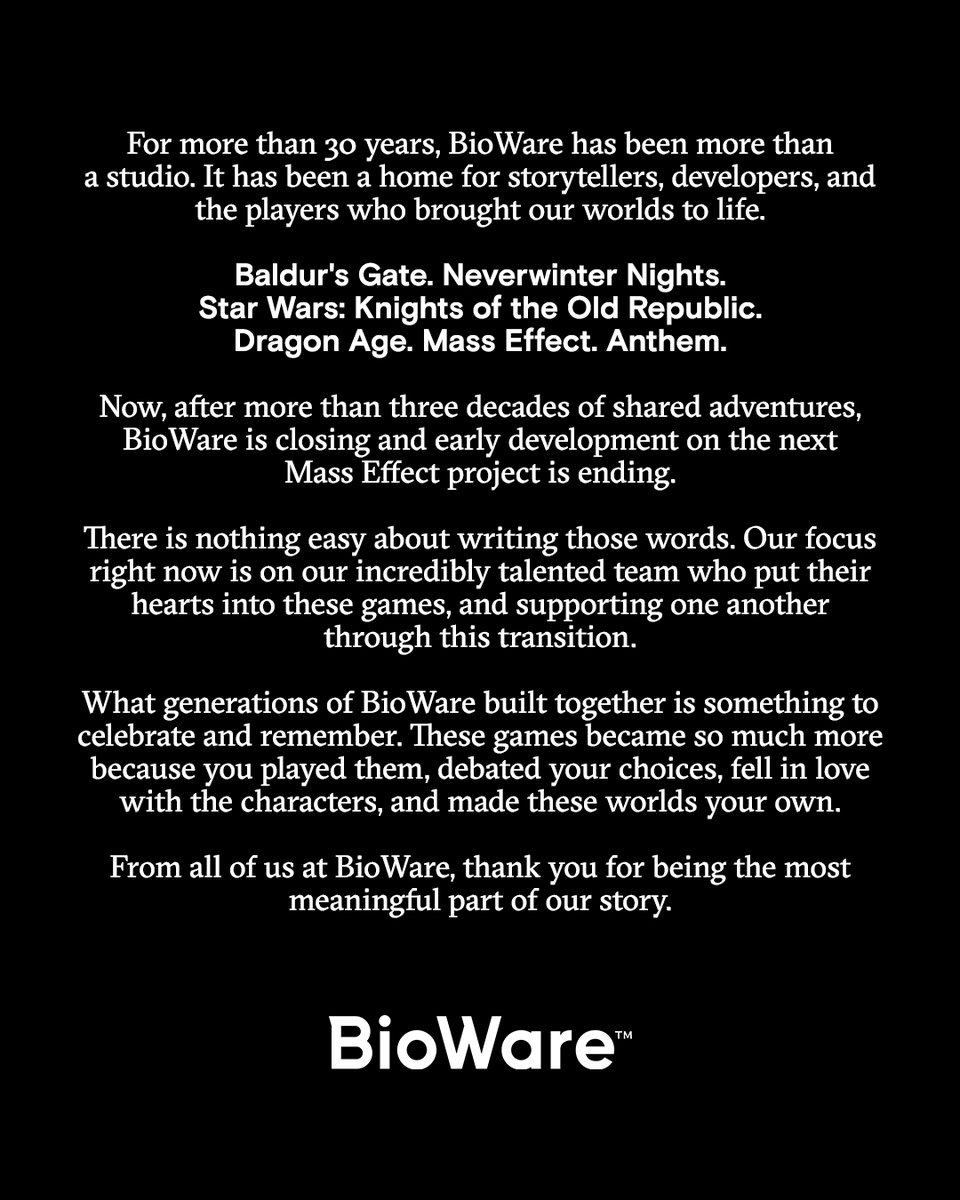
Dragon Age: Origins is one my favorite game of all times. Played it for hundreds of hours. Didn't play the newer titles much; didn't like them. Still, I will remember Bioware and its stories.
RIP.
Choose optimism
Around the age of twenty-two I realized that my worldview had been deeply imbued with pessimism and cynicism. It was the culture I grew up in. A hostility to new ideas, to anything that strays from the norm. An assumption that if things can go wrong, they will go wrong — that malice is pervasive.
One day, I decided to become an optimist and life became much more fun.
The life of a pessimist is easy but dreary. The life of an optimist is hard but exciting. Pessimism is easy because it costs nothing. Optimism is hard because it must be constantly reaffirmed. In the face of a hostile, cynical world, it takes effort to show that positivity has merit.
To be an optimist, adopt these assumptions:
1. The future can be great
2. People’s intentions are mostly good
3. Ideas are fragile and need nurturing
Every new idea is an unrealized dream. Dreams are delicate and easy to destroy. When an idea presents itself, try to imagine the best version of it — what would make this idea great?
Pessimism and optimism share a trait: both are self-fulfilling. Your intention influences the outcome. Call it karma or, simply, effort. I would rather inhabit a future that has the possibility of being great.
Only optimists can create a great future. Only optimists can imagine it. Only optimists will put in the effort to make it. If you want to create a great future, believe it can happen. Choose optimism.
This is Pele, my new rendering library for diagrams and charts, compatible with the latest Mermaid syntax.
- 100-500× faster than mermaid.js
- 6× smaller bundle
- No dependencies
- Easy to theme
- Responsive to device width
In pursuit of making Obsidian insanely fast and cohesively designed, I always found the Mermaid library to be too big, too slow, and too hard to theme. Pele will be the new renderer in the next version of Obsidian, but you can start using it now.
Pele [ˈpɛlɛ] is named after the goddess of volcanoes and fire. It's open source under the MIT license. Try the playground!
interpretability might be the most important scientific problem in the world right now, as I don't think we can solve alignment if we don't know what we're building. I think I have good news about it. I co-authored early work in mechanistic interpretability at OpenAI and came away pessimistic, because neural networks appeared to fold into arbitrary tangled knots. years later, I started openai's first large-scale automated interpretability project, finding about 2% of neurons legible with the primitive tools we had
with modern agentic tools and a much closer look, the picture looks totally different. the vast majority in models up to trillions of parameters are legible, and their circuits beautiful. many famous examples of tangled neurons turned out to be misunderstood. The roadblocks I expected mostly aren't there. I now think ambitious interpretability will be solved by the time we need it most, and possibly quite soon, as automated scientists keep improving. it may be a bitter lesson for interpretability: the simple thing, at absurd scale, works
https://t.co/zHij5zwKGT
Nimby/degrowthers use the environment as an excuse to paralyze clean energy, infrastructure and housing in Europe. Europe's environmental laws protect paperwork, not nature. We can do better. My post today
https://t.co/Hd5cRfKMux
I CALLED IT.
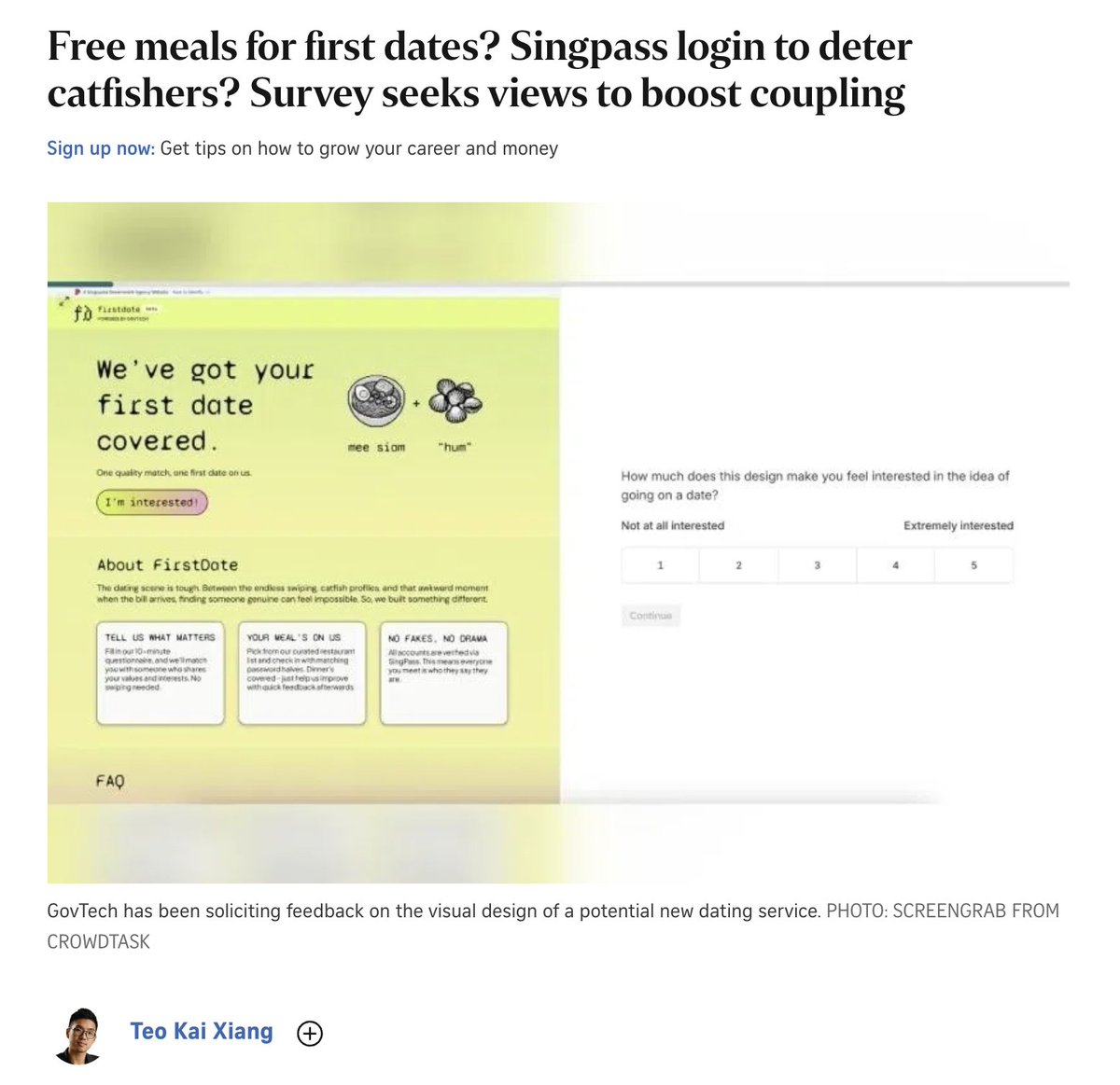
It's happening y'all. The singapore gov has launched a pilot programme for a gov-run dating service. Looks like the pilot is currently restricted to just government workers for now.
People got upset at me for saying this, but there are no companies outside the US and China even *trying* to build frontier AI (perhaps Korea and UK are close), despite marketing claims. Governments saying "sovereign AI" need to understand this.
no way it's yet another webpage: https://t.co/v2EzGISPHH
fits right next to
https://t.co/VksVmnEdbL
https://t.co/cF4On240tG
https://t.co/iyydg8VKPi
https://t.co/AxQyJQQCwJ
https://t.co/hwuIYyOb4P
https://t.co/NUwa9uBv2w
https://t.co/DGuWCWqxAi
Here you go: European Disapora Index. Companies valued $1B+ incl. Stripe, Snowflake, Datadog, Miro, Grammarly, UiPath, etc cc @sc_cath@lugaricano (small disclaimer: just made this today on the @dealroomco API, will refine coming days)