NSTEAD OF WATCHING NETFLIX TONIGHT.
Spend 1 hour with this.
Claude AI FULL COURSE that teaches you how to BUILD and AUTOMATE anything.
The people who watch this tonight will wake up tomorrow with a new skill.
Watch it and Bookmark it now.
Anthropic engineers just showed how they build a full app from scratch, using a loop of agents
40 minutes from the team behind Claude Code
they used three agents: one to plan, one to build, one to judge, cycling until the app actually works
the winners won't have the smartest model, they'll have the best loop
watch it, then read the full guide on how to actually use loops below
🚨Anthropic just showed a 24-minute workshop on how to actually do prompts for Claude.
Taught by the people who built it.
Free. No registration. No paywall.
I've seen $300 courses that don't cover what they teach in the first 8 minutes.
Watch it and bookmark it now.
IN 1986 MIT FILMED A LECTURE THAT OPENS BY TELLING YOU COMPUTER SCIENCE IS NOT A SCIENCE AND HAS ALMOST NOTHING TO DO WITH COMPUTERS
72 minutes from Hal Abelson and Gerald Sussman, the lecture an entire generation of engineers calls the one that rewired how they think.
-> The line that lands: computer science is about computers the way astronomy is about telescopes. The tool was never the point.
The real subject was always one thing -- controlling complexity. Everything else is detail.
Forty years later it reads like a prophecy. AI writes the syntax now. What's left is exactly what they taught: taming complexity nobody can hold in their head.
The language was never the skill -> the thinking was. This is where you learn it.
Most people chase the newest framework. The ones who watched this think on a level frameworks can't touch.
Bookmark & Watch today it, this one's a legend ↓
GOOGLE CEO SUNDAR PICHAI: "IF YOU DON'T LEARN HOW TO ORCHESTRATE AGENTS NOW, YOU'LL SPEND 2027 CATCHING UP TO PEOPLE WHO STARTED TODAY."
30 minutes on why the best engineers stopped writing code line by line and started orchestrating agents instead.
Most people think building an agent requires an engineering degree.
It doesn't.
It requires one guide and one afternoon.
Watch the interview. Then save the exact setup below.
One guide. One afternoon. That's all it takes.
The gap between you and the engineers winning in 2027 closes this weekend.
Best YouTube Channels To Learn AI in 2026 (No BS). Save it.
1. Fundamentals – 3Blue1Brown
2. Deep Learning – Andrej Karpathy
3. AI Research – Yannic Kilcher
4. Practical AI – AssemblyAI
5. LLMs – AI Explained
6. ML Theory – StatQuest
7. Papers Simplified – Two Minute Papers
8. GenAI – Matthew Berman
9. AI Agents – Nicholas Renotte
10. Applied ML – Krish Naik
11. PyTorch – Aladdin Persson
12. Math for ML – Serrano Academy
13. Industry Insights – Lex Fridman
14. Real-world AI – DeepLearningAI
This very practical math book is for anyone who wants to develop their powers to think mathematically, especially anyone who has always wondered what lies at the core of mathematics.
"Thinking Mathematically" at https://t.co/UrpyZ8F5TH
Anthropic pays $750,000+ a year for engineers who can build LLMs from scratch.
Not how to prompt them.
Not how to fine-tune them.
Not how to build RAG pipelines.
But how to build them from scratch.
This 2-hour Stanford lecture teaches you everything.
Scaling laws.
Data collection.
Architecture design.
Post-training alignment.
Free. From Stanford.
Watch first. Then read this.
The lecture is the theory.
And this article shows you how to actually build it (with code) ↓
Dirac couldn't get hired as an electrical engineer. A 19-year-old with a Bristol degree in 1921, during a post-war depression that had no use for him. So he stayed at Bristol and studied math for free because there was nothing else to do.
Two years later he got a fellowship to Cambridge. His advisor, Ralph Fowler, handed him proofs of an unpublished Heisenberg paper in August 1925. Dirac read it and realized the math resembled Poisson brackets from classical mechanics. Within months he had built an entirely new mathematical framework for quantum theory.
He published 11 papers before submitting his thesis. Eleven. Most PhD students struggle to publish one. Dirac had a body of work that constituted an entire theoretical foundation, and he still needed to package it into a dissertation to satisfy the degree requirements.
The thesis title tells you everything about the confidence level. When you title your PhD "Quantum Mechanics" at age 23, you are either delusional or correct. Dirac was correct. It was the first PhD thesis ever written on the subject.
Two years after that he wrote the Dirac equation, unifying special relativity with quantum mechanics and predicting antimatter before anyone had observed it. By 1932 he held the Lucasian Professorship of Mathematics at Cambridge. The same chair Isaac Newton held. He was 30.
Nobel Prize at 31. The youngest physics laureate at the time.
The entire arc from unemployable engineer to owning Newton's chair took 11 years. The field he named his thesis after is now the operating system of modern physics.
Here’s a remarkable photo: Kabaka Daudi Cwa, wearing a tan suit, greets Bishop Willis. Date is late 1920s. I’ve not seen images of him wearing anything other than his robes.
Arkadaşlar kadın erkek farketmez şu seriyi kaydedin 5-10 gün 20 gün 50 gün ne zaman tam anlamı ile yapabilirseniz yapın 24 saniyede vücuttaki her kasınızı çalıştırır sizi makina yapar
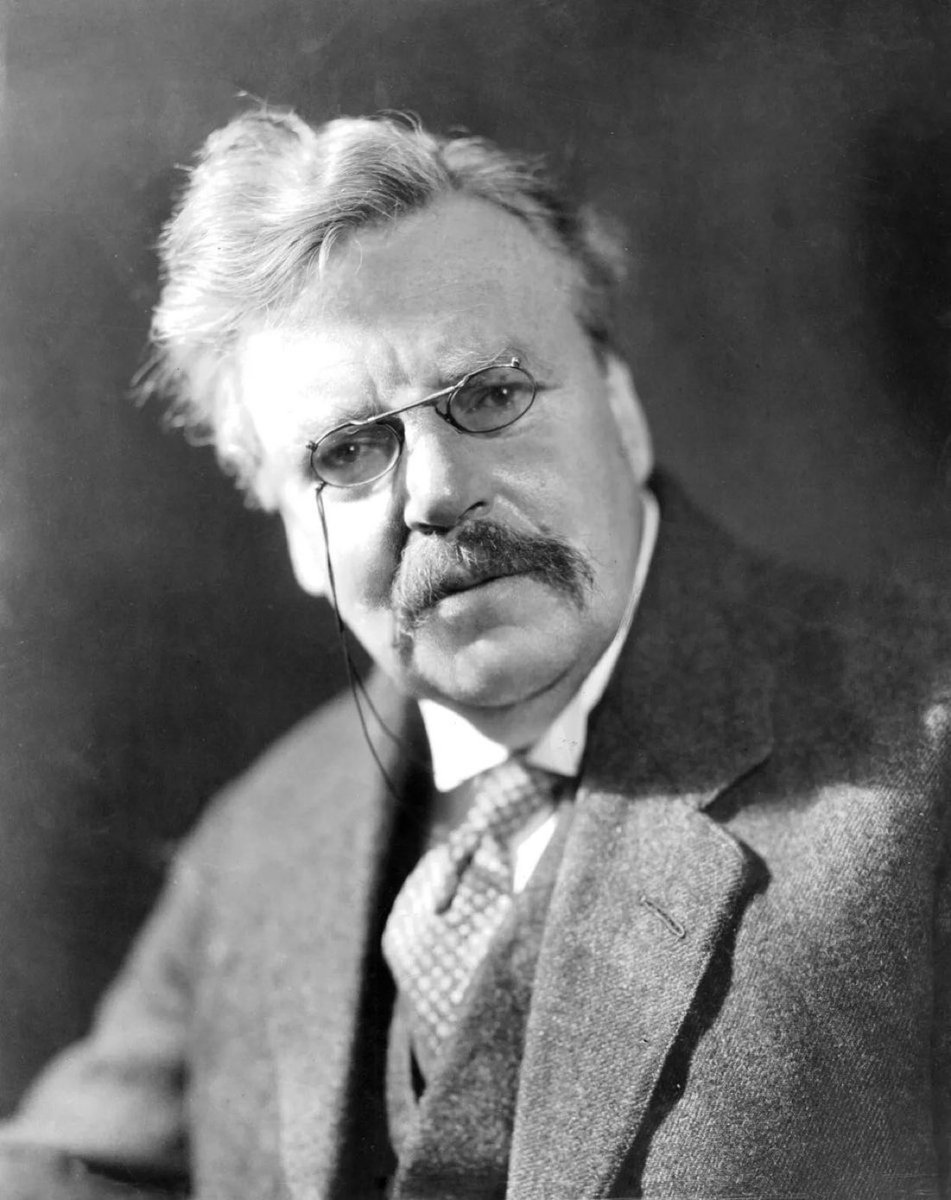
“A man who has read a thousand books is armed for life; a man who has read none is easy prey. The man who has read a thousand books has lived a thousand lives. He has seen cities he has never visited, spoken to men who died centuries ago, and walked in worlds that no longer exist. Reading does not merely inform him; it enlarges him. It stretches the boundaries of his own experience until he becomes something more than himself.”
-G. K. Chesterton
A 22-year-old graduate student in Kazakhstan got so angry at journal paywalls in 2011 that she built a pirate website holding 88 million scientific papers, and last month she turned the whole thing into an AI that lets you ask one question and get the actual research as the answer.
Her name is Alexandra Elbakyan, and the website is called Sci-Hub.
The AI she just launched is called Sci-Bot. It lives at https://t.co/6w0IBtOEYB and almost nobody outside academia knows it exists yet.
Here is the story, because it is one of the strangest things to happen in science publishing in the last 50 years.
Elbakyan was born in Almaty in 1988, the year the Soviet Union started to collapse. She taught herself programming at 12. She read Soviet science books that explained things her family used to call miracles. She got into computer security at university and graduated in 2009 with a degree she barely needed because by then she was already a serious hacker.
Alexandra moved to Moscow that fall. Then Germany. Then a research internship in the United States. She was working on brain-computer interfaces, the kind of research that requires you to read hundreds of papers a year just to keep up with the field.
And every single one of those papers was locked behind a journal paywall that cost between 30 and 50 dollars to read once.
She did the math. A graduate student in Kazakhstan could not afford to read science.
The first thing she did was learn how to get around the paywalls one paper at a time. She passed the trick around to other students. They asked her for papers constantly. She got tired of doing it manually.
So in September 2011, in three days, she wrote a script that automated the whole thing. A user pastes a DOI. The script logs in through a donated institutional credential. The paper comes back free. The website caches it.
The next person who asks for that paper gets it instantly because the previous request already saved a copy.
That was Sci-Hub. Three days of code. One graduate student. Done.
15 years later, the cache holds 88 million scientific papers. Almost every piece of scholarly literature published before 2020 is sitting on her servers. Researchers in 190 countries use it. Studies in Nature have shown that roughly half of all academic paper downloads worldwide now go through Sci-Hub, not the publishers who actually own the copyrights.
Elsevier sued her in 2015 and won a 15 million dollar judgment. She did not pay. The American Chemical Society sued her and won an injunction. She did not comply. Courts in India, France, Russia, and the UK have tried to block the domain. She just moves it. https://t.co/3sAWJzNe8I. https://t.co/tGIETesZ8i. https://t.co/H5WQ1f9lqR. The site has had over 20 domains and is still up.
Nature put her on its list of the 10 people who mattered most to science in 2016. The New York Times compared her to Edward Snowden. The Verge called her the pirate queen of science.
She has not been to the United States in over a decade because she would be arrested at the airport.
The Sci-Bot launch in April 2026 is the part that nobody is talking about.
She took the 88 million paper database and put a small language model on top of it. You ask a question in plain English. The model searches the entire shadow library, pulls the relevant papers, synthesizes an answer grounded in real citations, and links you to the full text of every source. Free. No login. No institutional credential. No paywall.
Three real scientists tested it for a Chemical and Engineering News article last month. They asked it medical and chemistry questions. The radiologist said the answer he got was usable. The chemist said the gaps in recent literature were obvious but the older science was solid. The publisher community is furious.
What she built is what the paid academic AI tools are trying to build. Except the paid ones are limited to what their parent publisher legally owns. Hers is limited to almost nothing.
Alexandra still lives somewhere in Russia. She does not give her address. She does not do video interviews. She gives talks over Skype with the camera off. She runs the largest illegal library in human history from a laptop and a donation page.
A graduate student who could not afford to read science built the system the entire scientific community now quietly depends on.
The publishers have spent a decade trying to shut her down.
She just shipped an AI that makes their entire business model outdated.
A Google Cloud engineer just showed how to build a full app with Claude from scratch
he spent 26 minutes showing exactly what one person with Claude can do, completely free
worth more than any $500 vibe-coding course
here's what he covers:
> raw idea to deployed app in a single session
> using Claude as the entire engineering team
> the exact workflow they use at Google
> no big team, no prior experience needed
the people who figure out what Claude can actually do are building things everyone else thinks requires a team
that's exactly why I put together a guide on Claude features most people have no idea exist
the guide is in the article below