Chicago Fed President Austan Goolsbee traveled to rural Illinois to hear directly from farmers facing lower crop prices and rising costs for fuel, fertilizer and other inputs. Those conversations offer the Fed a ground-level view of inflation pressures that may emerge before they are fully reflected in national data. More on Wall Street Week https://t.co/YXGbySV2qD
Legendary Illinois corn farmer Herman Warsaw poses in a field with some of his record-breaking crop, circa 1985. He achieved a world record of 370 bushels per acre.
What makes his story even more incredible is that when he and his family bought the farm in 1941, the damaged soil was yielding only about 38 bushels per acre.
Through soil restoration and highly creative techniques, he completely transformed the fields over the years and made history.
More rare photos: https://t.co/dQjceOPkrz
This morning, the @chicagofed introduced new labor market indicators that combine private sector data with official labor statistics to provide a real-time view of hiring, layoffs and other job separations, and an early forecast of the unemployment rate. https://t.co/iln1LpPNAr.
It was a battle royale between 7th District teams at Rate Field—Chicago vs Detroit.
The White Sox let me throw out the first pitch.
All I could think was…inflation target.
https://t.co/PPDwjP5LNO
Heading down to Springfield, IL to meet with local business leaders to learn more about current economic conditions in the heart of the Midwest. I'll join the Greater Springfield Chamber of Commerce's monetary policy luncheon at 12 p.m. CT. Tune in here: https://t.co/AI6KdQqEM2
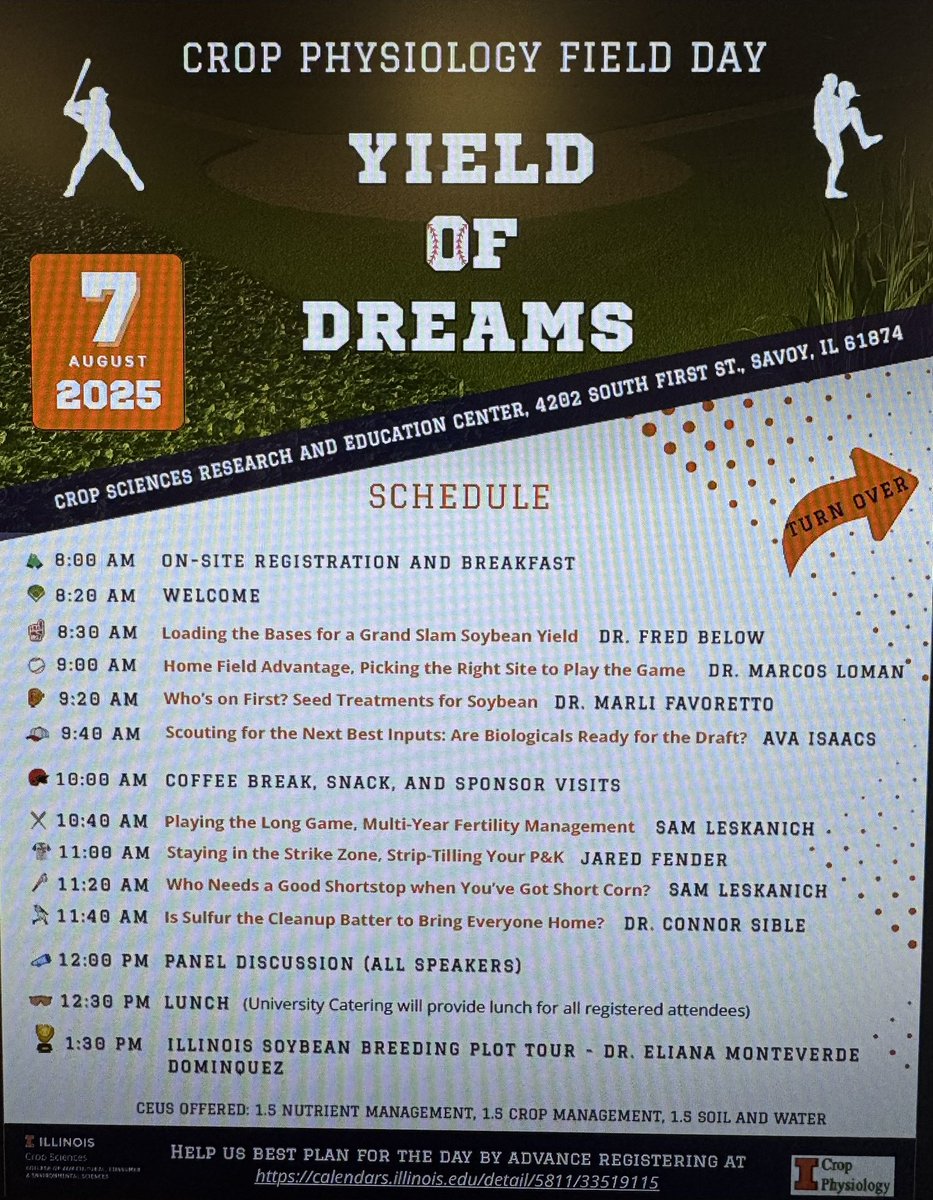
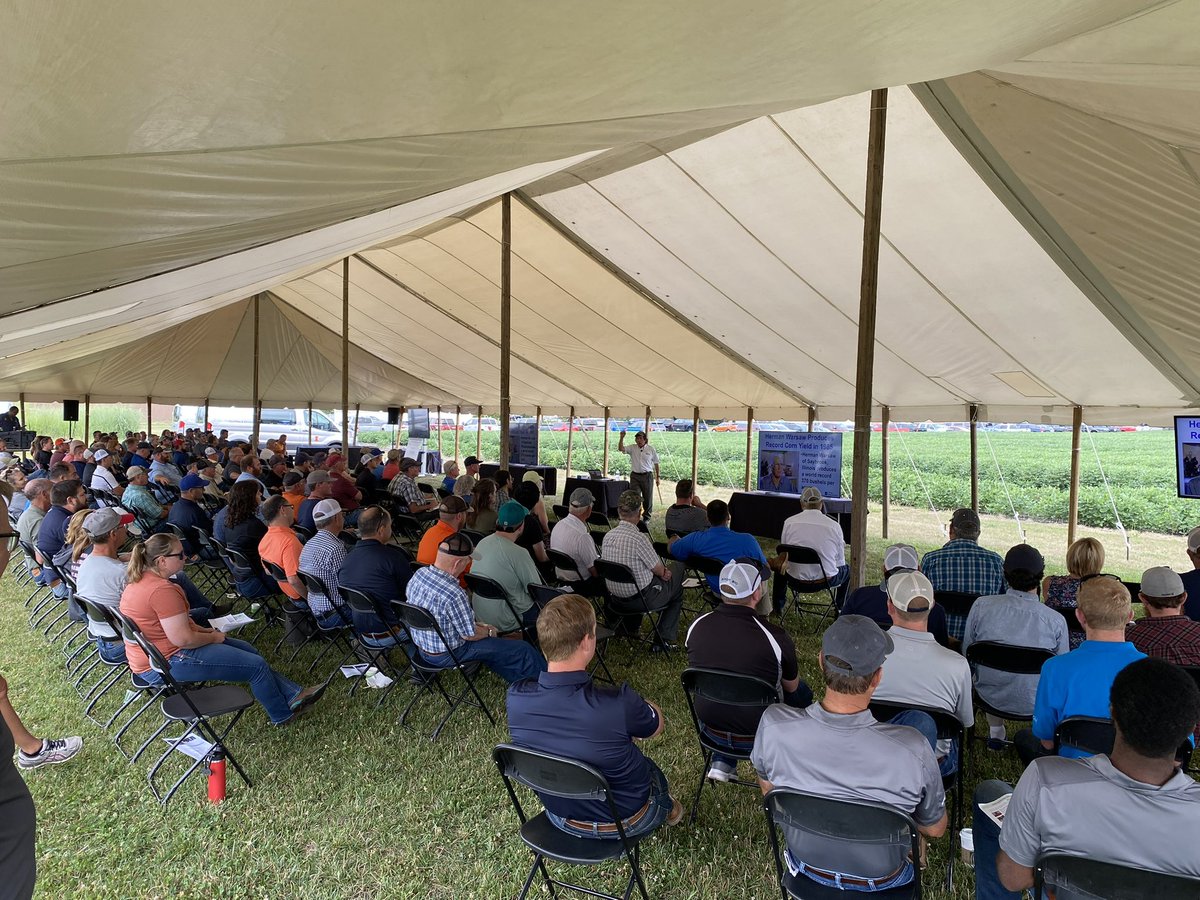
Got plans for August 7th? Well if not, now you do! The 4th annual Crop Physiology Day will be in full force on Thursday, August 7th at the @IllinoisCropSci Research and Education Center on S 1st St. #yieldofdreams#yield#agronomy
https://t.co/G2TDkWRcqJ
All of our soybean plots are harvested, so now it’s time to double down on corn! Having 2 Almaco R1 combines in the same field harvesting different trials is definitely a dream on productivity.
In this @ILSoybean checkoff-funded project, Dr. Fred Below and Dr. @ConnorSible explore new tissue testing methods in soybeans to better assess nutrient needs and increase yield potential.
@jfender7710 getting us rolling on the first corn plots of the season for us on campus. Moistures still 24%+ but the R1 just running through no problem. 270+ bu/acre is not a bad start to the season on these plots
No fungicide, 1 pass at R1, or 2 pass with R1 and R4.
Washington county, planted May 31st.
Part of our hybrid screening block, full yield results will be posted by December
27 hybrids x 14 managements
More roots! Pulling from Washington county today to see how environment influences these phenotypes. We expect overall root size to differ site to site, but will the hybrids phenotype the same architecture relative to each other from site to site? Will know in a few weeks!
While updating to a new tractor can be fun and all, remounting all the monitors required to run a research planter isn’t the most fun job, especially the wiring. Good thing I trust @ConnorSible pretty heavily to run it.
Root characterization season has begun!
@SamLeskanich with the SAAM rating (surface area, angle, mass) to characterize hybrids. Then he uses that rating to compare how and why a hybrid responds to a given management practice
Year 2 of our Nitrogen trial. First year where I included a zero N block. Looking forward to seeing the yield and $/ac differences this fall #Plant24#corn
Tomorrow! come hear more at the Illinois Agronomy- Crop Physiology Field Day-Did 2024 give you too much rain? What did you do about that? https://t.co/tdV0ZzKL02 via @YouTube more field day info at: https://t.co/6mjXPaWyur
@ChannelSeed I promise I haven’t forgotten about the trial! We squeezed in the Channel 215-70 on May 20th, and just hit VT/R1 earlier this week. The in-row picture is from a no-till no P/K treatment.
Yesterday, we took 324 soil samples to track nutrient movement between tillage types, and fertilizer placements to better understand the effect of strip till vs no till vs conventional tillage on fertilizer timing/placement. All these soil samples were taken in-row.