In 1986 a guy got kicked out of every casino in Vegas for counting cards. So he flew to Hong Kong with $180,000 and started betting on horses instead. He walked away with almost $900 million.
It's Bill Benter. He figured horse racing was just another counting problem. Same math, more moving parts.
He and a partner showed up with $180k and a computer. Benter spent years teaching that computer to guess one thing, the real chance each horse had to win. If his number was better than the odds the bookies gave, he bet. If not, he skipped it.
That's the whole trick. Expected value.
EV = p · b − (1 − p)
Only bet when your win chance p, at odds b, is worth more than your chance of losing.
This recording was never meant to be some hidden gem. Nobody expected Professor Tsitsiklis to hand the whole foundation away in 45 minutes, but that's exactly what happens on the board. Students in that room pay over $80,000 a year to sit through it. It's free right here. It's free right here.
Every quant, every professional bettor, every hedge fund analyst started with this exact hour. Benter just watched it and actually did the homework.
Almost nobody knows this lecture even exists. Watch it before it gets taken down.
The answer is in this video.
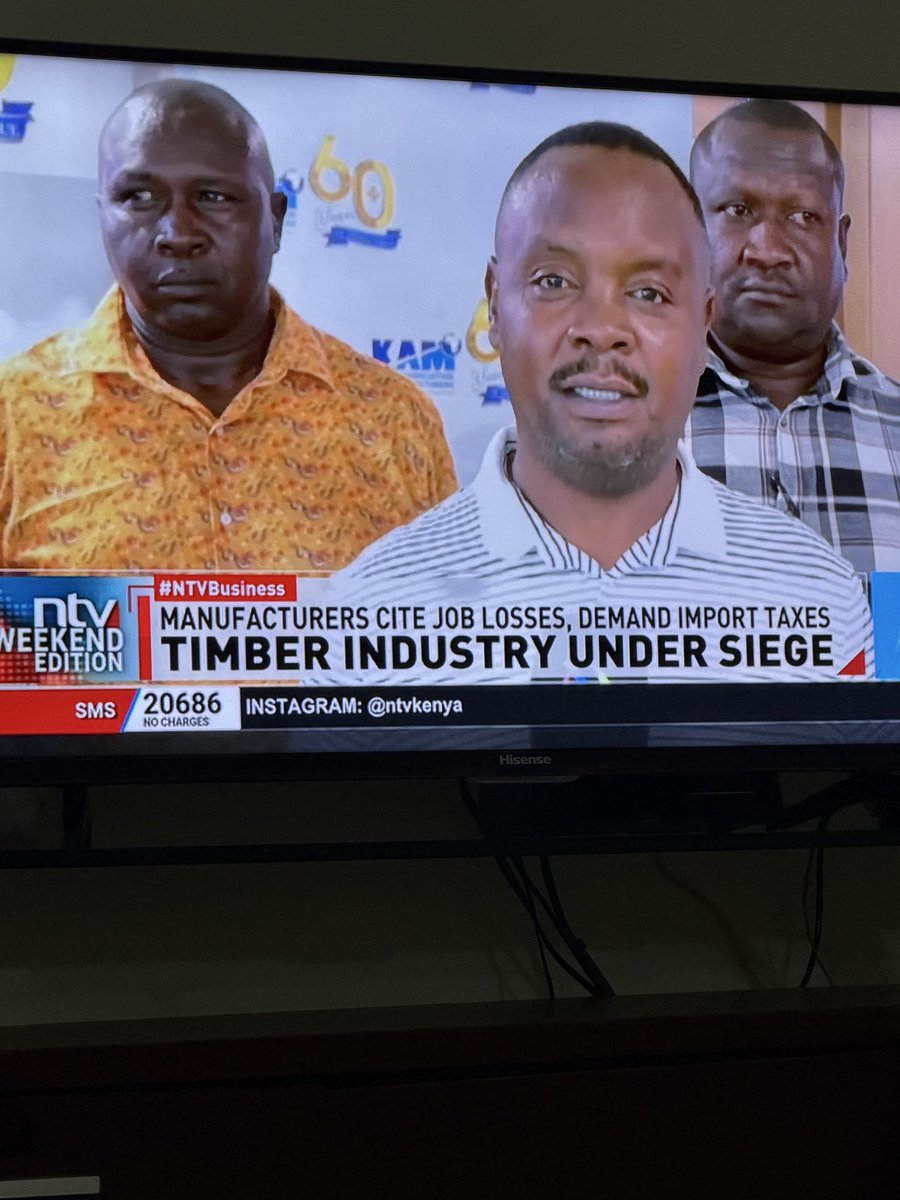
Proud to be featured in today’s @NationAfrica on Kenya’s push for a real #TreeEconomy to support the 15 Billion Trees agenda.
As Chair of the Wood, Timber & Furniture Sector at @KAM_Kenya, I spoke about our deepening dependence on imported wood — and the massive opportunity to create a strong domestic market for locally grown and processed timber.
Done right, this can create jobs, retain value in Kenya, and make our tree-planting efforts truly sustainable.
Full article
https://t.co/IpD7A9c2z3
The gun is the most misunderstood object in Western civilization. Not a weapon. A technology. The technology that made the idea of equality physically real.
1. The longbow democratized warfare – a peasant could kill a knight with a stick and a string, and Agincourt proved it. The gun completed the process. The armored warrior class whose claim to social dominance rested on physical superiority became obsolete. The aristocratic monopoly on violence ended not with a philosophy but with a mechanism. The gun is the physical enforcement of the idea that all men are created equal. Which is why the American founders put it in the second amendment – not as an afterthought, but as the guarantee of everything else.
2. The Roman citizen had the right to bear arms. The Greek citizen had it. The English yeoman had it. The Swiss canton built its entire civilization on it. The disarming of the population has always been, in every civilization, in every century, the first act of the government that intends to stop being answerable to that population. Show me a disarmed population and I will show you a population that lost something else shortly after.
3. The Second Amendment is not about hunting. It is not about sport. It is about the relationship between the armed citizen and the state – the explicit constitutional acknowledgment that the citizen’s right to defend himself, his family, and his civilization against any threat, including the government itself, is not granted by the state and cannot be revoked by it. Power flows upward from the armed citizen, not downward from the armed state.
4. The gun defends the family. The woman alone with her children. The farmer on the edge of civilization. The shopkeeper in the neighborhood the police no longer patrol. The gun is the equalizer – the technology that makes the physical difference between a large man and a small woman irrelevant. Every argument for disarmament is, at its core, an argument that the state will protect you better than you can protect yourself. The evidence for this proposition is not encouraging.
5. In Europe, the disarmament is now nearly complete – and it happened precisely as the state’s ability and willingness to protect its citizens began to decline. The timing is not coincidental. A population that cannot defend itself must trust the state to defend it – which is a population that cannot effectively question whether the state is doing so. The dependency is the design.
6. The gun is a civilizational technology in the deepest sense: it requires responsibility, judgment, and the willingness to accept the consequences of your decisions. You cannot outsource it. You cannot have a committee fire it. It is the most anti-bureaucratic object ever invented – a direct, personal, consequential instrument that puts the full weight of the decision on the individual holding it. Which is precisely why the administrative state finds it intolerable. Not because it is dangerous. Because it is sovereign.
7. The family that can defend itself does not depend on the state for its most fundamental security. The civilization that can defend itself has not yet outsourced its survival to an institution that will negotiate the terms of that survival on its own behalf. The gun determines who controls violence – and therefore who controls everything that violence can threaten. Which is everything. The Sobieski who rode down the hill had a sword and sixty thousand horsemen. The equivalent today is the armed citizen who understands what he is defending and why. Every civilization that forgot this discovered it the hard way. The ones that remembered it are still here.
America was not inherited. It was designed.
This is the most important difference between the American political system and every European one – and it explains almost everything about how they behave differently under pressure.
The European systems are the accumulated result of centuries of people grabbing, protecting, and occasionally reforming their privileges. The castle became the parliament. The knight became the aristocrat became the bureaucrat. The physical hierarchy of the medieval order dissolved slowly into the institutional hierarchy of the modern state – but the direction of power never fundamentally changed. It flows downward. The state is the source. The citizen is the recipient. Rights are granted, regulated, and can be revoked. The government rules. The people, from time to time, get to choose which version of the ruling class they prefer. But not too much.
America reversed the direction deliberately, constitutionally, and in writing. Power flows upward from the citizen. The government does not grant rights – it is created specifically to protect rights that exist before it and above it. The Bill of Rights is not a list of things the government allows you to do. It is a list of things the government is forbidden to touch. The distinction is not semantic. It is civilizational.
The founders had read their history. They designed against the accumulation of power: separation of powers, checks and balances, federalism, the armed citizen as the ultimate check on all of it. Not a perfect system. A system designed to be imperfect in a specific way – to make the concentration of power difficult, slow, and visible.
Europe reformed its inherited systems. America built from first principles. The European instinct was to trust the institution. The American instinct is to limit it. The gun is the symbol of the difference – not as a weapon but as a principle. In America, the citizen is armed because the citizen is sovereign. In Europe, the citizen is disarmed because the state is sovereign. Everything else follows from that single difference in the direction of power.
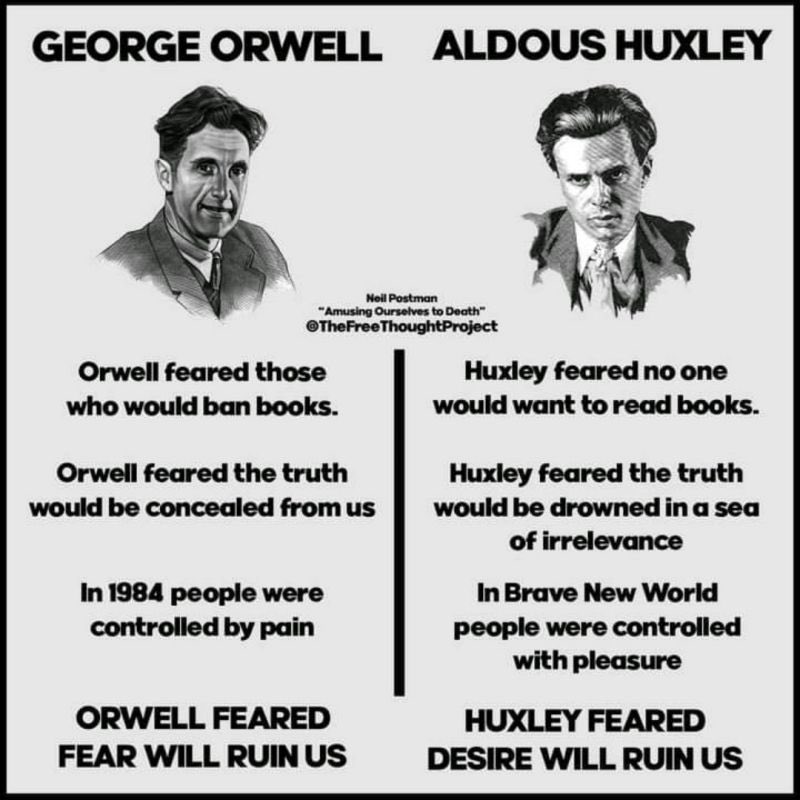
One of my longest-standing arguments is that we are not living in Orwell’s 1984, where truth is centrally suppressed and censored by force (that’s former communist societies, modern-day China, Russia, North Korea).
We are living in something much closer to Huxley’s Brave New World.
The truth is not hidden - it is almost always readily available. But it is buried beneath an industrial quantity of noise: propaganda, outrage, half-truths, conspiracy theories, influencer theatre, algorithmic rage bait and an endless stream of content designed not to inform us, but to keep us emotionally stimulated.
The modern information system does not need to censor the truth when it can simply drown it in noise.
A fact no longer has to be disproven - it only has to be surrounded by a hundred competing claims, stripped of context and nuance, turned into partisan ammunition and pushed into the same feed as celebrity gossip, memes and 15 second videos engineered to deliver the fastest possible dopamine hit. By the time the truth reaches us, it appears as just another piece of content competing for our attention.
That is the more sophisticated form of control: not preventing people from knowing, but exhausting their capacity to care.
Orwell feared a world in which people would be deprived of information. Huxley feared a world in which they would be given so much distraction, stimulation and triviality that they would lose the desire to seek it.
The defining struggle of our age is therefore not simply between truth and censorship, but between truth and indifference.
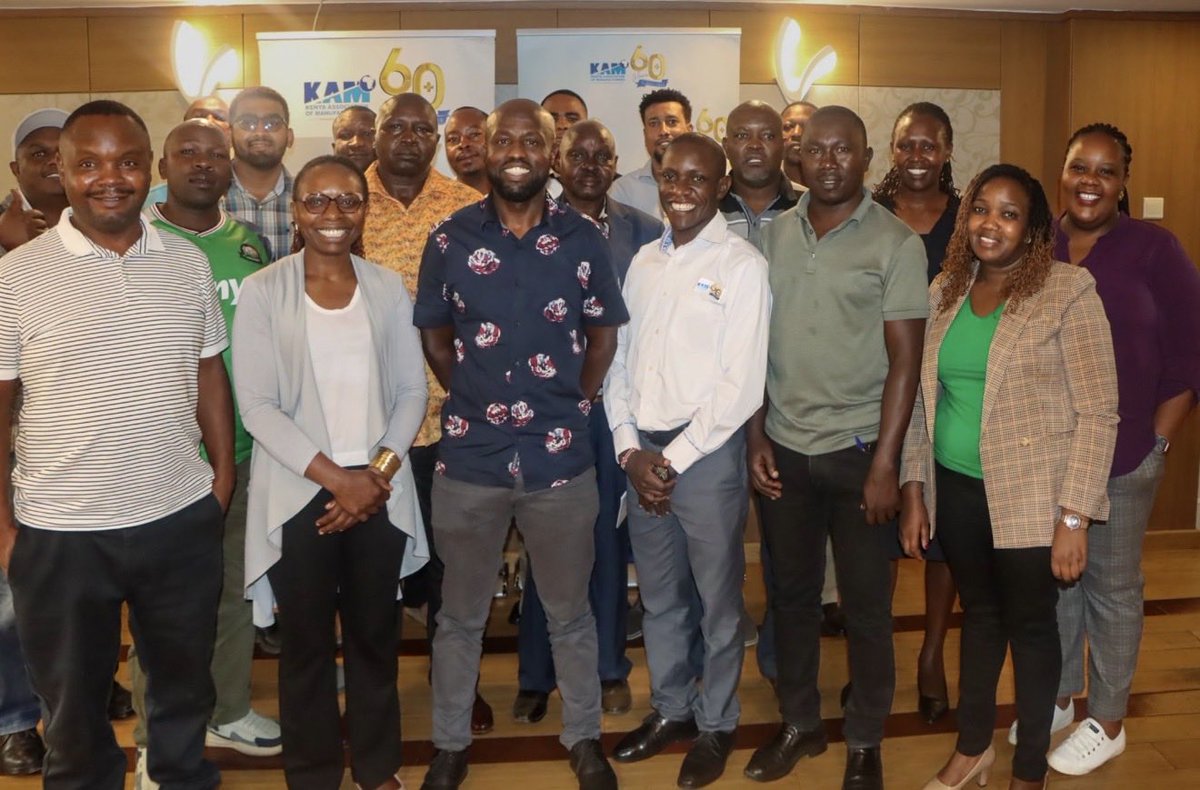
At KAM Timber, Wood & Furniture Sector meeting in Nakuru, the industry spoke with one voice.
Kenya is becoming a dumping ground for substandard wood:
• From Tanzania: mostly undersized, immature timber failing structural standards (standard quality timber diverted to India/China)
• From Uganda: foreign-owned EPZ manufacturers diverting tax-subsidised boards meant for export outside EAC
2024 EAC wood imports hit USD 140M — nearly 3× pre-moratorium levels.
90% of wood in Affordable Housing is imported despite Kenyan levy funding.
We lead 10,000HA restoration with @KFS_Kenya at zero cost & support 15B Trees.
United call: Guaranteed local offtake now — like cement & steel.
Fair competition for Kenyan industry!
@Forestry__Kenya
Nassim Nicholas Taleb walked into Google and explained what Antifragility is and how the world actually works:
1. The opposite of fragile is not robust. That is the first mistake almost everyone makes. Robust means something does not care about volatility. The true opposite of fragile is something that actually benefits from disorder, volatility, and stress. He calls it antifragile.
2. If you are shipping something fragile you write handle with care on the box. The true opposite of that package would have please mishandle written on it. Something antifragile wants to be mishandled. It gets stronger from it.
3. Fragility is always about nonlinear harm. Jumping ten meters kills you. Jumping ten centimeters a hundred times does not. The harm accelerates disproportionately with size. That acceleration is the mathematical signature of fragility and it can be measured precisely.
4. Anything that has survived long enough to exist today must have this property. If harm were linear you would be destroyed just walking to the office. Everything that persists is built so that small stressors barely touch it but large unexpected shocks destroy it.
5. Large size creates fragility automatically. A hundred million pound project in the UK had thirty percent more cost overruns than a five million pound project doing the same thing. The bigger the stone the more the harm. Size and fragility are inseparable.
6. Governments and institutions make the same mistake constantly. They chase perfect stability and call it good management. But something organic requires variability to survive. Greenspan tried to eliminate all economic volatility. He called it the Great Moderation. What he actually did was allow hidden risk to accumulate invisibly until it exploded all at once.
7. Small forest fires clean out flammable material and prevent catastrophic ones. By eliminating small fires you guarantee a massive one eventually. The same principle applies to economies, banks, and any complex system. Suppressing volatility does not remove risk. It stores it.
8. The only way to make something genuinely robust is to embrace bipolar strategies rather than medium ones. Eighty percent of your portfolio in something safe and twenty percent in something highly speculative is more robust than putting everything in medium risk. The average of extremes beats the mediocre middle.
9. Everything organic communicates with its environment through stressors. Your body needs the gym. Your bones need stress. Your immune system needs exposure. Depriving any living system of the stressors it needs does not protect it. It weakens it invisibly.
10. What does not kill me makes others stronger is closer to the truth than what does not kill me makes me stronger. When a system gets stronger under stress it is usually because the weaker components were destroyed, not because the survivors individually improved. The system improves through the death of its fragile parts.
11. Trial and error is not the opposite of knowledge. It is a form of knowledge with a convex payoff. You lose little when you are wrong and gain enormously when you are right. That asymmetry is what makes tinkering more powerful than theoretical planning in unpredictable environments.
12. Most of what we attribute to theoretical knowledge actually came from tinkering that was dressed up afterward as having been scientifically planned. The Romans built extraordinary things for centuries without ever having heard of Euclidean geometry. Technology routinely precedes the science that supposedly explains it.
13. The fragilista is Taleb's name for the person who denies antifragility and causes damage through that denial. Bureaucrats, central planners, academics, and policy makers who overstabilize systems from the top down are fragilistas. They remove the volatility that systems need and call it improvement.
14. Seneca, the wealthiest man in the ancient world, trained himself every day to wake up as if he had lost everything. He would deliberately live as if he were on a shipwreck to ensure he always had more upside than downside. Having more to gain than to lose from random events is the definition of antifragility in personal life.
15. In medicine, convexity matters more than people realize. If you are very ill the potential benefit of treatment vastly outweighs the risk, so you should see ten doctors not one. If you are mildly ill the risks of intervention almost certainly outweigh the modest benefits. The problem is that mildly ill patients are five times more numerous than severely ill ones, which is exactly who pharmaceutical companies focus on.
16. Removing something unnatural from your life has almost no side effects. Adding something artificial always has multiplicative hidden effects. In complex systems less is almost always more. The via negativa, improving by subtraction rather than addition, is consistently underestimated.
17. The real ethical crisis of modern times is that the people making decisions do not bear the consequences of those decisions. Bankers take the upside. Society takes the downside. Economists give broken advice and face no consequences when it fails. Nothing improves in any field where the people who are wrong are not harmed by being wrong.
18. Time is the ultimate detector of fragility. Whatever is fragile will eventually be broken by time. Whatever has survived for a long time has demonstrated antifragility and will likely survive longer still. A book that has been read for three thousand years will probably be read for three thousand more. A technology that is forty years old has at least forty more years ahead of it.
19. The only way to know you are alive and not a machine is that you benefit from variability. If you like variation and gain from disorder you are antifragile. If you require peace and predictability to function you are fragile. It is as simple and as profound as that.
Before you go, can we stay in touch?
I'd love to share one email with you every Sunday that'll challenge how you think about business, money and freedom.
Stay in touch here:
https://t.co/VMTlilB7aq
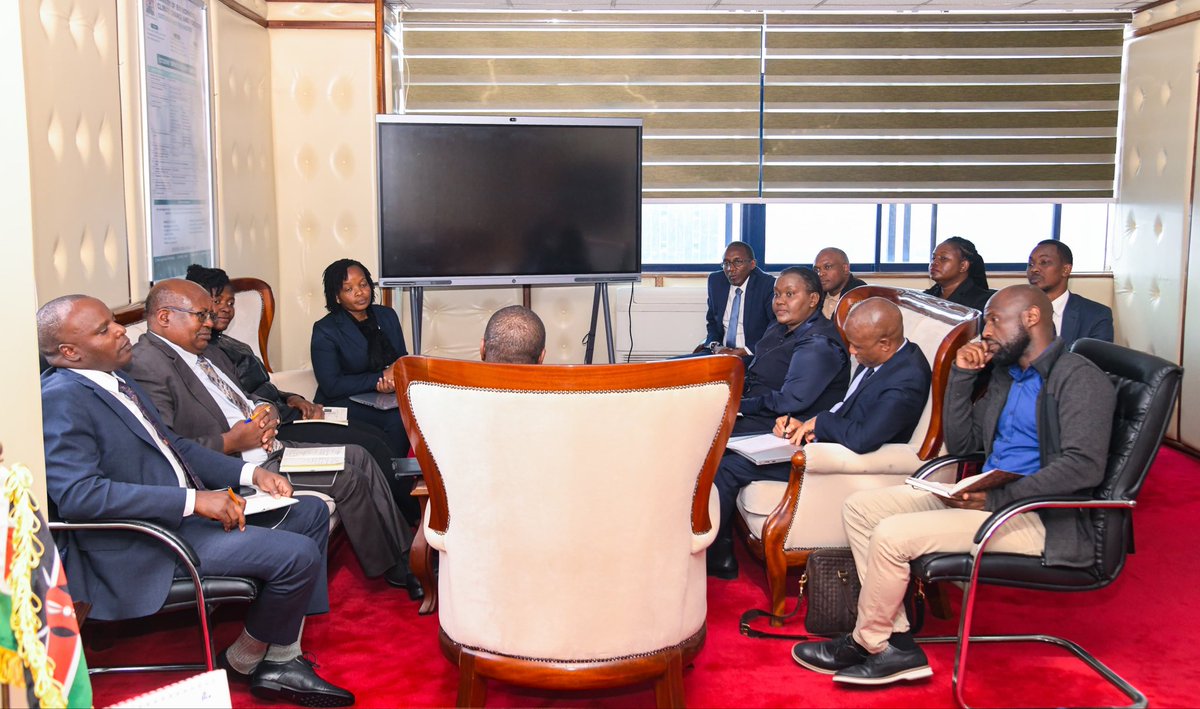
Led a KAM delegation to @NemaKenya alongside Board Vice Chair Hitesh Mediratta and CEO Tobias Alando.
We sought clarity on the Extended Producer Responsibility (EPR) regulations, particularly the ambiguity and dual application of fees that continue to challenge our members.
Beyond compliance, I see a greater opportunity: for KAM and NEMA to partner on environmental stewardship that goes beyond industry — centering the environment for all Kenyans.
Just as we collaborate successfully with @KFS_Kenya, a similar working agreement with NEMA can deliver a true win-win for people, planet, and businesses.
Let’s build this future together. 🇰🇪
@KAM_Kenya
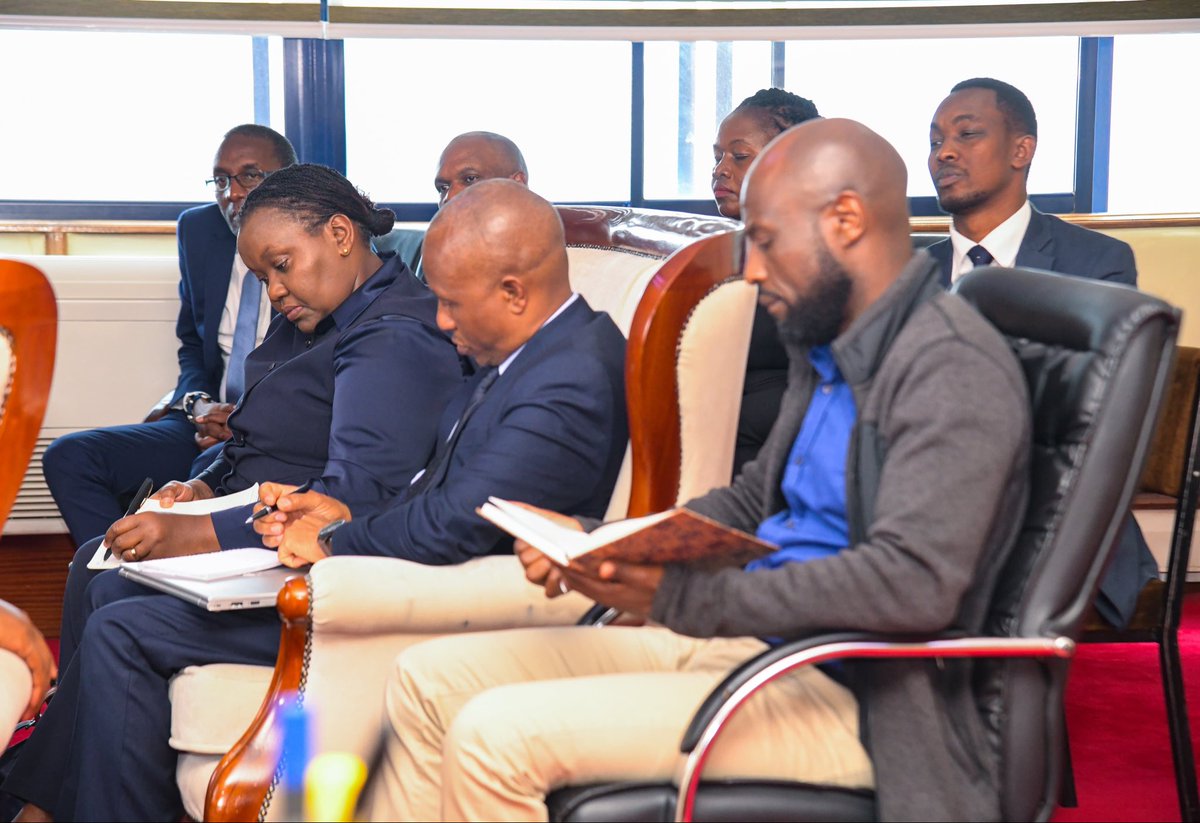
Privileged to have represented the Kenya Association of Manufacturers (KAM) — where I chair the Timber & Furniture Sector — at today’s Technical Working Group briefing on Forest Tree Seeds Regulation, hosted by the State Department of Forestry.
We’re making solid progress on a robust regulatory framework to ensure high-quality, certified forest reproductive materials. This will be key to Kenya’s 15 Billion Trees Programme by 2032.
Grateful to contribute to sustainable forestry and landscape restoration.
#TreeGrowingKE #SustainableForestry #KAM
Self-hypnosis is easily one of the quickest ways to change your life, with many people seeing real results in just two to three weeks.
To actually do it on yourself, lie down or sit somewhere quiet, close your eyes, breathe slow with longer exhales than inhales (like 4 in, 6 to 8 out), and slowly relax your body part by part from your feet to your head (using progressive muscle relaxation: briefly tense then completely release each muscle group from your toes up to your face as you exhale), then count down from 10 to 1 in your head, telling yourself with each number that you're going twice as deep, and once you feel heavy and relaxed, that's when you feed in the suggestion.
The rules are simple: Say it in the present tense ("I am confident" not "I will be confident"), keep it positive ("I am financially secure" instead of "I am not broke," because the subconscious skips the "not" and focuses entirely on the mental picture of the problem, which is why "don't think of a pink elephant" makes you think of a pink elephant), make it vivid and emotional, see it as already happening, feel what you'd feel if it were already true, then repeat it, then count yourself back up from 1 to 5 feeling more awake and energized.
The best times to do it are the second you wake up and the moment before you fall asleep because your brain is already halfway in that state naturally, which is exactly the window Émile Coué used in 1920s France with one phrase his patients repeated twenty times morning and night, "every day, in every way, I am getting better and better," and he had clinics full of people healing chronic conditions with it.