Introducing #AtuaAI – your go-to platform for AI-powered productivity and creativity in the #Web3 space! 🚀
Discover the suite of tools we offer:
💬 Chat: Get instant responses from #AI assistants to support you in various tasks, from research to brainstorming, making it easier to get things done quickly.
✍️ Writer: Seamlessly generate high-quality blogs, sales emails, and more with our text generator, tailored to your specific needs.
💻 Coder: Accelerate your coding process with AI-generated code, perfect for developers looking to boost efficiency and focus on innovation.
🖼️ Imagine: Visualize your dreams by creating beautiful images from text. Perfect for artists and content creators seeking to bring their ideas to life.
🗣️ Transcriber: Convert spoken words into written text effortlessly, making documentation and content creation simple and effective.
🎙️ Voiceover: Transform text into lifelike speech, ideal for creating engaging audio content and enhancing accessibility for all users.
🔊 Voice Isolator: Remove background noise and isolate voices to ensure clear, high-quality audio for any project.
🛡️ Classifier: Ensure safety and security with our advanced classifier that detects potentially harmful content, keeping your environment protected.
Explore these features and redefine what's possible with AI at https://t.co/9Ea3drSodR!
@PythNetwork 😂 Everyone talks about the next big perp.
Almost nobody asks:
"Who's actually providing the price?"
Meanwhile Pyth in the background...
🧠 Powers Polymarket Perps.
📈 Powers Kalshi Up/Down Markets.
⚡ Feeds Coinbase's growing 24/7 markets.
🚀 Supports Hyperliquid, Binance, and more.
💰 Revenue keeps climbing.
📊 Trading volume keeps growing.
🌎 Multi-asset markets keep expanding.
The funniest part?
Most traders celebrate the profits...
...without realizing there's an oracle quietly making those markets possible.
Pyth doesn't need the spotlight.
It just keeps delivering prices every second while everyone else argues on Crypto Twitter.
When everyone is chasing the next meme coin...
Pyth is busy powering the infrastructure behind the memes.
The market:
"I made another 100x!"
Pyth:
"Cool... I priced it." 😎
No drama.
No downtime.
Just accurate data.
Again.
And again.
And again.
That's the difference between hype...
and infrastructure.
😂 $PYTH keeps doing the heavy lifting while everyone else farms engagement.
#PythNetwork #PYTH #Oracle #DeFi #Crypto #Memes #Hyperliquid #Coinbase #Binance #Polymarket
Exclusively on Binance Wallet: the Catapult Trade campaign is now live
🎁 Join to earn your share of a 1,666,667 PULT token reward pool
📜 Campaign Period: June 24th 15:00 UTC – July 1st 23:59 UTC
Details in comment!
1,666,667 $PULT up for grabs
Catapult Trade x @BinanceWallet are running a 7-day social airdrop campaign open to Binance Wallet users. 10,000 participants will be selected to share the full reward pool, with each winner receiving an equal cut.
To qualify, you need to complete social campaign tasks.
Selection is based on Binance Chain Hash Value, so the process is transparent and on-chain.
$PULT tokens will be distributed to winners by Binance shortly after token launch.
Campaign window: June 24th 2026 - July 1st 2026
Full details on participation: https://t.co/m92wgWg4lm
Pyth Network, RWA Markets, and the Road to $3.25 Trillion: Why Financial Infrastructure Is Becoming the Most Valuable Layer in Digital Finance
Introduction
When people discuss the future of finance, the conversation often revolves around visible innovations. Most attention goes toward exchanges, tokenized assets, decentralized applications, perpetual futures, stablecoins, or the latest blockchain narratives. These are the products users interact with every day.
However, history shows that the most transformative technologies are often not the applications themselves, but the infrastructure that enables those applications to function.
The internet did not change the world because websites existed. It changed the world because the infrastructure supporting those websites became reliable, scalable, and globally accessible.
Likewise, modern financial markets are not built solely on exchanges or trading platforms. They depend on layers of infrastructure operating behind the scenes: settlement systems, liquidity networks, risk engines, and perhaps most importantly, data infrastructure.
Without accurate market data, financial systems cannot operate efficiently.
Without reliable price discovery, traders cannot manage risk.
Without trusted pricing mechanisms, markets struggle to scale.
This is why the recent growth metrics from Pyth Network deserve attention.
According to recent figures, Pyth-powered markets generated approximately $130 billion in total volume during May 2026, including $110 billion in Real World Asset (RWA) perpetual trading volume. During June 2026, the network had already facilitated approximately $100 billion in total volume and $80 billion in RWA volume before the month concluded.
Even more significant is the cumulative milestone.
Pyth-powered markets have now surpassed $3.25 trillion in cumulative trading volume.
At first glance, these figures may seem like another collection of impressive statistics. But when examined more closely, they reveal something much larger: the rapid evolution of digital finance into a multi-asset ecosystem where commodities, equities, indices, and traditional financial instruments increasingly coexist alongside crypto-native assets.
Understanding this transformation requires understanding the role of infrastructure.
The Evolution of Market Infrastructure
Every major financial revolution throughout history has been supported by infrastructure.
Stock markets required exchanges.
International trade required banking networks.
Electronic trading required communication systems.
Modern digital finance requires data.
Price information represents the foundation upon which virtually every financial activity is built.
When a trader opens a position, they depend on accurate prices.
When an exchange calculates funding rates, it depends on accurate prices.
When a protocol determines collateral requirements, it depends on accurate prices.
When liquidations occur, they depend on accurate prices.
Pricing information influences billions of decisions every day.
Most users rarely think about where this information originates.
Yet without reliable pricing infrastructure, financial markets become inefficient and potentially unstable.
Traditional financial markets developed over decades around centralized exchanges operating during fixed hours.
These systems were designed for a world where markets opened in the morning and closed in the evening.
The blockchain economy changed that model entirely.
Today, markets operate continuously.
Traders interact with assets around the clock.
Capital flows globally twenty-four hours a day.
Information spreads instantly.
The result is a financial environment fundamentally different from the one traditional market infrastructure was designed to support.
This evolution created demand for a new generation of pricing infrastructure.
That demand has helped drive the growth of oracle networks.
Why Oracle Networks Matter
Oracle networks perform a simple but essential function.
They connect off-chain information with on-chain applications.
Blockchains are excellent at maintaining secure ledgers.
However, blockchains do not naturally know the price of oil.
They do not automatically know the value of gold.
They do not inherently understand the price of a stock.
External data must be delivered to blockchain systems.
This is where oracle networks become critical.
Without oracles, decentralized finance would be unable to access real-world information.
Without real-world information, many financial applications would become impossible.
Lending protocols require pricing information.
Derivatives require pricing information.
Prediction markets require pricing information.
Perpetual futures require pricing information.
Tokenized assets require pricing information.
The entire ecosystem depends on accurate data.
As markets grow larger and more sophisticated, the quality of that data becomes increasingly important.
The difference between accurate and inaccurate pricing can determine whether markets function efficiently or experience significant disruptions.
This makes infrastructure providers like Pyth increasingly important within the broader financial landscape.
The Growth of Real World Assets
One of the most important developments in blockchain finance during recent years has been the rise of Real World Assets.
For much of crypto's history, trading activity focused primarily on native digital assets.
Bitcoin.
Ethereum.
Stablecoins.
Alternative cryptocurrencies.
These assets formed the foundation of the digital economy.
However, blockchain technology was never limited to crypto-native applications.
Over time, market participants began exploring ways to connect traditional assets with blockchain infrastructure.
This led to growing interest in RWAs.
The concept is powerful because it expands the range of assets available within digital markets.
Instead of limiting participation to cryptocurrencies, traders gain exposure to broader financial opportunities.
Commodities.
Equities.
Indices.
Treasuries.
Various traditional financial instruments.
This creates a bridge between conventional finance and decentralized finance.
Rather than operating as separate ecosystems, both worlds begin interacting through shared infrastructure.
The potential market size associated with this trend is enormous.
Traditional financial markets represent hundreds of trillions of dollars in value.
Even modest levels of integration can generate substantial growth opportunities.
The increasing volume observed across RWA markets reflects this reality.
Understanding RWA Perpetual Growth
The statistics associated with RWA perpetual markets provide valuable insight into current adoption trends.
In April 2026, RWA perpetual volume powered by Pyth reached approximately $173 billion.
According to available reports, this represented roughly one-third of the broader RWA perpetual market.
Capturing such a significant share within a rapidly expanding sector demonstrates substantial market penetration.
Importantly, this growth was not isolated to a single month.
During May 2026, RWA perpetual volume remained extremely strong at approximately $110 billion.
During June 2026, volume had already reached approximately $80 billion before month-end.
These figures suggest continued demand rather than temporary speculation.
Markets experiencing sustainable growth typically demonstrate recurring activity.
Users return because products provide utility.
Liquidity remains because participation remains attractive.
Infrastructure becomes valuable because markets depend on it.
The persistence of RWA trading volume indicates that real-world asset exposure is becoming an increasingly important component of digital finance.
Why Perpetual Markets Continue to Expand
Perpetual futures represent one of the most successful innovations within crypto markets.
Unlike traditional futures contracts, perpetuals do not require expiration dates.
This structure provides flexibility for traders.
Positions can remain open indefinitely.
Liquidity tends to concentrate effectively.
Market participation becomes more efficient.
These characteristics contributed significantly to the popularity of crypto perpetuals.
Applying similar structures to real-world assets expands possibilities even further.
Imagine traders gaining exposure to commodities around the clock.
Imagine global access to equity-related products.
Imagine continuous participation across markets traditionally restricted by geographic boundaries.
These possibilities become increasingly realistic as infrastructure improves.
However, perpetual markets require reliable pricing.
Without trustworthy price feeds, perpetual contracts become difficult to manage.
Risk increases.
Market confidence decreases.
Liquidity suffers.
Therefore, growth in perpetual markets naturally increases demand for high-quality oracle infrastructure.
This relationship helps explain why trading volume powered by Pyth has expanded so significantly.
The Significance of $3.25 Trillion
Numbers alone do not tell the entire story.
However, cumulative volume provides one of the clearest indicators of adoption.
Every dollar of trading volume represents activity occurring within real markets.
Every transaction reflects trust in infrastructure.
Every trade depends on systems functioning correctly.
When cumulative volume surpasses $3.25 trillion, the milestone demonstrates substantial practical utility.
Three trillion dollars is not merely a symbolic achievement.
It reflects years of ecosystem growth.
It reflects integration across numerous applications.
It reflects adoption across multiple chains and asset classes.
Most importantly, it demonstrates that market participants consistently rely on the infrastructure being provided.
Infrastructure providers rarely receive the same attention as exchanges or trading platforms.
Yet they often become essential components of broader ecosystems.
Volume milestones help reveal this importance.
Markets vote through usage.
Developers vote through integrations.
Users vote through participation.
The cumulative figures associated with Pyth suggest growing confidence across all three categories.
Multi-Asset Finance Is Emerging
One of the most interesting trends shaping modern markets is convergence.
Historically, different asset classes existed within separate systems.
Stocks traded on stock exchanges.
Commodities traded on commodity exchanges.
Currencies traded through foreign exchange markets.
Crypto traded through crypto exchanges.
These boundaries are gradually becoming less rigid.
Technology enables broader access.
Digital infrastructure enables greater interoperability.
Users increasingly expect seamless participation across multiple markets.
This trend encourages development of multi-asset trading environments.
Instead of focusing exclusively on cryptocurrencies, platforms increasingly support broader exposure.
The emergence of RWA products reflects this transition.
The expansion of perpetual markets reflects this transition.
The demand for continuous pricing reflects this transition.
Infrastructure providers capable of supporting multiple asset classes may therefore become increasingly valuable.
Pyth's recent growth aligns closely with this broader market evolution.
The Competitive Value of Infrastructure
Technology history repeatedly demonstrates the importance of infrastructure.
Roads enabled commerce.
Railways accelerated industrialization.
Telecommunications connected global economies.
Internet protocols enabled digital communication.
Financial infrastructure enables modern markets.
Many users focus on visible products.
However, long-term value often accumulates within foundational systems.
Infrastructure benefits from network effects.
As adoption grows, utility increases.
As utility increases, integration expands.
As integration expands, dependence grows.
This creates powerful feedback loops.
Infrastructure providers capable of maintaining reliability during growth often become deeply embedded within ecosystems.
The latest trading metrics suggest that Pyth may be moving further along this path.
Challenges Facing the Industry
Despite impressive growth, challenges remain.
Financial infrastructure must continue evolving.
Data accuracy remains critical.
Latency remains important.
Security remains essential.
As markets expand into additional asset classes, complexity increases.
Supporting commodities differs from supporting equities.
Supporting indices differs from supporting cryptocurrencies.
Each market introduces unique requirements.
Infrastructure providers must continuously adapt.
Competition also remains intense.
Numerous projects recognize the importance of data infrastructure.
Innovation continues accelerating.
Maintaining leadership requires ongoing development.
The broader market environment also influences growth trajectories.
Adoption may fluctuate alongside economic conditions.
Regulatory developments may impact market structures.
Technological shifts may introduce new opportunities and challenges.
Successfully navigating these factors will remain important for long-term success.
Looking Toward the Future
The future of finance increasingly appears multi-asset, global, and continuous.
Digital assets are unlikely to exist in isolation.
Instead, they will interact with traditional markets through shared infrastructure.
This creates opportunities for greater efficiency.
It creates opportunities for broader participation.
It creates opportunities for entirely new financial products.
As this transformation continues, demand for accurate pricing will likely increase.
Every new market requires reliable data.
Every new asset class requires reliable data.
Every new trading venue requires reliable data.
The importance of infrastructure therefore continues growing.
Volume metrics provide evidence of current adoption.
Future growth will depend on continued execution.
If the broader RWA sector expands as many expect, infrastructure providers supporting these markets may play increasingly important roles.
The recent statistics suggest that Pyth is already benefiting from these trends.
Conclusion
The latest metrics from Pyth Network tell a story that extends far beyond volume figures.
Yes, $130 billion in May trading volume is impressive.
Yes, $110 billion in May RWA volume is significant.
Yes, $100 billion in June volume and $80 billion in June RWA volume demonstrate continued momentum.
And yes, surpassing $3.25 trillion in cumulative volume represents a major milestone.
But the deeper significance lies in what these numbers represent.
They reflect the growing importance of infrastructure within digital finance.
They reflect the rise of Real World Assets.
They reflect increasing demand for multi-asset trading environments.
They reflect the transition toward markets that operate continuously across geographic and technological boundaries.
Most importantly, they demonstrate that reliable pricing infrastructure has become one of the foundational requirements of modern financial systems.
As blockchain technology continues integrating with traditional markets, the role of data infrastructure will only become more important.
The future of finance will not be built solely by exchanges or applications.
It will also be built by the systems that make those applications possible.
And judging by the latest growth metrics, Pyth is positioning itself as one of those systems.
📊 $130B Total Volume — May 2026
📊 $110B RWA Volume — May 2026
📊 $100B Total Volume — June 2026 (to date)
📊 $80B RWA Volume — June 2026 (to date)
🚀 $3.25T+ Cumulative Volume
🌎 Powering the infrastructure behind the next generation of global, multi-asset markets.
@PythNetwork #PythNetwork #RWA #DeFi #Crypto #Oracle #Finance #Trading #Web3 $PYTH
🚀 Markets don't sleep anymore.
Crypto trades 24/7. Perpetual futures never close. Prediction markets react instantly to global events. Tokenized assets are expanding across every corner of finance.
Yet one critical piece of infrastructure has remained stuck in the past:
Pricing.
For years, traders have operated in markets that never stop while relying on price feeds and benchmarks that still follow traditional market hours. When major events happen during weekends, price discovery becomes fragmented and inefficient.
That's exactly why the launch of Pyth Indices is such a significant milestone.
Pyth has introduced a new generation of proprietary 24/7 indices covering some of the world's most important asset classes, including Oil (WTI & Brent), Gold, Silver, major U.S. equities such as NVDA, TSLA, AAPL, MSFT, GOOGL, INTC, HOOD, MSTR, and CRCL, as well as thematic baskets like AI10, Defense10, China10, and Tech100.
The most important part?
These aren't theoretical products waiting for adoption.
They're already live.
Coinbase is using them for thematic equity index futures.
Kraken has integrated them for oil perpetuals and derivatives.
dYdX launched perpetual contracts powered by Pyth's 24/7 Oil Index.
Nado utilizes continuous oil pricing across spot, margin, and perpetual markets.
When multiple major trading venues adopt a product from day one, it sends a powerful signal to the entire industry.
The market is demanding continuous pricing.
And Pyth is delivering it.
What makes this launch even more impressive is the collaboration with MarketVector, the index business of VanEck. With more than $100 billion tracking its indices, MarketVector brings institutional-grade governance and methodology, while Pyth provides the real-time data infrastructure needed for always-on markets.
Together they are building benchmarks designed for the next era of finance.
The reality is simple:
Markets have already evolved beyond traditional trading hours.
Capital moves globally every second.
Information spreads instantly.
Traders react immediately.
Pricing infrastructure must evolve as well.
Pyth recognized this trend years ago when it pioneered 24/5 U.S. equity pricing through Blue Ocean ATS. Now, with Pyth Indices, they're taking the next step toward a world where every major asset class can be priced continuously and transparently.
The future of finance won't wait for Monday morning.
The future is already trading.
🔥 Markets stopped closing.
🔥 Pricing finally caught up.
🔥 Pyth Indices are here.
@PythNetwork #PythNetwork #DeFi #RWA #Crypto #Trading $PYTH
🚨 Markets don't close anymore.
Yet most pricing infrastructure still acts like it's 1995.
While crypto traders, perpetual futures, prediction markets, and tokenized assets operate 24/7, traditional market data feeds continue to shut down after hours and disappear over weekends.
That's the gap Pyth is solving.
Pyth has officially launched a new business line: proprietary 24/7 indices covering Oil, U.S. Equities, Precious Metals, and thematic baskets — built for a world where trading never stops.
This isn't a concept.
It's already live.
At launch, Pyth Indices include WTI Oil, Brent Oil, Gold, Silver, major U.S. equities such as NVDA, TSLA, AAPL, MSFT, GOOGL, INTC, HOOD, MSTR, and CRCL, alongside thematic products including AI10, Defense10, China10, and Tech100.
Even more impressive?
The thematic baskets were co-developed with MarketVector, the index business of VanEck, whose indices track more than $100 billion in assets worldwide. Pyth delivers the real-time data infrastructure and 24/7 pricing, while MarketVector contributes institutional-grade index governance and methodology.
The result is a new generation of benchmarks designed specifically for on-chain markets.
And the biggest signal isn't the launch itself.
It's who is already using it.
Coinbase is live with thematic equity index futures.
Kraken is using Pyth Indices for oil perpetuals and derivatives.
dYdX has launched perpetual contracts based on Pyth's 24/7 Oil Index.
Nado is integrating continuous oil pricing across spot, margin, and perpetual products.
When Coinbase, Kraken, dYdX, and Nado all go live from day one, the market is sending a clear message:
24/7 pricing is no longer optional.
It's becoming essential infrastructure.
Think about it.
If oil moves 3% on a Saturday due to a geopolitical event, most traditional market feeds are asleep.
But traders aren't.
Capital isn't.
Markets aren't.
Pyth Indices close that gap by providing continuous, transparent, methodology-driven pricing around the clock.
This isn't Pyth's first step toward always-on markets either.
They previously pioneered 24/5 U.S. equity pricing through Blue Ocean ATS.
Now they're extending that vision across multiple asset classes and pushing financial infrastructure into a truly global, always-open era.
The future of finance isn't waiting for Monday morning.
The future is trading right now.
And Pyth is building the pricing layer that makes it possible.
🔥 Markets stopped closing.
🔥 The pricing finally caught up.
🔥 Pyth Indices are live.
@PythNetwork #DeFi #RWA #Crypto $PYTH
For decades, traditional financial indices were designed around a simple assumption: markets open, markets close, and trading stops.
But the world is changing.
In the era of blockchain and decentralized finance, capital moves 24/7. Opportunities don't wait for a market bell, and traders around the globe never truly go offline.
That's why Pyth Indices represents a major leap forward.
Built specifically for an always-on financial ecosystem, Pyth Indices brings institutional-grade benchmarks directly on-chain, giving users continuous access to some of the world's most important markets. From equities and commodities to energy, precious metals, and thematic investment baskets, these indices are now available in a format designed for the future of finance.
Imagine tracking global stocks, oil prices, gold, and emerging market trends anytime, anywhere—without being limited by traditional trading hours. This unlocks entirely new possibilities for DeFi protocols, traders, builders, and investors seeking real-time exposure to global markets.
As decentralized finance continues to mature, reliable and transparent market data becomes one of the most critical pieces of infrastructure. Pyth Network is helping bridge the gap between traditional finance and the on-chain economy, creating a foundation where global financial products can operate seamlessly around the clock.
The future of markets isn't limited by geography, business hours, or outdated systems.
The future is open, global, permissionless, and available 24/7.
Pyth Indices is another big step toward that vision. 🚀🔥
@PythNetwork #DeFi $PYTH
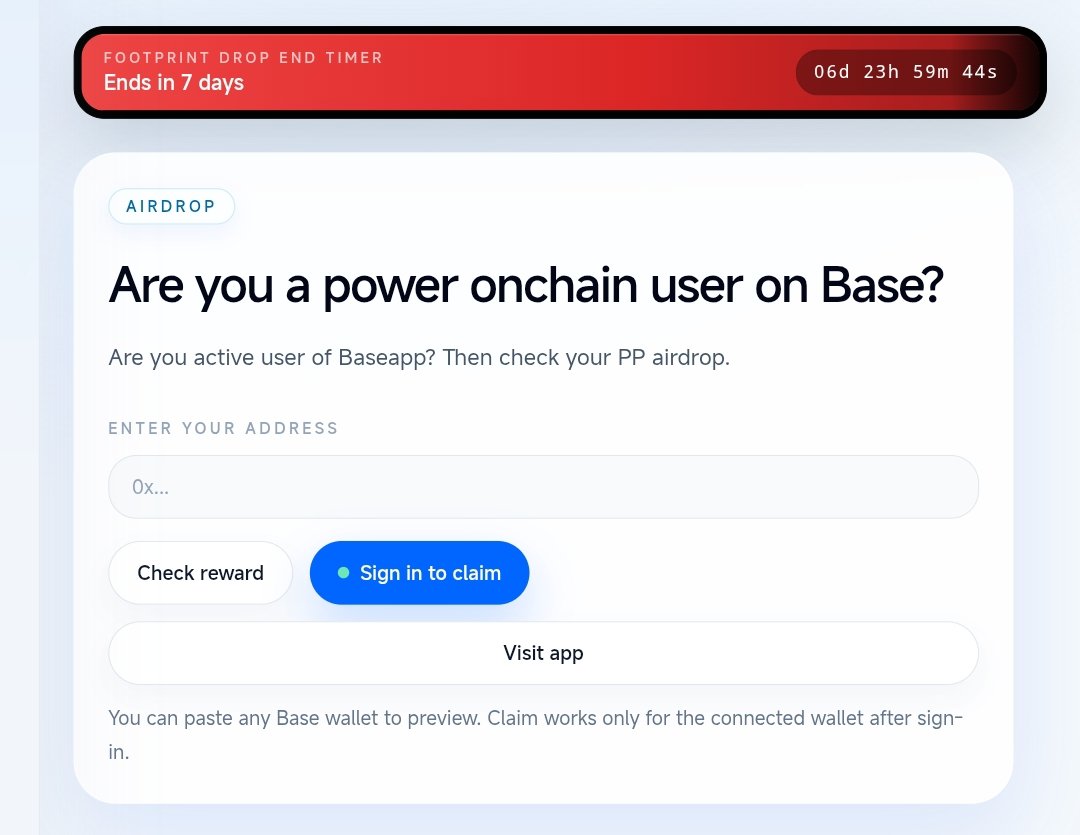
Last 7 days to claim the Dustswap PP Airdrop.
Active @base onchain users are eligible for PP based on their wallet activity.
Check eligibility and claim here:
https://t.co/SFSmmXknJv
You can also invite friends and earn 20% of their PP rewards too.
Dustswap users can also access the app through Herond Browser.
Herond is a Web3 focused browser with built-in wallet access, privacy protection, and ad/tracker blocking, designed to make crypto browsing simpler across desktop and mobile.
Excited for what’s ahead 💙
Are you active on @base ?
You may be eligible for the @DustswapOnBase PP Airdrop.
The claim window ending on 25th may.
Check your wallet: https://t.co/O3dK0QMsXA
You can also invite friends and earn 20 percent of their PP rewards too.
#DustswapOnBase
The revolution begins. ⚡
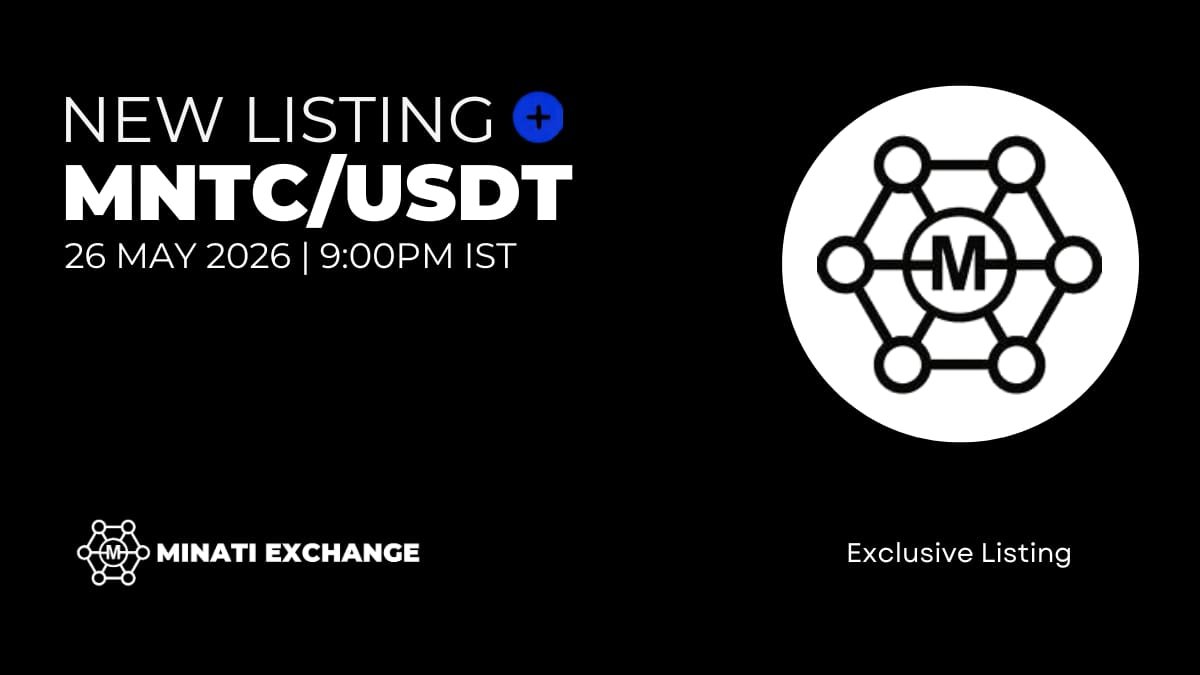
Minati Coin ($MNTC) is officially getting listed on Minati Exchange on 26 May 2026 at 3:30 PM UTC.
Trade Pair: MNTC/USDT
https://t.co/I1i79fCl6C
🎉 Celebrate $ZEST on #KuCoin with a thrilling giveaway!
🎁 80,000 ZEST for 100 winners!
How to enter:
1️⃣ Follow @kucoincom & @ZestProtocol
2️⃣ Like, RT & Quote: "Trade $ZEST on #KuCoin!" + Tag 3 friends
3️⃣ Fill this out: https://t.co/ZzzpPvkvAr
⏰ 48 hours
New to KuCoin? Sign up to participate
https://t.co/x7jmgKGnCS
🎉 Celebrate $NXT on #KuCoin with a thrilling giveaway!
🎁 10,000 NXT for 100 winners!
How to enter:
1️⃣ Follow @kucoincom & @NEXST_AI
2️⃣ Like, RT & Quote: "Trade $NXT on #KuCoin!" + Tag 3 friends
3️⃣ Fill this out: https://t.co/SD03yBFlqR
⏰ 48 hours
New to KuCoin? Sign up to participate
https://t.co/x7jmgKFPNk
🎉 Celebrate $NXT on #KuCoin with a thrilling giveaway!
🎁 10,000 NXT for 100 winners!
How to enter:
1️⃣ Follow @kucoincom & @NEXST_AI
2️⃣ Like, RT & Quote: "Trade $NXT on #KuCoin!" + Tag 3 friends
3️⃣ Fill this out: https://t.co/SD03yBFlqR
⏰ 48 hours
New to KuCoin? Sign up to participate
https://t.co/x7jmgKFPNk