renaissance technologies hasn't had a losing year since 1988
not because they're smarter or have better data
they're asking a completely different question than everyone else
while retail asks "will it go up" quant desks ask something else entirely
which state is the market in right now, and with what probability does it transition to the next
tool for that: markov chains
markets cycle through states - trending, ranging, volatile, reversing
each transition has a historical probability you can calculate
trending -> stays trending: 48%
trending -> ranging: 34%
trending -> reversing: 18%
you don't pick direction. you calculate expected value across every possible transition
enter only when the math is positive
that's it. that's the entire edge
the framework is 119 years old - andrei markov published it in 1906
it's in every statistics textbook on earth
nobody in your trading group ever mentioned it
paper is free, data is free, implementation is 200 lines of python
they kept you staring at candles while they ran probability tables
Bookmark it or lose last chance to be quant
options dealers know exactly where they're forced to buy and sell
not a strategy - a legal obligation. they file it daily
market makers who sell options have to hedge constantly. price drops 1%, they buy. price rises 1%, they sell - no discretion, just math
that mechanical buying and selling creates price gravity toward certain levels - called gamma walls
price gravitates toward them before expiration, pins there, then snaps clean through after - usually hard
CBOE publishes aggregate dealer positioning every morning before open. free, no login
number to watch is net gamma exposure (GEX)
positive GEX = dealers act as shock absorbers, moves get suppressed, price drifts sideways
negative GEX = dealers amplify every tick, volatility cascades, support floors vanish
this one number predicted the character of almost every big SPY move in 2024
hedge funds run full desks modeling dealer flows. retail argues about RSI divergence
SpotGamma tracks it. free tier gets you daily GEX level
data has been public for 20 years. nobody ever mentioned it on fintwit
save this before next monthly opex - actually pull up GEX and watch what happens
every major drawdown since 2008 had a warning
it was public the whole time, and almost nobody read it
most quants are buried in alt data subscriptions at $40k/year, 15 years of tick data, models stacked on models
signal that actually worked was always free
it's the fed's weekly H.4.1 release - every thursday at 4:30pm ET
when excess reserves contract faster than the 6-week trailing average, S&P underperforms by 3.2% over the next 20 sessions on average
74% hit rate going back to 2008. zero subscription fees
signal fires about 6-7 times a year - each window lasts roughly 3 weeks
hedge funds pay analysts $300k a year to find this stuff. this one was a $0 API call and a weekend of backtesting
expensive part was never the data
it was knowing which table to read
a bell labs scientist solved optimal trading in 1956
AT&T tried to suppress the paper. every prop desk on earth runs it quietly today
john kelly wasn't a trader - he was an information theorist studying telephone noise. realized mid-research that the math for optimal signal transmission was identical to the math for optimal bet sizing
published it. wall street found it a decade later and never looked back
the formula:
f* = (bp - q) / b
b = the odds you're being paid
p = your probability of being right
q = your probability of being wrong
most retail traders risk 2% flat on every trade. completely arbitrary number they picked up from some youtube video
kelly says something else entirely: size small when the edge is thin, size up specifically and mathematically when the probability is strongly in your favor - and gives you the exact fraction down to the decimal
ran 500 SPY trades through both approaches, same 54% win rate signal:
flat 2% sizing: +180% over 3 years
kelly optimal: same exact trades, same win rate - +740%
same signals. 4x the outcome. nothing changed except the math deciding the size
ed thorp used this formula to beat blackjack in the 60s, then brought it to wall street and compounded at 20% annually for 30 years straight. warren buffett called it the closest thing to a mathematical guarantee in markets
it's been public since 1956. it's in every probability textbook on earth. maybe 20 lines of python to implement
you've been leaving the majority of your compounding on the table every single trade
not because your signals are wrong, because nobody ever showed you the math for sizing them
bookmark this
a two sigma quant told me something at a bar that still pisses me off
"retail looks at price. we look at the autocorrelation of price changes - completely different signal"
i asked him to explain it like i was twelve
he drew on a napkin:
if today's move predicts tomorrow's even 53% of the time - that's an edge
size it with kelly and it compounds into something most people will never touch
data is free. bloomberg and the fed publish everything. the math sits in every stats textbook
reason retail keeps losing isn't intelligence. it's that they're reading the wrong representation of the same data
a chart hides serial correlation. a time series shows it naked
i went home and ran the tests on three years of SPY
found four statistically significant patterns on a five-day window
58% hit rate. kelly says that's more than enough
same free data. same free framework. nobody ever pointed retail toward it
they kept you staring at candles while they extracted the real signal
you're not competing against the market. you're competing against people who stopped looking at the picture and started looking at the math underneath it
Bookmark this or keep losing to the same edge for another decade
Before you buy that call, do this...
Look at where its expiry sits on the vol curve
There's a step between picking a direction and buying an option that a lot of people skip entirely, and it's cost me money in the past when I've rushed it.
You've decided you're bullish and you've decided on a horizon. Now look at the term structure, which is just implied vol plotted across expiries. Its shape should influence which expiry you actually buy.
Say the curve is inverted, with the front end trading on a much higher vol than normal. That happens in stressed markets. If you go and buy a short-dated call there, you're buying the most expensive vol on the board, and vol mean reverts. You can get your direction completely right and still watch the vega bleed you as the front end vol normalises back down.
The reverse matters too. If the curve is steeply upward sloping, a long-dated option is being priced at a meaningfully higher vol than a short-dated one, and you have to decide whether the extra time is worth the extra vol you're paying for it. Maybe you spread it off to reduce VEGA.
So the question isn't just how long do I need. It's also which part of this curve am I comfortable owning and for how long.
CONVERSAS QUE VOCÊ DEVERIA TER COM SEU PARCEIRO(A) NA PRÓXIMA VIAGEM LONGA DE CARRO.
Pule aquela conversa de sempre de "o que a gente vai comer?"
Faça perguntas que fazem os quilômetros desaparecerem.
I am currently active in the Chinese EV market and have been for a while. I would like to share some lessons I have learned to help anyone interested in importing cars from China. I am typing this in real time, so this will likely be a long thread. 🧵
Hakeem Belo-Osagie, founder of FSDH Merchant Bank, on why he sold UBA for $250m in 2005.
He says he was merely an investor, not a banker. And he also got tired of the constant investigations from SEC, Military intelligence, and other government agencies.
He had bought the bank for $15m in 1994
This Anthropic lecture on Claude for Finance is the closest thing to a real quant research desk you'll find online.
1 hour. Massive value.
Bookmark it.
JENSEN HUANG PULLED THE NEW $249 JETSON OUT OF AN OVEN ON CAMERA AND SAID HE "COOKED IT TOO LONG, IT SHRUNK". THEN HE READ THE SPECS.
70 trillion ai operations per second. 25 watts. $249. runs everything the hgx systems run, large language models included.
the joke is the box came out of an oven. the real joke is the chip inside.
last year an h100 cost $30,000 and lived in a datacenter. now a board the size of a wallet pulls 25 watts under load and runs llama 7b in your kitchen.
the ceo of the most valuable company on earth just demoed the death of the ai subscription on a baking tray.
every dollar paid to chatgpt plus from january forward is a vote against the kitchen.
I genuinely don't understand why everyone isn't using this yet
Andrej Karpathy, a co-founder of OpenAI, posted a simple idea that hit 16 million views: stop using AI to write code, use it to build a second brain.
You point Claude Code at a folder, drop in any source, an article, a transcript, a PDF, and Claude reads it, links it, and files it into a living wiki of everything you know. It compounds like interest, the more you feed it, the smarter it gets.
Here's the whole thing:
> Install Obsidian, create a vault, open it in Claude Code
> Paste Karpathy's wiki idea file and tell Claude to build it
> Claude makes three folders: raw for sources, wiki for its pages, a CLAUDE.md that runs it
> Drop any source into raw and say "ingest this"
> Ask questions across everything, forever
Five minutes to set up, and you never start from a blank chat again.
Full step-by-step guide with Claude and Obsidian, link below.
Bookmark this
🚨Anthropic just showed a 24-minute workshop on how to actually do prompts for Claude.
Taught by the people who built it.
Free. No registration. No paywall.
I've seen $300 courses that don't cover what they teach in the first 8 minutes.
Watch it and bookmark it now.
The engineer who built Claude Code just dropped a 28-minute video on how to write prompts that actually work
I've seen $300 courses that don't cover what he shows in the first 10 minutes
CLAUDE.md files, memory shortcuts, parallel sessions, prompting patterns
all in one video and completely free works whether you're a developer, a beginner, or someone who's been using Claude for months.
INSTEAD OF WATCHING AN HOUR OF NETFLIX TONIGHT.
This 1 hour Stanford lecture by Joel Peterson will teach you more about negotiation and getting what you want than most people learn in years.
Bookmark it and give it an hour, no matter what.
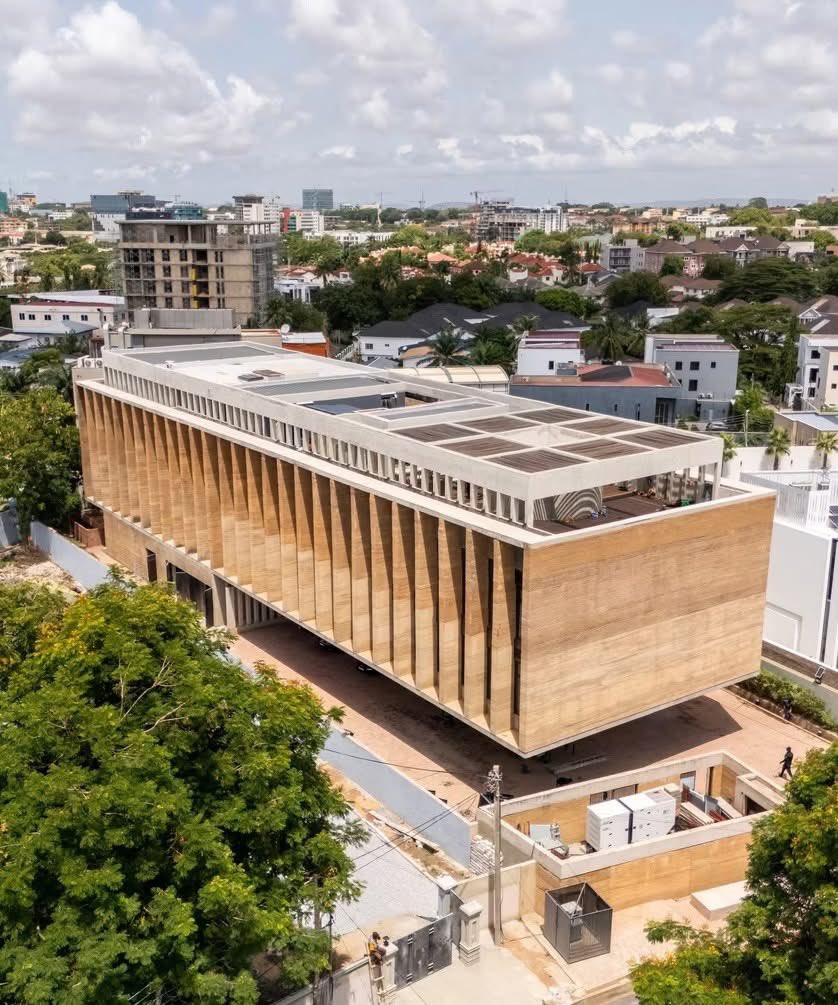
Ghana is not experimenting with rammed earth. Ghana is demonstrating mastery of it.
The Shippon Offices. Cantonments, Accra, Ghana. Adjaye Associates’ own global headquarters. Designed by David Adjaye. Completed 2026.
The entire facade is rammed earth fins; deep, rhythmically spaced, locally sourced. They shade the interior from
Accra’s tropical sun while framing precise views of the city. A 26-metre cantilever lifts the primary office floors off the ground entirely, preserving the ground plane as a shaded social pergola for the neighbourhood.
1,300 m² of column-free workspace. A creche for staff families. A rooftop kitchen. Rammed earth walls that regulate humidity and temperature without mechanical systems.
David Adjaye chose rammed earth for his own firm’s home. Not for optics. Because it performs.
This is what it looks like when an African architect builds African soil into a Grade-A global workplace and dares the world to call it primitive