It holds up. He trained as an electrical engineer in Paris and reached New York in 1941. At the Brooklyn Navy Yard his work was inspection — checking that the wiring on each ship had been run to plan. Missouri was launched there in January 1944. Nineteen months later Japan signed on her deck.
@jewishhistoryst These three were photographed inside a quarter of a million. In 1948 Morocco held about 265,000 Jews — the largest Jewish community anywhere in the Muslim world. Today it is roughly a thousand.
The photograph outlasted the world that is in it.
You can push it back further. 24 August 1929, Hebron: sixty-seven Jews murdered out of a community of about eight hundred, the yeshiva students among the first attacked. No state, no army, nineteen years before 1948. The survivors were evacuated to Jerusalem and a community that had lived there for centuries ended in two days.
The dates keep moving. The reason never arrives.
Shulkin (1852–1918) was a Russian-born immigrant and amateur woodcarver. The ark now stands in the Jewish Museum in New York, a gift of the Jewish Federation of Sioux City. The eagle and the open priestly hands come straight from the carved wooden arks of 18th–19th c. Eastern Europe.
The poison, the cure and the hate.
When plague came, or famine, or an enemy at the gate, the city chose a man — a beggar, a criminal, a slave, someone nobody would fight for. They fed him. They led him through the streets in procession. They beat him with green branches. Then they drove him out past the boundary.
He left, and they believed the pollution left with him. They called him the pharmakos — from pharmakon, one word meaning both poison and cure.
Then Apion of Alexandria wrote that the Jews did this. That every year they seized a Greek, fattened him for a full year, took him outside the city and killed him.
Fed. A year. Taken out. Killed.
Because this is how Jew hate works — take your poison, throw it on the Jew, and you get the cure.
The pharmakos is still going on...
In Greek, pharmakon means the drug, the poison and the cure — one word for the thing that kills you and the thing that heals you. Pharmacy and pharmacology come from it. Pharmakos, the human scapegoat, belongs to the same family of words.
That is the promise the whole thing runs on: you are healed by what you cast out. Someone has to be the poison.
It did not stop in Athens. The one who breaks the treaty cries betrayal. The one who did the killing cries genocide.
The accusation is not an argument. It is a medicine, and someone else has to swallow it.
What makes these street photographs hard is how short the gap was. Of roughly 208,000 Jews in Lithuania when the Germans arrived in June 1941, most were dead by that December — shot in pits outside their own towns, before the death camps were built. Whole streets, inside six months.
Josephus mentions it too. As commander of Galilee at the start of the revolt in 66 CE, he writes that he walled the Upper Galilee villages of "Jamnia, and Meroth, and Achabare" (Life 188). So Meroth was already a fortified Jewish village some 300 years before this synagogue went up. Looking forward to #3.
An argument you can win is a safe argument.
If the Jews were wrong about Sinai, you refute them, and the reason to resent them goes with it.
That is not what happened. The idea was never refuted. It was adopted — human dignity, conscience, the sanctity of life — and rewritten in a language with no God in it.
And the hatred did not move an inch.
October 6, 1943. Three days before Yom Kippur, four hundred rabbis marched through Washington to the White House to ask that something be done for the Jews of Europe.
The Vice President received them. The President had left through a rear exit to attend an Army ceremony, and then went to the country for the weekend.
Eighty-three years ago today.
Norwich, 1144. A boy is found dead. Someone says the Jews did it for a ritual.
Nobody asked what that meant. You only had to repeat it.
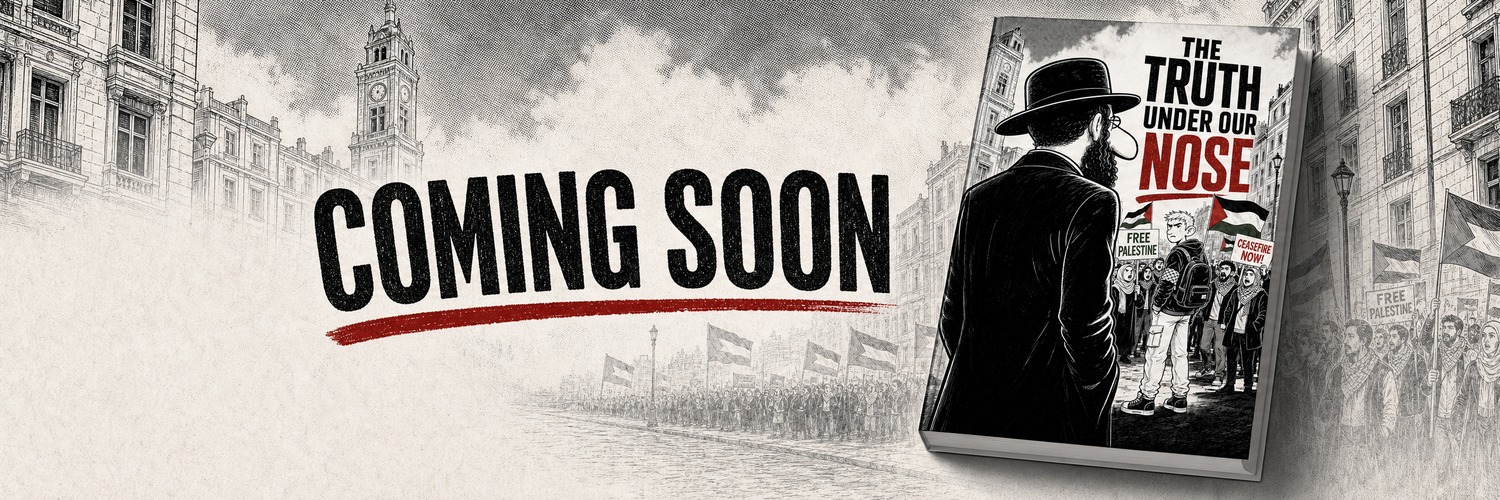
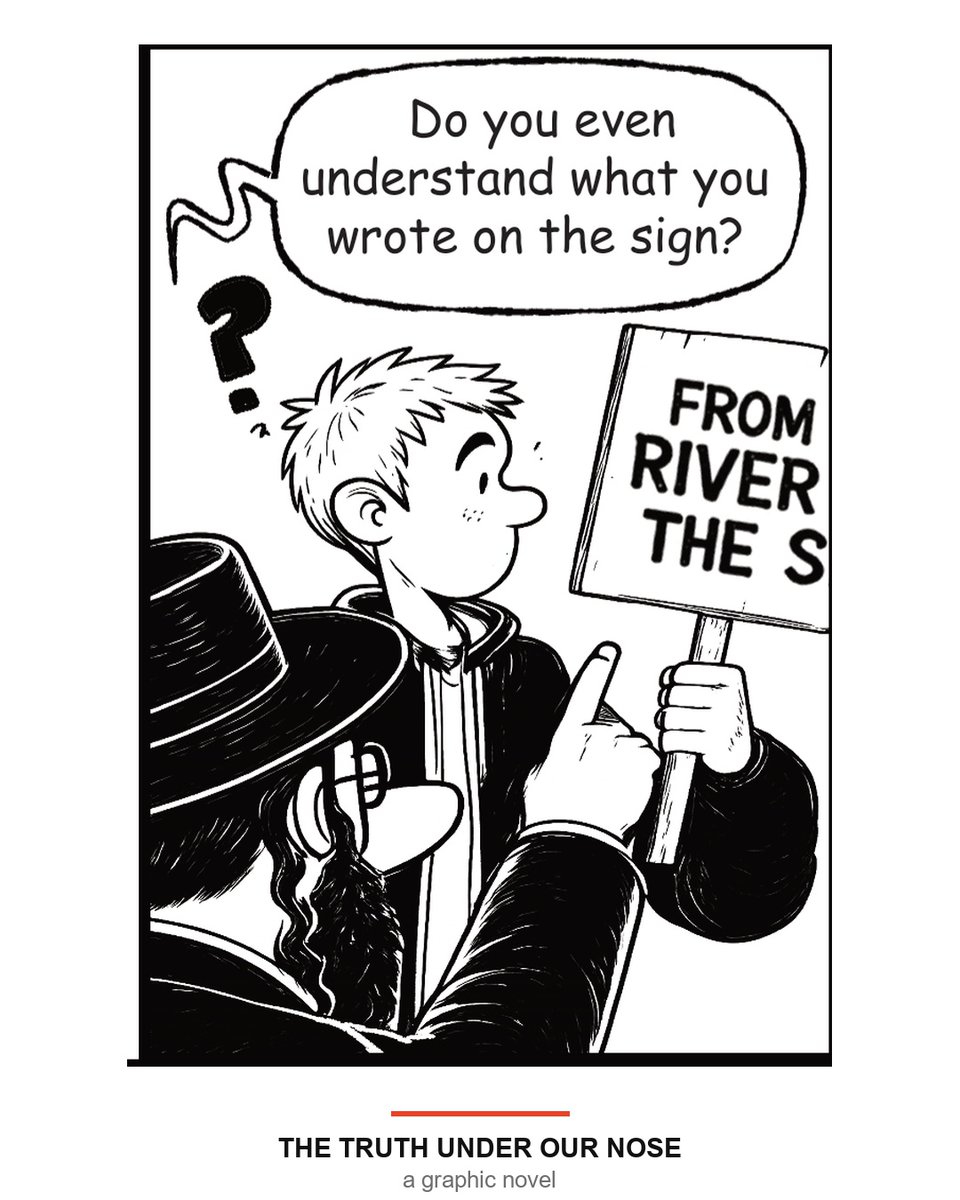
Eight hundred years later a man marches with a sign and does not know what it says. The slogan always arrives finished.
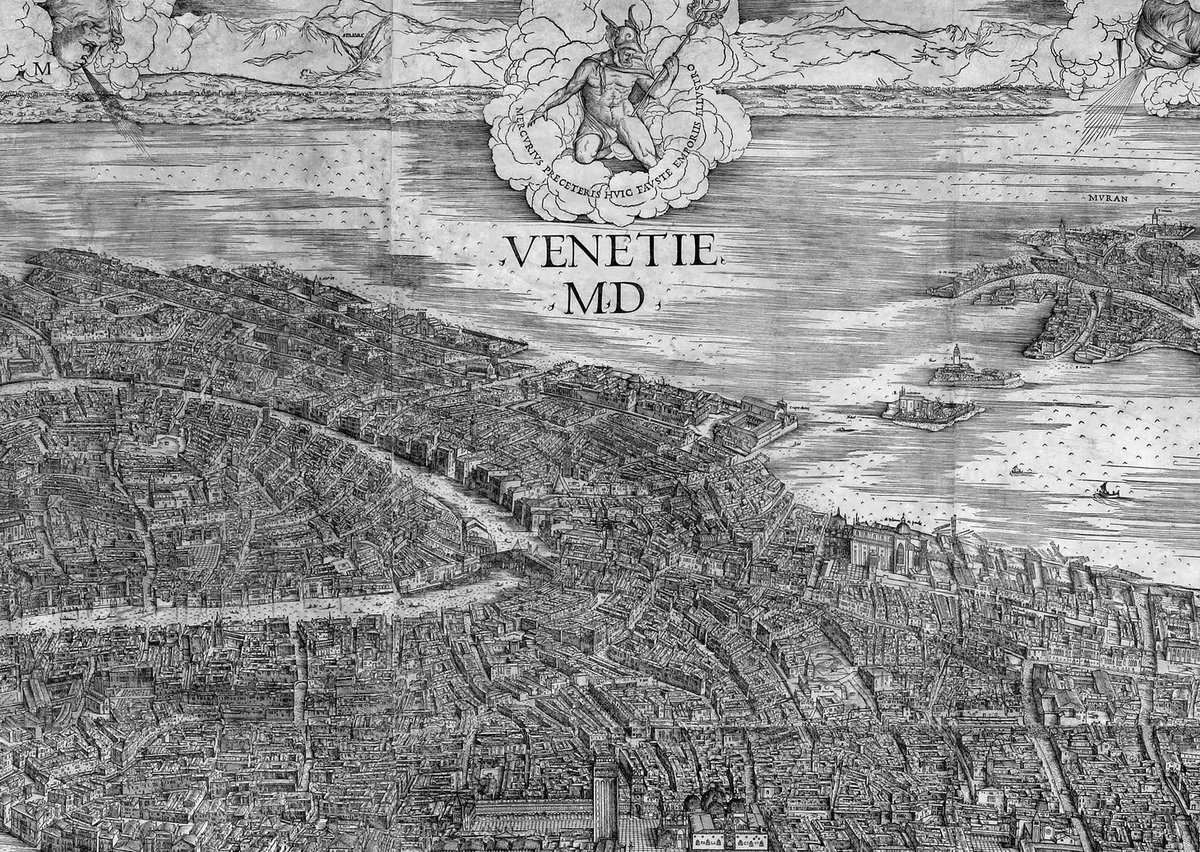
The word ghetto is Venetian. In 1516 Venice shut its Jews inside the grounds of a disused foundry - the geto, the casting.
The world kept the word and forgot the foundry.
Most of what is said about Jews works like this. A word that outlived its reason.
Toledo, 1449: a Jew who converts is still not a Christian. Blood decides.
Rome, 1555: the Jews will live behind one gate and wear a yellow hat.
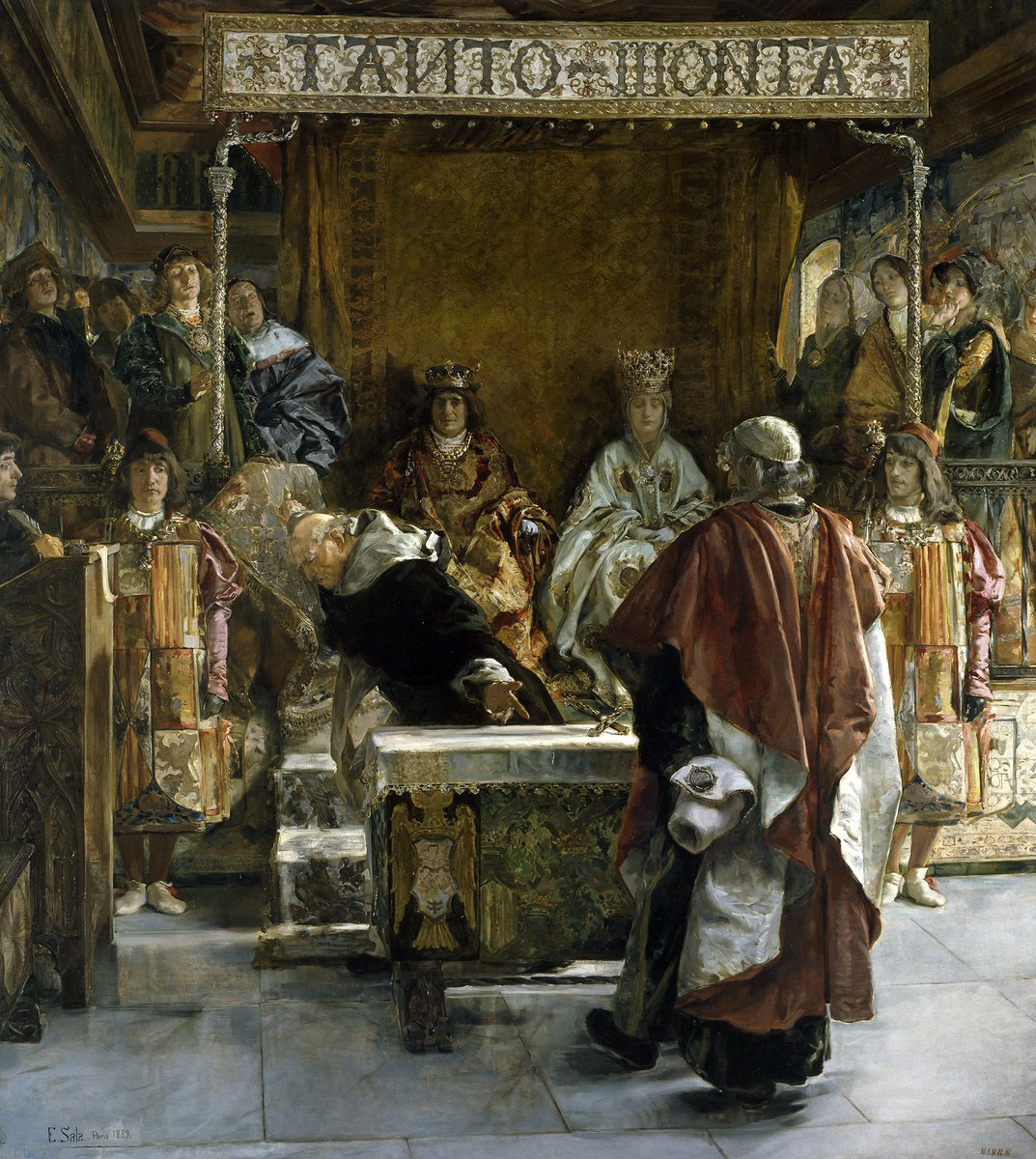
Spain, 1492: convert or leave.
Three completely different reasons. Not one of them written by a Jew.
@adam_louis52328 Poland in 1968 was an early version. The communist government ran an officially "anti-Zionist" campaign, Jews were purged from jobs and from the party, and at least 13,000 left by 1972, their Polish citizenship revoked on the way out.
Fitting week for it. Rashi's very first comment on Bereishit asks why the Torah opens with creation instead of the first commandment. His answer, quoting Rabbi Yitzchak: so that when the nations say "you are robbers" for taking the Land, Israel can reply that the whole earth belongs to its Creator.
@joshxhowie That place has been fought for before. Lionel de Rothschild was elected MP for the City of London in 1847 and could not sit, because the oath required "on the true faith of a Christian." London kept re-electing him. In July 1858 he finally took his seat, head covered.
@shiraeis One detail worth adding: the 1991 repeal passed 111 to 25, a far bigger majority than the 72 votes that adopted it in 1975. Israel made the repeal a condition for attending the Madrid Peace Conference. So this is a motion the UN itself already voted down, now revived in Brighton.