MHI Annual Industry Report: 61% of supply chain leaders expect AI budget by 2026.
Planned vs actually spent: roughly a 40% gap.
Adoption is moving slower than the headlines suggest.
#SupplyChain#AIinOperations
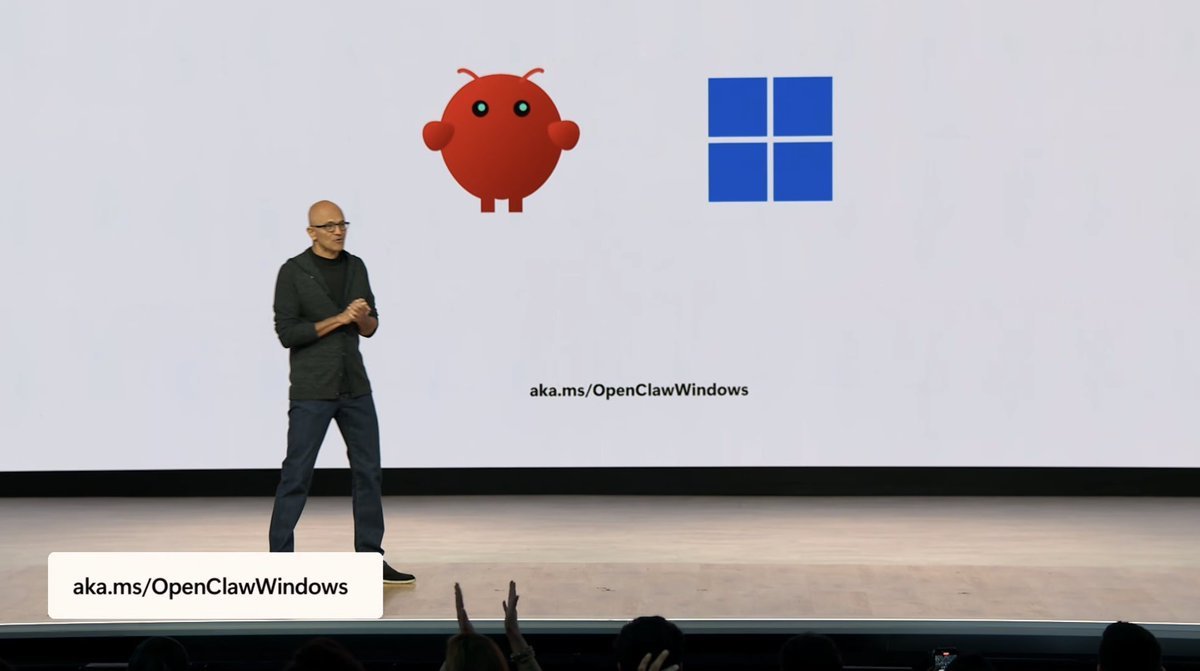
"You can run OpenClaw inside your company now." Annoucing our work with @Microsoft to bring OpenClaw to the Microsoft and Windows ecosystems. Claws now work securly in the enterprise.
Hermes Desktop by @NousResearch is exactly what @openclaw needs. A native desktop app for working with local files + remote models/agents would be the natural next step. Hope you're taking notes 👀
https://t.co/dDW20rQCqG
#OpenClaw#HermesAgent#AIAgents#DesktopApp
The next evolution of Hermes Agent is here!
Introducing Hermes Desktop: everything you love about Hermes, now native on your machine.
First demoed in Jensen's GTC keynote, it's now in public preview.
Projects that work have operations people driving them, not just IT.
IT can implement. Operations knows if it makes sense.
Alignment between the two is where good projects live.
#LogisticsAI#WarehouseAutomation
Three questions worth asking before any warehouse AI project:
1. Who owns the training data? (Often not you)
2. What's the model maintenance cost after year one?
3. Who runs it if the vendor relationship changes?
#AIinOperations#SupplyChain
Early results from collaborative robots in picking: 31% throughput gain on regular SKUs, 8% lower on irregular ones.
The average number hides the story. Look at the breakdown.
#LogisticsAI#WarehouseAutomation
Most AI warehouse projects show ROI within 18 to 36 months.
That timeline matters when you're planning annual budgets. Worth setting expectations early.
#WarehouseAutomation#AIinOperations
Kuehne+Nagel tested AI for seasonal staffing allocation.
Result: 23% less overtime, 17% more throughput during peak periods.
Not a revolution. Applied math on a real problem.
#SupplyChain#LogisticsAI
Training computer vision for picking? Garbage data in means garbage predictions out.
If your warehouse processes are inconsistent, your AI will learn the inconsistencies.
Worth fixing the process first.
#AIinOperations#LogisticsAI
Amazon operates 750k robots across its warehouses. European average: 12 per site.
The gap isn't about budget. It's about where automation sits in the priority list.
#WarehouseAutomation#LogisticsAI
Adding AI to your WMS is incremental improvement. Real automation changes the whole game.
Not better — different. Most warehouses aren't ready for that shift yet.
#SupplyChain#AIinOperations
About 67% of European warehouses running an AI pilot say it's stuck in testing phase.
The main reason isn't the technology. It's that process redesign usually comes after, not before.
#LogisticsAI#WarehouseAutomation
The warehouse AI projects that stick are the ones where the team feels like they tried something new — not like something was imposed on them.
Outcomes tend to follow.
#LogisticsAI#WarehouseAutomation
Integration costs for warehouse AI are typically underestimated by a factor of 2-3x.
Not because teams are careless. Because vendors quote software, not the organizational change that comes with it.
#SupplyChain#AIinOperations
When evaluating AI vendors, ask for references where they've been running for 2+ years.
Most case studies are from year one. Year two and three are where the picture changes.
#AIinOperations#LogisticsAI
The warehouses doing well with AI are rarely the ones with the biggest budgets.
They're the ones where the team understood what they were trying to solve first.
Clarity of purpose beats budget size.
#SupplyChain#WarehouseAutomation