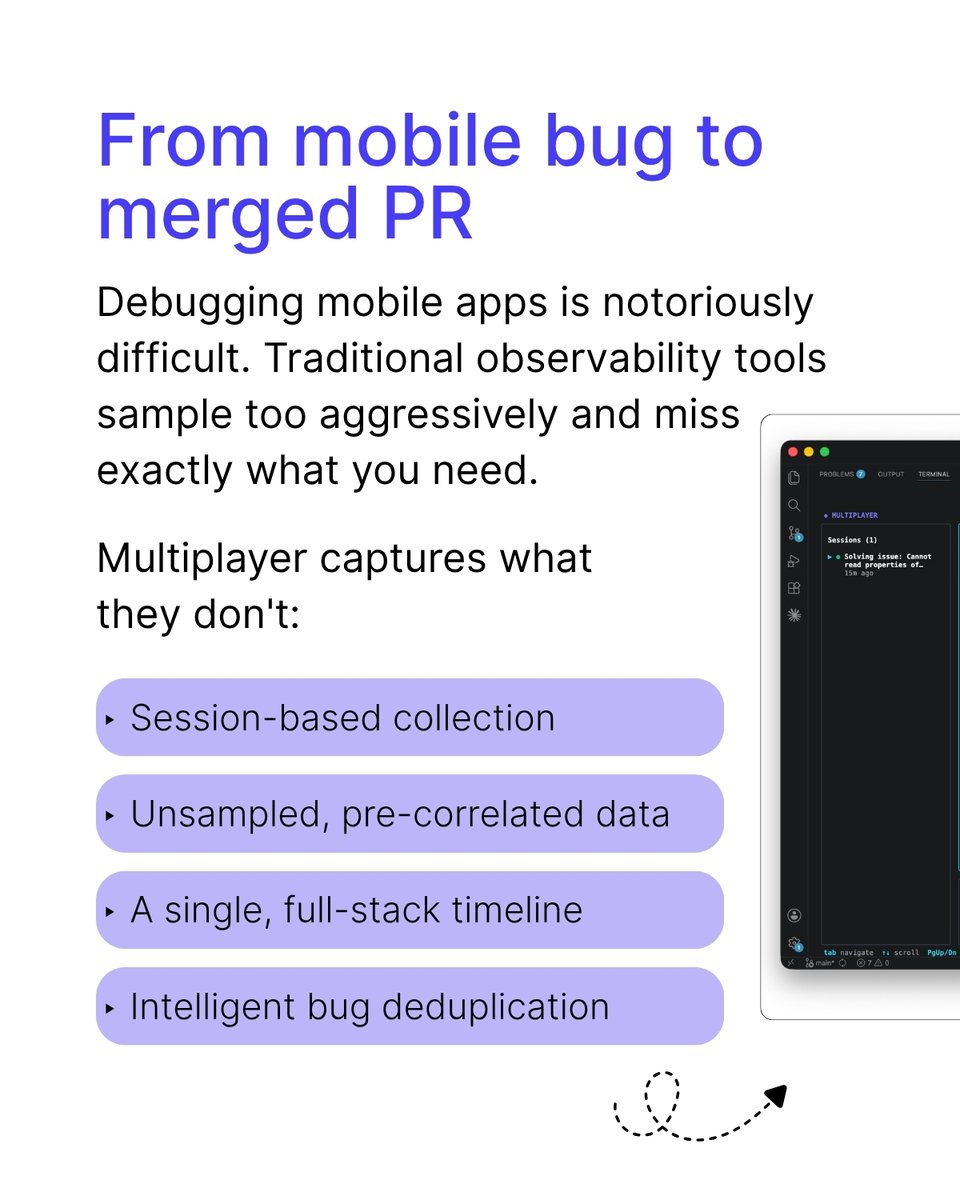
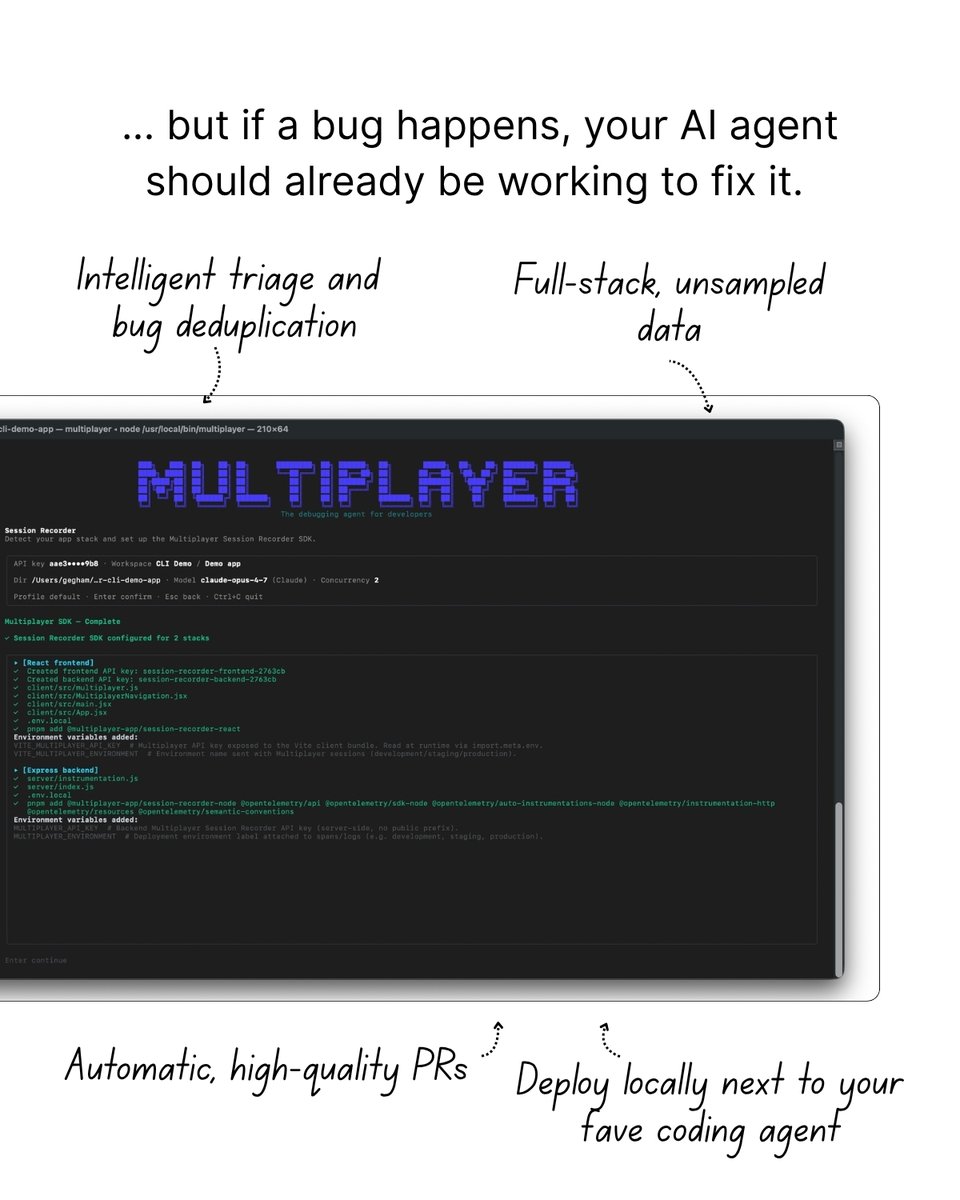
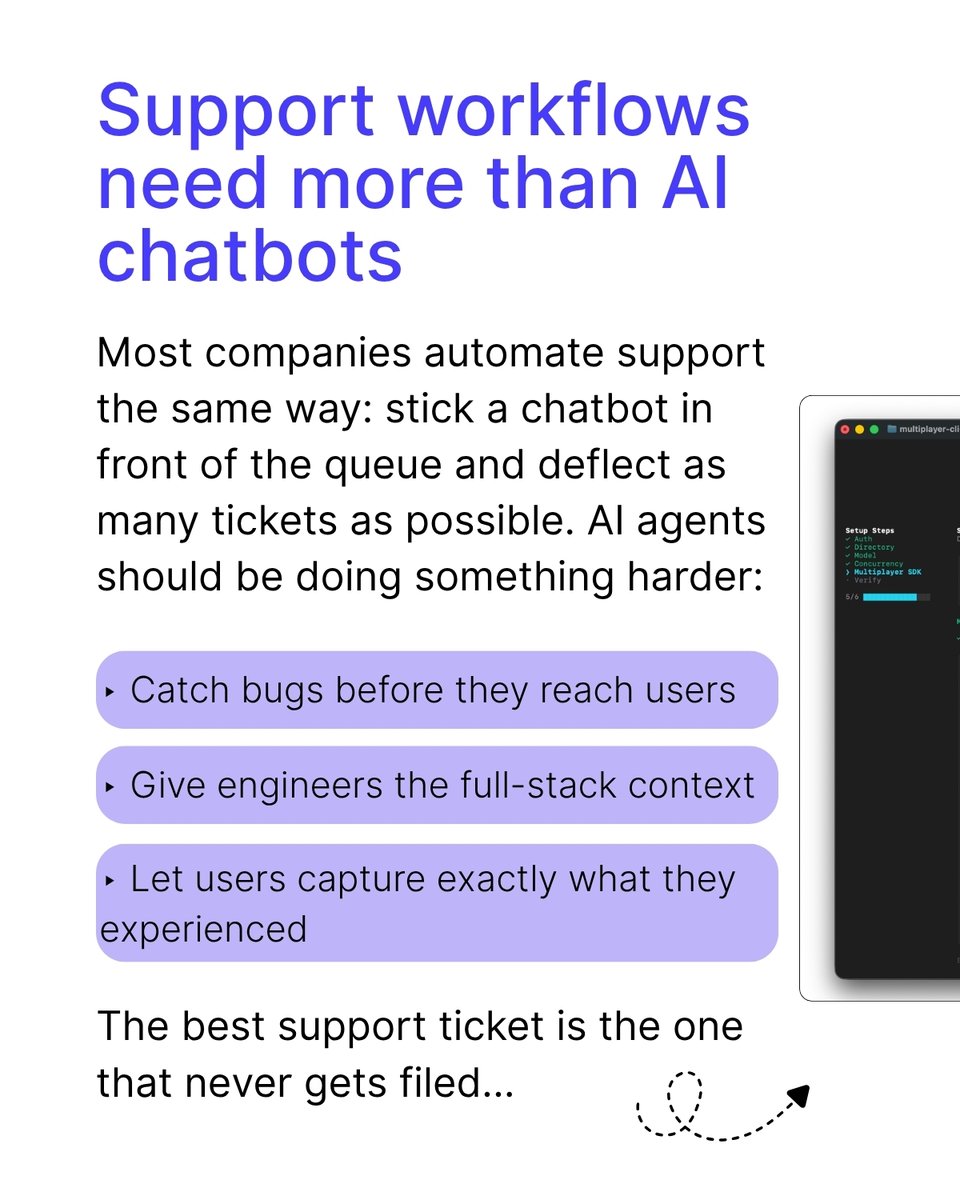
Multiplayer: the debugging agent for developers.
We connect your favorite coding agent to prod to fix application bugs automatically.
Run us locally and eliminate PR slop.
Big news: Multiplayer is joining @FilingRamp 🎉
Four years ago we set out to help teams work better on distributed systems. Along the way we grew to thousands of users, open-sourced our AI debugging agent, and found success building alongside the FilingRamp team.
Together, we're bringing real AI to the InsurTech space: smarter filing, agentic workflows, and deeper insight into your data.
Our CEO, @BkStephJ1 shares the full story here 👇
https://t.co/SzvcqWGMTr
To everyone who's been part of this journey, thank you. This is just the beginning. 💜
Myth: connecting your agent to your APM closes the debugging loop.
Reality: the agent inherits every structural limitation of the data underneath it.
Our CTO @tomjohnson3 explains it best in this article 👇
The token optimization advice everyone is missing:
An agent is only as good as the environment it operates in. And traditional observability wasn't designed for agents with its sampled data, aggregated metrics and siloed context that stops at system boundaries.
By structuring the data layer natively for machine consumption you give the agent a curated, correlated, session-scoped package of exactly what it needs to understand your system and how to fix it.
Precision beats volume.
Issues are our answer to noisy alerts and duplicate PRs.
We aggressively correlate data per session: user interactions, session metadata, network requests, backend traces, and logs.
We then aggressively deduplicate and group sessions into issues.
The same bug appearing across a hundred user sessions becomes one issue. ✨
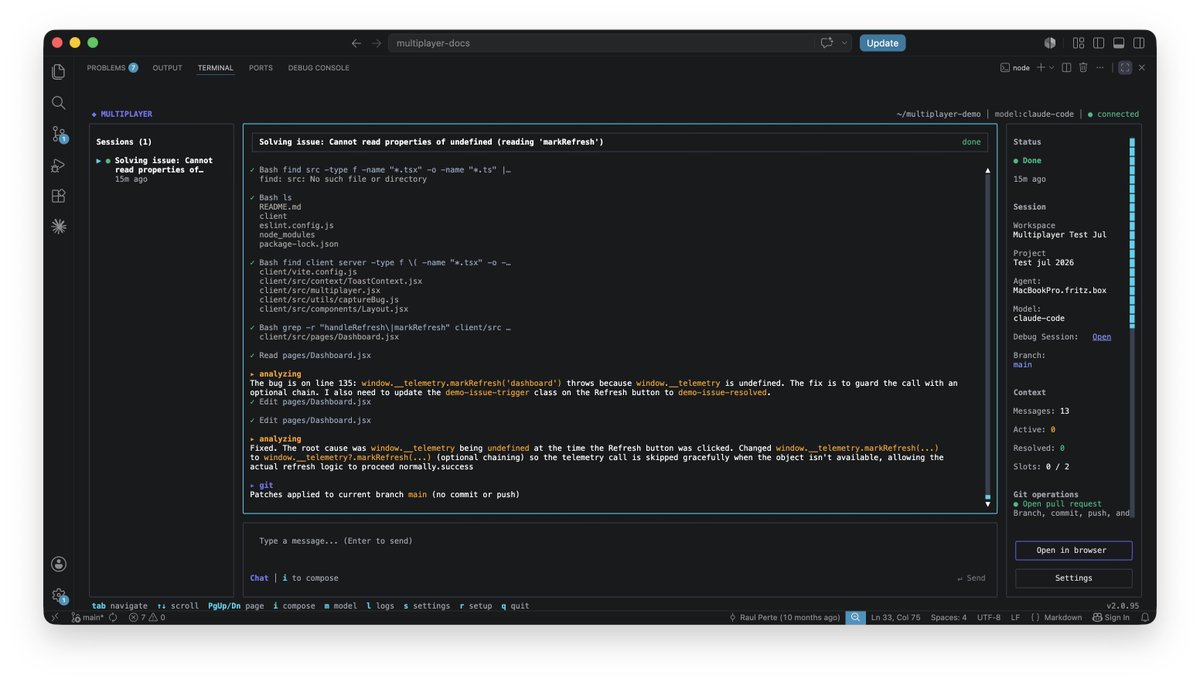
Your terminal shows the debugging sessions you're running.
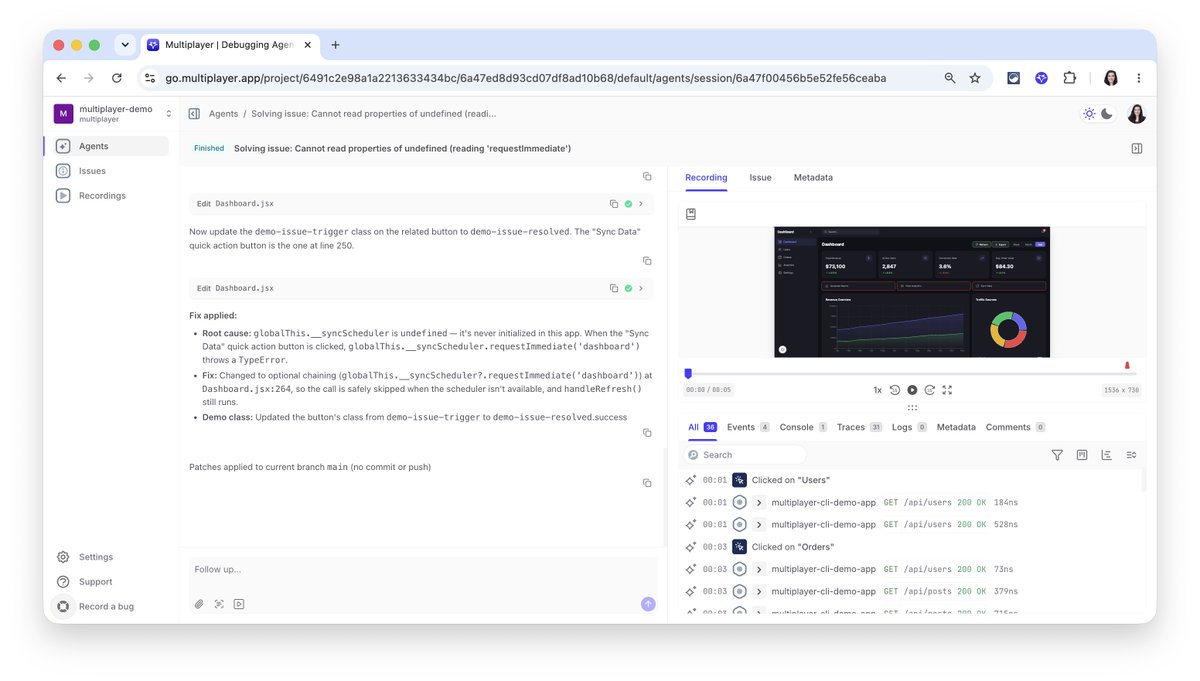
The web dashboard tab shows every debugging session anyone on the team ran, today or three weeks ago.
Team efficiency is a different goal than individual velocity.
The developers I find most interesting right now don’t ask 'how do I ship more with AI?', instead they ask 'how do I make sure what we ship is worth keeping?'
Finished doesn't mean closed.
One of my favorite things about the Multiplayer web dashboard is that you can reopen any session and keep going in the same thread the agent used the first time.
One npm install.
Try a demo.
Setup existing project.
Arrow keys, Enter.
That’s it. That’s all you need to do to get full-stack, unsampled, runtime data into your coding agent.
Targeted runtime visibility without managing your own infrastructure OR targeted runtime visibility with full control.
No wrong choice, only great options 😉
Here are four concrete strategies engineering teams are already using:
‣ Give agents the right data, not all the data
‣ Use the right model for the right task
‣ Context minimalism
‣ Teach your agents to be less verbose
Full article: https://t.co/NBtpAEVApm
The token leaderboards are already coming down. Token optimization is the natural next step: giving agents exactly what they need to do their best work, and nothing more.