ZIMBABWE MOVES TOWARDS SMARTER REGULATION
It is FACT that to Strengthen Zimbabwe's competitiveness, we require sustained commitment and practical action.
Anchored on Vision 2030, the Ministry through the National Competitiveness Commission is advancing the ease of doing business through regulatory reforms.
These reforms are a significant step towards improving the ease of doing business and establishing a competitive economy.
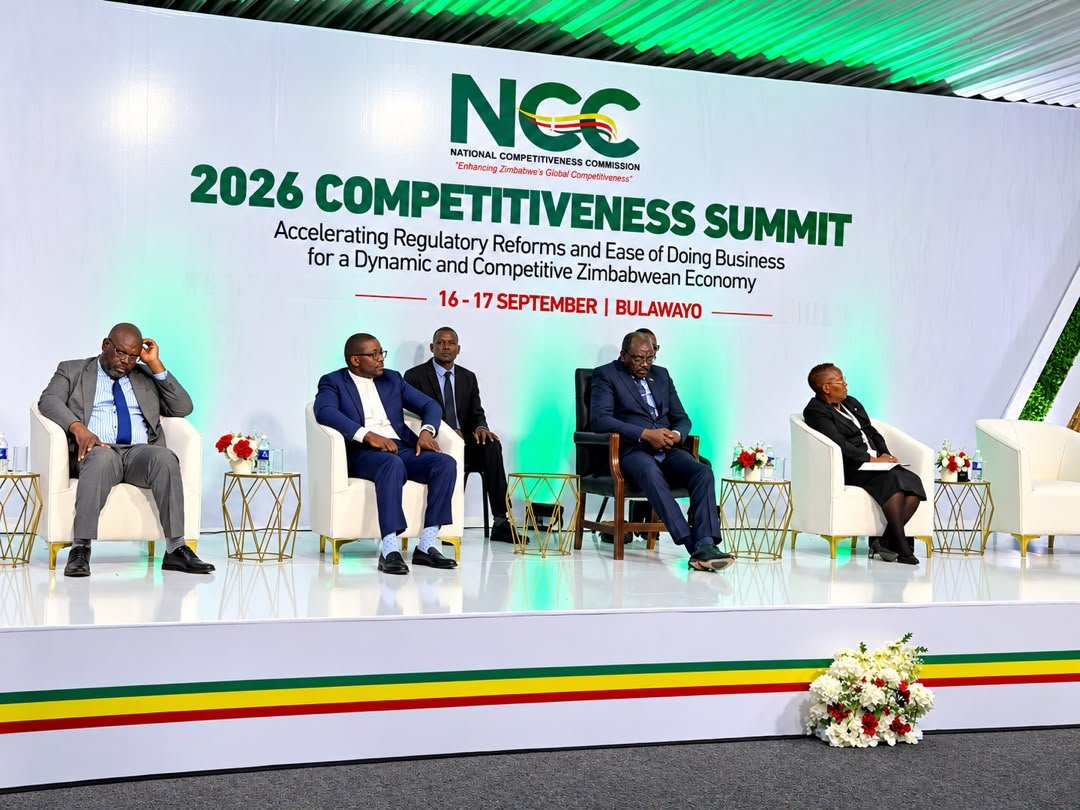
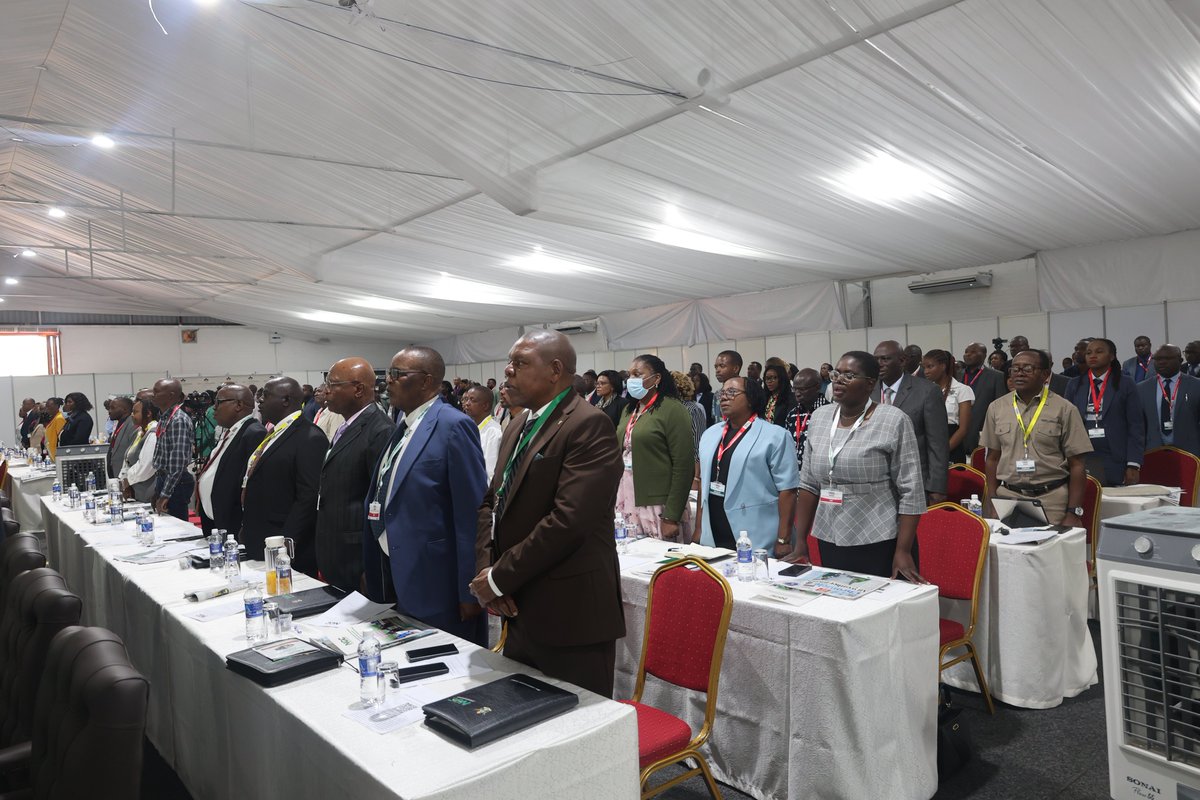
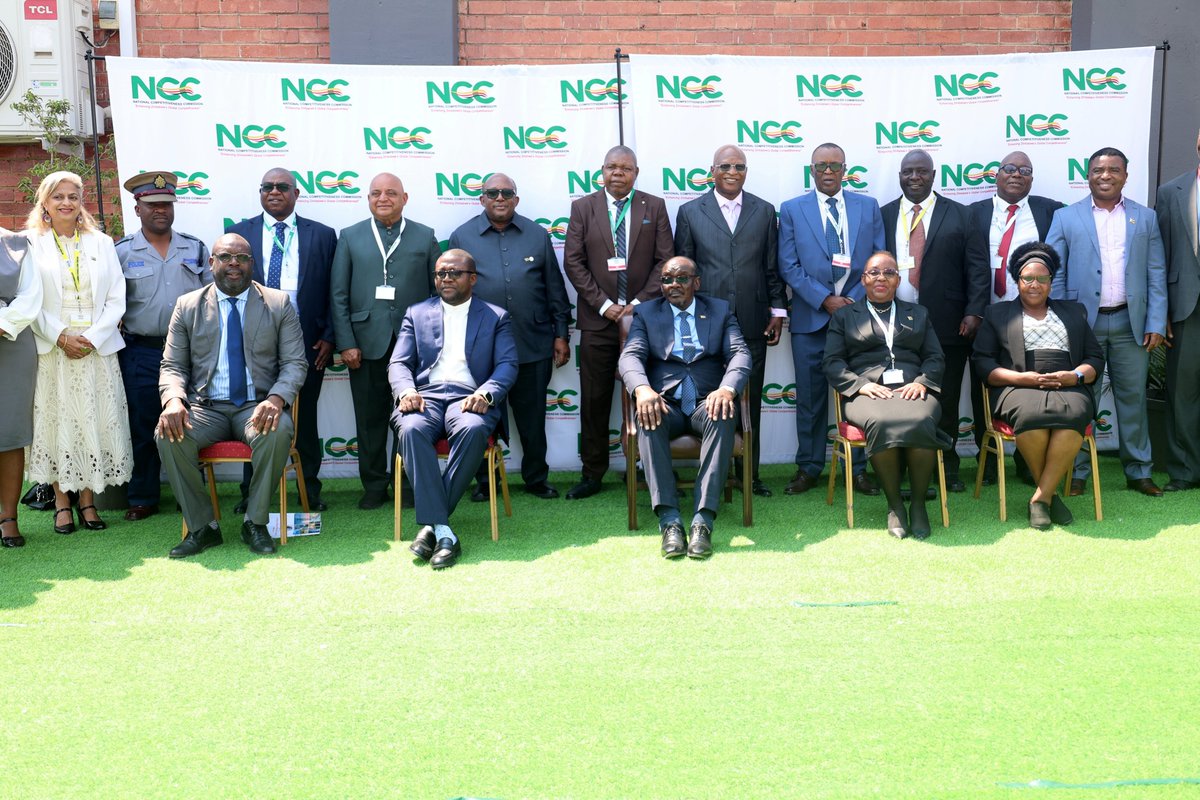
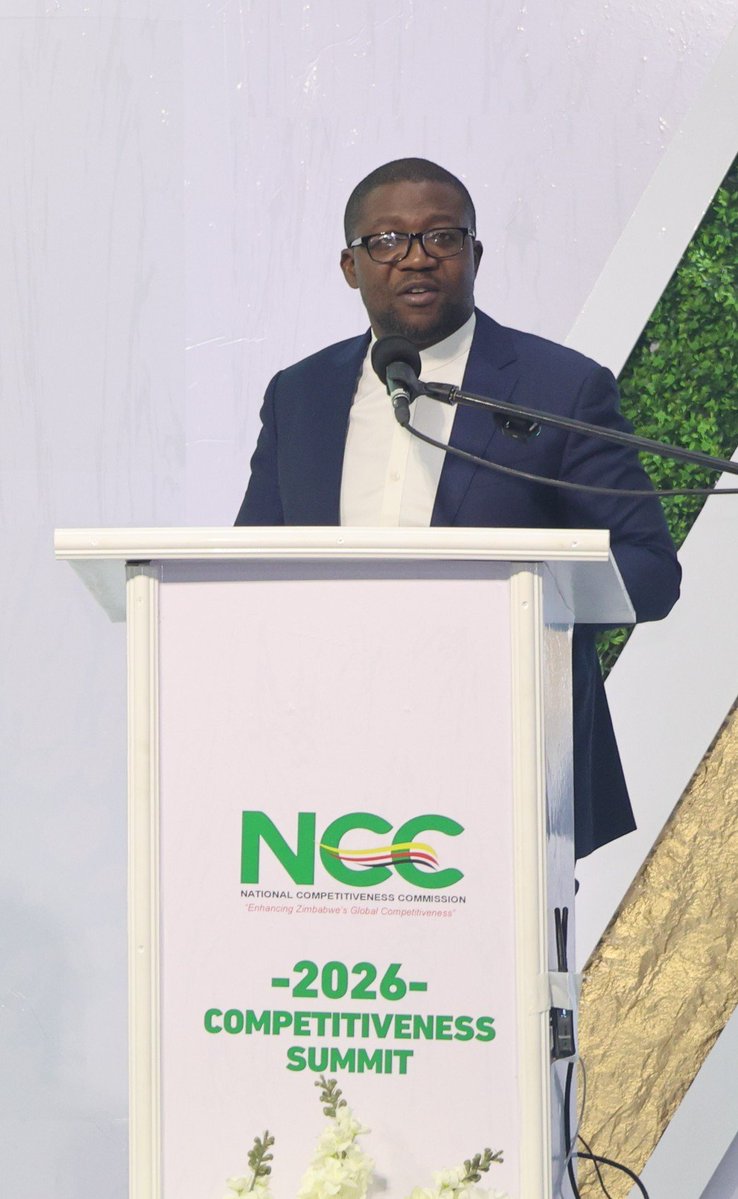
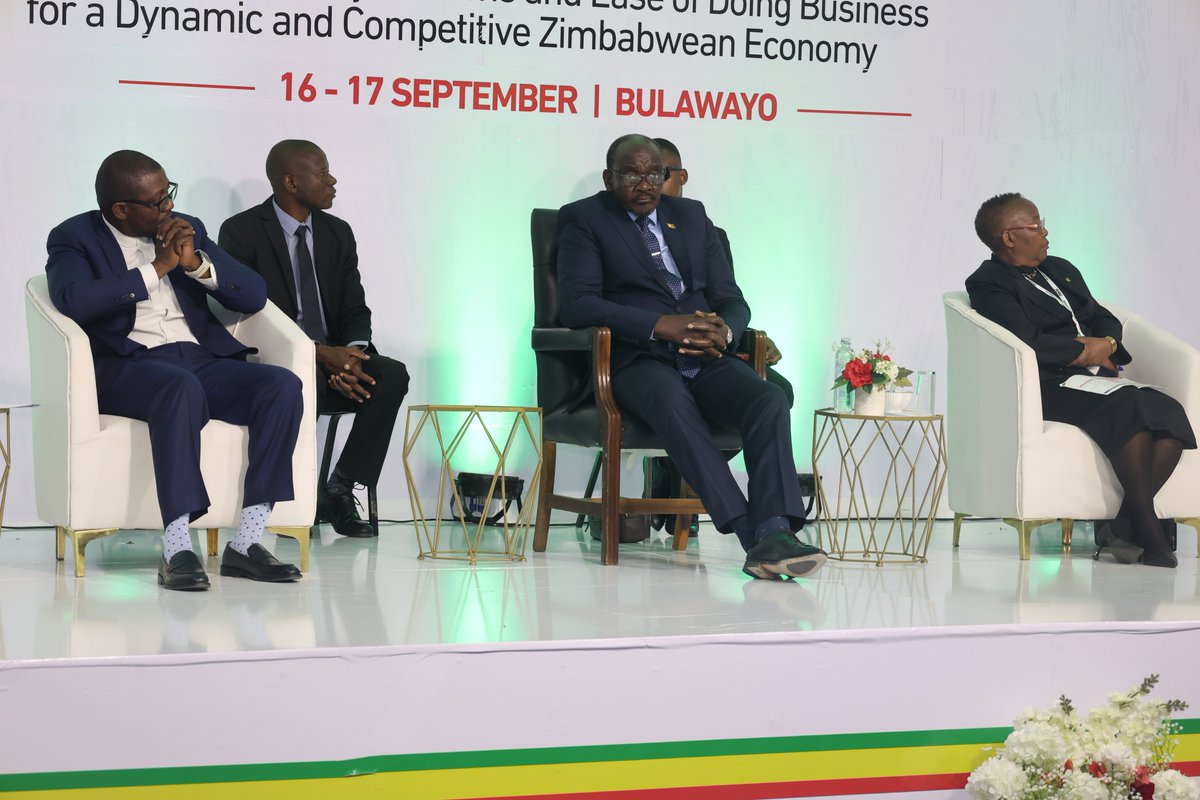
Today Hon. Minister Ndhlovu told delegates during the Second Competitiveness Summit that, "The competitiveness of our economy is fundamentally shaped by the quality of our regulatory environment".
He added that, "It is a collective responsibility to ensure that regulation facilitates enterprise, investment, innovation and productivity".
He said the success of the Summit will be measured by the reforms that follow.
PHARMACEUTICAL SECTOR: A PRIORITY VALUE CHAIN 🇿🇼
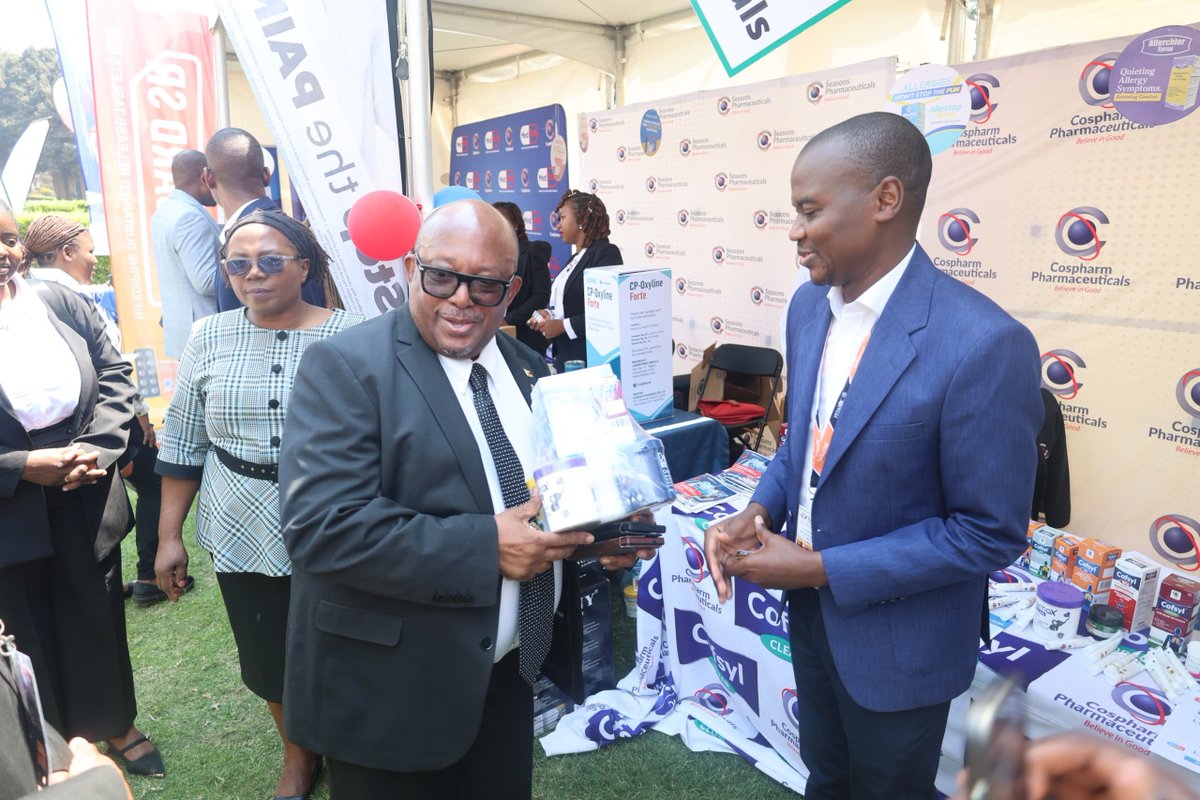
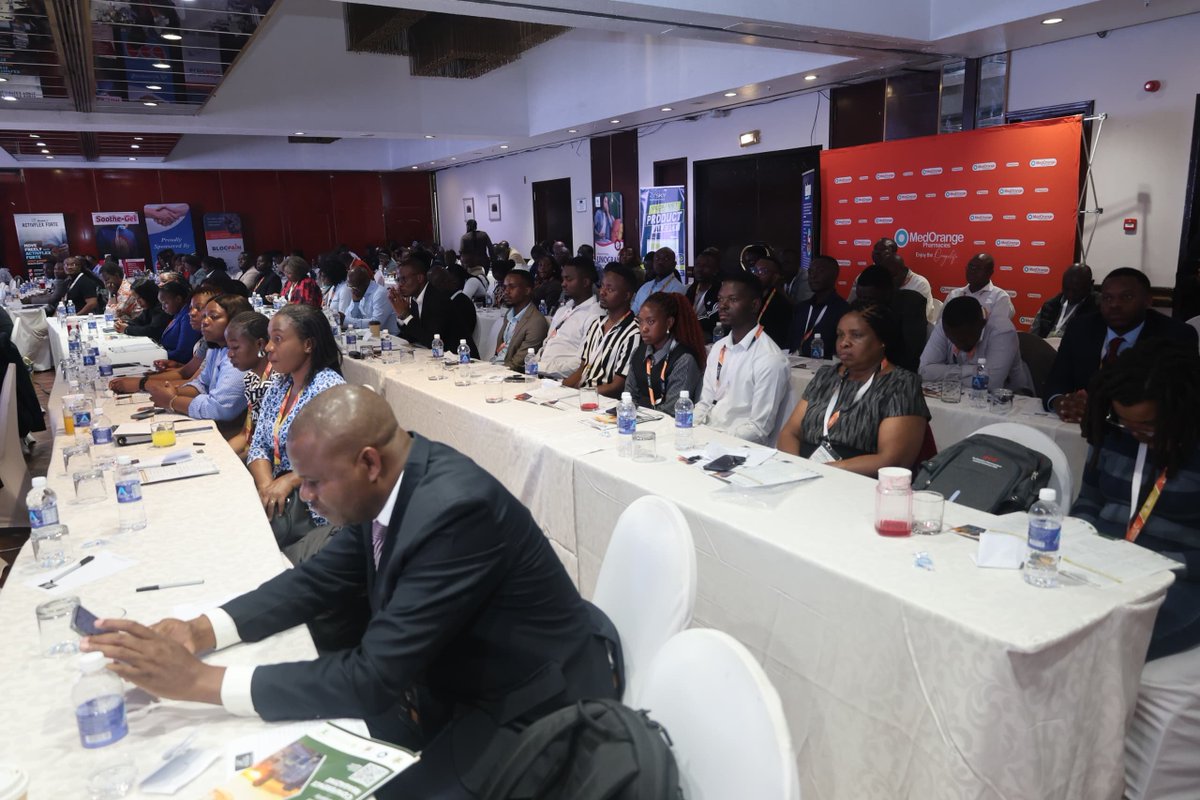
This afternoon, the Permanent Secretary for the Ministry of Industry and Commerce, Amb. T.T. Chifamba, officiated at the Zimbabwe Pharmaceutical Industry Conference 2026 on behalf of the Minister, Hon. N.M. Ndhlovu, under the theme “Strengthening the Pharma Ecosystem for Sustainability and Resilience.”
Zimbabwe now has 14 pharmaceutical manufacturers, up from 9 five years ago, with capacity to produce approximately 1,500 medicine lines. However, only around 300 products are currently manufactured locally, highlighting room for growth.
Pharmaceutical imports have exceeded US$1.5 billion over the past five years, while the domestic pharmaceutical market is estimated at US$400 million annually, with local manufacturers supplying about 20% of the market.
Government is advancing the development of the Pharmaceutical Manufacturing Strategy 2026–2030, strengthening local testing capacity and leveraging Zimbabwe’s achievement of World Health Organisation (WHO) Maturity Level 4—the first country in Africa to attain this level.
Government is driving efforts to move Zimbabwe away from a predominantly import-dependent pharmaceutical market towards a stronger domestic manufacturing base capable of serving Zimbabwe, the region and the wider African market.
The US$10 million facility for procurement of medicines from local manufacturers further demonstrates Government’s commitment to linking public procurement with industrial development.
With increased investment, value addition, innovation, skills development and access to SADC and AfCFTA markets, Zimbabwe has a significant opportunity to build a competitive pharmaceutical industry that creates jobs, attracts investment, strengthens health security and contributes to Vision 2030 and economic transformation.
STRENGTHENING TRADE, INVESTMENT AND PRIVATE SECTOR COOPERATION THROUGH ENGAGEMENT
The Minister of Industry and Commerce, Hon. Nqobizitha Mangaliso Ndhlovu is in Dubai on a working visit. He engaged the President and CEO of Dubai Chambers, His Excellency Mohammad Ali Rashed Lootah, on 7 September 2026 to discuss ways of strengthening trade, investment and private sector cooperation between Zimbabwe and Dubai.
Hon. Minister Ndhlovu was accompanied by the Ambassador of Zimbabwe to the United Arab Emirates, His Excellency Isaac Moyo, together with officials from the Ministry of Industry and Commerce.
The engagement, held on the margins of the 2026 Annual Investment Meeting (AIM) Congress in Dubai, focused on deepening linkages between the business communities of Zimbabwe and Dubai and translating the existing relationship into concrete investment and commercial opportunities.
Hon. Minister Ndhlovu highlighted investment opportunities in key sectors, including manufacturing, agro-processing, mineral beneficiation, infrastructure, renewable energy and value-chain development. He also underscored Government’s commitment to creating a competitive and enabling business environment that supports investment, industrialisation, local value addition and export growth.
It was noted that in 2025, the United Arab Emirates was Zimbabwe’s largest export destination, with exports to the UAE approaching US$6 billion. However, the Minister highlighted that Zimbabwe’s exports to the UAE remain largely dominated by mineral-based resources, underscoring the need to transform the composition of trade towards higher-value products. He advised the meeting that Zimbabwe’s ambition is to increasingly export value-added and high-value manufactured products, rather than predominantly exporting unprocessed minerals. This approach is central to Government’s industrialisation agenda and seeks to ensure that Zimbabwe captures a greater share of value along its production and export value chains.
A key outcome of the engagement was the proposal for a high-level Dubai Chambers business delegation to visit Zimbabwe in 2027. The proposed mission is expected to bring together Dubai-based investors and business leaders to engage directly with Zimbabwean companies, Government institutions and other relevant stakeholders.
The 2027 mission will provide an important platform to showcase Zimbabwe’s investment opportunities, facilitate business-to-business engagements, identify bankable projects and explore potential investment partnerships across priority sectors.
The engagement also proposed a reciprocal Zimbabwean business delegation to Dubai in 2028. The mission would provide Zimbabwean businesses with an opportunity to engage directly with Dubai’s business community, explore market-access and investment opportunities, and establish commercial partnerships with companies based in the Emirates.
MINISTER NDHLOVU CALLS FOR SMARTER REGULATION TO DRIVE ZIMBABWE’S COMPETITIVENESS
Speaking at the 2026 Competitiveness Summit at ZITF in Bulawayo, Minister of Industry and Commerce, Hon. N. M. Ndhlovu, emphasised the need for practical regulatory reforms that make it easier to invest, produce, trade, innovate and create employment in Zimbabwe.
Key takeaways:
✅️ Zimbabwe’s competitiveness agenda is anchored on Vision 2030 and NDS2, and operationalised through ZNIDP2 2026–2030, Local Content Strategy 2026–2035, Consumer Protection Policy 2026–2030 and National Quality Policy 2026–2030.
✅️ Government is institutionalising Regulatory Impact Assessment (RIA) to strengthen evidence-based policymaking, reduce unnecessary regulatory burdens and improve the business environment.
✅️ Zimbabwe must advance proportionate, predictable, transparent and digitally enabled regulation, responsive to the realities of businesses, particularly MSMEs.
✅️ Competitiveness must be inclusive and sustainable, with attention to environmental responsibility, climate resilience, energy efficiency and responsible resource utilisation.
✅️ The Summit must focus on implementation and measurable outcomes, identifying regulatory constraints and establishing clear actions for reform.
“The success of this Summit should ultimately be measured not by the quality of our discussions alone, but by the reforms that follow.”
Great News!!
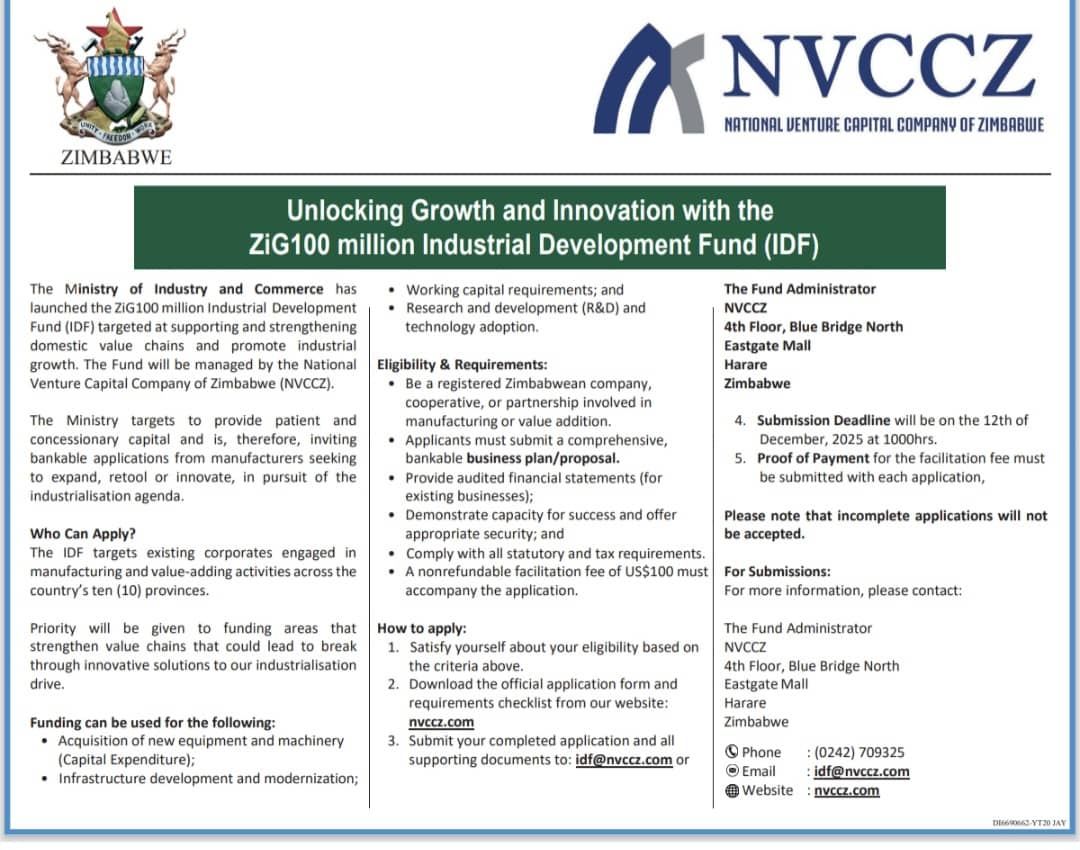
The Ministry is availing a Zig 100 million Industrial Development Fund (IDF) to support & strengthen domestic value chains & promote industrial growth. The IDF is managed by the National Venture Capital Company of Zimbabwe (NVCCZ).
[email protected]
0242 7093250
The Ministry thanks all stakeholders for a successful conference. Contributions & feedback duly noted & adopted. Everyone has a role to play. #nyikainovakwanevenevayo
Congratulations to the winners of the 2025 National Annual Quality Awards.
This is evidence of commitment, integrity, innovation & development that drives sustainable Industrial growth. Government under the Second Republic continues to support companies to prioritise quality
South Africa is more than just Zimbabwe’s neighbour and ally—it is one of our most vital trading partners. We source key raw materials and manufacturing equipment from them, benefit from their investments in Zimbabwe, and rely on their harbours for both exports and imports.
The National Competitiveness Commission is set to host the 2025 Competitiveness Summit from 19 to 20 February in Bulawayo at #ZITF. The Summit will provide a platform for robust deliberations on competitiveness gaps and possible areas of policy interventions.