I am pleased to share that a research paper exploring Nepal’s participatory traditions has been published in the World Bank’s Policy Research Working Paper Series. @bijurao https://t.co/ieOBGa0DI5
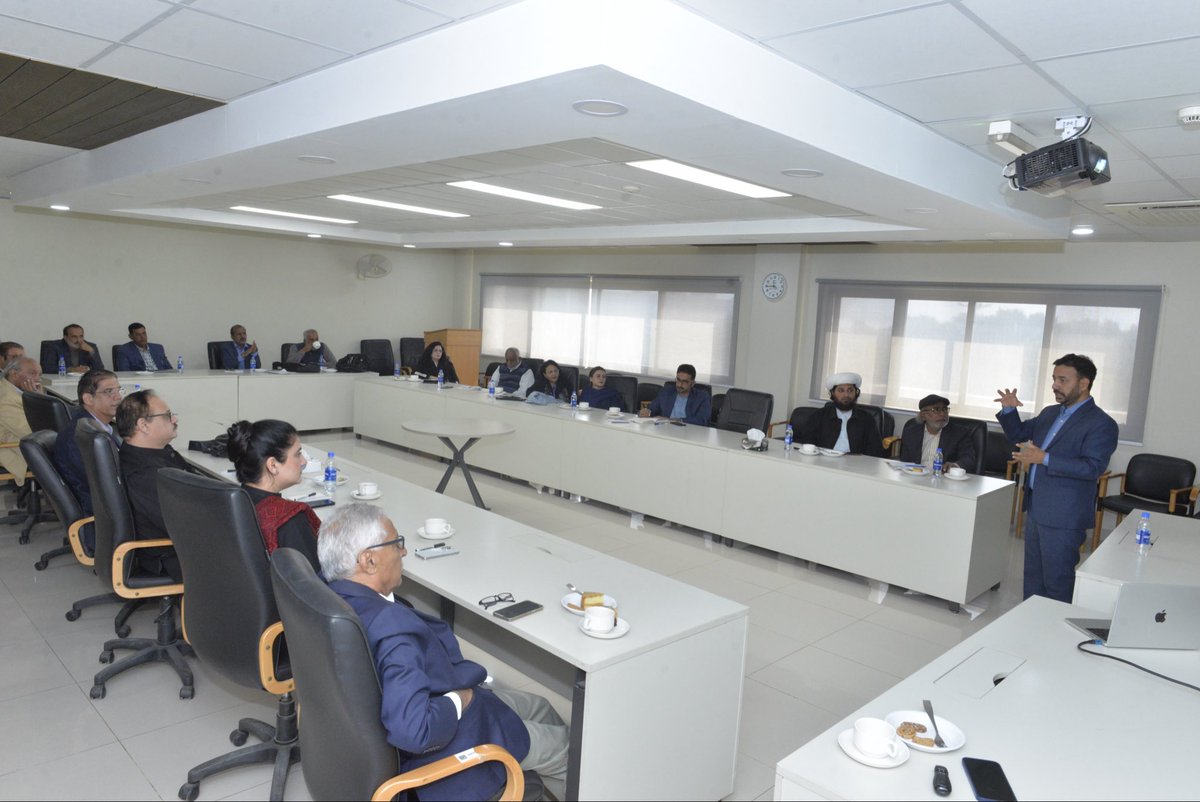
Academia has been my passion for a little while. A session at the Mehran University of Engineering and Technology in Pakistan on participatory research was another opportunity to fulfil such passion.
Feeling incredibly lucky to be in the Sindh Province of Pakistan where eastern civilisation evolved through the Indus River some 5000 years ago. The term “Sindh civilisation” has echoed in my mind since childhood. #SindhCivilisation#IndusRiver
Development assistance in Nepal has often overlooked the country’s long history of local participatory democracy. In a new World Bank working paper, “The Evolution of Local Participatory Democracy in Nepal,” @tsbhusal, Michael Breen, and I highlight why it’s time to ground development policy in Nepal’s rich, indigenous traditions of participation and deliberation.
https://t.co/1jUQKm46RT
Abstract:
Nepal is, according to its constitution, among the world’s most decentralized countries, with a long and complex tradition of local-level public participation. This paper traces the evolution of Nepal’s modern participatory institutions, examining the extent to which they are “induced” by external interventions versus being “organically” rooted in indigenous practices. The paper identifies three broad phases: an initial focus on participation in project implementation; a subsequent phase that expanded citizen engagement; and a third phase of citizen empowerment, culminating in the 2015 federal constitution, which granted unprecedented local autonomy. The analysis yields five key findings. First, over the past 50 years, successive reforms have progressively expanded opportunities for citizens to influence local decision-making. Second, these reforms have integrated traditional participatory mechanisms into formal institutions of local government. Third, although central-level initiatives exist, most participatory platforms continue to operate at the local level. Fourth, the federal constitution has created a new landscape of local democracy, embedding autonomy and accountability. Fifth, although they are still valued in many ethnic and territorial communities, traditional participatory practices are gradually disappearing. The paper concludes by offering policy recommendations to help donor agencies and governments strengthen Nepal’s democratic trajectory. It argues that effective interventions should build on Nepal’s deep participatory traditions while recognizing the constitutional reality of far-reaching local autonomy.
#PublicationAlert
I am privileged to share my 15th peer-review work, although this time as second author.
It was an insightful journey to work with @Keshavkacharya5 on Nepal’s Intergovernmental Fiscal Transfer.
https://t.co/tmUwNvokYZ