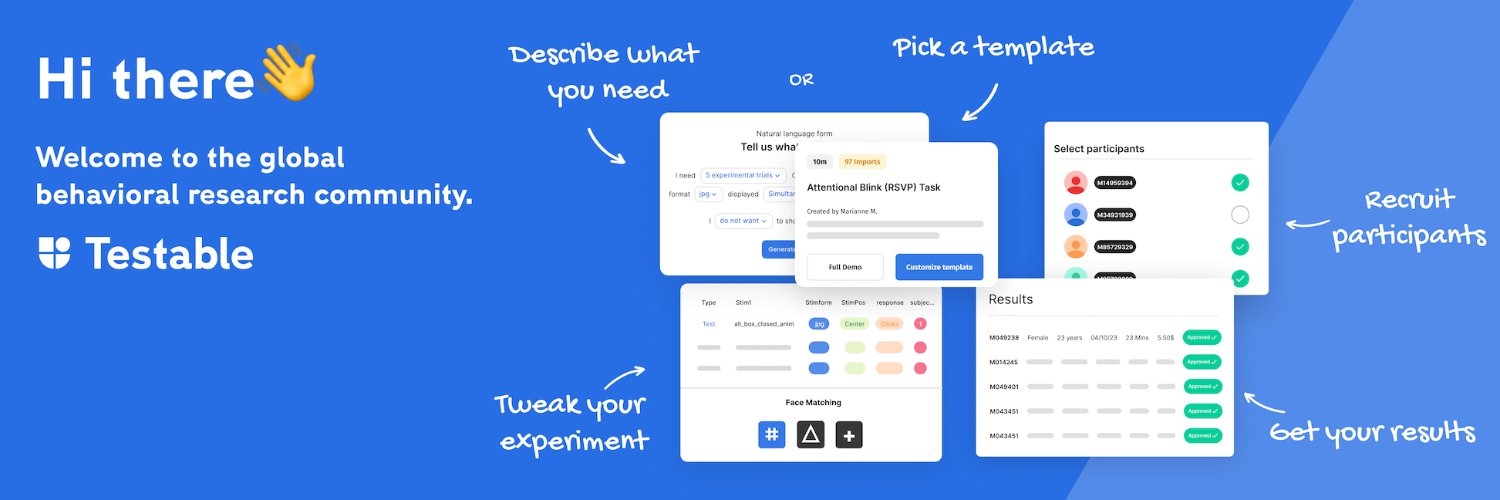
We have very exciting news! Our new website just launched and it is amazing. Get ready to be blown away by lots of new interactive features for you to explore 😊 https://t.co/FoPP5Q9ch5. We’ll be tweeting a lot about this week so stay tuned!
@GorillaPsyc and @EvershedJo: why are you lying? "You can’t create anything a novel tasks (sic!) with @tstbl"? Seriously? I understand copying our communication style and features (that's a compliment, after all), but lying? https://t.co/8GFTp3pi83
🎵 Singing voices truly captivate our attention in music, standing out from other sounds! 🎤🎶 Study on @tstbl explored the factors behind this vocal salience. Frequency micro-modulation emerged as a crucial feature 🎧🔊 #MusicPerception @unioldenburg https://t.co/7K22GHwPlX
Curious about the darker side of academia? Delve into this thought-provoking paper presenting personal accounts from scholars sharing experiences such as repeated rejection, impostor syndrome, and burnout #ScholarStories https://t.co/ZlWG1pYTJb
🧠 Let's bust a brain myth! Contrary to the belief that we only use 10% of our brains, PET scans show that the entire brain is constantly active, even during sleep! https://t.co/aXzCfLt0kW
🎧 Another podcast shout out! Tune in to the 'New Directions in Psychological Science' podcast for a captivating episode on implementing evidence-based mental health treatments. Explore the latest research and insights in the field of psychology. https://t.co/GxNGC6m4pQ
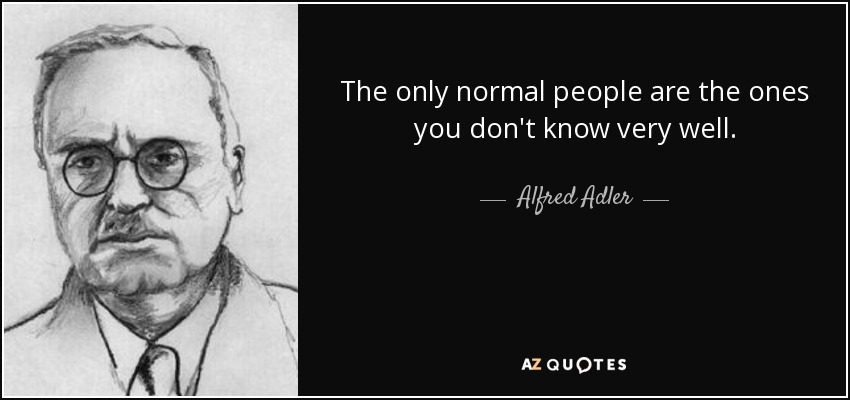
Founder of individual psychology, Alfred Adler reminds us that our perception of normalcy is often distorted. Embrace imperfections and resist comparing ourselves to others. Let's celebrate the uniqueness of every individual. #IndividualPsychology#EmbraceUniqueness
The blunted neural reward response may serve as a potential marker for depression, emerging before depression onset and relating to specific phenotypes like early-onset depression. It could aid in early identification and targeted interventions https://t.co/rFb8aAZBX2
Neural reward processing deficits in depression: Can a blunted neural reward response be a trait-like marker? This study explores specific depression phenotypes, focusing on early-onset depression associated with intergenerational transmission in women and girls.
Interestingly, the study found no significant association between maternal adult-onset depression and neural reward response in mothers or daughters. It seems that the blunted response is more closely linked to early-onset depression.
Heard of the SNARC effect? When we see small numbers, we tend to associate them with the left side, whilst larger numbers are linked to the right side. Explore how numbers influence our spatial perception and import the test free from our library today! #SNARC#spatialperception
These findings align with previous research suggesting that amygdala, hippocampus, and insula connectivity could be influenced by MDMA-AT. They offer valuable insights into potential neural mechanisms underlying the therapeutic effects of MDMA-AT in PTSD treatment.
Exploring the neural effects of MDMA-assisted therapy for PTSD! This study used functional MRI to investigate brain activity and connectivity in PTSD patients before and after MDMA-AT. https://t.co/QKYtxxYpFv
Furthermore, the study found correlations between the extent of PTSD recovery and changes in functional connections during autobiographical memory recall. Specifically, connections involving the amygdala, posterior cingulate cortex, insula, and hippocampus were implicated.
Dive into the icy waters of the Wim Hof Method! This systematic analysis unveils the psychological benefits of cold exposure therapy. Discover the science behind this popular method and its potential for boosting mental wellbeing https://t.co/6wbgZ4oIhc
In the past, the crowd symbolized fear of 'mass society,' pathologizing the crowd and offering control to ruling elites. Explore how contemporary identity-based crowd psychology redefines 'riots', shedding new light on collective action #crowdpsychology https://t.co/w4prpuL0DY
Introducing Testable's enhanced lists feature! Simplify surveys and experiments using the power and versatility of our expanded lists feature, now available for surveys and "form" trials.