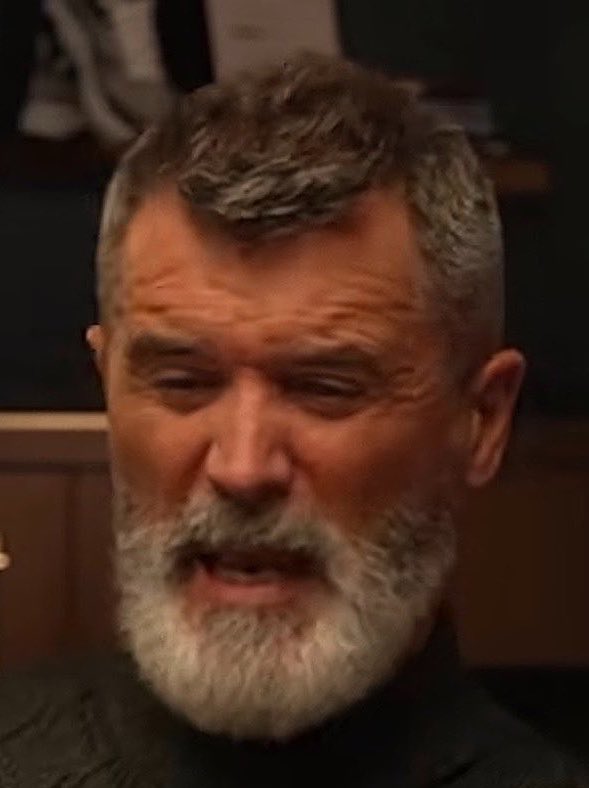
🚨 Roy Keane on Nico Williams disallowed goal against Argentina:
“I’ve just seen the biggest robbery of this World Cup. The ball comes into the box, nobody touches anybody, everyone goes up for it, then one Argentina player starts shouting. The next thing you know, two defenders are on the floor appealing,
Nico Williams has scored, and Emiliano Martinez … who wasn’t even touched… is somehow lying there as well asking for a foul.
The referee blows immediately. No VAR review. No replay. No check to see if there was actually any contact. Just disallowed. Apparently if enough Argentina players fall over at the same time, that’s now considered conclusive evidence.
If we’re being honest, Paredes shouldn’t even still be on the pitch after some of the tackles he’s made today. Yet somehow the only thing the referee managed to spot instantly was an invisible foul.”
Hoy hace 151 años que el obtuso teniente coronel George Armstrong Custer y 264 soldados del Séptimo Regimiento de Caballería murieron en Little Bighorn. Custer tenía la costumbre de atacar poblados de indios sin dejar que los ancianos, mujeres y niños pudieran escapar con vida.
🇪🇸🇮🇹 El buen camino se hace acompañado
👮🏻Agentes de @policia junto a @poliziadistato escoltan la Caravana de la Legalidad «Viaggio alla fine del mondo»
32 personas con #discapacidad y técnicos de la Asociación Juvenil Juppiter APS (🇮🇹) viviendo el #CaminoDeSantiago 🥾como experiencia de superación e #inclusión
¿ERES POLICÍA O GUARDIA CIVIL?🚓
¿Sabes cómo actuar en caso de incendio de vivienda🔥como primer interviniente?
Tanto en aso afirmativo como negativo, este hilo te interesa. Compártelo a más compañeros para garantizar una mejor coordinación entre cuerpos.
Dentro hilo 🧵:
Pues debo decir que todavía más, si cabía, respeto gordo a SAR Doña Leonor.
En este viejo hilo podrán entender el porqué y quizás valorar es su justa medida lo que ha hecho.👇
https://t.co/3bXe4uFb9P
Sin risas no hay ni liderazgo, ni buen mando, ni leches, se lo digo de verdad. Si no eres capaz de reírte, abierta y francamente, con tu gente, podrás sobrevivir en el día a día, pero tendrás un problema cuando vengan mal dadas. Si aún ahí, sonríen, es que la cosa va bien…
Cuando en una triste efeméride, aparecen nombres que te son muy familiares, tienes la tentación de evitar citarla, pero, por otra parte, solo muere quien es olvidado.
Mientras hay quien llama valiente al que se expone en una red a recibir cuatro insultos virtuales, yo sigo llamando valiente a los que nunca alardearon de serlo de verdad.
Fueron valientes en Bosnia, Kosovo, Irak, Líbano o Afganistán, pero fue un día como hoy, hace 13 años, en España, cuando perdieron la vida haciendo cosas de rutina, si es que trabajar con artefactos explosivos puede llamarse rutina.
When Barack Obama entered the Hiroshima Peace Memorial Park on May 27, 2016 — becoming the first sitting U.S. president to visit the city destroyed by the United States in August 1945 — the world focused on his speech. Cameras showed the wreath at the cenotaph. Headlines rightly emphasized the weight of the moment. But almost no one noticed a short, quiet Japanese man standing among the official delegation.
His name was Shigeaki Mori. He was eight years old on the day of the atomic bombing. By 2016, he was the only person who knew the names of all twelve Americans who died in Hiroshima — U.S. prisoners of war whom America had never fully accounted for.
Mori spent forty years finding them. Not for money. Not by order. Simply because he believed the dead should have names.
He was born in Hiroshima on March 29, 1937. On the morning of August 6, 1945, he was crossing a small bridge about 2.5 kilometers from the epicenter. The blast threw him into the stream below. Decades later, he recalled:
“I climbed out and saw a woman stumbling toward me. Her body was covered in blood, her organs hanging out. Holding them, she asked where the hospital was. I cried and ran away.”
He was eight. And there were no hospitals left.
Mori survived. He grew up in postwar Japan, worked ordinary jobs — in a brokerage, later at a piano factory — but dreamed of becoming a historian. He never got a formal degree. So he became one on weekends.
In the 1970s, a professor showed him a document: a list of twelve American airmen shot down over Japan in 1945. They were crew members of two B-24 bombers — Lonesome Lady and Taloa — captured and held in Hiroshima, just 400 meters from where the bomb exploded.
They died from their own country’s bomb.
For decades, their story was barely acknowledged. Families were told only: “missing, presumed dead.” No details. No truth.
Mori decided to find it.
Without funding or institutional support, he spent decades reconstructing their fate — comparing archives, tracking records, even locating surviving crew members. One by one, he restored their identities.
Then he wrote letters.
In broken English, he contacted families across the U.S. — often seventy years too late — explaining what had happened to their sons, brothers, husbands.
In 2008, he published his research, which eventually led the U.S. government to officially acknowledge the deaths of the twelve American POWs in Hiroshima.
In 2016, a documentary introduced his story to a wider audience. During Obama’s visit, Mori was invited to attend. In his speech, Obama mentioned the victims — including “twelve Americans held in captivity.”
For the first time, a sitting U.S. president publicly acknowledged them on Japanese soil.
After the speech, Obama approached Mori — a small, elderly man who bowed politely. Then, unexpectedly, the president opened his arms.
They embraced.
The image went around the world.
In 2018, at age 79, Mori visited the United States for the first time. He attended memorial events, spoke publicly, and finally met some of the families he had written to for decades.
When asked why he devoted his life to Americans who died beside him, Mori answered:
“My work was not about people from an enemy country. It was about human beings.”
Shigeaki Mori died in Hiroshima on March 14, 2026. He was 88 years old.