Anthropic CEO Dario Amodei says in an interview with Bloomberg that he believes one shouldn't choose a business model that conflicts with one's values.
AI isn't a money printer; it’s an accelerant.
If you rely entirely on bots, you’ll lose. If you use it as an edge, you win.
How elite traders actually use AI:
Code & Backtest: Use LLMs to rapidly test your strategy thesis.
Sentiment Scrape: Instantly scan news and social sentiment at scale.
Risk Automation: Let AI execute strict stop-losses and targets.
Arbitrage Agents: Deploy autonomous workflows to hunt cross-market gaps.
Manual trading is becoming a relic.
The future belongs to traders who pair market fundamentals with AI speed
The SpaceX ($SPCX) listing is officially set to become the largest IPO in global history. Here is what you need to know about the numbers before tomorrow's historic Nasdaq debut:Valuation:
Targeting a staggering $1.77 https://t.co/OiuOhuT8bA
Raised: Aiming to secure $75 Billion at $135 per share.
Retail Demand: Already drew over $70 Billion in retail orders alone
.While some Wall Street analysts warn the stock is heavily overvalued relative to fundamentals, it marks the official reopening of the mega-cap tech IPO market.
Are you buying the hype or waiting for the dust to settle? 👇
All eyes are on Wall Street as the upcoming Non-Farm Payrolls (NFP) report drops, threatening to trigger major market volatility across stocks, forex, and crypto.
The NFP data serves as the ultimate health check for the economy, directly influencing the Federal Reserve's upcoming interest rate decisions.
Key metrics the market is watching:
Headline payrolls: Higher numbers signal economic strength; lower numbers fuel recession fears.
Unemployment rate: A sudden tick upward could force the Fed to pivot toward cutting rates.Average hourly earnings: Rising wages drive inflation, pushing the Fed to keep rates higher for longer.
Expect sharp price swings across major indices and assets immediately following the release.
#NFP #Macroeconomics #Trading #Stocks #Forex #Fed
Most people willingly blow $250 a month on daily habits and subscriptions they won't even remember next year.
Put that exact same $250 into a low-cost index fund instead.
It turns into a seven-figure safety net over time. More people need to stop overcomplicating this and start doing it. 🎯
The recent Bitcoin halving slashed miner block rewards by 50%, fundamentally tightening the asset's digital scarcity.
Historical data shows that past halvings served as structural catalysts for long-term supply-demand shocks, often triggering major bull cycles in the 12–18 months following the event.
Key impacts to watch:
Supply squeeze: Daily new Bitcoin issuance drops significantly.
Miner pressure: Only the most energy-efficient operations survive.
Institutional inflows: Spot ETFs continue to absorb liquid supply.
While short-term volatility remains guaranteed, the programmatic reduction in inflation reinforces Bitcoin’s status as a premier hard-money asset.
#Bitcoin #BTC #Crypto #Halving
AI and Crypto are officially merging into a single stack. 📷📷
In 2026, it’s no longer just hype. We’re seeing AI agents use crypto for instant nanopayments, while decentralized networks like Bittensor and Render provide the compute and intelligence layers.
AI provides the brain, but blockchain provides the trust and verification. The autonomous economy is scaling in real-time.
#Crypto #AI #Web3 #DeFAI
Most people have no idea that if they invest just 20 seconds of their life and send a simple message to their banker, they could save themselves thousands $$$$$
Something generic like:
'Hi, I’d like a full breakdown of all the management fees and commissions I’m paying in my investment portfolio, including:
• Custody fees
• Buy/sell commissions
• Management fees on funds and products I hold
• Any other costs related to managing the portfolio.
I’m considering moving my account and want to understand my current costs.'Do it. Even if you hate dealing with this stuff."
The secret to wealth is aggressively boring (and your brain hates it):
• Positive cash flow (aka stop buying dumb shit)
• 10-year investment horizon (yes, TEN. Not ten minutes)
• Embracing the ups and downs like a dysfunctional marriage
• Radical patience (the kind that makes monks look like ADHD squirrels)
That’s literally 90% of the game. The remaining 10% is ignoring every shiny “passive income in 7 days” guru who’s one Lambo lease away from bankruptcy.
Stay boring. Get rich.
You just got $1,000,000, and you can only do ONE thing with it:
Buy 1 asset right now and hold it for 5 years.
Nothing else.
What asset are you buying?
Would you pay off your $119,000 mortgage at 4.8% or invest the cash in the S&P 500?
Most people would pay off the house for that “peace of mind.” Debt-free feels safe.
But here’s what actually happened if you had chosen to invest the $119k in the S&P 500 instead - over the last 20 years (total return with dividends reinvested, ~10.8% CAGR).
Your $119,000 would now be worth ≈ $925,000. That’s +$806,000 in growth - while you still paid the mortgage on schedule from your regular income. You end up with: The house (mortgage paid down normally)
Plus a ~$925k brokerage account
If you had paid off the mortgage with the cash?
You’d have a free-and-clear house… and zero of that $806k profit sitting in the market.
Low-rate “good debt” + long-term stock market compounding beat the mortgage every single year on average.
Hindsight is 20/20, and past performance isn’t a guarantee. Markets can (and do) drop hard. But the numbers from the last 20 years are crystal clear: keeping the 4.8% mortgage and investing the cash was the massively profitable move.
Planning early retirement? The Trinity Study isn’t the whole story.
Two retirees start with the exact same portfolio and get the same average returns over time.Yet one ends with $920K… and the other with just $850K.
The difference? Sequence of returns risk.
Markets don’t move in a straight line. If big losses hit early - right when you’re withdrawing money - your portfolio can get wrecked and never fully recover… even if the long-term average returns look identical.
The famous “4% rule” (roughly 300× your monthly expenses) worked 96% of the time in historical backtests.
But newer research suggests safer withdrawal rates may be closer to 2.7%.
And real life is even messier:
Expenses fluctuate (kids, travel, healthcare, housing)
Income streams change (pensions, Social Security, inheritance)
Taxes eat into returns
Random life events hit hard
Bottom line:
The 4% rule is a guideline, not a guarantee.If you want real confidence in early retirement, don’t just rely on averages.
Model different scenarios. Stress-test multiple return sequences. Plan for the worst paths - not just the average ones.
📷
Markets fall 5% and suddenly everyone’s a “bottom caller.”
Meanwhile, Warren Buffett is calmly sitting on a $373B cash pile, probably thinking: “Wake me up when it’s interesting.”
He’s not chasing a modest dip — he’s waiting for real opportunities.
Because history shows: the biggest wealth shifts don’t happen during small pullbacks… they happen when everyone else is hitting the panic button.
Financial History Books in 2031 be like:
Nifty Fifty Bubble (1960–1972):
Everyone went crazy for 50 “invincible” growth stocks. Valuations left planet Earth.
Burst (1973–1974): Oil crisis + inflation showed up and yeeted the dream.
Dot-com Bubble (1995–1999):
Billions poured into companies whose business plan was “we have a .com”
Burst (2000–2002): Interest rates rose, money dried up, and “we have no profits” suddenly mattered.
Subprime Bubble (2003–2007):
Cheap credit let anyone with a heartbeat buy a mansion.
Burst (2008–2009): Turns out lending to cats and houseplants was risky. Banks went splat.
COVID Bubble (2020–2021):
Governments printed money like it was candy, rates hit zero, and everyone became a stock market genius.
Burst (2022): The Fed remembered inflation exists and started hiking rates like a disappointed dad.
The AI Revolution Bubble (2023–2025):
Any company with “AI” in its name got flooded with cash. “AI-powered socks? Take my life savings!”
Burst (2026): Claude Code and Anthropic’s endless feature drops quietly automated the hype away.
Nobody in 1975 needed a budget app, financial coach, or 3 side hustles to afford a 2-bedroom apartment.
This isn't just a 'personal finance problem.'
It's a wage vs cost-of-living problem.
But until it changes:
-Spend less than you earn
-Build a 3-6 month emergency fund
-Invest the gap automatically
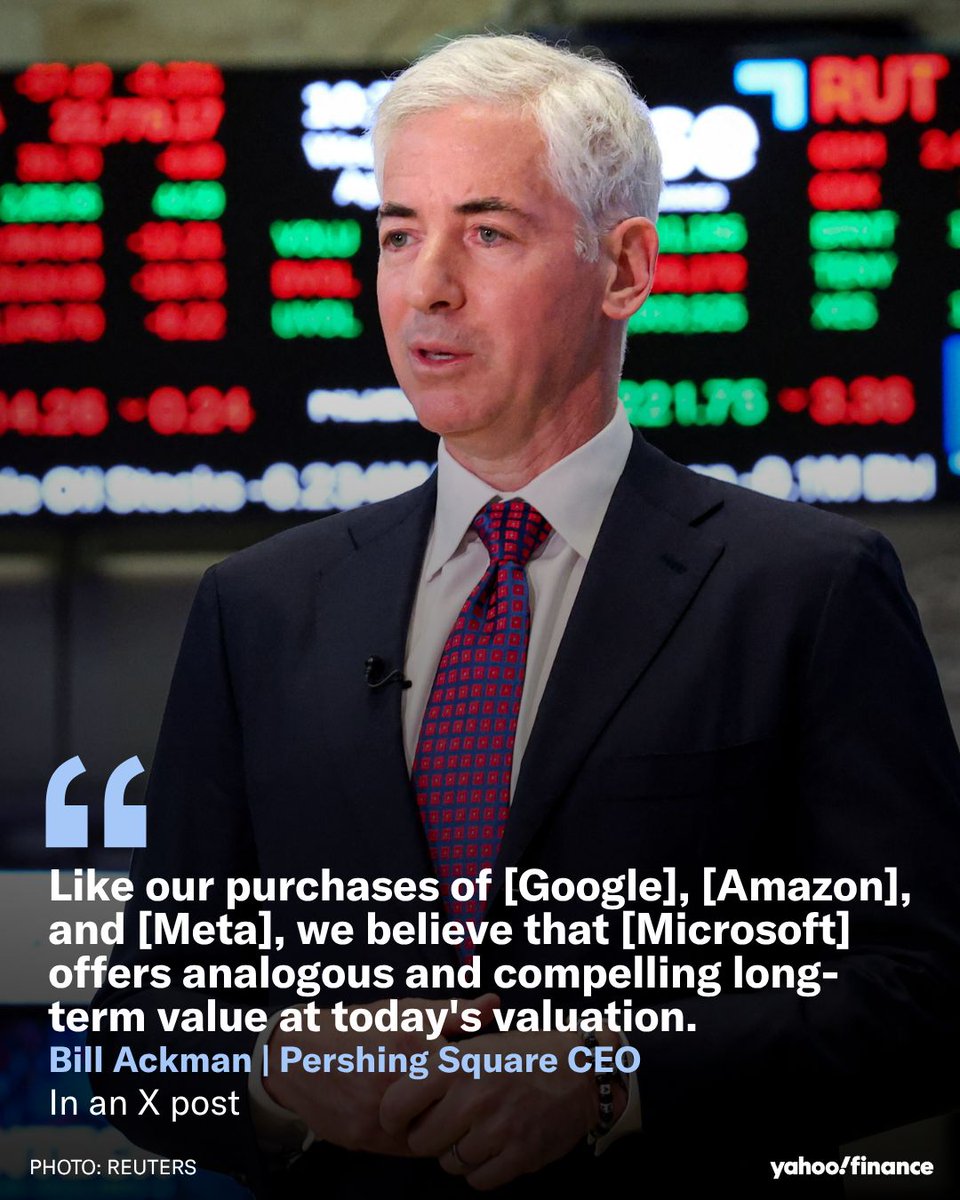
Distance from the peak:
Apple 15%-
Nvidia 21%-
Google 22%-
Amazon 23%-
Broadcom 27%-
Tesla 29%-
Palo Alto 34%-
Meta 35%-
Microsoft 35.5%-
Oracle 60%-
Adobe 63%-
"An investor needs only 2 things: courage and cash. If you have one of them, it's not enough."
Every trading platform makes a decision before you do.
What gets surfaced. What gets buried. What demands a response.
These aren't neutral choices — they're design decisions that shape how attention moves through a session.
https://t.co/0AGEXPZU0v