📆 Day 90:
MongoDB is a NoSQL database, and with Mongoose, working with it in Node becomes super easy and structured!
💡 Why?
📦 NoSQL = Flexible, schema-less storage
🔗 Mongoose = Object mapping with built-in validation
🚀 Ideal for dynamic, fast-changing data in modern apps
📆 Day 89:
A RESTful API lets your frontend and backend talk using HTTP methods (GET, POST, PUT, DELETE) and JSON.
💡 Why RESTful APIs?
🔗 Connect frontend to backend
📤 Communicate using JSON
✅ Use proper HTTP status codes (200, 201, 404, etc.)
🧱 Base for modern web apps
📆 Day 88:
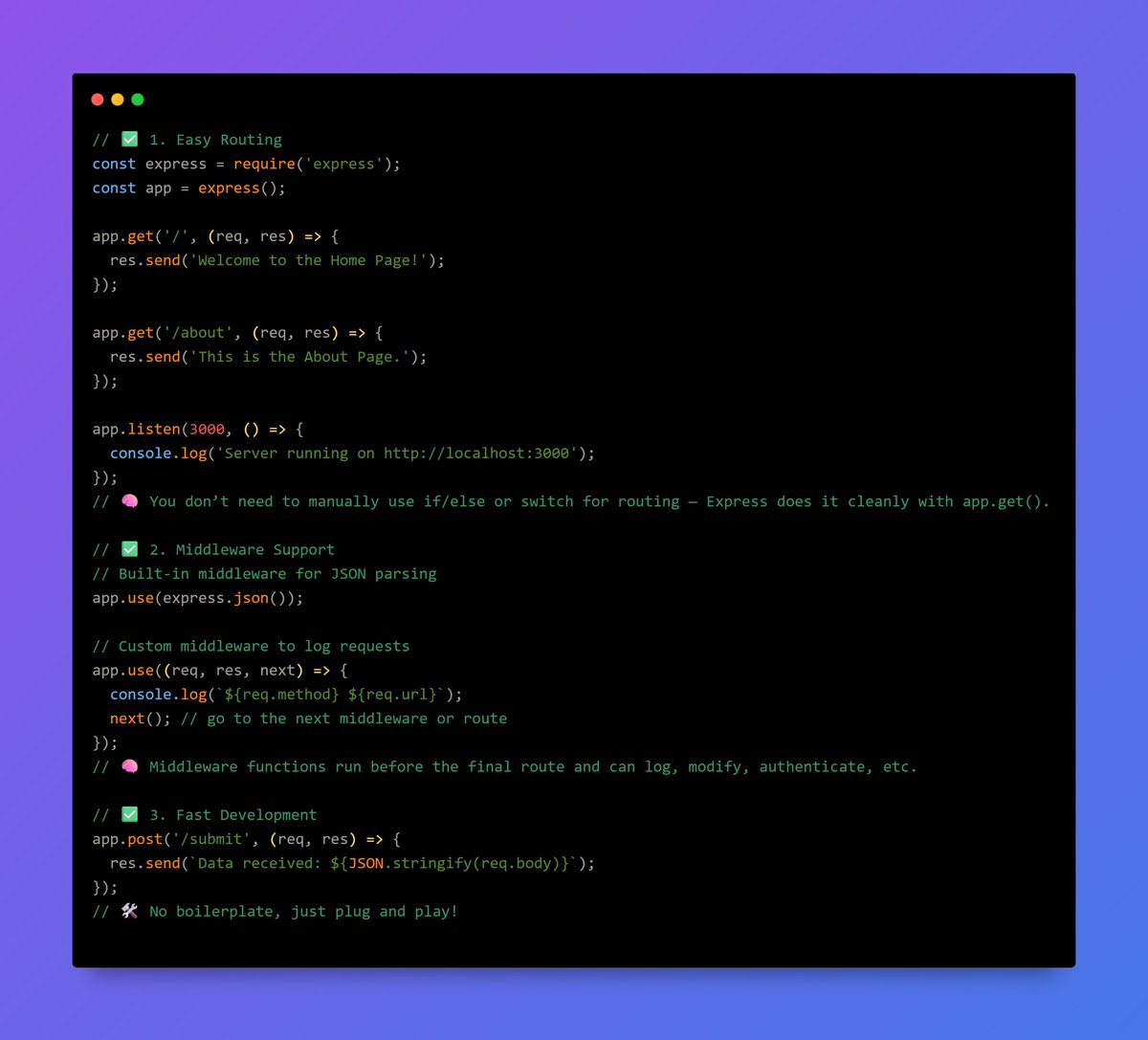
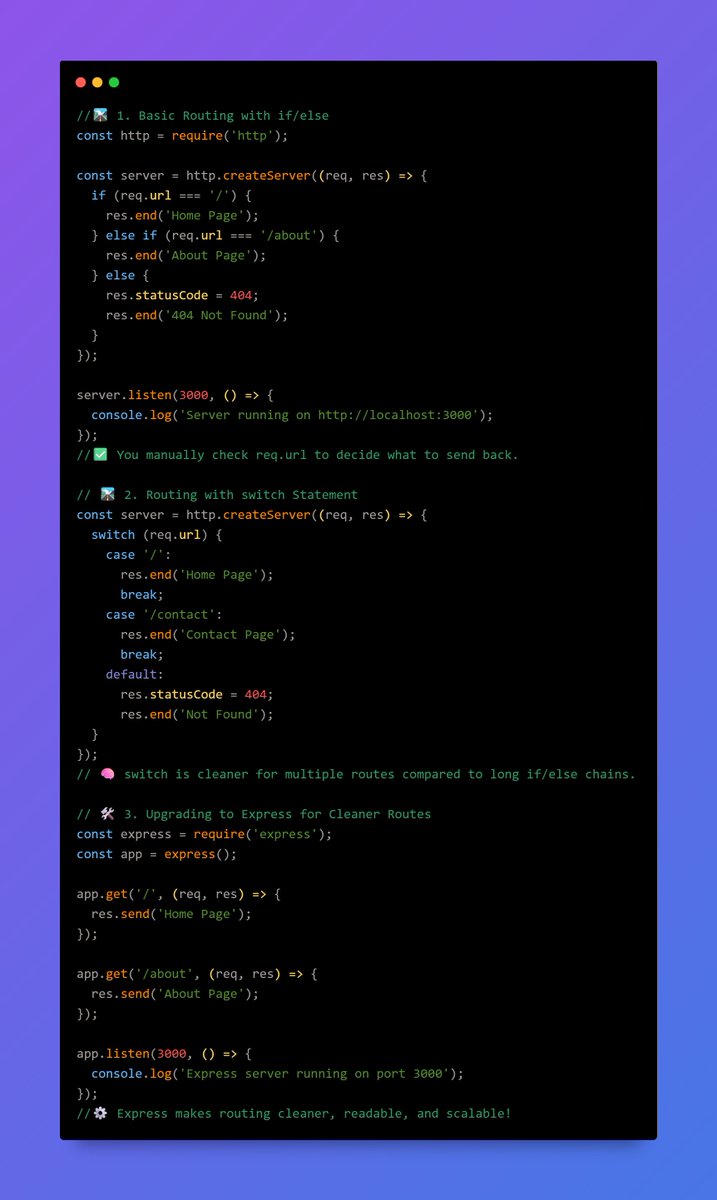
Express.js is a minimal, fast, and flexible Node.js framework that simplifies server creation and routing.🚀
💡 Why Use Express?
✅ Faster than raw Node HTTP server
✅ Cleaner routing
✅ Built-in middleware support
✅ Easy to scale with third-party packages
📆 Day 87:
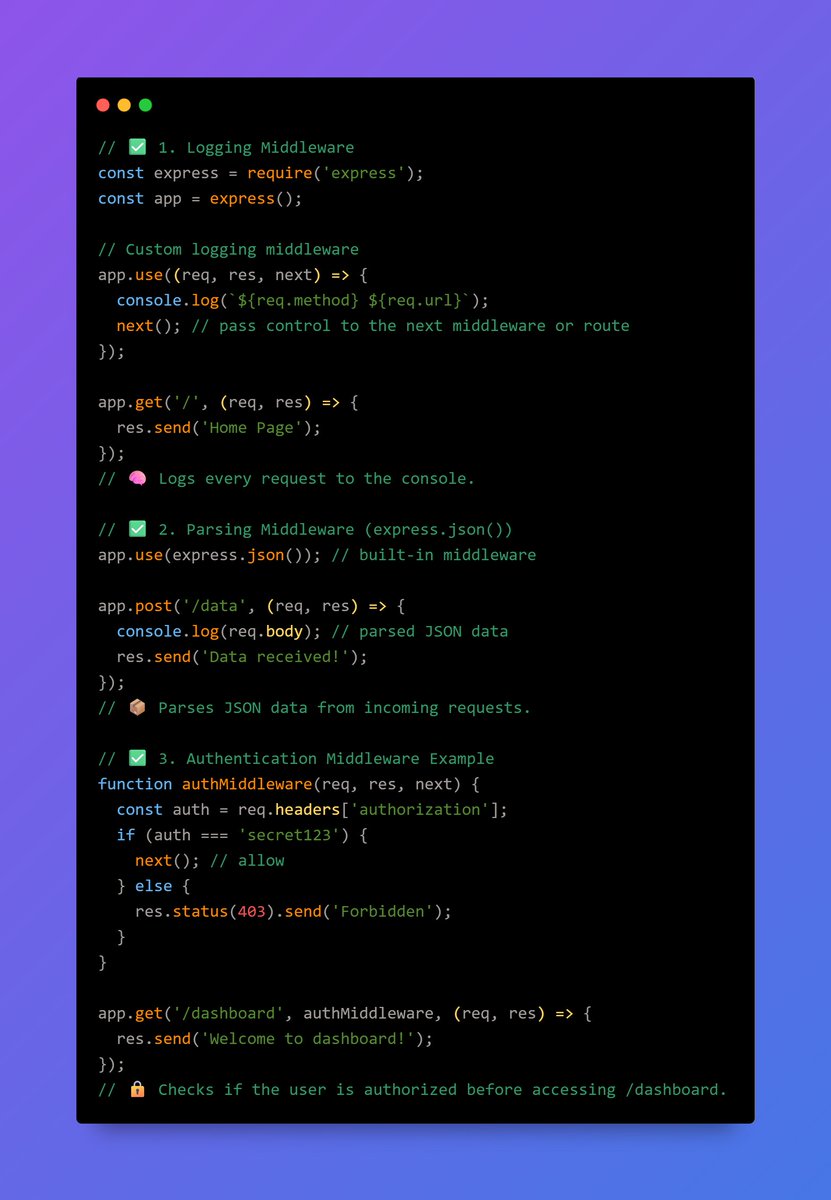
Middleware runs between a request (req) and a response (res).
Used for logging, auth, and parsing — especially in Express.js.
🛠️ Powered by Express
Middleware is a core part of Express.
It helps you:
🔍 Modify requests
✅ Add security
🧩 Use tools like morgan, cors
📆 Day 86: Routing in Node.js 🌐
Routing decides how your server responds to various URL requests.
💡 Summary:
-Manual routing is a good way to learn the basics.
-But for real-world apps, Express gives a cleaner and more powerful approach to routing!
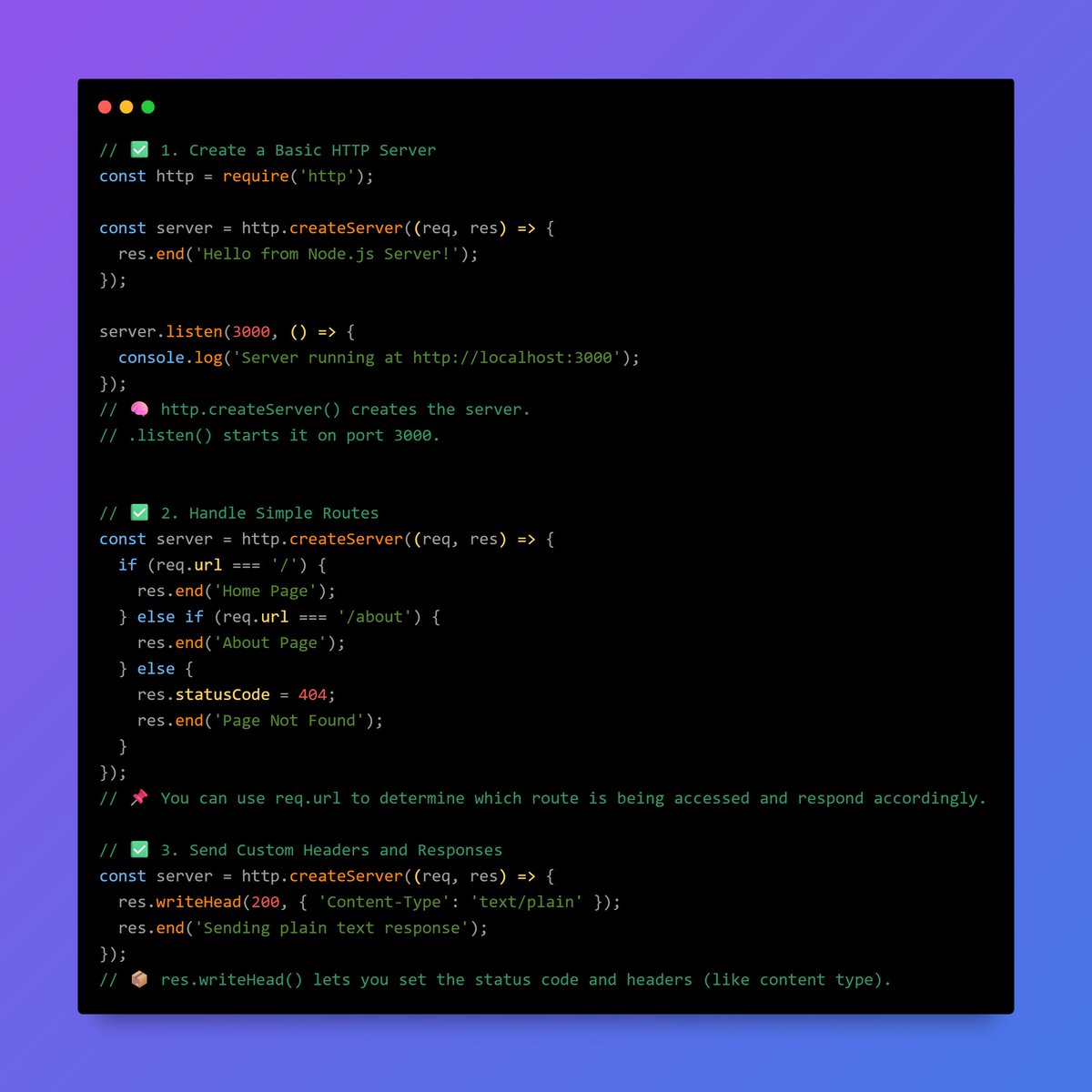
📆 Day 85:🖥️
Node.js lets you create a basic web server using the built-in http module — no external packages needed!
💡Why it matters?
Creating HTTP servers is a core backend skill.
You’ll later build on this with frameworks like Express, but this is the foundation!
📆Day 84:
Error handling keeps your app stable and safe. Here’s how to handle errors like a pro in Node.js!
🧠Use try-catch for sync code.
🧠Wrap await calls in try-catch for async errors.
🧠Create custom error for clearer responses.
🧠Use Express middleware to catch all errors.