People think learning Claude takes days. It doesn't.
I wrote 17 free guides that teach it in hours:
Claude 101: https://t.co/HNa5MrCLVU
Claude Code: https://t.co/O2kJvFkgan
Claude Skills: https://t.co/jT4uB5Bdjw
Claude Design: https://t.co/q1zjMfeAyg
Claude for Excel: https://t.co/7g3CFNcKrs
How to Prompt: https://t.co/EE46WHU8vg
Claude + Linkedin: https://t.co/9d5stC6grm
Be good at Claude: https://t.co/SVGd967eMQ
Stop writing like AI: https://t.co/JWKUGNKgOS
Claude Certificates: https://t.co/9jKsXWOt66
Claude for your team: https://t.co/U1JsBVCzYH
Claude Connectors: https://t.co/TSAQqOpDeV
Set up Claude Cowork: https://t.co/diDhiKkfjs
Stop Prompting Claude: https://t.co/j1LATSJiat
Claude to sound like you: https://t.co/kDGBpSF7Wh
Stop hitting Claude limits: https://t.co/j5fEzSH5br
Stop using Claude at work: https://t.co/c6X55Thy6t
___
PS: I'm Ruben Hassid, and I want us to master AI before it masters us, with simple instructions.
Follow me never to miss my 2x daily posts.
You want to help someone in your network? ♻️ Repost this so they can find the best free resources.
$5,280 a year on AI subscriptions. Claude Max, ChatGPT Pro, Gemini, Cursor. $440 every month going to the cloud.
a mini PC for $1,700 does the same thing on your desk. GMKtec EVO-X2 - a box the size of a hardcover book. inside it the chip that Lisa Su personally brought on stage at CES and signed with her name.
128GB of memory in one pool. runs models that cloud subscriptions behind $200 paywalls throttle during peak hours. here there are no limits - your hardware, your rules.
NVIDIA's RTX 5080 at $1,000+ lost to this box by 3x on a real AI workload. a discrete GPU beaten by a mini PC the size of a lunchbox.
electricity - $9 a month. pays for itself in 10 months. after that $440 every month stays in your pocket.
the cloud made sense when nothing on a desk could compete. now it can.
this is like investing into Bitcoin in 2009.. 😭💀
there’s 18/yo making $24,867/month with AI clipping and Content Rewards
All they do is:
1. Join clipping campaigns
2. Find the campaign videos on YouTube
3. AI clip them Vugola
4. Submit them on Content Rewards
5. Get paid $300+ per reel
you missed dropshipping in 2016
you missed meme coins in 2022
don’t miss AI clipping in 2026…. 💰
This is by far the simplest way to making $20,000/month.
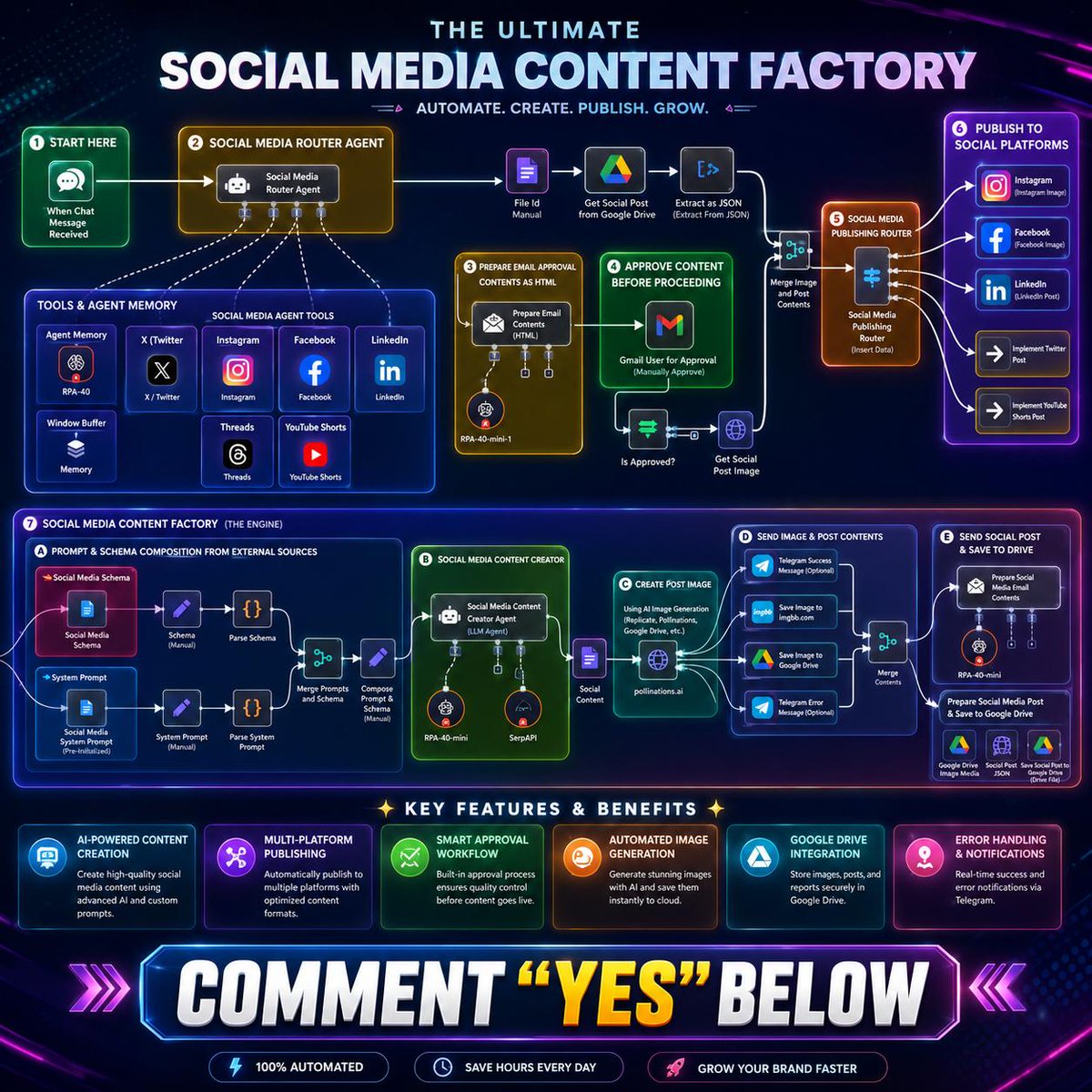
🔥 MIND-BLOWN: Found the craziest N8N AI automation…
This system converts ANY concept into trending AI videos automatically.
Zero manual work. Zero hiring. Zero headaches:
→ Brainstorms content concepts via ChatGPT integration
→ Generates insane visuals through Veo 3 + FAL API (think: Dragons doing cooking tutorials)
→ Handles lip-sync, animation, rendering & file storage automatically
→ Records every prompt, description, video link + scene data in Google Sheets
→ Can merge multiple clips into extended content
→ Primed for instant publishing across TikTok, Instagram, YouTube & more
Entire system runs on n8n automation. Zero human intervention needed.
Like + reply “YES” & I’ll send you the FULL workflow + setup FREE!
Andrej Karpathy spent 2h showing how he actually uses AI day to day
he's a co-founder of OpenAI and led AI at Tesla, so when he shows how he works, it’s worth watching
and the whole session is just him telling the machine what he wants in simple terms, like he's briefing a coworker
watch what's actually happening the entire time:
> he describes the task in normal words
> it goes off and does the work
> he glances at the result and nudges it with one more sentence
that's the whole skill, and you've had it since you learned to talk
the only gap between that and a worker that runs on its own is handing that sentence a schedule and the tools to act
check his work, then build the version that keeps working when you stop
how I’m building an agent company inside my agency.
the structure looks like this:
Agency gBrain
→ Orchestrator Hermes Agent
→ Department verticals
→ Specialist agents
→ Scoped sub-agents
gBrain is the company brain.
It gets ingested with the data and experience we already have:
> transcripts
> chats
> previous campaigns
> client learnings
> strategy docs
> internal workflows
> examples of what good looks like
That brain is maintained by a human champion plus an orchestrator Hermes Agent.
Under the orchestrator, we have different department verticals inside the agency.
Each vertical has its own specialist agents.
Some of those specialist agents have even narrower scoped agents underneath them.
I’ve found that narrow scope improves output quality and reduces drift.
> a general “marketing agent” is too vague.
> a lifecycle email agent with access to the right campaigns, voice rules, approval gates, and examples can get very good.
> a technical SEO agent with its own tools, checklists, and source standards can get very good.
> a content research agent with narrow inputs and a clear definition of done can get very good.
The narrower the job, the easier it is to improve the agent.
I use different harnesses for this.
Mostly Hermes Agent, but also CLI harnesses like Codex and Claude Code depending on the job.
I’m still looking for a good bare-bones harness for model routers to run on.
To keep track, I maintain an org chart inside the company gBrain.
The org chart shows:
> top-level orchestrator
> department verticals
> specialist agents
> scoped sub-agents
> which brain each agent reads from
> which tools each agent is allowed to use
> where human approval is required
For clients, I do downstream pods.
Think of them as new agent companies that are isolated from the agency brain, but can still communicate with our agency agents when needed.
A client pod has its own:
> client gBrain
> client orchestrator
> client specialist agents
> client-specific workflows
> client-specific approvals
> client-specific memory
This is important.
You do not want client context bleeding across accounts.
You do not want one agent with every client’s data, every tool, and every permission.
Scope is what keeps the system useful.
The powerful part is that once you build one vertical agent well, you can fork it.
Not copy-paste blindly.
You still need to customize the context, examples, approvals, voice, tools, and workflows.
But you are not starting from zero.
You might have 75% of the agent already done.
That changes the agency model.
You no longer need a full traditional department for every function before you can deliver a well-rounded marketing service.
One or two strong marketing engineers can run an output surface that used to require a much larger team.
But this only works if the agents are actually good.
It takes iteration, taste, source material, QA, workflow design, and real marketing experience.
Bad agents do not become good because you connected more tools.
Vague agents just create vague output faster.
TLDR:
> turn the agency’s knowledge into a brain
> turn repeated work into scoped agents
> turn each client into an isolated pod
> let skilled operators run the system
Claude Code is (actually) easy.
The 12-step roadmap in plain English:
If you're totally new to Claude Code:
Beginner: https://t.co/2dPKJnEZMQ
Intermediate: https://t.co/HHtZFTfpq2
Advanced: https://t.co/tLKItVJZGR
PHASE 1: Context (what Claude knows about you)
Step 0: Install the CLI
One terminal command gets it running:
"npm install -g @anthropic-ai/claude-code"
Step 1: Projects
- Give Claude its own folder.
- Everything you build stays tied to it.
"I'm creating a new folder for my [project]. Create it for me and set it up so I can start working in it."
Step 2: claude .md
- Claude reads this before every chat.
- Role, voice, defaults. Set once, it sticks.
"Help me build my CLAUDE.md from scratch. Use Boris Cherny's CLAUDE.md as a starting template. Ask me about my business, voice, banned words, output defaults, and how I want you to work. Save the final file to ~/CLAUDE.md."
Step 3: Memory
- Every correction becomes a saved lesson.
- Same mistake never lands twice.
"From now on, whenever I correct you, save it as its own .md file at ~/.claude/projects/{project}/memory/, prefixed feedback_, user_, project_, or reference_. Index everything in MEMORY.md."
PHASE 2: Fire (how you trigger work)
Step 4: Skills
- Wrap a workflow in one keyword.
- Fire it from any chat, any folder, any time.
"Turn this workflow into a skill called /[name]. Set it up so I can fire it from any chat."
Step 5: /commands
Type the name and Claude fires the workflow.
"Save this prompt as a /[name] command. Set it up so I can run it any time."
Step 6: /plan
- Type /plan before starting any task.
- Claude lays out the steps. You approve it.
"/plan I want to [your task in plain English]."
PHASE 3: Extend (wire it to your stack)
Step 7: Hooks
- Auto-run something the moment an event fires.
- You never have to trigger it manually.
"Set up a hook that runs [thing you want] every time I [event]. Wire it up for me."
Step 8: MCP
- Plug Claude into Slack, Notion, Gmail, etc.
- You get live data from the tools you use.
"Connect Claude to [tool]. Set it up for me and walk me through it."
Step 9: Plugins
Install skills, agents, and MCPs in one command.
"/plugin install [plugin-name]"
PHASE 4: Scale (delegate and autopilot)
Step 10: Subagents
- Send out parallel workers.
- Get three jobs done at once.
"Use subagents to handle [task A], [task B] and [task C] in parallel."
Step 11: Agent Teams
- A pipeline of specialist AI agents.
- Each owns one job, hands off to the next.
"Build me an agent team for [process].
Step 12: Routines
- Schedule your agent team on the cloud.
- You set it once, walk away forever.
"/schedule [agent or skill] every [schedule]."
That's Claude Code from zero to autopilot.
12 steps with no coding background needed.
Repost ♻️ to help someone in your network.
Cc : Charlie
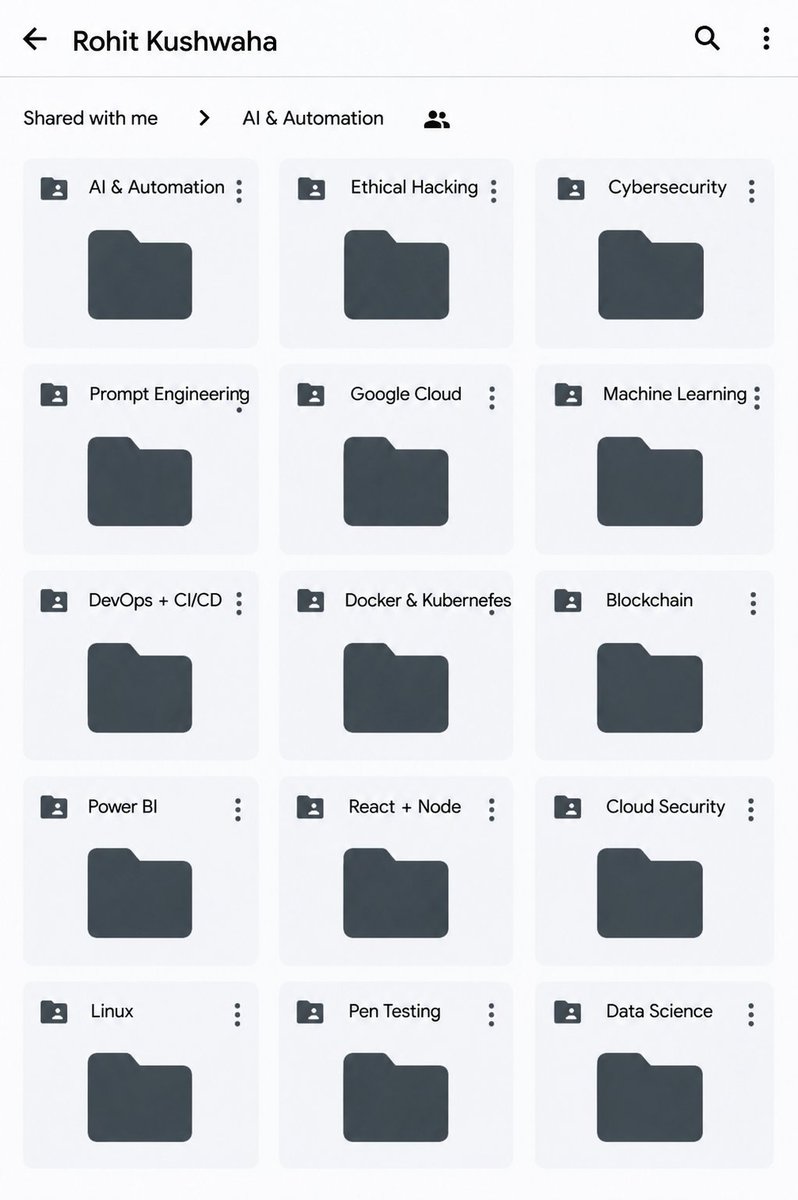
All Paid Courses (Free for First 4500 People)
𝗣𝗮𝗶𝗱 𝗖𝗼𝘂𝗿𝘀𝗲 𝗙𝗥𝗘𝗘 (PART - 1)
1. Artificial Intelligence
2. Machine Learning
3. Prompt Engineering
4. Claude,Chatgpt,Grok
5. Data Analytics
6. AWS Certified
7. Data Science
8. BIG DATA
9. Python
10. Ethical Hacking
(72 Hours only )
Like + RT + comment ' Drive '
Must Follow me so I can DM you.
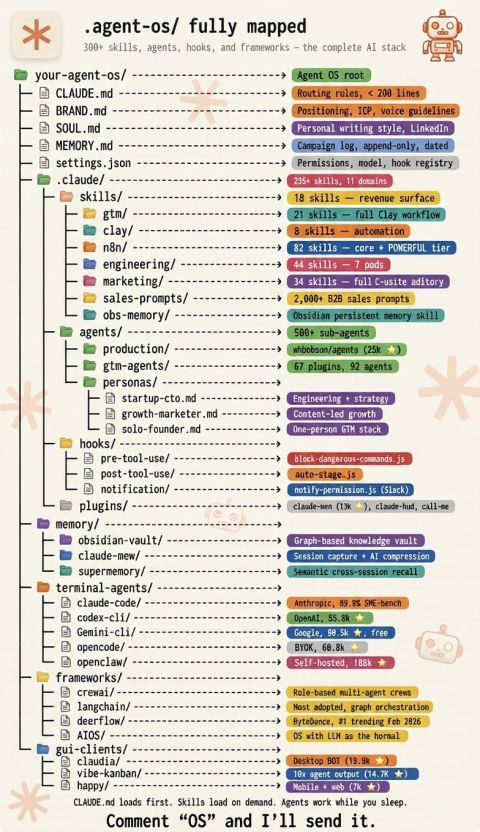
Claude Code For GTM Teams is INSANE.
I've built a complete breakdown of the full Agent OS that maps every config file, skill, and memory system in under 30 minutes.
The same OS running 235+ skills and 500+ sub-agents from one config layer.
Root config files, skills library, automation hooks, memory systems, full ecosystem coverage.
Inside the breakdown:
- All 5 root config files with the 30-minute setup walkthrough
- The full skills directory in tier order with safety hooks for every unattended run
- Worked examples for GTM outbound setup, enrichment waterfall, and multi-agent LinkedIn system with real output shown
Want a copy? Like + Comment "OS" and I'll send it over ASAP
(Must be following)
ANTHROPIC'S 31 SMALL BUSINESS SKILLS GOT 382,000 DOWNLOADS ON DAY ONE AND SOMEONE JUST MAPPED EVERY SINGLE ONE INTO A 10 MINUTE SETUP.
It covers financial operations, sales, HR, marketing, and reporting with a full connector guide and real output examples.
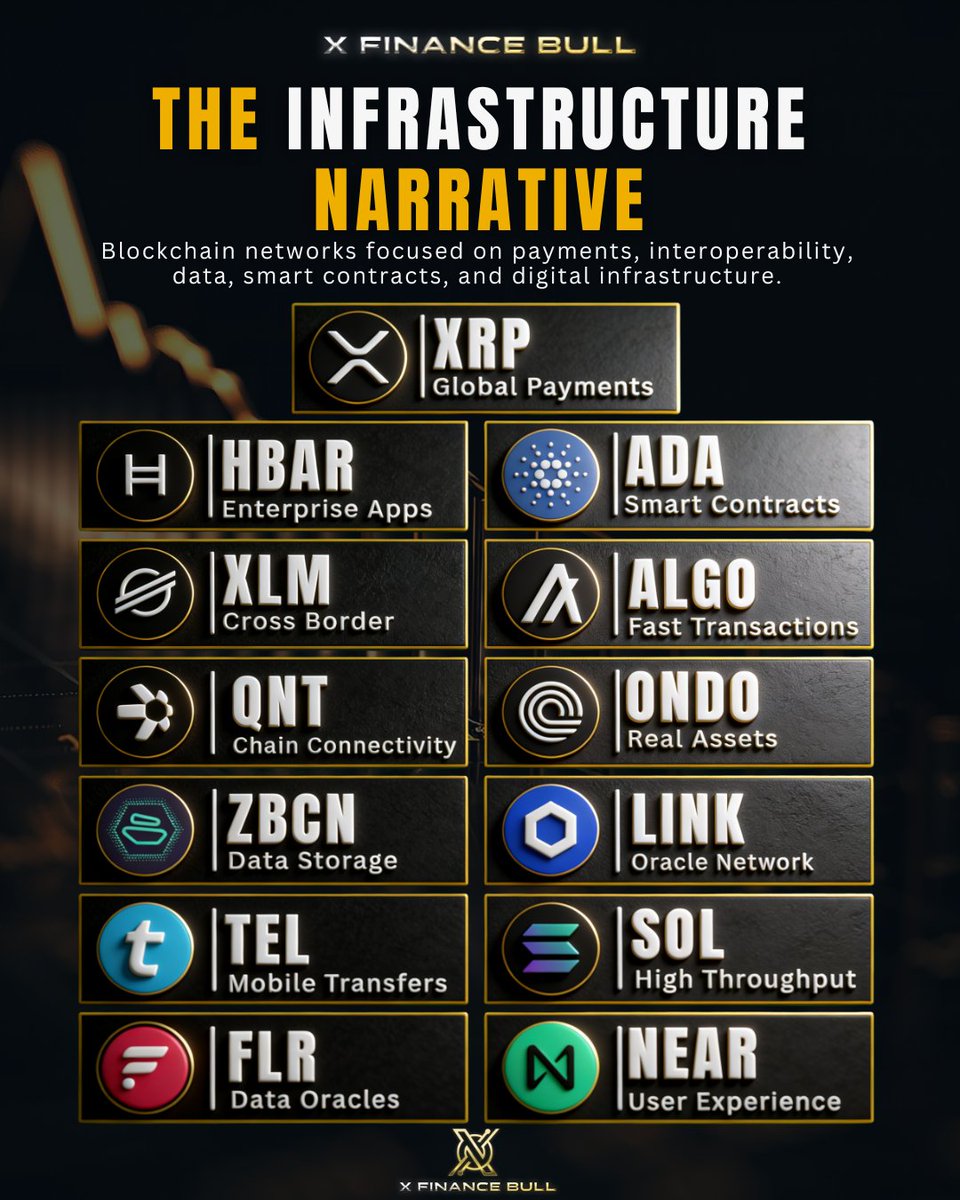
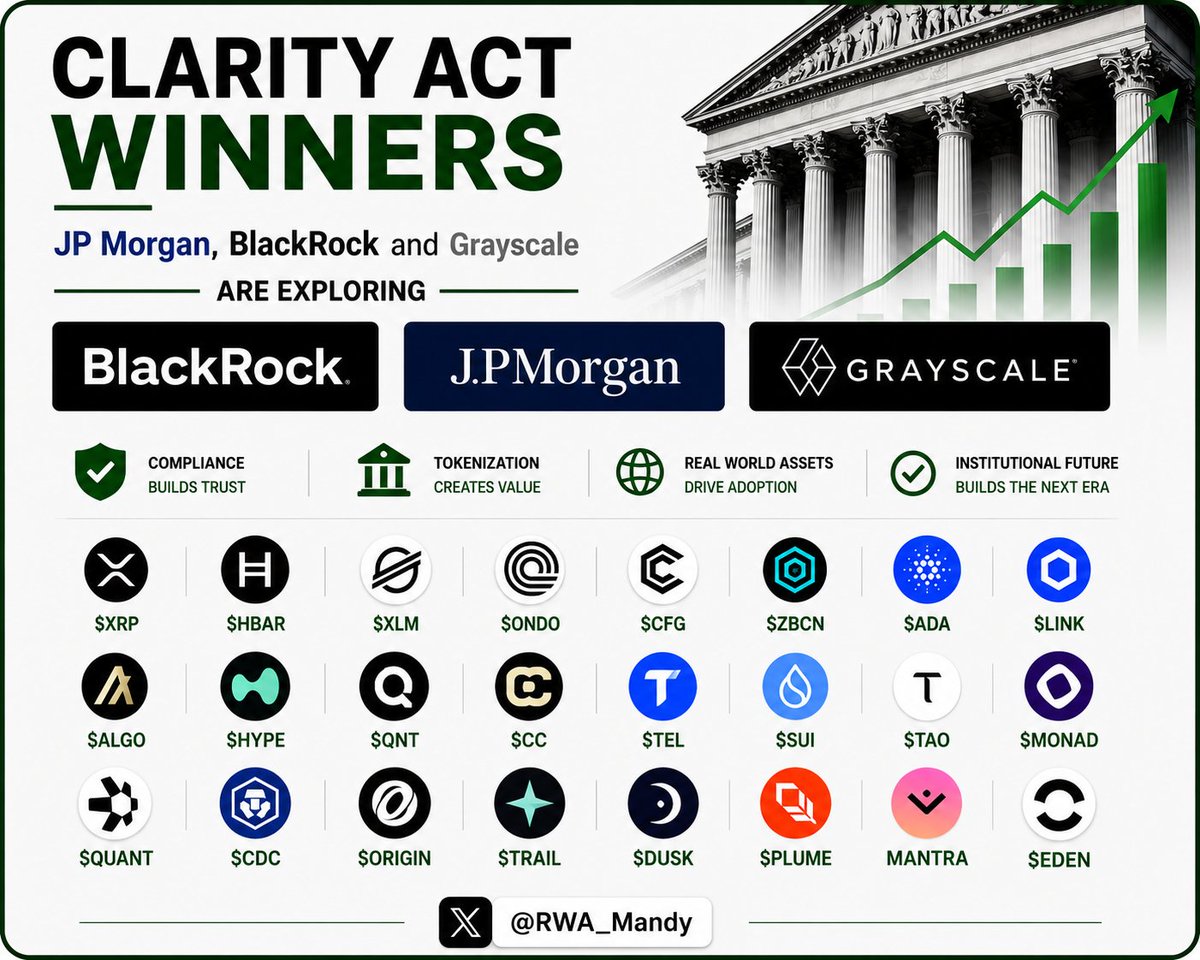
The next wave of wealth in crypto won't come from speculation. It will come from infrastructure.
The networks that power payments, connect chains, feed data, and settle real-world assets.
$XRP for global payments.
$HBAR for enterprise applications.
$XLM for cross-border settlement.
$QNT for chain-to-chain interoperability.
$LINK for oracle data feeding every institutional deployment.
$ONDO for tokenized real-world assets.
$SOL for high-throughput execution.
$ADA for research-driven smart contracts.
$ALGO for quantum-safe transactions.
$TEL for mobile banking and remittances.
$FLR for data oracles and XRPFi.
$ZBCN for payroll infrastructure.
$NEAR for user-accessible blockchain.
Each one serves a different function. Each one replaces a piece of legacy infrastructure that costs trillions to maintain today.
None of this pumps the price overnight. That's not how infrastructure adoption works. It compounds. Week by week. Partnership by partnership. Integration by integration.
Until the demand becomes structural and the price has no choice but to reflect it.
The projects building the pipes, the rails, and the connections for global finance are the ones that survive every cycle.
The speculation fades. The infrastructure stays.
I hold every one of these because I studied what they do, not what the chart says today.
The long-term demand story for utility assets has never been stronger.
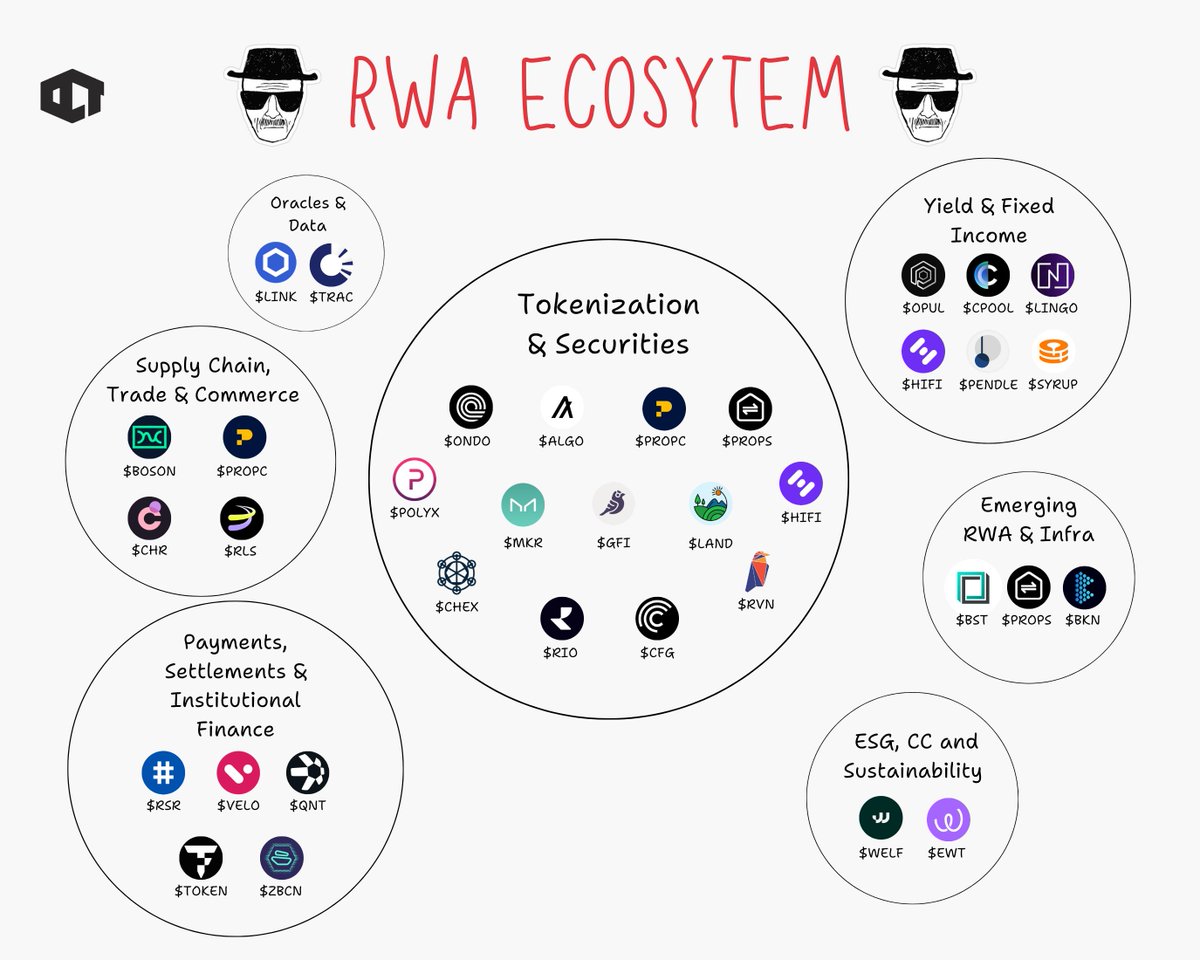
Coinbase just called it a tokenization takeover.
> The roster is already on-chain.
> The pipes are already laid.
RWA Ecosystem 👇
$LINK | $ONDO | $TRAC | $ALGO
$CFG | $POLYX | $PLUME | $ZBCN
Not to be early, but tokenization has been quietly eating TradFi for 4 years and the only thing that's changed is who's paying attention.
Everyone thinks their favorite token is the hidden gem that no one has discovered.
However, this game is extremely simple.
Buy these tokens, hodl, and you get rich 🤷♂️ the writing is on the wall and it’s very obvious.
$XRP $XLM $XDC $ADA $HBAR $ALGO $QNT $LINK $IOTA $ZBCN



![Krishnasagrawal's tweet photo. Claude Code is (actually) easy.
The 12-step roadmap in plain English:
If you're totally new to Claude Code:
Beginner: https://t.co/2dPKJnEZMQ
Intermediate: https://t.co/HHtZFTfpq2
Advanced: https://t.co/tLKItVJZGR
PHASE 1: Context (what Claude knows about you)
Step 0: Install the CLI
One terminal command gets it running:
"npm install -g @anthropic-ai/claude-code"
Step 1: Projects
- Give Claude its own folder.
- Everything you build stays tied to it.
"I'm creating a new folder for my [project]. Create it for me and set it up so I can start working in it."
Step 2: claude .md
- Claude reads this before every chat.
- Role, voice, defaults. Set once, it sticks.
"Help me build my CLAUDE.md from scratch. Use Boris Cherny's CLAUDE.md as a starting template. Ask me about my business, voice, banned words, output defaults, and how I want you to work. Save the final file to ~/CLAUDE.md."
Step 3: Memory
- Every correction becomes a saved lesson.
- Same mistake never lands twice.
"From now on, whenever I correct you, save it as its own .md file at ~/.claude/projects/{project}/memory/, prefixed feedback_, user_, project_, or reference_. Index everything in MEMORY.md."
PHASE 2: Fire (how you trigger work)
Step 4: Skills
- Wrap a workflow in one keyword.
- Fire it from any chat, any folder, any time.
"Turn this workflow into a skill called /[name]. Set it up so I can fire it from any chat."
Step 5: /commands
Type the name and Claude fires the workflow.
"Save this prompt as a /[name] command. Set it up so I can run it any time."
Step 6: /plan
- Type /plan before starting any task.
- Claude lays out the steps. You approve it.
"/plan I want to [your task in plain English]."
PHASE 3: Extend (wire it to your stack)
Step 7: Hooks
- Auto-run something the moment an event fires.
- You never have to trigger it manually.
"Set up a hook that runs [thing you want] every time I [event]. Wire it up for me."
Step 8: MCP
- Plug Claude into Slack, Notion, Gmail, etc.
- You get live data from the tools you use.
"Connect Claude to [tool]. Set it up for me and walk me through it."
Step 9: Plugins
Install skills, agents, and MCPs in one command.
"/plugin install [plugin-name]"
PHASE 4: Scale (delegate and autopilot)
Step 10: Subagents
- Send out parallel workers.
- Get three jobs done at once.
"Use subagents to handle [task A], [task B] and [task C] in parallel."
Step 11: Agent Teams
- A pipeline of specialist AI agents.
- Each owns one job, hands off to the next.
"Build me an agent team for [process].
Step 12: Routines
- Schedule your agent team on the cloud.
- You set it once, walk away forever.
"/schedule [agent or skill] every [schedule]."
That's Claude Code from zero to autopilot.
12 steps with no coding background needed.
Repost ♻️ to help someone in your network.
Cc : Charlie](https://pbs.twimg.com/media/HJLYWzkbYAA0xwB.jpg)